



Heavy Truck Cooling System Checks That Prevent Costly Breakdowns
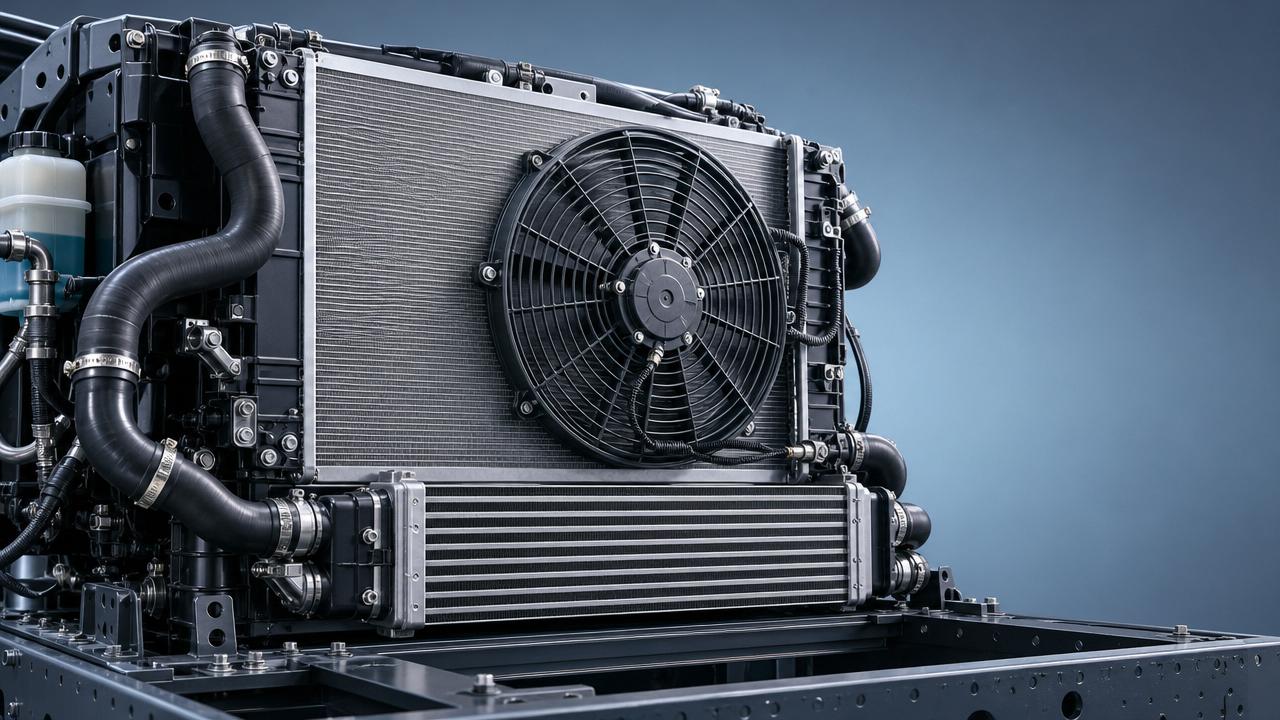
For project managers and engineering leaders, unexpected downtime can quickly derail budgets and delivery schedules. A reliable heavy truck cooling system is essential to keeping fleets, construction equipment, and demanding operations running without interruption. By understanding the key checks that prevent overheating, coolant loss, and component failure, you can reduce maintenance risks, extend equipment life, and avoid costly breakdowns before they impact productivity.
Why do cooling system checks matter so much in heavy-duty operations?
In the parts industry, a heavy truck cooling system is not just a maintenance item. It directly affects engine stability, fuel efficiency, uptime, and the service life of connected components such as radiators, intercoolers, hoses, clamps, reservoirs, and cooling fans.
For project managers, the real cost of a cooling failure rarely stops at replacing one damaged part. It often includes stalled vehicles, missed site schedules, emergency labor, secondary engine damage, and procurement delays for replacement components.
This is especially true in construction, mining, freight, and mixed fleet environments where heavy trucks work under sustained load, dust exposure, vibration, long idling periods, and sharp ambient temperature changes.
- Overheating can reduce engine reliability and increase the likelihood of head gasket stress, hose fatigue, and coolant degradation.
- Poor airflow through the radiator or charge air cooling path can affect thermal balance, especially during hill climbs, stop-and-go work, or heavy payload transport.
- Small leaks that seem manageable in the workshop can become critical failures once the vehicle is operating continuously under load.
A structured inspection routine gives engineering teams a practical way to control risk rather than react to failure. That shift from repair to prevention is where cost savings usually begin.
What should be included in a heavy truck cooling system inspection checklist?
The most effective heavy truck cooling system checks combine visual inspection, pressure verification, temperature behavior review, and parts condition assessment. Managers should ask maintenance teams to standardize these checks across vehicles and jobsite equipment.
Core inspection points
- Inspect the radiator core for clogging, bent fins, corrosion spots, and signs of impact from road debris or jobsite materials.
- Check hoses, joints, and clamps for swelling, softening, cracking, abrasion, and coolant residue around connections.
- Verify coolant level and review coolant condition for contamination, discoloration, oil traces, or excessive sediment.
- Test the pressure cap and expansion tank sealing condition to confirm the system can maintain required pressure.
- Observe fan clutch or electric fan response, because inadequate airflow often appears before obvious overheating alarms.
- Review water pump area for bearing noise, shaft play, or dried coolant traces around the weep hole.
- Inspect the intercooler path for external blockage, damaged fins, and loose ducting that can reduce thermal efficiency.
When fleets operate on dusty roads or near aggregate handling, debris buildup on cooling cores can reduce heat exchange far earlier than many teams expect. Regular cleaning intervals should be tied to duty cycle, not only calendar dates.
How often should checks be performed?
Frequency should match load profile and environment. A highway truck in stable conditions may follow routine service intervals, while construction or off-road equipment often needs shorter inspection cycles due to contamination and vibration exposure.
The table below helps project teams connect heavy truck cooling system check frequency with common operating conditions and maintenance priorities.
This schedule is not a fixed rule, but it gives decision-makers a practical framework. The more severe the environment, the more the heavy truck cooling system should be treated as a monitored asset rather than a passive component group.
Which warning signs usually appear before a costly breakdown?
Many cooling failures do not happen without warning. The issue is that the warning signs are often scattered across different maintenance observations and are not consolidated into a single risk picture.
Early symptoms managers should not ignore
- Gradual rise in operating temperature during loaded climbs or long idle periods.
- Repeated coolant top-ups without a clearly documented cause.
- Wet marks, white residue, or staining near radiator seams, tanks, or hose interfaces.
- Reduced engine response related to poor charge air cooling performance.
- Fan noise changes, inconsistent fan engagement, or abnormal temperature swings.
When these signs appear together, the risk is not simply a worn part. It may indicate system imbalance, poor heat dissipation, pressure loss, or aging materials across multiple connected components.
For procurement and maintenance planning, this means replacement decisions should consider the heavy truck cooling system as an integrated assembly, not just isolated single-item purchases.
How can project teams compare parts quality before purchasing?
Selecting replacement parts for a heavy truck cooling system is often difficult because project leaders must balance budget, lead time, compatibility, and durability. The cheapest option may reduce initial spend, but it can increase lifecycle cost if fitment, heat rejection, or sealing consistency is poor.
The comparison table below highlights practical evaluation points for radiators, intercoolers, and related cooling components in real procurement decisions.
A good supplier relationship lowers project risk because technical clarification happens before shipping, not after the vehicle is already waiting in the workshop. That is especially important when managers oversee mixed fleets or equipment with multiple cooling configurations.
A practical example of component matching
When charge air cooling performance becomes a concern, part confirmation should include model reference, dimensions, and installation compatibility. For instance, INTERCOOLER FOR MAN XD163 corresponds to MAN OEM 8161300216 with size 665*892*62.
This kind of information helps engineering teams avoid ordering delays caused by incomplete specifications. It also improves confidence when matching replacement parts to heavy truck cooling system layouts that require precise dimensional fit.
What procurement criteria matter most for project managers?
Project managers usually evaluate cooling parts differently from workshop technicians. The manager’s concern is broader: total downtime exposure, parts consistency across batches, communication speed, and supply reliability for future orders.
Decision points that reduce lifecycle cost
- Confirm whether the supplier can support radiators, intercoolers, and related assemblies within the same project scope.
- Ask for dimensional verification and model mapping before purchase approval, especially for older fleets or rebuilt equipment.
- Check whether production and export experience supports stable documentation, packaging, and communication for global shipments.
- Evaluate supplier responsiveness when urgent breakdowns require quick part confirmation or short lead-time replenishment.
Liaocheng Xinde Auto Parts Co., Ltd., established in 2018, focuses on the research, production, and global sales of water tank radiators, intercoolers, construction machinery radiators, related components for heavy trucks, and new energy radiator modules.
With registered capital of 5 million RMB and total investment of 50 million RMB, the company has expanded rapidly and has received provincial and municipal honors including High-tech Enterprise, Civilized and Honest Enterprise, and Trustworthy Unit for Consumers.
For buyers, those facts matter because they indicate a manufacturer built around thermal management components rather than a general trader with limited technical depth in heavy truck cooling system applications.
How should teams balance cost, replacement timing, and alternative solutions?
Cost control in the parts sector should focus on total operating impact, not only unit price. A lower-cost radiator or intercooler that fails early can create much larger losses through vehicle idling, recovery logistics, labor rescheduling, and emergency procurement premiums.
The table below compares common decision paths when a heavy truck cooling system begins to show signs of deterioration.
In many fleets, the third option delivers the best value when the truck supports revenue-critical or schedule-critical work. Planned replacement is easier to budget than emergency failure, especially when parts can be confirmed in advance.
What standards, documentation, and technical communication should buyers request?
Even when detailed project specifications vary, buyers should request clear technical data and communication records for each heavy truck cooling system component. This is important for internal approval, installation planning, and future reorder accuracy.
Useful confirmation items
- Part number or OEM reference cross-checking.
- Core dimensions and connection layout confirmation.
- Photos or drawings for mounting position review.
- Packaging and shipment requirements for export or long-distance transport.
- Any project-specific compliance expectations tied to customer or regional requirements.
Not every project needs the same paperwork depth, but consistent documentation reduces the chance of receiving mismatched parts, a common source of delay in heavy equipment maintenance planning.
FAQ: common heavy truck cooling system questions from engineering teams
How do we know whether a cooling issue is caused by the radiator or another component?
Start with symptom patterns. External fin blockage, seam leakage, and uneven temperature behavior often point toward the radiator. Repeated pressure loss may involve the cap, hoses, or reservoir. Reduced charge air cooling efficiency can also involve the intercooler path rather than the main coolant circuit alone.
What is the biggest purchasing mistake in heavy truck cooling system replacement?
The most common mistake is buying only by vehicle name without confirming dimensions, connection points, and OEM references. In practice, project teams should verify fitment data before approving orders, especially when dealing with mixed production years or regional configuration differences.
Should we replace hoses and clamps when replacing a radiator or intercooler?
If the existing hose set shows age, soft spots, cracking, or abrasion, replacement at the same time is usually more efficient. It avoids reopening the same maintenance window later and helps stabilize the heavy truck cooling system after a major component change.
When does an intercooler inspection become urgent?
Urgency increases when there is visible fin damage, oil contamination around connections, reduced engine response under load, or evidence of airflow restriction. For model-specific confirmation, buyers should request exact OEM and size details, as with the second-stage review of INTERCOOLER FOR MAN XD163 in applications requiring precise MAN reference matching.
Why choose us for heavy truck cooling system parts and project support?
For engineering leaders and project managers, the right supplier should reduce uncertainty at every stage, from model confirmation to delivery planning. That is where a specialized thermal management manufacturer brings more value than a price-only sourcing channel.
Liaocheng Xinde Auto Parts Co., Ltd. focuses on heavy truck and construction machinery cooling products, including water tank radiators, intercoolers, related components, and new energy radiator modules. This specialization supports more efficient technical discussion and more targeted product matching.
- You can consult on parameter confirmation, including OEM references, dimensions, and installation matching.
- You can discuss product selection for heavy trucks, construction machinery, and multi-model fleet requirements.
- You can ask about delivery cycles, replenishment planning, and support for urgent replacement needs.
- You can request customized solutions, sample support, packaging communication, and quotation discussions based on project scope.
- You can align technical and documentation expectations early, which helps avoid delays caused by incomplete specification checks.
If your current heavy truck cooling system maintenance plan is reactive, this is the right time to move toward a more controlled replacement strategy. Early checks, accurate part matching, and supplier-side technical support can protect uptime, budget discipline, and project delivery targets.