



What Makes a New Energy Vehicle Radiator Cost More to Develop
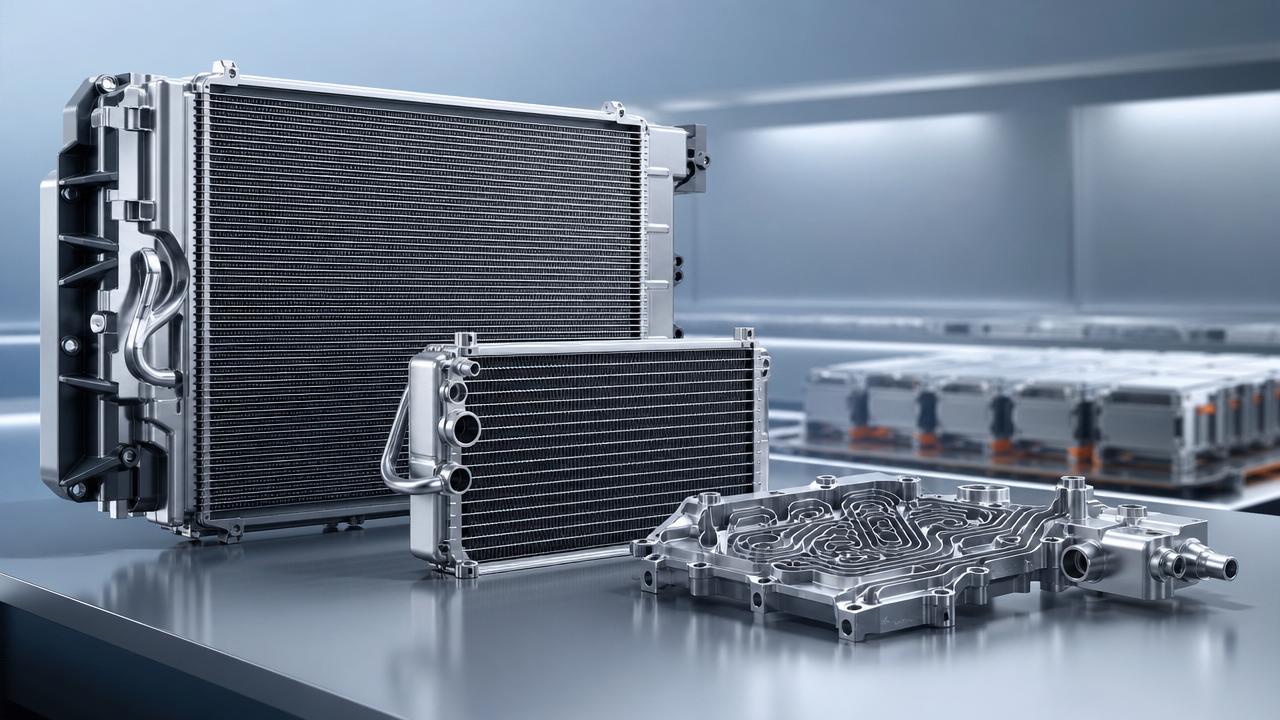
For financial decision-making, the cost of developing a New Energy Vehicle Radiator reflects more than tooling or labor.
It comes from tighter thermal control, new material choices, deeper validation, and shorter update cycles across new energy vehicle platforms.
Understanding these cost drivers helps improve budget planning, supplier screening, and long-term project risk control in the auto parts sector.
Liaocheng Xinde Auto Parts Co., Ltd., founded in 2018, focuses on radiators, intercoolers, heavy truck cooling parts, and new energy radiator modules.
Its rapid growth and recognized technical capability reflect how thermal system development has become a strategic issue, not only a component purchase decision.
Why development cost rises in high-load electric driving scenarios
A New Energy Vehicle Radiator works in a very different thermal environment than a conventional engine cooling unit.
Electric motors, batteries, inverters, onboard chargers, and power electronics create multiple heat sources at the same time.
That means development must consider system interaction, not only standalone heat rejection performance.
Under fast charging, hill climbing, towing, or high-speed delivery use, temperature spikes can happen quickly.
A radiator module for these conditions needs broader operating margins and more precise flow distribution.
This pushes engineering hours upward during simulation, prototype refinement, and test planning.
Key judgment points in these scenarios
- Peak heat load changes faster than in fuel vehicles.
- Battery safety limits allow less thermal deviation.
- Packaging space is tighter because of battery layout.
- Noise and energy efficiency targets limit fan strategy options.
When compact vehicle platforms make a New Energy Vehicle Radiator more expensive
Compact passenger EV platforms often appear simple, but they raise development complexity significantly.
The New Energy Vehicle Radiator must fit tight frontal areas while still supporting range, charging speed, and cabin comfort.
Engineers must balance airflow resistance, heat transfer, crash requirements, and lightweight goals in one module.
Small dimensional adjustments can trigger repeated CFD analysis, fixture changes, and sample remanufacture.
This repeated optimization is a major reason why development cost grows before mass production begins.
Why packaging pressure adds hidden cost
In many EV programs, cooling parts compete with sensors, wiring, active grille systems, and structural reinforcements.
As a result, radiator tube design, header layout, bracket geometry, and sealing interfaces need multiple revisions.
Each revision affects tooling, measurement, and validation timing.
How battery and fast-charging applications reshape radiator development priorities
Battery-dominant thermal systems create stricter temperature uniformity demands than many conventional cooling applications.
A small local hot spot can affect charging speed, battery life, and safety confidence.
Because of that, a New Energy Vehicle Radiator often requires advanced fin structures, corrosion-resistant materials, and tighter production tolerance.
Material cost alone is not the main issue.
The larger cost comes from proving that the design performs consistently across seasonal temperatures and load conditions.
Fast-charging use adds another layer.
The thermal system must recover quickly after repeated charging cycles, which increases the need for fatigue testing and thermal shock verification.
Typical validation work in these projects
- Thermal cycling under high and low ambient temperatures
- Pressure pulse and leak durability testing
- Salt spray and long-life corrosion verification
- Vibration tests linked to battery pack mass effects
- Charging event simulation with repeated peak loads
Different application scenes create different cost structures
Not every project needs the same development depth.
Cost depends heavily on the operating scene, duty cycle, and integration target.
Where supplier capability changes the real cost outcome
The quoted price of a New Energy Vehicle Radiator does not reveal the full development value.
A capable supplier can reduce cost through better first-round design accuracy and faster issue closure.
This is especially important when launch timing is tight.
Strong radiator and intercooler experience often improves thermal module judgment across platforms.
For example, legacy expertise from products like intercooler for benz xd330 can support understanding of durability, airflow, and structural reliability.
That specific solution covers OEM 9405010301 and 97024, with size 630*892*68 for Benz applications.
While the use case differs, disciplined cooling development methods remain highly transferable.
Capability indicators worth checking
- In-house prototype speed and tooling response
- Thermal simulation and test correlation ability
- Experience in heavy truck and new energy cooling modules
- Material control and long-cycle durability records
- Communication efficiency during engineering changes
Practical ways to match development depth with project scene
Development cost becomes more manageable when the cooling target is defined by real operating scenes early.
A staged approach often prevents overdesign and late redesign.
- Define peak load scene, not only rated load data.
- Separate battery, motor, and electronics cooling priorities.
- Lock packaging boundaries before final prototype release.
- Set validation levels by route, climate, and charging profile.
- Review lifecycle cost, not only sample quotation.
This process helps align spending with actual risk rather than assumptions.
Common misjudgments that make a New Energy Vehicle Radiator project cost more later
One common mistake is treating the New Energy Vehicle Radiator as a simple carryover part from fuel vehicle development logic.
Another is underestimating the impact of charging behavior on thermal peaks and recovery speed.
Some projects also focus too heavily on raw material price while ignoring validation failure cost.
Late-stage issues are usually more expensive than early engineering investment.
A further oversight is neglecting contamination, vibration, and road debris exposure in commercial or industrial scenes.
These conditions can quickly change radiator performance and service life expectations.
What to do next when evaluating New Energy Vehicle Radiator development budgets
A realistic budget review should begin with scenario mapping.
List charging patterns, road loads, ambient temperature ranges, packaging limits, and durability targets.
Then compare suppliers by engineering depth, response speed, and validation resources, not only by unit price.
In the auto parts industry, the higher development cost of a New Energy Vehicle Radiator often protects program stability later.
When cost drivers are understood clearly, investment decisions become more accurate, measurable, and commercially defensible.
That is the most practical way to reduce long-term thermal risk in new energy vehicle projects.