



Radiator Core Blockage Symptoms That Often Get Misdiagnosed
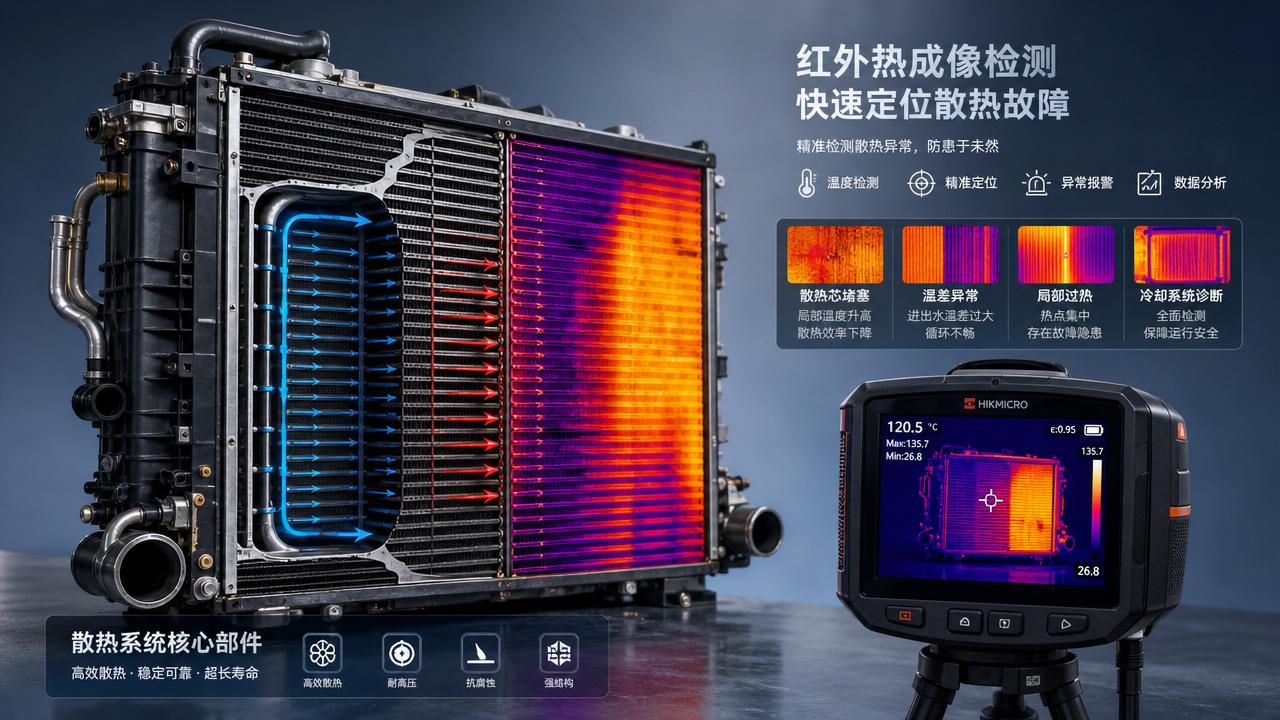
Many cooling system problems blamed on thermostats, water pumps, or coolant quality actually point to a blocked radiator core. For aftermarket maintenance professionals, recognizing these often-misdiagnosed symptoms early can prevent repeat repairs, overheating risks, and costly downtime. This guide explains the warning signs, inspection logic, and practical clues that help identify radiator core blockage with greater accuracy.
What does radiator core blockage really mean?
A radiator core blockage happens when coolant flow or air passage is restricted inside the heat exchange section.
The radiator core contains tubes and fins. Coolant moves through tubes, while air removes heat across the fins.
Blockage can be internal, external, or both. Internal blockage often comes from scale, rust, gelled coolant, or debris.
External blockage usually involves mud, oil film, insects, road dust, or bent fins reducing airflow.
Because symptoms overlap with other cooling faults, radiator core problems are often diagnosed too late.
That delay matters in heavy trucks, construction machinery, and high-load systems where thermal reserve is limited.
Why it is commonly misdiagnosed
A blocked radiator core may still allow some flow. The engine may run normally at idle but overheat under load.
This pattern often leads technicians toward fan clutch issues, thermostat sticking, or weak water pump performance.
In reality, the cooling system may have enough circulation pressure, but not enough heat rejection capacity.
Which radiator core blockage symptoms get confused with other failures?
The most frequent clue is load-related overheating. Temperature climbs on grades, during towing, or in stop-and-go traffic.
Many call this a thermostat problem. Yet thermostats usually create different behavior, especially during warm-up.
Another classic symptom is an engine that cools down quickly once speed or load drops.
That quick recovery suggests the system is marginal, not completely failed. A partially blocked radiator core fits that pattern well.
Symptoms often mistaken for thermostat faults
- Rising temperature after normal warm-up
- Heat spikes under acceleration or climbing
- Upper hose hot, but poor heat transfer across the radiator
- No clear thermostat sticking evidence during replacement
Symptoms often mistaken for water pump issues
- Overheating at higher RPM or sustained load
- Weak coolant return observed indirectly
- Repeated coolant service with no lasting improvement
- Cavitation concerns blamed without pump damage proof
Symptoms often mistaken for coolant quality alone
Contaminated coolant can trigger blockage, but replacing coolant alone may not reopen blocked passages.
If temperature improves only briefly after flushing, radiator core restriction should remain high on the checklist.
How can you tell if the radiator core is the real cause?
Diagnosis improves when symptoms are tested as a pattern instead of one isolated complaint.
Start with operating conditions. Ask when overheating appears, how fast it rises, and what reduces it.
A restricted radiator core usually shows stronger symptoms during high heat load, not during initial engine warm-up.
Practical inspection logic
- Check coolant level and obvious leaks first.
- Confirm fan operation, belt condition, and thermostat basics.
- Inspect radiator fins for dirt packing, oil residue, and bent sections.
- Compare inlet and outlet temperature behavior across the core.
- Look for cold spots that suggest blocked internal tubes.
- Review service history for stop-leak use, mixed coolants, or corrosion evidence.
Infrared temperature scanning is especially useful. Uneven temperature distribution often reveals a blocked radiator core quickly.
A healthy core usually shows smooth thermal transition. Sharp cold bands suggest restricted passages.
What external clues should not be ignored?
Do not focus only on coolant flow. Air-side blockage can create similar overheating behavior.
Charge air coolers, condensers, and protective screens may trap dirt ahead of the radiator stack.
In high-demand thermal systems, component matching matters. Similar attention applies to parts like intercooler for benz xd330, especially where stacked airflow affects cooling efficiency.
What are the biggest diagnostic mistakes with radiator core restriction?
One common mistake is replacing the thermostat first, then stopping diagnosis when the problem returns.
Another mistake is judging radiator condition only by outside appearance. A clean face does not guarantee free internal flow.
Some systems also suffer from partial blockage. Because the engine still cools under light duty, the issue looks intermittent.
Misread signals that delay repair
- Assuming a new cap, hose, or thermostat solved root cause
- Ignoring repeat overheating after temporary coolant flushes
- Testing only at idle instead of under realistic load
- Skipping thermal imaging or temperature mapping
- Missing stack contamination between cooling modules
For heavy-duty applications, radiator core diagnosis should include the full heat exchanger package, not only one component.
Liaocheng Xinde Auto Parts Co., Ltd. focuses on radiators, intercoolers, construction machinery radiators, and new energy radiator modules.
Its product development reflects how cooling reliability depends on system-level design, production quality, and correct application matching.
When should a blocked radiator core be cleaned, repaired, or replaced?
The right decision depends on blockage type, material condition, age, and downtime tolerance.
External dirt can often be cleaned safely if fins remain structurally sound and airflow path is recoverable.
Internal scale or gel contamination is more difficult. Chemical cleaning may help, but success varies.
If many tubes are blocked or corrosion is advanced, replacement is usually more reliable than repeated flushing.
Decision guide
If the vehicle uses a matched cooling package, replacing one weak unit may restore overall balance better than repeated repair attempts.
What quick FAQ checks help confirm radiator core blockage faster?
If cooling demand involves turbocharged applications, adjacent components also deserve review, including units such as the intercooler for benz xd330 with OEM 9405010301, model 97024, size 630*892*68 for Benz platforms.
Radiator core blockage symptoms are easy to misread because they overlap with several common cooling system faults.
The best approach is structured diagnosis: observe load-related behavior, inspect airflow, map temperatures, and verify the full cooling stack.
When a radiator core is partially or severely restricted, early identification prevents repeat parts replacement and protects engine reliability.
Use these checks during routine service or overheating investigations, and move quickly from symptoms to evidence-based repair decisions.