



What Causes a Condenser to Lose Efficiency Over Time
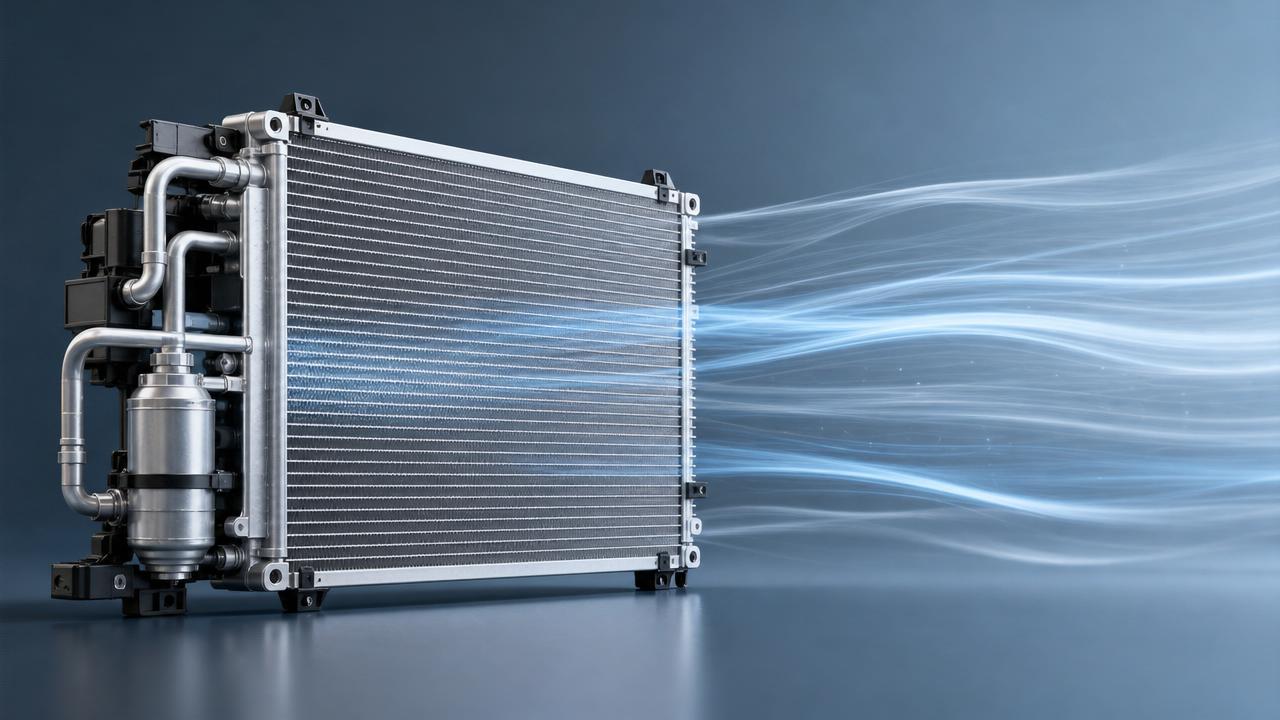
A condenser can gradually lose efficiency due to dirt buildup, corrosion, airflow restriction, internal blockage, or long-term thermal stress. Understanding these causes is essential for anyone researching cooling performance, equipment lifespan, and maintenance costs. In this article, we explore how a condenser’s efficiency declines over time and what key warning signs should never be ignored.
Why does a Condenser lose efficiency in real operating conditions?
A Condenser is designed to reject heat efficiently, but that performance is never static. In auto parts applications, heavy-duty vehicles, construction machinery, and new energy cooling modules, thermal components work under vibration, dust exposure, road salt, moisture, and repeated heating cycles.
Over time, these conditions reduce heat transfer capability. Even when the Condenser still appears serviceable from the outside, its effective cooling area, airflow path, and internal refrigerant flow may already be compromised. That is why efficiency loss often begins long before complete failure.
For information-focused buyers and technical researchers, the key question is not only whether a Condenser fails, but how early performance decline affects operating cost, engine compartment temperatures, system balance, and replacement timing.
- Reduced heat exchange raises the workload on the overall cooling system.
- Airflow problems may create secondary stress on nearby radiators and fans.
- Minor contamination can gradually become a major maintenance cost if ignored.
What are the main causes behind Condenser efficiency loss over time?
The most common causes are mechanical, environmental, and thermal. They often interact with one another. A dirty external surface reduces airflow, while corrosion weakens metal structure and internal deposits disrupt fluid distribution. The result is cumulative performance decline rather than one single fault.
1. Dirt and debris buildup on the fin surface
Dust, insects, oil mist, mud, and road grime can settle on condenser fins and tubes. This layer acts as insulation. It prevents heat from transferring from the working fluid to the passing air stream, especially in vehicles or machinery used in harsh outdoor environments.
Once fins are partially blocked, airflow becomes uneven. Some sections run hotter, while other sections still perform normally. This creates an efficiency imbalance across the core and lowers the overall heat rejection rate.
2. Corrosion from moisture, chemicals, and road conditions
Corrosion is especially important in the parts industry because condensers often operate in changing climates. Moisture, road salt, cleaning chemicals, and industrial pollutants can degrade aluminum surfaces and tube joints. Corrosion reduces material integrity and can narrow flow passages.
Early corrosion may not immediately cause leaks, but it weakens thermal conductivity and shortens service life. In long-duty applications, corrosion also increases the likelihood of repair interruptions and unplanned replacement.
3. Airflow restriction caused by bent fins or poor installation
A Condenser depends on steady airflow. Bent fins, blocked shrouds, fan performance loss, or poor spacing between heat exchangers can all reduce air volume. In compact vehicle layouts, one cooling component often affects another, so airflow design should be evaluated as a system rather than as a single part.
4. Internal blockage and flow imbalance
Internal restriction is harder to detect than external contamination. Metal particles, degraded lubricant residues, moisture-related reactions, or debris from a damaged system may partially block internal channels. When the flow path becomes uneven, the Condenser loses active heat transfer area.
This is one reason replacement decisions should not be based on visual inspection alone. A clean exterior does not always mean internal performance is healthy.
5. Long-term thermal fatigue
Repeated heating and cooling cycles gradually stress joints, fins, tubes, and brazed areas. Thermal expansion and contraction can cause microscopic deformation over time. In demanding working conditions, this may reduce structural stability and heat transfer consistency even before a leak appears.
The table below summarizes how different causes affect Condenser efficiency, diagnostics, and replacement urgency in practical parts evaluation.
This comparison shows why condenser diagnosis should combine surface inspection, flow assessment, and system-level analysis. In many cases, one visible problem is only the symptom of a broader cooling issue.
Which warning signs should buyers and maintenance teams not ignore?
When a Condenser starts losing efficiency, the system often sends indirect signals first. These warning signs matter because they influence maintenance budgets, service intervals, and purchasing decisions for replacement parts.
Common field symptoms
- Cooling performance becomes inconsistent during high ambient temperature or heavy load.
- System pressure or temperature trends move outside normal operating patterns.
- The fan runs more often or for longer cycles than before.
- The core shows physical damage, fin collapse, or corrosion traces.
- Maintenance frequency rises without a clear root cause.
For information researchers comparing replacement options, these signals help determine whether cleaning, partial repair, or full replacement is the more economical path. Delayed action can affect adjacent components and increase total lifecycle cost.
How do operating scenarios change the speed of Condenser degradation?
A Condenser in a clean passenger vehicle environment ages differently from one used in logistics fleets, construction equipment, or high-load thermal systems. In the auto parts sector, application context matters as much as material quality.
Companies with experience in heavy truck radiators, intercoolers, construction machinery radiators, and new energy radiator modules often evaluate cooling parts through real usage conditions rather than catalog dimensions alone. That approach reduces mismatch risk and improves service planning.
Liaocheng Xinde Auto Parts Co., Ltd., established in 2018, focuses on the research, production, and global sales of water tank radiators, intercoolers, construction machinery radiators, and related cooling components. Its growth in the Chinese market and recognition as a High-tech Enterprise, Civilized and Honest Enterprise, and Trustworthy Unit for Consumers reflect a manufacturing profile that aligns with practical cooling-system demands.
The table below helps compare how different application scenarios accelerate Condenser efficiency loss and what buyers should pay attention to during parts selection.
This scenario view is useful because a Condenser should not be judged only by initial appearance or price. The expected load profile and maintenance environment strongly influence the right replacement decision.
How should you evaluate a replacement Condenser or related cooling part?
Research-stage buyers often face a common problem: many parts look similar, but field performance can differ because of material selection, internal design, manufacturing consistency, and fitment precision. A lower upfront price may not reduce actual ownership cost if thermal stability drops early.
Practical evaluation checklist
- Confirm operating environment, duty cycle, and airflow conditions before comparing part numbers.
- Review core material quality, fin density, and resistance to corrosion or deformation.
- Check whether the supplier understands system integration, not just standalone component dimensions.
- Ask about application matching, sample support, and delivery planning for urgent replacement schedules.
- Consider whether related components such as radiators or intercoolers may also need review to restore full cooling efficiency.
In some cases, a researcher investigating Condenser decline may also need to compare related thermal components. For example, in vehicle cooling systems, a high-performance radiator can help maintain overall system balance when the thermal load is demanding. One reference option is Radiator for AION, model AIONV-1301010-0030, developed for car fitment with functions centered on replace or repair needs, cooling efficiency, and stable operation under grueling workloads.
Its positioning around advanced fluid dynamics, premium thermal materials, and uncompromising stability reflects the broader principle that cooling parts should be selected by thermal performance logic, not by appearance alone.
Repair, cleaning, or replacement: which option makes more sense?
Not every inefficient Condenser needs immediate replacement, but not every unit is worth saving either. The right choice depends on contamination severity, structural condition, internal blockage risk, and the cost of downtime.
When cleaning may be enough
If the main issue is external dirt and the fin structure remains largely intact, careful cleaning may restore acceptable performance. This is more likely when the inefficiency is discovered early and corrosion is limited.
When repair is risky
If the Condenser has widespread fin collapse, advanced corrosion, repeated leakage, or signs of internal contamination, repair may only provide short-term relief. In commercial or heavy-load applications, repeated service stops often cost more than a planned replacement.
When replacement is the more rational decision
Replacement becomes more economical when thermal performance remains unstable after cleaning, pressure balance suggests internal restriction, or the unit has reached an age where material fatigue is likely. Buyers should then evaluate supplier capability, fitment accuracy, and delivery responsiveness together.
What technical and sourcing details matter most in the parts industry?
For Condenser and radiator procurement, technical quality and supply reliability must be considered together. An acceptable part on paper may still create trouble if production consistency or communication quality is weak.
- Material and brazing quality influence long-term thermal durability.
- Core design affects airflow resistance and heat transfer balance.
- Fitment precision reduces installation rework and leakage risk.
- Supplier response speed matters when fleets or workshops face urgent downtime pressure.
- Application knowledge is especially valuable for heavy truck, construction machinery, and new energy cooling systems.
A manufacturer focused on cooling components across multiple vehicle and machinery segments is often better positioned to discuss matching logic, replacement risk, and practical trade-offs. That is important for buyers who need more than a catalog quote.
FAQ: common research questions about Condenser efficiency
Can a dirty Condenser really cause major performance loss?
Yes. Even a moderate dirt layer can reduce heat transfer because the fins depend on direct air contact. In dusty or oily conditions, the loss can build gradually until the system shows temperature instability, higher fan usage, or reduced cooling effectiveness under load.
How do I know whether the problem is internal blockage or only surface contamination?
Surface contamination is usually visible and often linked to blocked fins or debris accumulation. Internal blockage is harder to confirm and may appear as poor performance despite a relatively clean exterior. Pressure behavior, temperature distribution, and system history are useful clues.
Are all replacement condensers equal if the size matches?
No. Similar dimensions do not guarantee equal thermal behavior, durability, or flow design. Material grade, manufacturing stability, internal channel design, and resistance to corrosion all affect real service life and cooling performance.
What should procurement teams ask a supplier before ordering?
Ask about application fitment, core structure, material choice, lead time, packaging, sample availability, and support for parameter confirmation. If the cooling system includes related components, ask whether the supplier can also advise on radiators, intercoolers, or module-level matching.
Why choose us for cooling parts research, matching, and supply?
For buyers investigating why a Condenser loses efficiency, the real value is not just getting a replacement part. It is getting a clearer path to diagnosis, selection, and stable operation. Liaocheng Xinde Auto Parts Co., Ltd. focuses on cooling-related components including water tank radiators, intercoolers, construction machinery radiators, and heavy truck and new energy radiator modules.
If you are comparing options, you can consult us for parameter confirmation, product selection, delivery cycle planning, sample support, custom solution discussion, and quotation communication. If your project involves vehicle thermal balance rather than a single component, we can also help review whether a matching part such as Radiator for AION is relevant to your repair or replacement plan.
The earlier you identify the real cause of Condenser efficiency loss, the easier it is to control maintenance cost and avoid unnecessary downtime. A focused technical discussion before purchase is often the fastest way to reduce replacement risk.