



Condenser Capacity Problems That Show Up in Hot Weather
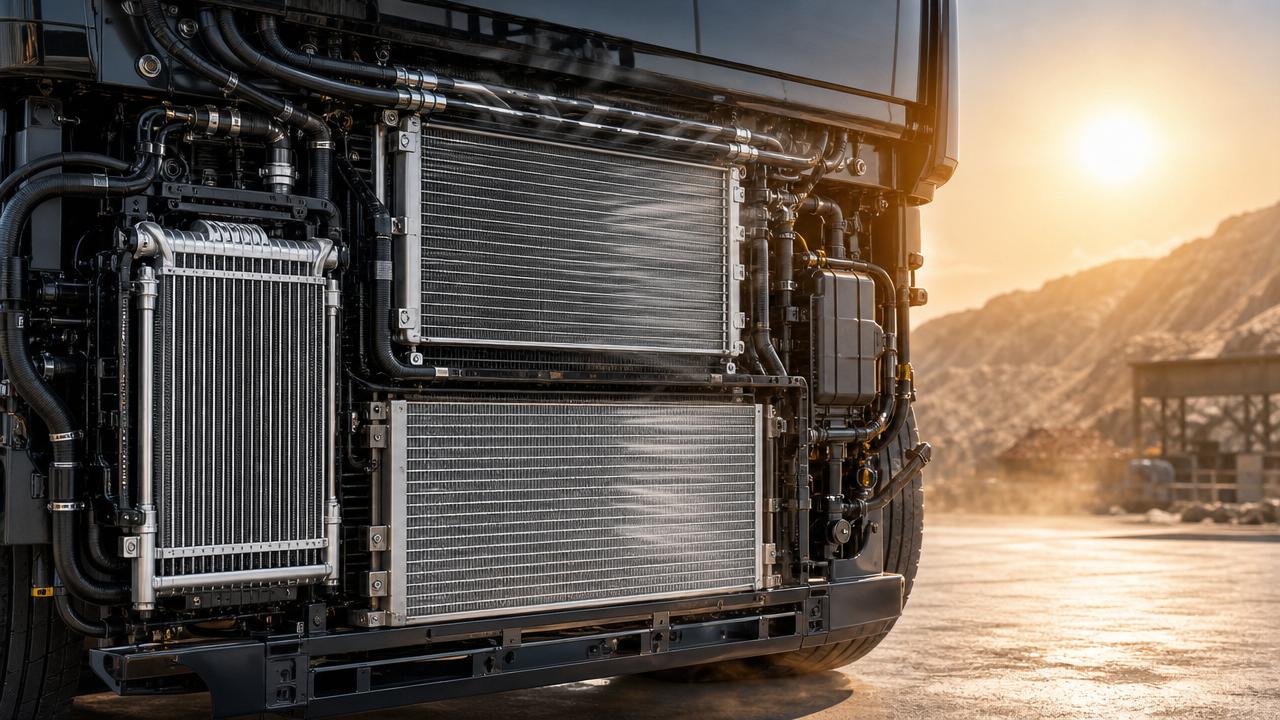
Why Condenser capacity problems become obvious in hot weather
When temperatures rise, Condenser capacity problems often become impossible for operators to ignore.
Weak cooling, higher system pressure, and unstable performance can reveal hidden limits inside the heat-exchange system.
In parts-related applications, summer heat does not create every fault, but it exposes every weak point faster.
That is why understanding Condenser behavior under thermal stress matters for uptime, safety, and service planning.
For heavy-duty cooling systems, component quality, airflow design, and contamination control all shape real Condenser performance.
Liaocheng Xinde Auto Parts Co., Ltd. focuses on radiators, intercoolers, and related heat-exchange parts for demanding vehicle and machinery use.
Its development in truck, construction, and new energy cooling modules reflects how critical durable thermal components have become.
How operating scenes change Condenser load in summer
Not every hot-weather complaint points to the same Condenser issue.
The correct diagnosis depends on where the equipment works, how long it runs, and how much airflow it receives.
A truck on open roads faces different Condenser demands than a machine idling in dust or a vehicle trapped in stop-start traffic.
Ambient temperature, engine bay heat, road speed, and debris exposure can change heat rejection capacity dramatically.
Looking at the scene first helps separate airflow limits from refrigerant problems, part aging, or system mismatch.
Scene 1: Slow traffic and long idle periods
In slow traffic, the Condenser loses the benefit of strong ram air.
Cooling performance then depends heavily on fan efficiency, shroud integrity, and fin cleanliness.
If pressure climbs at idle but drops while driving, poor airflow is often the first suspect.
Bent fins, blocked surfaces, or weak fan output can reduce Condenser capacity even when other parts seem normal.
Scene 2: Heavy load and high engine compartment heat
Loaded trucks and hard-working machinery produce more surrounding heat.
That hotter air reaches the Condenser and lowers the temperature difference needed for effective heat release.
The result can be rising head pressure, unstable cooling, and more frequent compressor cycling.
In these scenes, the Condenser may not be defective, but its installed capacity may be too close to the thermal limit.
Scene 3: Dust, insects, mud, and surface blockage
Construction routes and summer highways quickly load the Condenser face with debris.
Even a thin layer can reduce airflow and insulate the surface from hot refrigerant vapor.
This type of capacity loss appears gradually, so it is often ignored until cabin cooling drops sharply.
A blocked Condenser also increases strain on related cooling parts and shortens service life.
Typical warning signs that suggest Condenser capacity loss
Hot weather makes symptoms easier to detect because the system has less reserve capacity.
Several field signs can help identify whether the Condenser is becoming the bottleneck.
- Cooling is acceptable in the morning but weak in the afternoon.
- High-side pressure rises quickly during idle operation.
- Vent temperature improves once road speed increases.
- Compressor cycling becomes frequent during peak heat.
- The Condenser surface shows clogged fins, corrosion, or impact damage.
- Adjacent radiator or intercooler heat affects total airflow efficiency.
These signs do not replace testing, but they narrow the diagnosis path quickly.
They are especially useful in mixed cooling stacks where several heat exchangers share the same airflow path.
How different working scenes create different Condenser needs
A useful summer diagnosis compares application scenes rather than checking parts in isolation.
This scene-based view helps determine whether a Condenser problem is environmental, mechanical, or design-related.
Practical checks for summer Condenser diagnosis
Effective troubleshooting starts with simple checks before major disassembly.
- Inspect the Condenser face for dirt, insects, bent fins, and oil traces.
- Compare system behavior at idle and at higher road speed.
- Measure pressure trends during the hottest operating window.
- Check whether the radiator, intercooler, or guards restrict shared airflow.
- Confirm fan function, fan clutch response, and shroud sealing.
- Review whether the current Condenser matches actual seasonal duty.
Many summer failures are not sudden part breaks.
They are accumulated efficiency losses that only become visible when the heat load peaks.
Why the full cooling stack matters, not only the Condenser
In heavy-duty applications, the Condenser rarely works alone.
It shares space and airflow with the radiator, intercooler, and sometimes additional thermal modules.
If one layer becomes blocked or oversized for the available airflow, the whole stack loses efficiency.
This is why parts selection should consider the total thermal package, not a single component rating.
For example, an intercooler with strong structural quality helps maintain stable charge-air cooling under heavy engine load.
A suitable option in related truck cooling systems is INTERCOOLER FOR MAN XD163.
Its reference model includes MAN OEM 8161300216 with size 665*892*62 for compatible application planning.
When stack components are matched correctly, the Condenser faces less secondary heat stress and performs more consistently.
Common misjudgments that hide the real Condenser problem
Several mistakes lead to repeated summer complaints and unnecessary part replacement.
- Assuming refrigerant charge is the only reason for weak cooling.
- Ignoring airflow restrictions caused by guards, screens, or stacked debris.
- Checking the Condenser only when the weather is mild.
- Replacing the compressor before verifying heat rejection performance.
- Overlooking nearby radiator or intercooler deterioration.
Another common error is focusing on visible leaks while ignoring thermal fatigue and fin corrosion.
A Condenser can remain sealed yet still lose meaningful capacity because heat transfer has degraded.
How to improve hot-weather Condenser reliability
Reliable summer performance comes from preventive action, not emergency repair alone.
- Schedule cleaning before peak summer temperatures arrive.
- Use durable heat-exchange parts with stable brazing and corrosion resistance.
- Inspect the full airflow route, not only the Condenser core.
- Match replacement parts to real operating duty, load, and environment.
- Track recurring pressure patterns to catch capacity decline early.
These steps reduce downtime and improve thermal stability during the most demanding season.
Next steps for evaluating Condenser performance under heat
If hot weather repeatedly exposes Condenser weakness, start with a scene-based inspection.
Record temperature, pressure behavior, airflow conditions, and contamination level during real operation.
Then compare those findings with the condition of the entire cooling stack and related parts.
A stronger Condenser strategy often depends on better matching across radiators, intercoolers, and thermal modules.
With durable components and timely checks, summer heat becomes a manageable test instead of a costly interruption.