



What Causes Heavy Duty Truck Radiator Overheating Under Load?
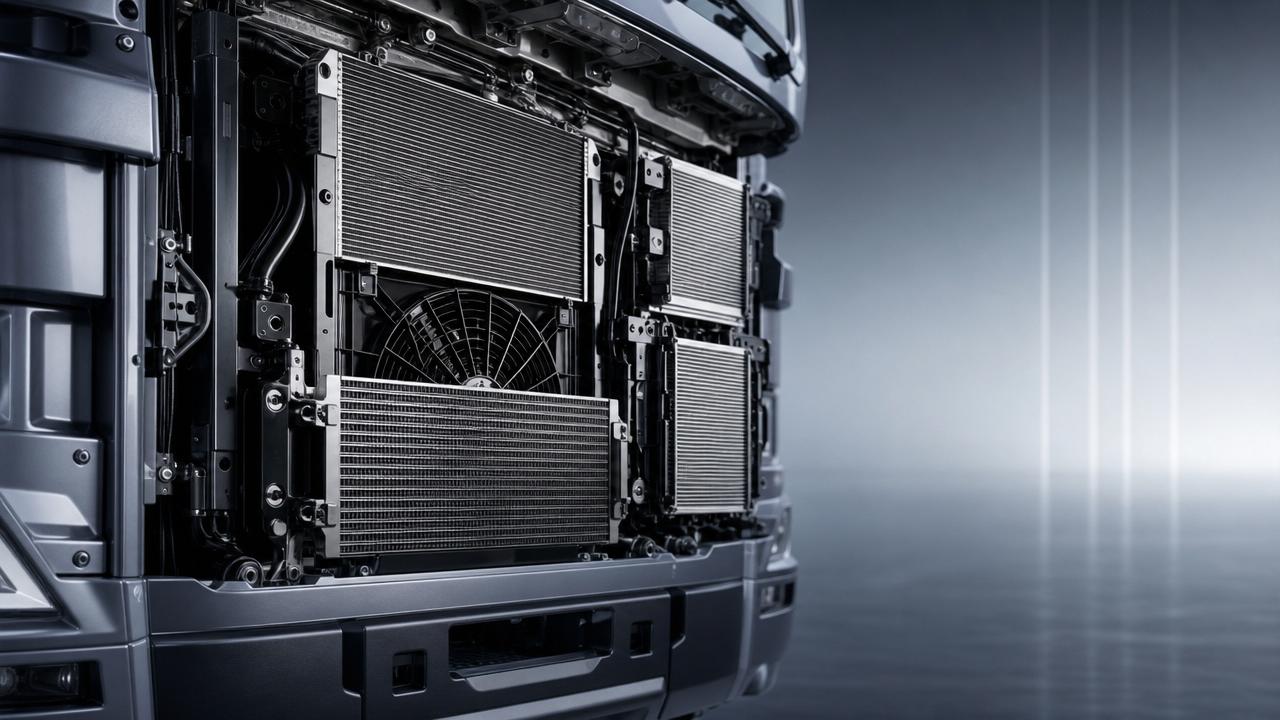
Why a Heavy duty truck radiator overheats when the load suddenly rises
A Heavy duty truck radiator usually performs well in light traffic and mild weather.
The real weakness appears when the engine pulls hard for long periods.
That is why overheating under load often points to a system limitation, not a single failed part.
In practical service, heat rejection depends on airflow, coolant flow, core cleanliness, and engine demand working together.
If one part falls behind, the Heavy duty truck radiator may cope at idle but fail on climbs, in stop-start hauling, or on construction routes.
For parts-related businesses, this matters because the correct diagnosis affects replacement choice, maintenance intervals, and fleet reliability.
Companies with strong radiator production experience, such as Liaocheng Xinde Auto Parts Co., Ltd., typically evaluate the full thermal system rather than the core alone.
That approach is especially important in heavy trucks, where operating conditions change faster than catalog specifications suggest.
Actual operating conditions change the diagnosis
A loaded tipper on a dusty road does not stress a Heavy duty truck radiator the same way as a highway tractor on long-distance transport.
Both may show high coolant temperature, but the root cause can be very different.
More often, the useful question is not “Is the radiator bad?”
The better question is “What condition pushes the cooling system past its margin?”
Load, ambient temperature, altitude, road speed, debris exposure, and engine tuning all change that margin.
This is why one truck overheats only uphill, while another overheats only in low-speed yard work.
This kind of comparison prevents a common mistake.
A Heavy duty truck radiator can appear undersized when the real issue is airflow loss or poor maintenance discipline.
Long uphill pulls expose coolant flow restrictions first
On grades, engine load remains high for minutes instead of seconds.
That sustained demand quickly exposes weak coolant circulation.
A partially blocked radiator tube, worn water pump, sticking thermostat, or collapsed hose may not trigger problems on flat roads.
Under full pull, the Heavy duty truck radiator receives more heat than restricted flow can carry away.
In this scenario, surface cleaning alone rarely solves the issue.
The more useful checks are coolant temperature difference across the core, pump condition, and signs of internal scaling.
Where service history is unclear, testing for mineral buildup matters as much as checking the radiator exterior.
This is also where component quality becomes important.
Stable brazing, consistent tube geometry, and pressure-tested assemblies influence how much usable cooling capacity remains after long service.
Low-speed heavy hauling often points to airflow, not core size
Some overheating complaints happen in ports, mines, and local distribution routes.
The truck is loaded, but road speed stays low.
In those conditions, the Heavy duty truck radiator depends heavily on forced airflow from the fan system.
If the fan clutch engages late, if the shroud is damaged, or if the fan blade pitch is wrong, heat remains trapped in the cooling pack.
This often gets misread as radiator failure because temperature drops once the truck reaches open-road speed.
The pattern itself is the clue.
When overheating is worse at low speed than at high speed, airflow should be checked before replacing the Heavy duty truck radiator.
In mixed fleets, this is also why cooling modules must match the airflow design of the vehicle platform.
A supplier familiar with radiator modules across truck and machinery applications usually pays attention to these matching details.
Dust, mud, and stacked coolers change the heat balance
Construction transport creates a different kind of overload.
The issue is not always the engine producing too much heat.
Often, the cooling pack cannot release normal heat because the air side is blocked.
Mud on the fins, oily dust between layers, and debris trapped ahead of the condenser or intercooler can cut cooling efficiency fast.
Here, a Heavy duty truck radiator may still be structurally sound, yet perform far below design.
The key judgment is whether blockage sits on the front face, between stacked exchangers, or inside the tubes.
Each case needs a different action.
- Front-face dust suggests more frequent external cleaning and better debris shields.
- Inter-layer contamination suggests the pack needs separation during service.
- Internal blockage suggests coolant flushing or radiator replacement.
This distinction saves cost because not every hot-running truck needs a new core.
Sometimes the smarter step is improving maintenance access and cleaning intervals.
When engine demand increases, the original Heavy duty truck radiator may lose reserve margin
Overheating under load is also common after the truck’s duty profile changes.
A vehicle that once carried moderate loads may start operating near maximum weight every day.
Engine calibration changes, turbo upgrades, or persistent high-ambient routes can push the cooling system beyond its original reserve.
In that case, the Heavy duty truck radiator is not necessarily defective.
It may simply no longer match the thermal reality of the job.
This is where application-based matching becomes more useful than part-number matching alone.
Manufacturers with broad radiator and intercooler development experience often assess tube layout, fin density, tank strength, and module integration together.
That same engineering logic can be seen across different vehicle families, including products such as Radiator for TOYOTA, where fitment and thermal balance matter as much as nominal dimensions.
What usually deserves priority in this situation
- Compare current payload and route profile with the original vehicle duty cycle.
- Check whether engine output or auxiliary heat sources have increased.
- Measure real operating temperatures instead of relying on dashboard impression.
- Confirm that radiator size, fin structure, and airflow path still suit the new load pattern.
Similar symptoms, different decisions
The same overheating complaint can lead to very different parts decisions.
That is why replacing the Heavy duty truck radiator without checking system context often wastes time.
This is also the point where lifecycle cost matters.
A cheaper replacement can become expensive if it shortens cleaning intervals or weakens durability under vibration.
Common misjudgments that make overheating harder to solve
One frequent error is focusing only on radiator dimensions.
A Heavy duty truck radiator can match the original outline yet still differ in tube count, fin efficiency, or material consistency.
Another mistake is treating every hot-weather complaint as a coolant issue.
In many field cases, the real trigger is a dirty cooling stack or weak fan drive.
There is also a long-term blind spot.
A truck that passes inspection today may still have too little reserve for seasonal peaks.
That matters in operations where summer, altitude, and overload periods overlap.
Looking beyond initial purchase cost is usually the better decision.
Reliability depends on how the cooling system behaves after dust exposure, vibration, and long service intervals, not only on catalog compliance.
A practical way to judge the next step
When a Heavy duty truck radiator overheats under load, the best path is to map the fault to the real operating scene.
Check where the truck overheats, how fast temperature rises, and what changes when road speed, dust level, or payload changes.
Then compare airflow condition, coolant flow condition, and thermal reserve as separate factors.
That sequence usually reveals whether the issue is maintenance-related, component-related, or application-related.
For follow-up action, it helps to document route type, ambient temperature, cleaning frequency, and current radiator specification before changing parts.
A structured review like this makes later selection more accurate, whether the need is a replacement module, a revised cooling pack, or a better-matched unit such as Radiator for TOYOTA in other platform categories.
In real service work, the strongest result usually comes from matching the radiator to the job, not just to the vehicle label.