



Radiator Core Performance Clues in Daily Use
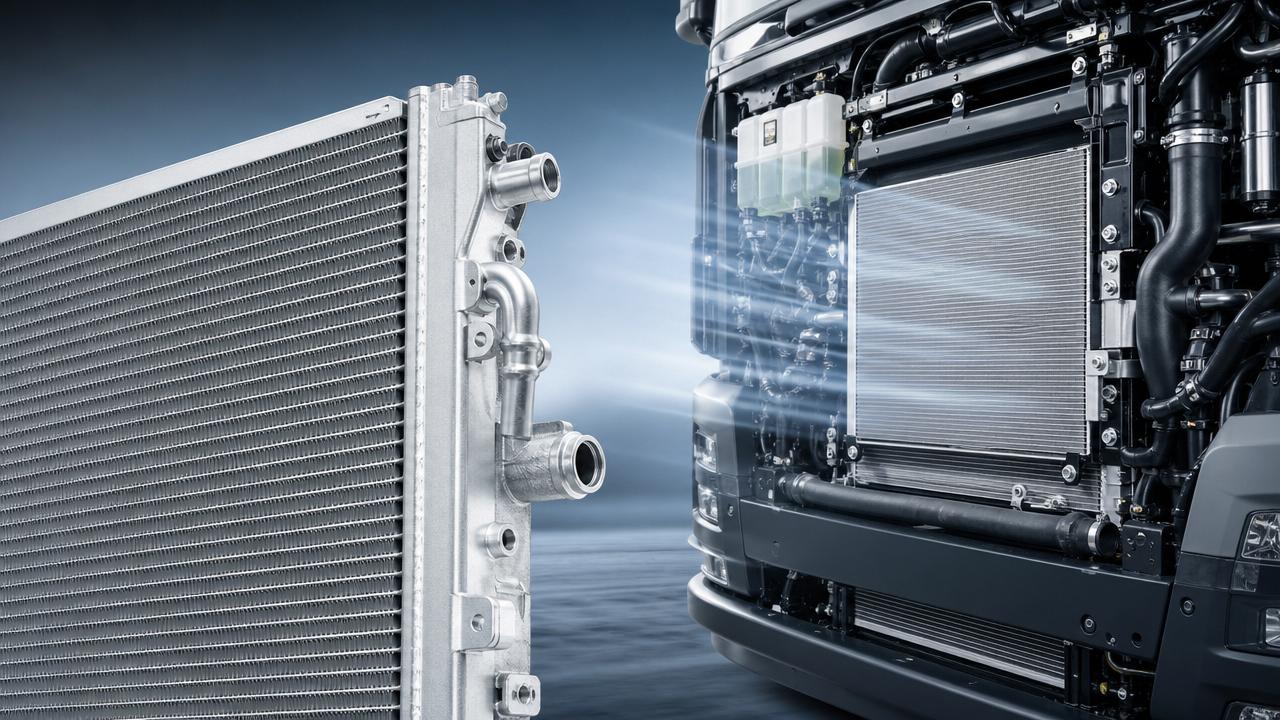
A radiator core often reveals its true condition through small changes during daily operation.
Rising coolant temperature, uneven heat dissipation, visible leaks, dust blockage, or lower engine power can signal early performance loss.
As heavy trucks, machinery, and new energy systems work under higher loads, radiator core condition becomes a stronger uptime indicator.
Daily Cooling Behavior Is Becoming a Clearer Performance Signal
Cooling systems were once checked mainly after overheating or leakage. That habit is changing across the parts industry.
A radiator core now works in tighter thermal windows, especially on high-load trucks and construction machinery.
Engines, transmissions, intercoolers, hydraulic systems, and battery modules generate more concentrated heat than older equipment platforms.
Because of this shift, small radiator core changes during daily use deserve earlier attention.
A few degrees of temperature rise may not stop a vehicle immediately. Yet it can reveal airflow, coolant, or fin efficiency problems.
Current Trend Signals Around Radiator Core Performance
The strongest trend is preventive cooling inspection. Maintenance decisions are moving from failure response to performance tracking.
The radiator core is central to this shift because it connects coolant flow, air passage, material condition, and thermal exchange.
Several daily clues are becoming more important than occasional workshop checks.
- Coolant temperature rises faster during climbing, hauling, or idling.
- The fan runs more often without clear ambient temperature changes.
- Heat feels uneven across the radiator core surface.
- Dust, mud, insects, or fibers block visible fin channels.
- Coolant stains appear near tanks, seams, tubes, or hose joints.
- Engine output weakens when load and temperature increase together.
These signals do not always confirm radiator core failure. They indicate that cooling capacity may be narrowing.
Why Radiator Core Stress Is Increasing
Several forces are pushing radiator core design and maintenance standards higher across heavy-duty applications.
The radiator core is no longer a simple passive part. It is part of a broader heat management strategy.
When heat rejection declines, fuel efficiency, power stability, emissions control, and component life can all be affected.
Temperature Changes That Reveal Radiator Core Weakness
Temperature behavior is often the first daily clue. The pattern matters more than one isolated gauge reading.
A healthy radiator core should help temperature rise and fall in a predictable range.
If the gauge climbs quickly under normal loads, heat transfer may be restricted.
If temperature falls slowly after load reduction, airflow or coolant circulation may be insufficient.
Frequent fan engagement also deserves attention. It may show that the radiator core is losing reserve cooling capacity.
Patterns Worth Recording
- Temperature after cold start and warm-up.
- Temperature during idle after heavy work.
- Temperature during uphill operation or towing.
- Recovery speed after load is reduced.
- Fan activity compared with similar ambient conditions.
These records help separate normal workload changes from radiator core performance degradation.
Uneven Heat Dissipation Points to Internal or External Restriction
A radiator core should not have extreme hot and cold zones during stable operation.
Uneven heat can suggest blocked tubes, trapped air, scale buildup, damaged fins, or poor coolant flow.
External restriction is often easier to see. Mud, grass seeds, insects, and road dust collect between fins.
Internal restriction is harder to confirm. Rust, mineral deposits, or degraded coolant can narrow tube passages.
Both forms reduce the effective working area of the radiator core.
A Practical Observation Method
After safe shutdown and cooling, inspect the fin field, tank edges, and visible tube rows.
Do not touch hot components. Use safe inspection tools and follow equipment service procedures.
If one radiator core section remains much cooler, circulation or passage blockage may require deeper diagnosis.
Leaks and Coolant Loss Are Still Major Warning Clues
Visible leakage remains one of the clearest radiator core warnings.
Small stains should not be ignored, especially around side tanks, seams, drain plugs, and tube-to-header joints.
Coolant loss lowers heat absorption capacity. It can also introduce air pockets into the cooling circuit.
Air pockets reduce contact between coolant and metal surfaces, weakening radiator core heat transfer.
Repeated topping up without finding the cause can hide a growing problem.
Leak Clues That Need Fast Action
- Sweet coolant odor after stopping.
- Damp areas near the lower radiator core.
- White, green, red, or blue residue near joints.
- Coolant level drops without visible hose failure.
- Steam appears during load or after shutdown.
A pressure test can help confirm whether the radiator core, cap, hose, or tank is responsible.
Dust Blockage Is Becoming a Larger Field Performance Issue
Construction sites, mining roads, farms, ports, and long-haul routes create heavy airborne contamination.
Fine particles settle into the radiator core and reduce airflow through fin passages.
The surface may look acceptable, while deeper fin layers remain packed with dust.
This hidden blockage forces the fan and engine to work harder for the same cooling result.
Cleaning frequency should match operating conditions, not only mileage or calendar intervals.
Cleaning Decisions Should Avoid Fin Damage
Aggressive cleaning can bend fins and reduce airflow. Low-pressure, controlled cleaning is usually safer.
Cleaning should move debris out of the radiator core, not push it deeper into the stack.
Bent fins, crushed rows, or corroded surfaces should be assessed before returning equipment to heavy work.
Impact on Vehicles, Machinery, and Parts Decisions
Radiator core performance affects more than engine temperature. It influences operating cost, repair planning, and equipment reliability.
In heavy trucks, weak cooling can reduce power during climbs, high-speed hauling, or stop-and-go work.
In construction machinery, overheating may stop hydraulic work, lifting cycles, or earthmoving operations.
In new energy radiator modules, stable heat exchange supports battery, motor, and electronic control performance.
For replacement planning, fit, material quality, pressure resistance, and heat exchange area are becoming stronger decision factors.
For Volvo-related applications, options such as RADIATOR FOR VOLVO XD029 can be evaluated by model and size.
Its referenced models include 100314589, 21649619, 100316845, and 65624, with size parameter 945*728*48.
Key Points to Monitor Before Radiator Core Replacement
Replacement should be based on evidence, not only age. A structured check reduces misdiagnosis.
- Confirm coolant quality, concentration, and contamination level.
- Check cap pressure, thermostat function, and water pump condition.
- Inspect the radiator core for corrosion, leaks, and fin collapse.
- Compare temperature behavior before and after cleaning.
- Verify fan, shroud, belt, sensor, and airflow path condition.
- Review workload changes that may exceed the original cooling margin.
If multiple clues appear together, radiator core replacement becomes more likely than minor service.
How the Industry Should Judge the Next Cooling Requirement
Cooling demand will keep rising as equipment becomes more powerful and compact.
The radiator core will need stronger durability, stable flow design, cleaner brazing, and better resistance to vibration.
Daily data will also matter. Temperature patterns can support earlier maintenance and smarter parts selection.
Liaocheng Xinde Auto Parts Co., Ltd. focuses on radiators, intercoolers, construction machinery radiators, and new energy radiator modules.
Founded in 2018, the company has developed through research, production, and global sales of heavy-duty cooling components.
Its honors reflect continued attention to technology, reliability, integrity, and consumer trust in the auto parts sector.
Action Steps for More Reliable Radiator Core Performance
Start with daily observation. Track temperature rise, fan activity, coolant level, visible debris, and power changes.
Then connect those clues with operating conditions, including load, route, ambient temperature, and dust exposure.
When radiator core symptoms repeat, schedule inspection before overheating becomes a breakdown.
For replacement, match model, dimension, cooling demand, mounting structure, and system pressure requirements.
A well-matched radiator core protects uptime, reduces thermal stress, and supports safer heavy-duty operation.
The practical next step is simple: treat small cooling clues as early performance data, not background noise.