



What Affects Heavy Duty Truck Radiator Replacement Cost Most
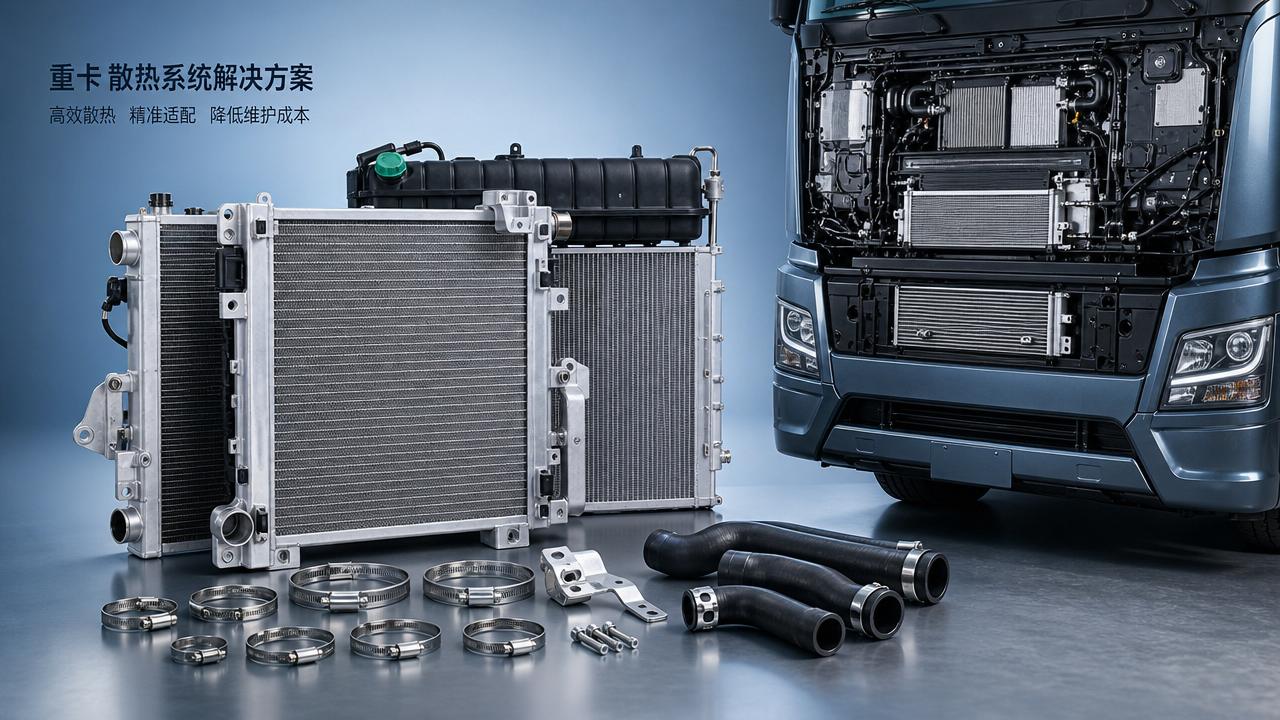
For finance approvers, understanding what drives Heavy duty truck radiator replacement cost is essential to budget control and asset reliability.
A Heavy duty truck radiator is not a simple metal box.
Its design, material, fitment accuracy, and production quality directly affect cooling performance, downtime risk, and total lifecycle spending.
When replacement decisions are made only on unit price, fleets often face repeat failures, overheating, and higher labor costs later.
This article explains the main cost drivers behind Heavy duty truck radiator replacement and shows how to compare options with more confidence.
Basic Cost Structure of a Heavy Duty Truck Radiator Replacement
The total replacement cost usually combines parts cost, labor, coolant, related hardware, and possible downtime.
For many operators, the radiator price is only one part of the final invoice.
A Heavy duty truck radiator may also require hose inspection, clamp replacement, fan shroud removal, or system flushing.
If the original failure caused overheating, extra engine checks can further increase spend.
- Replacement radiator unit
- Installation labor hours
- Coolant refill or full coolant change
- Mounting brackets, seals, hoses, or clamps
- Transport, urgent delivery, or inventory carrying cost
- Downtime and lost vehicle utilization
This wider view helps explain why similar trucks can have very different replacement totals.
Material and Core Design Often Influence Cost the Most
Material selection is one of the biggest cost drivers for any Heavy duty truck radiator.
Aluminum radiators are widely used because they offer good heat transfer and lower weight.
However, alloy grade, tube thickness, fin density, and brazing quality all affect both price and durability.
A low-cost unit may use thinner material, less stable joining methods, or weaker tank structures.
These choices reduce initial cost but may shorten service life under vibration, pressure, and thermal cycling.
Why core structure matters
The radiator core handles the main heat rejection work.
A larger or more efficient core usually costs more because it uses more material and tighter production control.
For trucks operating in high ambient heat, steep grades, or heavy loads, this difference matters greatly.
Vehicle Compatibility and Cooling Capacity Add Major Price Variation
Not every Heavy duty truck radiator fits every platform, even within the same brand family.
Engine output, transmission layout, frame packaging, and cooling module dimensions all influence replacement cost.
Units for common models often cost less because tooling volume is higher and supply is more stable.
Rare specifications or customized assemblies tend to cost more and take longer to source.
Integrated cooling modules can also raise price if the radiator must align with intercoolers or condenser systems.
- Engine size and heat load
- Cab and chassis design
- On-road versus construction duty cycles
- Original equipment dimensions and port locations
- Compatibility with fan systems and brackets
Precise fitment reduces installation issues and avoids hidden labor overruns.
Labor Rates and Service Complexity Can Rival Parts Cost
Labor is another major component in Heavy duty truck radiator replacement cost.
Access difficulty changes sharply by truck design.
Some vehicles allow relatively direct radiator removal.
Others require disassembly of guards, fan assemblies, coolers, or surrounding supports before extraction is possible.
If corrosion has seized fasteners or previous repairs altered mounting points, labor hours rise quickly.
Common labor-related cost drivers
- Regional workshop rates
- Truck accessibility and disassembly time
- Need for coolant system cleaning
- Replacement of adjacent wear parts
- Testing after installation
When comparing suppliers, it is useful to estimate installed cost, not just component price.
Supplier Quality, Production Standards, and Warranty Shape Long-Term Spend
A Heavy duty truck radiator from a dependable supplier can lower total ownership cost, even when initial pricing is higher.
Consistent manufacturing reduces the risk of leaks, poor fitment, and uneven thermal performance.
Warranty terms also matter because they signal confidence in process control and material reliability.
Liaocheng Xinde Auto Parts Co., Ltd. focuses on research, production, and global sales of radiators, intercoolers, and related cooling components.
Its manufacturing direction supports heavy trucks, construction machinery, and new energy radiator modules.
That specialization is important because cooling system parts demand stable thermal engineering and repeatable production quality.
In some cases, evaluating adjacent products helps benchmark supplier capability.
For example, Radiator for Lynk uses aluminum construction, a brazing radiator structure, and a 12-month warranty.
Its thermal stability focus reflects the kind of engineering discipline that also matters in commercial cooling applications.
Operating Environment and Failure Cause Should Guide Replacement Decisions
Replacement cost should always be reviewed together with failure cause.
If a Heavy duty truck radiator failed because of impact damage, contamination, pressure imbalance, or chronic vibration, a simple swap may not solve the issue.
The wrong root-cause decision often leads to repeat replacement and extra downtime.
Practical Evaluation Points Before Choosing a Heavy Duty Truck Radiator
A structured comparison prevents overpaying for features that are unnecessary or underbuying for harsh service conditions.
Before approving a replacement, review these points carefully.
- Confirm exact dimensions, ports, and mounting positions
- Check material thickness and brazing consistency
- Verify cooling capacity for actual duty cycle
- Compare warranty support and claim response
- Estimate total installed cost and downtime impact
- Review supplier history in radiator manufacturing
- Inspect whether hoses, caps, and coolant also need replacement
A Heavy duty truck radiator should be selected for fit, durability, and heat performance together.
Choosing on price alone can hide larger downstream losses.
Decision Path for Better Cost Control
The biggest influences on Heavy duty truck radiator replacement cost are material quality, core design, fitment complexity, labor hours, and supplier consistency.
Operating environment and root cause of failure also affect what level of replacement is financially sound.
A lower-priced Heavy duty truck radiator may look attractive at purchase stage.
Yet if it causes repeat labor, cooling issues, or unplanned downtime, the real cost becomes much higher.
The most effective next step is to compare options using total lifecycle value, not unit price alone.
Gather fitment details, expected duty conditions, and supplier quality evidence before final approval.
That approach leads to more reliable cooling performance and better control over maintenance spending.