



Heavy Duty Truck Radiator Materials Compared for Long Hauls
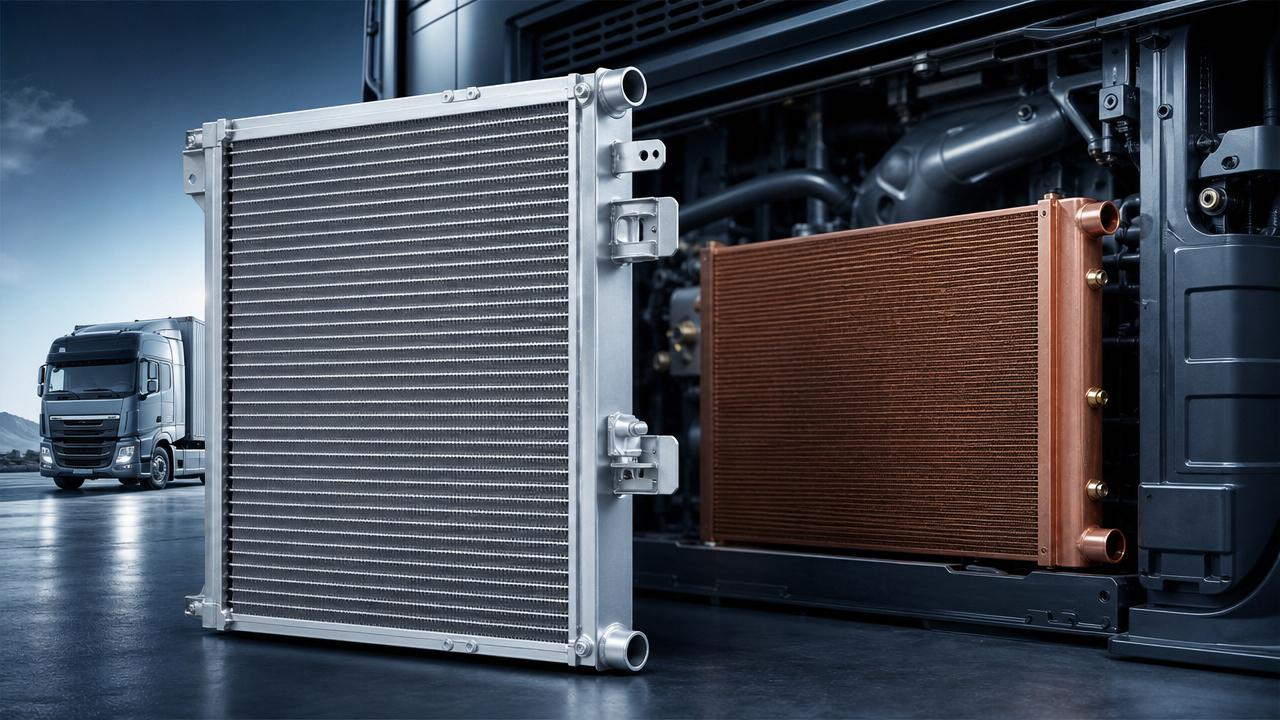
Choosing the right heavy duty truck radiator material is not a minor specification detail for long-haul fleets. For technical evaluators, it directly affects cooling stability, service life, repair strategy, payload, and lifecycle cost.
In most modern heavy truck applications, aluminum radiators are the default choice because they offer a strong balance of heat rejection, low weight, manufacturing consistency, and total operating efficiency. However, copper-brass designs still have value in certain repair-focused environments, while advanced module systems may outperform both in demanding integrated cooling packages.
This guide compares the main radiator material options used in long-distance trucking and explains how to evaluate them under real operating conditions. The goal is not to declare a universal winner, but to help technical teams choose the best-fit solution for route profile, engine load, maintenance resources, and cost targets.
What technical evaluators are really comparing in long-haul radiator selection
When engineers assess radiator materials, they are rarely comparing metal types in isolation. They are evaluating a complete thermal component that must maintain coolant temperature under variable ambient conditions, sustained engine load, vibration, contamination, and maintenance intervals.
For long-haul service, the key question is simple: which radiator construction can deliver stable cooling for hundreds of thousands of kilometers without creating excessive weight, downtime, or service complexity? Material choice matters because it affects all of these outcomes at once.
The most relevant comparison factors usually include thermal conductivity, wall thickness, tube and fin design, corrosion resistance, pressure tolerance, repairability, weight, and compatibility with modern engine bays. A technically sound decision weighs the whole system rather than relying on one headline property.
Aluminum radiators: why they dominate modern heavy truck platforms
Aluminum has become the mainstream material for the modern heavy duty truck radiator because it supports lightweight construction, scalable production, and efficient heat exchanger design. In long-haul applications, lower system weight can contribute to payload efficiency and improved fuel economy over time.
Although pure copper has higher intrinsic thermal conductivity than aluminum, radiator performance in real products depends on more than the base metal. Aluminum radiators can use wider tubes, optimized fin geometry, and controlled brazed construction to achieve excellent heat rejection in compact packages.
Another advantage is reduced mass. A lighter radiator places less stress on mounting points and surrounding structures, which can be useful in vehicles exposed to road shock, frame flex, and continuous vibration. This is especially relevant on routes combining highways, logistics yards, and secondary roads.
Aluminum also supports modern integrated cooling module design. Many OEM and aftermarket systems combine radiator, intercooler, condenser, and related airflow structures into tightly packaged assemblies. Aluminum is well suited to these modular designs because it helps control both weight and dimensional efficiency.
For technical evaluators, the practical value of aluminum is not just that it is light. It is that a well-designed aluminum radiator can deliver dependable thermal performance while fitting current vehicle packaging, emissions-related cooling demands, and fleet efficiency objectives.
Copper-brass radiators: where they still make sense
Copper-brass radiators are often discussed in terms of superior heat conductivity, and that point is technically valid at the material level. However, complete radiator performance depends on design execution, airflow, coolant flow, and structural configuration, not conductivity alone.
The enduring advantage of copper-brass units is repairability. In some service markets, especially where workshop repair capability is strong and replacement logistics are slow, copper-brass radiators can be easier to patch, resolder, or refurbish than aluminum assemblies.
This repair-focused benefit may matter for operators in remote regions, mining corridors, or cross-border routes where immediate access to replacement inventory is uncertain. If minimizing roadside immobilization through local repair is a priority, copper-brass can still deserve evaluation.
That said, copper-brass radiators are generally heavier. In long-haul trucking, extra weight is not trivial. It affects payload economics and may influence mounting durability and component handling during installation. Heavier construction can also conflict with modern vehicle lightweighting strategies.
Technical teams should therefore treat copper-brass as a situational solution rather than a default upgrade. It may be suitable where field repair culture is strong, weight sensitivity is lower, and thermal package space is less constrained.
Why real-world radiator performance is about construction, not only material
One of the most common sourcing mistakes is to compare radiators by metal type while overlooking core design. A poorly engineered aluminum radiator may underperform, while a high-quality aluminum unit with optimized tube geometry and fin density can exceed expectations in severe-duty hauling.
Important design variables include tube width, fin pitch, fin louver pattern, coolant passage layout, header strength, brazing quality, and airflow resistance. These factors influence how effectively heat moves from coolant to metal and then from metal to ambient air.
Durability also depends on construction details. Long-haul trucks experience continuous vibration, thermal cycling, pressure fluctuation, and contamination from dust, salt, insects, and road debris. Material selection must therefore be judged together with fatigue resistance and manufacturing consistency.
For example, a technically competent supplier should be able to discuss burst pressure, pressure cycling, leak testing, corrosion validation, and core strength under vibration. These metrics usually tell evaluators more than simplified claims about one metal being “better” than another.
This is also why procurement and engineering teams often review application-specific products rather than abstract radiator categories. A platform developed for a specific truck family, such as MERCEDES-BENZ applications, should be assessed by performance data, fit accuracy, and durability verification in addition to material choice.
Corrosion, coolant chemistry, and service life in long-haul operations
For long-distance fleets, corrosion resistance is one of the biggest determinants of radiator lifespan. Even a well-designed core can fail prematurely if coolant chemistry is unmanaged, water quality is poor, or galvanic conditions are introduced through mixed materials and inconsistent maintenance practices.
Aluminum radiators perform well when paired with the correct coolant formulation and controlled maintenance intervals. However, they can be vulnerable if operators use unsuitable coolant, hard water, or neglected additive packages. Technical evaluators should always align radiator specification with coolant management standards.
Copper-brass systems have their own corrosion considerations, including internal degradation and solder-related aging. The old assumption that metal repairability automatically means lower long-term risk is not always true if coolant discipline across the fleet is inconsistent.
In practical terms, service life is often determined less by nominal material durability and more by maintenance quality. Evaluators should therefore ask whether the operating environment can reliably support the coolant requirements of the selected radiator design.
Where long-haul fleets operate across multiple climates and service networks, standardization becomes important. Choosing a radiator type that matches available coolant, technician familiarity, and maintenance control may produce better reliability than choosing a theoretically superior material on paper.
Weight, fuel efficiency, and total operating cost
Weight reduction matters in heavy transport because small savings at component level accumulate across the vehicle and fleet. An aluminum heavy duty truck radiator usually supports lower mass than a copper-brass equivalent, and that can contribute to better operational efficiency over long service distances.
For technical evaluators, the correct cost question is not “Which radiator is cheaper to buy?” but “Which radiator delivers the best total cost of ownership?” Purchase price, expected service life, replacement frequency, repair cost, fuel impact, and downtime risk should all be included.
If a lighter aluminum radiator reduces fuel consumption marginally and maintains reliable thermal control, the lifecycle benefit may exceed any initial cost difference. Conversely, if a route network strongly favors local repair over replacement, a repairable copper-brass model may still produce acceptable economics.
This is why long-haul radiator decisions should be modeled over actual fleet usage assumptions. Annual mileage, ambient temperature, gross vehicle weight, idle time, terrain, and parts availability all affect the best material choice.
How to evaluate a supplier beyond the material specification
Material comparison is only one part of technical validation. Supplier capability is equally important, especially for fleets and buyers that need repeatable quality across multiple vehicle platforms. A radiator that performs well in one batch but varies in manufacturing quality creates unacceptable risk.
Evaluators should look for evidence of research and production capability, test processes, product range depth, and export experience. Manufacturers with expertise in water tank radiators, intercoolers, construction machinery radiators, and new energy radiator modules often have a stronger understanding of thermal system demands.
Liaocheng Xinde Auto Parts Co., Ltd., established in 2018, is one example of a company positioned around this specialization. Its focus on radiator and intercooler research, production, and global sales reflects the type of dedicated thermal-component background many technical buyers prefer when assessing sourcing partners.
It is also useful to ask whether the supplier can support application-specific fitment, performance consistency, and product traceability. A technically credible manufacturer should be able to explain material selection, process control, and validation methods in practical engineering terms.
Where platform compatibility is important, reviewing model-specific offerings such as MERCEDES-BENZ radiator solutions can help buyers judge whether the supplier understands OE fit, installation requirements, and operating conditions for demanding truck applications.
A practical decision framework for long-haul radiator material selection
If the operating environment prioritizes lightweight construction, modern packaging, stable large-scale supply, and strong all-around efficiency, aluminum is usually the preferred radiator material. This is why it dominates current heavy truck thermal systems worldwide.
If the fleet operates in regions where workshop-level repair is easier than fast replacement, and where extra component weight is less critical, copper-brass may remain a workable choice. The advantage is not universal performance, but service flexibility in specific maintenance ecosystems.
For severe-duty use, evaluators should go further than the aluminum-versus-copper debate. Review core design, pressure capability, corrosion protection, airflow integration, and supplier quality assurance. In many cases, these factors decide success more than the headline material category.
A disciplined selection process should include thermal load analysis, route condition review, maintenance capability assessment, and total cost modeling. This approach produces better procurement decisions than relying on legacy preferences or isolated material claims.
Conclusion
For long-haul applications, the best heavy duty truck radiator material is the one that delivers stable cooling, durable construction, manageable maintenance, and strong lifecycle economics in the actual operating environment. For most modern trucks, that points to aluminum-based designs.
Copper-brass still has relevance where repairability outweighs weight and packaging concerns, but it is no longer the automatic benchmark. Technical evaluators should compare complete radiator systems, not just raw material properties.
The most reliable decision comes from combining material knowledge with design analysis, maintenance reality, and supplier capability. When those factors are evaluated together, buyers can select a radiator solution that supports long service intervals, lower risk, and better heavy truck performance on demanding long-haul routes.