



Vehicle radiator replacement is not always the best fix
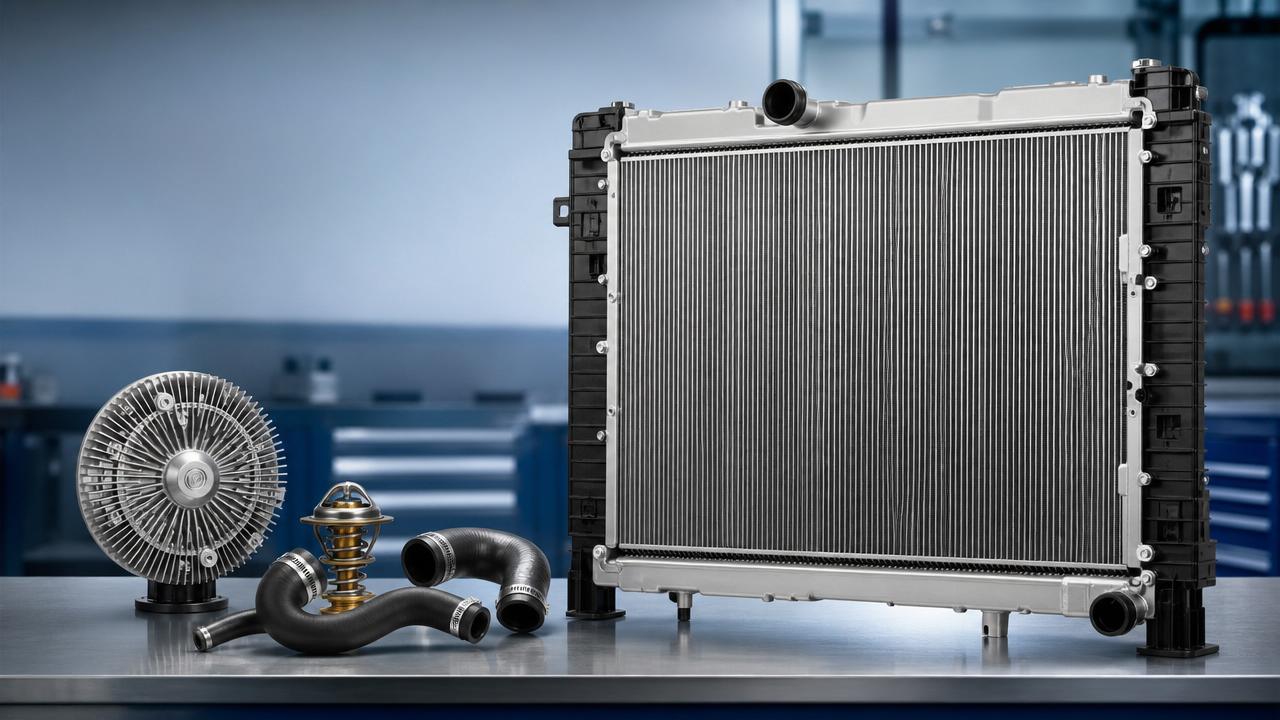
When a Vehicle radiator starts showing signs of trouble, replacement may seem like the fastest solution—but it is not always the most effective one. For aftermarket maintenance professionals, accurate diagnosis can reduce costs, prevent repeat failures, and improve system performance. Understanding whether the issue lies in the radiator itself, related components, or operating conditions is the key to making smarter repair decisions.
In heavy truck, commercial vehicle, and construction equipment service work, cooling failures rarely come from one isolated part. A leaking core, rising coolant temperature, pressure loss, or poor heat exchange can be linked to blocked fins, cap failure, fan clutch issues, water pump wear, hose collapse, thermostat malfunction, or contamination inside the cooling circuit.
For aftermarket maintenance teams, the real goal is not simply to change a Vehicle radiator. The goal is to restore stable thermal performance, avoid secondary engine risk, and control labor time within a practical service window of 2 to 6 hours, depending on vehicle platform, access space, and fault complexity.
This is especially important in fleet repair environments, where one incorrect replacement decision can trigger repeat downtime within 7 to 30 days. In the auto parts sector, professional component suppliers and service partners are increasingly expected to support diagnosis, fitment accuracy, and long-term cooling reliability rather than only parts delivery.
Liaocheng Xinde Auto Parts Co., Ltd., established in 2018 with a registered capital of 5 million RMB and a total investment of 50 million RMB, focuses on the research, production, and global sales of water tank radiators, intercoolers, construction machinery radiators, and related cooling components for heavy trucks and new energy radiator modules. For maintenance professionals, this kind of manufacturing background matters because product consistency, dimensional accuracy, and application matching directly affect field repair outcomes.
Why Vehicle radiator replacement can be the wrong first step
A Vehicle radiator is often blamed first because its symptoms are visible. Coolant stains, external fin damage, overheating alerts, and reduced cabin heating can all point toward the radiator. However, visible symptoms only describe the result. They do not always identify the root cause.
Common symptoms do not always mean radiator failure
A temperature spike of 8°C to 15°C above normal operating range may be caused by restricted airflow rather than internal core blockage. In work trucks operating in dusty routes, fin contamination can reduce effective cooling area within 3 to 6 months, especially when debris builds between the radiator, intercooler, and condenser stack.
Coolant loss of 200 to 500 ml per week may also be misread. The leak source can come from hose clamps, a cracked expansion tank, a weak pressure cap, or a water pump seal. Replacing the Vehicle radiator in that case only adds cost while the actual failure remains active.
Root causes often found during post-repair inspection
- Thermostat stuck partially closed, limiting flow at higher engine load
- Fan clutch slipping above mid-range RPM, reducing airflow under towing or climbing
- Coolant contamination causing scale build-up in multiple passages, not just the radiator
- Collapsed lower hose under suction at high speed
- Poor bleeding after previous repair, creating air pockets in the system
- Mixed coolant chemistry accelerating corrosion over 6 to 12 months
If any of these conditions remain uncorrected, a new Vehicle radiator may show the same complaints again. That is why experienced aftermarket technicians treat radiator replacement as one option within a cooling system diagnosis process, not as the automatic answer.
A structured diagnosis saves parts and labor
Before replacing the unit, it helps to inspect the system in 4 stages: visual check, pressure test, flow-related verification, and operating-condition review. This method can reduce unnecessary part changes and limit comeback repairs, which are among the most expensive hidden costs in service operations.
The table below shows how similar symptoms can lead to different repair decisions.
The key takeaway is simple: symptom-based replacement creates risk, while test-based repair improves reliability. In many commercial applications, one 20-minute inspection sequence can prevent a wrong component order and a second service visit.
How aftermarket maintenance professionals should diagnose cooling system faults
A reliable diagnosis process should be repeatable across fleets, workshops, and vehicle models. Whether servicing diesel trucks, machinery, or new energy thermal systems, the method should capture both component condition and operating context.
Step 1: Confirm the complaint and operating condition
Start by asking when the issue appears: at idle, at highway speed, under full load, during long climbs, or only in ambient temperatures above 30°C. A Vehicle radiator that performs well at moderate load but fails during peak demand may not be defective; the cooling package may simply be struggling with airflow or system balance.
Step 2: Inspect for external blockage and mechanical damage
Check fin condition, dirt packing, bent areas, oil contamination, and signs of impact. A fin section with 25% to 30% blockage can reduce local heat rejection significantly. Also inspect mounting points, because vibration-related stress can create recurring leaks at tanks or joints.
Step 3: Pressure-test the sealed circuit
A controlled pressure test remains one of the most effective methods in cooling service. Hold the system at the recommended pressure level for 10 to 15 minutes. If pressure drops, trace the leak path before authorizing replacement. Some leaks only appear when the system is hot, so a follow-up inspection after warm-up may be necessary.
Step 4: Evaluate coolant quality and circulation
Look for rust particles, oil traces, gel formation, or mineral scale. Coolant that has exceeded service life by 12 to 24 months often loses corrosion protection and can damage both the Vehicle radiator and the water pump. Poor coolant quality is a system issue, not just a parts issue.
Step 5: Compare inlet and outlet temperature behavior
Surface temperature checks across the core can reveal uneven flow. Large cold zones or inconsistent temperature spread can indicate restricted tubes. By contrast, a uniformly hot radiator with poor cooling effect often points to airflow limitations rather than internal blockage.
The checklist below can standardize decision-making in workshops handling multiple vehicle lines.
Using a checklist reduces technician-to-technician variation. It also makes procurement easier because the workshop can justify whether the repair needs a radiator, a cap, hoses, thermostat, fan-related parts, or a full cooling package service.
When replacement is necessary and how to choose the right Vehicle radiator
Not every radiator should be saved. Once the core is severely corroded, the tube network is internally restricted, the tank area is cracked, or repair history shows repeated leakage, replacement becomes the more efficient path. The key is choosing the right part based on fitment, thermal load, and durability expectations.
Replacement is usually justified in these cases
- Core leakage in multiple locations rather than one isolated repairable point
- Tube blockage affecting a large section of the heat exchange area
- Severe fin deterioration reducing structural stability
- Recurring failure after previous patch repair within 30 to 90 days
- Application demands where downtime cost exceeds repair cost
For aftermarket professionals, replacement quality depends on more than visual similarity. A Vehicle radiator must match mounting geometry, hose positions, core size, thermal capacity, and surrounding stack compatibility. Even a small mismatch can increase installation time, create hose stress, or lower cooling performance.
Selection criteria that matter in field service
Focus on 4 practical factors: application fit, dimensional accuracy, material consistency, and supplier support. In heavy truck service, a dimensional deviation of only a few millimeters at brackets or connections can complicate fitment. Reliable manufacturers reduce that risk by maintaining stable production control and application-specific development.
Example of application-based fitment
For MAN applications, workshops may require a unit such as RADIATOR FOR MAN XD145, supplied under OEM 81061016492 with size 590*610. In practical maintenance terms, clear model matching like this helps reduce ordering errors, improves installation efficiency, and supports better stock planning for fast-moving service parts.
When reviewing a replacement option, ask whether the supplier can clearly define model reference, application scope, and essential dimensions. This is often more important than choosing only by price, especially for vehicles with high daily utilization or regional logistics schedules.
Reducing repeat failure through system-level maintenance
A new Vehicle radiator will not deliver stable performance if the rest of the system remains compromised. Post-installation procedures are critical. In many workshops, repeat failures happen because flushing, bleeding, pressure confirmation, or fan system checks are skipped to save 20 to 40 minutes.
Post-installation practices that improve service life
- Flush contaminated coolant circuits before fitting the new unit.
- Inspect cap, hoses, clamps, thermostat, and pump at the same service event.
- Bleed trapped air according to vehicle procedure.
- Verify fan operation and airflow path under actual warm conditions.
- Recheck coolant level after the first heat cycle and again after 24 to 48 hours if possible.
This system-level approach is particularly relevant for fleets, mining support vehicles, and long-haul trucks where one cooling failure may disrupt route schedules, driver assignments, and cargo timing. The cost of one extra inspection step is usually far lower than the cost of roadside overheating or engine derating.
Supplier partnership also affects maintenance results
In the parts business, product quality and communication quality are closely linked. Liaocheng Xinde Auto Parts Co., Ltd. has built its development around radiator and intercooler manufacturing for heavy trucks, construction machinery, and new energy cooling modules. For aftermarket buyers, this specialization helps support more accurate sourcing discussions, especially when comparing application fit, replacement timing, and cooling system requirements.
The company’s rapid development since 2018 and recognition at provincial and municipal level reflect a clear focus on manufacturing discipline and market responsiveness. For maintenance professionals, these factors matter because a dependable supply partner can shorten ordering cycles, improve product traceability, and reduce uncertainty in cross-border or project-based procurement.
Common mistakes aftermarket teams should avoid
Many cooling system problems are made worse by rushed assumptions. Avoiding a few common errors can improve first-time fix rate and lower total repair cost over a 6 to 12 month operating period.
Mistake 1: Replacing the radiator without checking contamination source
If oil enters the coolant or rust is widespread, the Vehicle radiator is only one affected part. Without system cleaning, contamination can quickly reduce the performance of the replacement unit.
Mistake 2: Ignoring airflow stack condition
On many trucks and equipment platforms, the radiator sits behind or beside other heat exchangers. If the front layers are blocked, the radiator receives poor airflow no matter how new it is.
Mistake 3: Choosing by lowest price only
A lower purchase price may be erased by 1 extra hour of installation adjustment, a second coolant refill, or a return claim. In commercial service, total repair cost matters more than unit price alone.
Mistake 4: Skipping follow-up verification
A short road test and thermal check after repair can identify air pockets, unstable temperatures, or minor leaks before the vehicle returns to operation. That final step is often the difference between a successful repair and a comeback case.
For aftermarket maintenance professionals, the best fix is not always immediate replacement. The best fix is the repair decision that addresses the real fault, restores cooling efficiency, and prevents repeat downtime. A careful diagnosis of the Vehicle radiator, coolant circuit, airflow path, and related components leads to better service outcomes and more confident parts purchasing.
If you are evaluating replacement options for heavy truck or equipment cooling systems, or need fitment guidance for parts such as RADIATOR FOR MAN XD145, work with a manufacturer that understands both product engineering and aftermarket application needs. Contact us today to discuss product details, application matching, or a customized cooling solution for your maintenance program.