



How to compare condenser options without overpaying
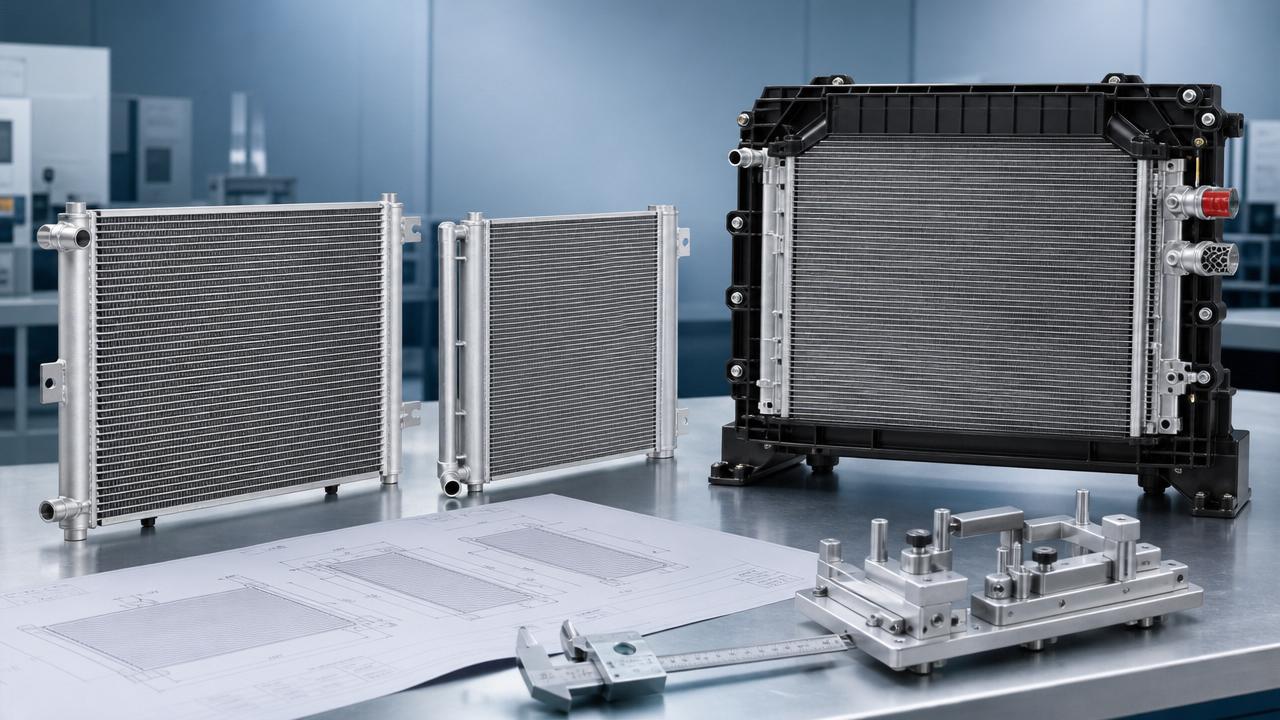
Why does comparing a Condenser properly matter?
Choosing the right Condenser should not mean paying premium prices for features you do not need.
A smart comparison starts with material quality, cooling performance, durability, compatibility, and supplier reliability.
When these points are reviewed carefully, buyers avoid hidden costs and gain better long-term value.
In auto parts and heavy-duty cooling systems, a Condenser is not just a catalog item.
Its design affects heat exchange efficiency, system stability, fuel economy, and maintenance frequency.
Price alone can be misleading, especially when lower quotes hide weaker brazing, thinner cores, or poor fitment.
A better method is to compare total ownership cost instead of the opening price.
What should you check first when comparing a Condenser?
Start with the basic construction details before reviewing branding or promotional claims.
The first checkpoint is material quality.
Aluminum grade, tube thickness, fin density, and corrosion protection all influence service life.
The second checkpoint is cooling performance under real operating loads.
A Condenser should perform consistently in hot weather, heavy traffic, and demanding road conditions.
The third checkpoint is compatibility.
Poorly matched inlet positions, mounting points, or dimensions create installation delays and return costs.
The fourth checkpoint is production consistency.
Samples may look good, yet mass supply can vary without strong process control.
- Core material and brazing quality
- Pressure resistance and leak prevention
- Exact dimensions and connection layout
- Surface treatment for corrosion protection
- Batch consistency and inspection records
How can you tell if a low-priced Condenser is actually expensive?
The cheapest Condenser can become the most expensive after installation.
This happens when low cost leads to leaks, reduced cooling, early corrosion, or repeated replacement.
Look beyond unit price and calculate related expenses.
Include shipping risk, installation time, return handling, downtime, and warranty response speed.
Also compare the expected operating life in the target environment.
Dusty routes, coastal regions, and high-vibration use will expose weak products quickly.
Another warning sign is incomplete technical data.
If a supplier cannot explain test methods, dimensions, or material standards, the quote may hide quality uncertainty.
A fair Condenser price should reflect reliable performance, not decorative claims.
Quick comparison table for avoiding overpayment
Which performance details make one Condenser better than another?
Not every Condenser with a similar appearance performs the same in service.
Heat transfer depends on fin design, airflow efficiency, internal flow path, and manufacturing precision.
A balanced design matters more than extreme specifications that add cost without practical benefit.
Check whether the Condenser is optimized for the actual vehicle or equipment platform.
In related cooling applications, intercoolers and radiators are often compared together during sourcing.
For example, INTERCOOLER FOR MAN XD163 uses MAN OEM 8161300216 and size 665*892*62.
That kind of precise reference helps verify fitment and prevents mismatch across heavy truck cooling modules.
Performance comparison should always match the working environment, not just the catalog image.
- Stable cooling at idle and under load
- Resistance to vibration and thermal cycling
- Clean welds and reliable sealing points
- Airflow-friendly fin structure
How do supplier capabilities affect Condenser value?
A good Condenser is supported by a capable supplier, not only by a competitive quotation.
Reliable supply reduces quality fluctuation, delivery problems, and after-sales disputes.
Review production capacity, engineering support, inspection process, and export experience.
Liaocheng Xinde Auto Parts Co., Ltd. was established in 2018 with registered capital of 5 million RMB.
Its total investment is 50 million RMB, focused on radiators, intercoolers, construction machinery radiators, and related modules.
The company serves global markets and develops cooling components for heavy trucks and new energy systems.
It has also received honors including High-tech Enterprise and Trustworthy Unit for Consumers.
These points matter because a dependable supplier can support technical clarification before and after purchase.
That support often saves more money than a small discount on the initial Condenser quote.
What common mistakes cause overpaying for a Condenser?
One mistake is paying extra for features that do not improve the target application.
Another is selecting solely by lowest price without checking durability or compatibility.
A third mistake is ignoring logistics and packaging standards.
Even a good Condenser loses value if shipping damage creates claims and replacement delays.
Some buyers also compare only one sample against production reality.
Batch inspection, traceability, and consistent materials deserve equal attention.
Finally, vague specifications create expensive misunderstandings.
Always confirm OEM references, size, port layout, and operating requirements before approval.
Mistake and solution checklist
What is the best way to make a final Condenser decision?
Use a simple scorecard and compare each Condenser across the same decision points.
Give weight to cooling performance, material quality, fitment accuracy, supplier reliability, and total cost.
This keeps emotional pricing pressure out of the process.
If two options look similar, choose the one with stronger documentation and more predictable support.
That usually delivers better value over time.
A well-selected Condenser should balance price, performance, and service stability.
The goal is not to buy the cheapest unit.
The goal is to avoid paying more later for preventable problems.
Review technical details, compare real operating value, and verify supplier credibility before placing the order.
That final step turns Condenser comparison into a practical cost-control advantage.