



Vehicle Radiator Trends Shown at 2026 Auto Cooling Expo
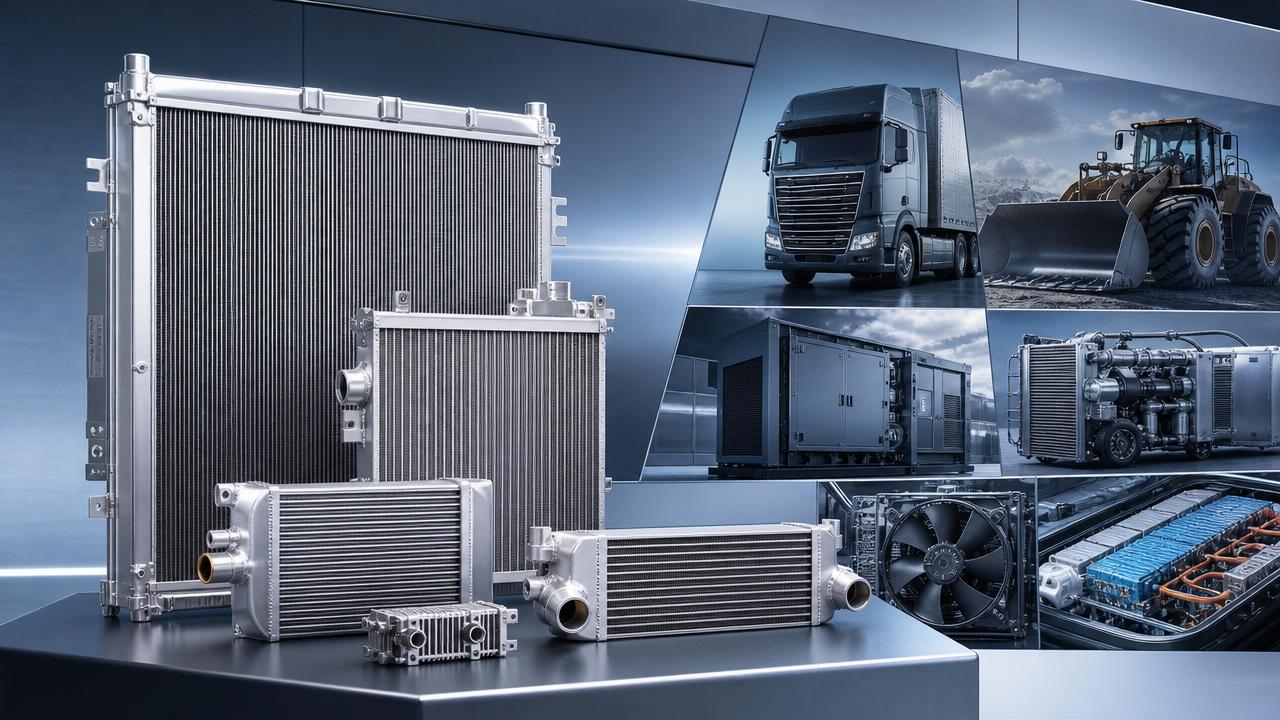
At the 2026 Auto Cooling Expo, vehicle radiator innovation is no longer a narrow engineering topic. It has become a business signal for OEMs, distributors, and industrial buyers assessing future competitiveness.
For decision-makers, the key takeaway is clear: the next phase of the vehicle radiator market will be shaped by thermal efficiency, durability, application flexibility, and supplier capability.
Companies that understand these trends early can reduce lifecycle cost, improve product reliability, and align sourcing decisions with the demands of heavy trucks, machinery, and new energy systems.
Why the 2026 Auto Cooling Expo Matters for Buyers and Industry Leaders
The 2026 Auto Cooling Expo highlighted more than product upgrades. It showed how cooling systems are becoming central to equipment uptime, emissions compliance, energy management, and aftermarket brand reputation.
In the past, many buyers treated the vehicle radiator as a standardized component. That assumption is becoming less practical as operating temperatures rise and application requirements become more specialized.
Exhibitors focused on solutions for heavy-duty transport, construction machinery, intercooling systems, and integrated modules for emerging energy platforms. This reflects a market moving toward performance-driven procurement rather than price-only selection.
For business leaders, that shift changes how supplier evaluation should be handled. The right radiator partner now affects warranty exposure, fleet efficiency, and the ability to serve export markets consistently.
What Decision-Makers Are Really Searching for Behind “Vehicle Radiator Trends”
When executives search for vehicle radiator trends, they are usually not looking for general technical definitions. They want to know where demand is heading and which product directions deserve investment.
They also want clarity on whether their current supply chain can support future requirements, especially in heavy truck applications, industrial equipment, and new energy thermal management systems.
Three questions dominate the buying perspective. First, which design trends will influence product reliability? Second, which suppliers can scale without quality instability? Third, what choices create long-term commercial advantage?
This is why trend analysis matters. It helps buyers avoid short-term sourcing decisions that appear economical but create service issues, replacement costs, and reputation risk later.
Trend One: Higher Thermal Efficiency Is Becoming a Baseline Requirement
One of the strongest signals from the expo was the market’s focus on improved heat exchange efficiency. Vehicles and equipment now operate under tighter thermal tolerances than many legacy designs were built for.
Heavy trucks face rising demands from longer working hours, varied climates, and increasingly complex engine systems. Industrial machinery often deals with dust, vibration, and high-load cycles that challenge cooling performance.
As a result, buyers are paying closer attention to core design, fin structure, airflow optimization, and material quality. A vehicle radiator that manages heat more effectively contributes directly to equipment stability and service life.
For procurement leaders, this trend means thermal performance data should be part of supplier discussions. It is no longer enough to compare dimensions and unit price without considering heat rejection capability under real conditions.
Trend Two: Durability Is Now a Strategic Purchasing Criterion
Durability received significant attention at the expo because end users increasingly expect longer component life in demanding commercial environments. Failure in cooling systems can quickly lead to broader equipment downtime.
That makes radiator durability a board-level concern for companies responsible for fleet productivity, machinery availability, and aftermarket service commitments. Strong performance under stress protects both revenue and customer trust.
Buyers are therefore evaluating brazing quality, weld consistency, corrosion resistance, pressure endurance, and structural resilience under vibration. These factors influence maintenance frequency and total cost of ownership far more than sticker price alone.
For global sellers and OEM partners, durable components also support market expansion. Products that perform well across regions help reduce claims, simplify inventory planning, and strengthen distributor confidence.
Trend Three: New Energy Applications Are Expanding the Role of the Vehicle Radiator
Another major theme was the extension of radiator expertise into new energy platforms. Thermal management is no longer limited to conventional engine cooling. It now supports batteries, power electronics, and integrated cooling modules.
This trend matters even for companies still focused on traditional commercial vehicles. Market demand is gradually expanding toward hybrid, electric, and specialized thermal systems that require broader engineering capability.
Suppliers that can bridge conventional and new energy cooling applications are likely to become more valuable partners. They offer greater flexibility as customers diversify product lines or respond to changing policy and export requirements.
For decision-makers, the practical question is not whether to abandon current business. It is whether current supplier relationships can support future transition without creating technical or operational gaps.
Trend Four: Platform Diversification Is Increasing Demand for Customized Solutions
The expo also confirmed that standardization has limits. Different heavy truck models, machinery platforms, and regional operating conditions often require tailored cooling configurations rather than universal designs.
This raises the importance of application-specific engineering. Buyers increasingly prefer manufacturers that can adapt radiator structures, dimensions, mounting points, and cooling characteristics to match real operating demands.
Customization does not simply improve fit. It reduces installation friction, protects system efficiency, and lowers the likelihood of field performance problems caused by compromise designs.
In practical sourcing terms, this means evaluating a supplier’s development responsiveness, technical communication, and production flexibility alongside manufacturing capacity.
How to Judge Whether a Supplier Can Support Long-Term Growth
Expo presentations often look impressive, but decision-makers need a framework for translating trends into supplier selection. The first area to assess is technical depth in product development and validation.
Can the manufacturer support multiple categories such as water tank radiators, intercoolers, construction machinery radiators, and new energy cooling modules? Capability breadth often signals stronger process maturity and engineering adaptability.
The second area is production stability. Rapid delivery means little if consistency is weak. Buyers should examine quality control systems, testing procedures, traceability, and the supplier’s ability to maintain standards while scaling output.
The third area is commercial reliability. A good partner communicates clearly, responds quickly, and understands international business requirements. This becomes especially important for companies serving multi-market customers.
Why Manufacturing Background Still Matters in a Fast-Changing Market
In a market shaped by innovation, manufacturing fundamentals remain essential. Buyers still need partners with proven discipline in research, production, and global sales execution.
Liaocheng Xinde Auto Parts Co., Ltd., established in 2018, reflects the type of company gaining attention in this environment. With registered capital of 5 million RMB and total investment of 50 million RMB, it has developed quickly.
The company specializes in water tank radiators, intercoolers, construction machinery radiators, and related components for heavy trucks and new energy radiator modules. That product scope aligns closely with the demand trends highlighted at the expo.
Its growth trajectory and recognition as a high-tech enterprise and trustworthy unit suggest a business model built around manufacturing advancement, credibility, and market responsiveness rather than low-cost positioning alone.
What These Trends Mean for Heavy Truck and Industrial Cooling Buyers
For heavy truck and industrial equipment buyers, the implications are direct. Cooling components now influence not only operating performance but also customer retention, warranty control, and aftermarket profitability.
If a vehicle radiator performs poorly, the issue rarely stays isolated. It can trigger overheating, unscheduled downtime, and service dissatisfaction that affect broader brand perception.
On the other hand, stronger cooling system design supports equipment resilience in high-load environments. This is especially relevant for fleets, construction machinery operators, and distributors managing service expectations in diverse climates.
Decision-makers should therefore view radiator procurement as a value decision. The goal is to balance initial cost with long-term operational stability, replacement demand, and business continuity.
How to Turn Trend Awareness Into Better Procurement Decisions
The first step is to revisit procurement criteria. If purchasing teams still rank suppliers mainly by price and basic fitment, they may miss the factors that determine long-term reliability.
Second, align technical and commercial evaluation. Engineering teams should define performance expectations, while management reviews lifecycle impact, market needs, and supplier continuity.
Third, ask suppliers for evidence, not promises. Testing standards, material specifications, quality documentation, and field application experience provide a stronger decision basis than generic product claims.
Fourth, consider whether the supplier can support portfolio expansion. A partner with experience across different cooling categories may be better equipped to support future business shifts.
Balancing Product Performance With Market Flexibility
One useful lesson from the 2026 Auto Cooling Expo is that product performance and market flexibility should not be treated as separate goals. The best suppliers increasingly deliver both.
For example, buyers serving European commercial vehicle applications may require platform familiarity and reliable replacement compatibility. In such cases, product alignment by vehicle brand category can improve sourcing efficiency.
That is where solutions such as MERCEDES-BENZ category offerings can fit naturally into a broader portfolio strategy for targeted heavy-duty and aftermarket needs.
Used correctly, this approach helps companies respond faster to demand changes while maintaining focus on application accuracy and quality consistency.
What Smart Buyers Should Watch Over the Next Two Years
Looking ahead, several developments deserve close attention. First, expect more demand for integrated cooling solutions rather than isolated parts, especially in advanced commercial and energy-related applications.
Second, supplier differentiation will increasingly depend on validation capability, response speed, and export readiness. Manufacturing scale alone will not guarantee preferred status with serious buyers.
Third, buyers should monitor how suppliers invest in new energy module development without neglecting conventional heavy truck and industrial demand. The strongest partners will manage both well.
Finally, product credibility in real operating environments will remain decisive. The market will reward suppliers whose vehicle radiator solutions perform consistently under pressure, not just in catalog descriptions.
Conclusion: The Real Business Meaning of Vehicle Radiator Trends
The 2026 Auto Cooling Expo made one point unmistakable: vehicle radiator technology is evolving in ways that directly affect sourcing strategy, product competitiveness, and operational risk.
For business decision-makers, the most important response is not to chase every trend. It is to identify which trends improve customer outcomes, reduce cost over time, and support future market adaptation.
That means prioritizing thermal efficiency, durability, application fit, and supplier capability in equal measure. Companies that do this well will be better positioned in heavy truck, industrial, and new energy cooling markets.
In short, the vehicle radiator is becoming a more strategic component. Buyers who recognize that shift early can make smarter partnerships, stronger product choices, and more resilient long-term business decisions.