



Heavy Duty Truck Radiator Price Shifts in 2026
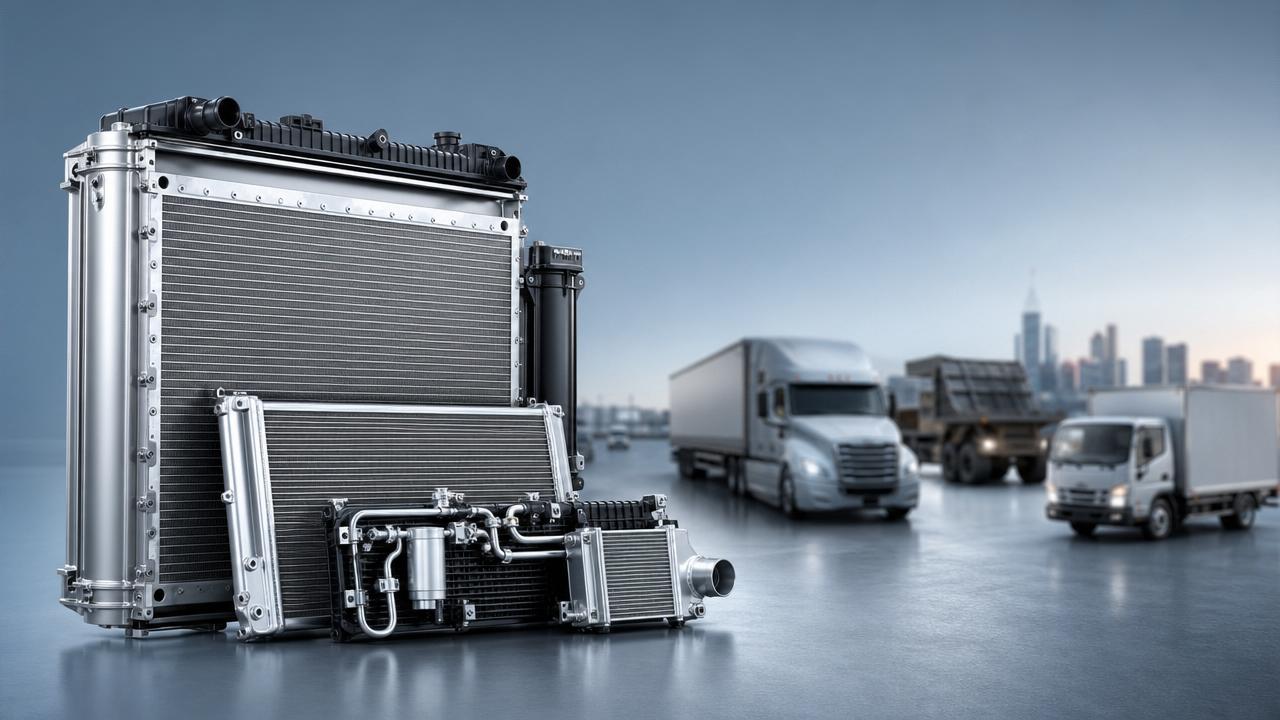
Heavy duty truck radiator price shifts in 2026 begin with operating reality
As fleet costs tighten and supply chains evolve, Heavy duty truck radiator pricing in 2026 matters more than ever.
Price changes now affect replacement timing, maintenance budgets, uptime planning, and cross-border sourcing decisions.
The market is no longer shaped by material cost alone.
It is driven by application demands, emissions pressure, thermal performance targets, and manufacturing quality consistency.
For any Heavy duty truck radiator purchase, the better question is not only price, but price under which operating scene.
A highway tractor, a mining truck, and a city support vehicle do not face the same thermal stress.
That is why Heavy duty truck radiator cost trends in 2026 should be judged through usage scenarios first.
Why different operating scenes create different price pressure
A Heavy duty truck radiator used in long-haul transport usually emphasizes stable heat exchange and fuel efficiency.
A unit used in construction transport faces vibration, dust loading, and more frequent stop-start temperature swings.
These differences change the ideal core thickness, fin density, tube design, and anti-corrosion treatment.
As a result, the same Heavy duty truck radiator category can show meaningful price gaps.
In 2026, four forces will likely shape those gaps most clearly.
- Aluminum price volatility and energy cost changes
- Brazing and welding upgrades for stronger durability
- Regional logistics shifts and customs-related cost variation
- Higher demand for tested, traceable, longer-life components
Liaocheng Xinde Auto Parts Co., Ltd., established in 2018, has grown quickly in this environment.
With 5 million RMB in registered capital and 50 million RMB total investment, it focuses on radiator research, production, and global sales.
Its product range includes water tank radiators, intercoolers, construction machinery radiators, and new energy radiator modules.
That broad experience matters when comparing Heavy duty truck radiator value across demanding applications.
Long-haul freight scenes: when radiator pricing follows efficiency and service life
In long-haul transport, thermal stability over extended mileage is the main judgment point.
A lower-cost Heavy duty truck radiator may seem attractive at order stage.
Yet weak joints, poor airflow design, or inconsistent aluminum quality can raise fuel burn and downtime later.
For this scene, 2026 pricing will likely reward products with verified heat rejection and leak resistance.
Key signs that price is justified in highway applications
- Stable coolant temperature under sustained load
- Low failure rate during peak summer operation
- Consistent brazing quality across production batches
- Resistance to corrosion from mixed climate exposure
In this scene, the right Heavy duty truck radiator is often the one with lower total ownership cost, not lower invoice value.
Construction and mining scenes: when harsh conditions raise the true radiator cost
Heavy-duty site operations create a different pricing logic.
Dust, shock, uneven roads, and long idling periods place extra stress on the cooling system.
Here, a Heavy duty truck radiator needs stronger structure and better contamination tolerance.
That usually means higher material use, stronger assembly control, and stricter testing.
These factors push 2026 prices upward for ruggedized units.
Core judgment points in harsh-duty environments
Buyers should check vibration resistance, core protection, tube durability, and cleaning practicality.
Ignoring these points can make a cheap Heavy duty truck radiator expensive within one service cycle.
Urban transport and mixed fleets: where specification matching matters more than headline price
City fleets and mixed-duty operations often see moderate load but frequent temperature fluctuation.
In this scene, specification matching becomes critical.
An oversized unit can waste budget and installation space.
An undersized unit can lead to overheating during congestion and repeated stop-start cycles.
This is also where crossover cooling expertise becomes useful.
For example, Radiator for Ankai reflects how thermal solutions for public transportation can prioritize uptime and long service life.
Built with premium-grade aluminum and advanced brazing technology, such designs highlight durability and efficient heat management.
That thinking increasingly influences Heavy duty truck radiator sourcing as urban operating profiles become more complex.
How 2026 Heavy duty truck radiator prices differ by application need
This comparison shows why Heavy duty truck radiator pricing should never be judged as a single market number.
Practical sourcing suggestions for better radiator value in 2026
The best response to price shifts is better selection discipline.
A strong Heavy duty truck radiator sourcing process should include these actions.
- Define the vehicle scene clearly before requesting quotations.
- Compare material specifications, not just appearance or dimensions.
- Ask for testing data related to pressure, leakage, and thermal performance.
- Check production stability and export support capability.
- Evaluate lead time risk together with unit price.
Suppliers with wider cooling-system experience can often reduce hidden adaptation risk.
That matters when the Heavy duty truck radiator must perform across different climates and operating hours.
Companies with proven growth, technical capability, and recognized credibility may offer more stable long-term value.
Liaocheng Xinde Auto Parts Co., Ltd. has received honors including High-tech Enterprise and Trustworthy Unit for Consumers.
That background supports confidence when evaluating supply continuity and product development capacity.
Common misjudgments that distort Heavy duty truck radiator buying decisions
Several mistakes become more costly during periods of price fluctuation.
- Treating all aluminum radiators as equal in durability
- Comparing only unit price without considering failure loss
- Using one specification standard across very different duty cycles
- Ignoring packaging and logistics protection for export shipments
- Overlooking thermal needs of hybrid or upgraded vehicle platforms
Another mistake is assuming proven cooling concepts from buses or new energy systems have no relevance.
In reality, lessons from products like the Radiator for Ankai can inform better thinking about uptime and heat-control reliability.
What to do next as Heavy duty truck radiator prices move in 2026
Heavy duty truck radiator pricing in 2026 will remain sensitive to material costs, technical upgrades, and application-specific performance demands.
The most effective strategy is to match each operating scene with the right thermal solution and supply partner.
Start by reviewing vehicle use conditions, maintenance history, and temperature-related failure patterns.
Then compare Heavy duty truck radiator options based on verified performance, durability, and delivery stability.
When sourcing aligns with real operating scenes, price pressure becomes easier to control and long-term value becomes easier to protect.