



Vehicle Radiator Supply Risks to Watch This Season
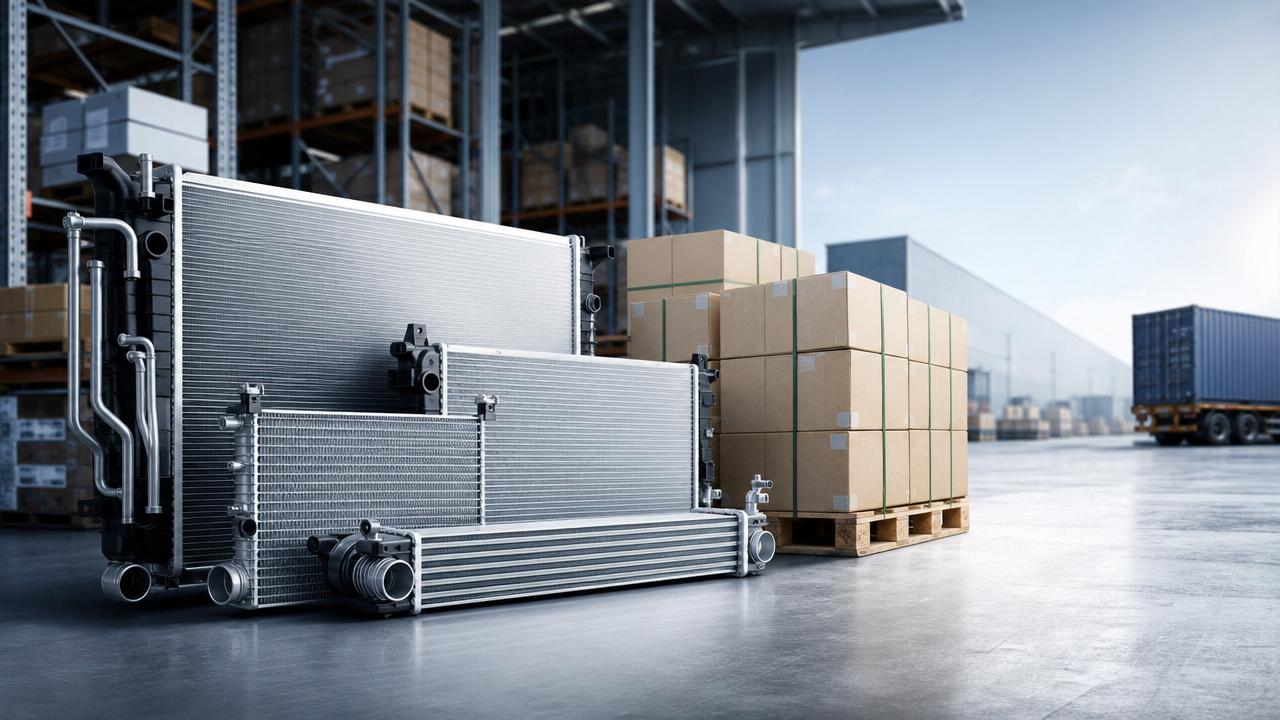
Seasonal disruptions can quickly turn a stable sourcing plan into a costly challenge, especially in the Vehicle radiator market. For procurement teams, understanding supply risks early is essential to maintaining delivery schedules, controlling costs, and protecting equipment performance. This article highlights the key warning signs to watch this season and offers practical insights for making smarter purchasing decisions in a fast-changing parts environment.
Why does Vehicle radiator supply become more fragile in certain seasons?
For buyers in the auto parts sector, seasonal risk is rarely caused by one factor alone. It usually comes from a chain reaction involving raw materials, production scheduling, freight availability, aftermarket demand, and model-specific replacement cycles.
A Vehicle radiator is not a simple commodity when used in heavy trucks, passenger vehicles, construction machinery, or new energy cooling systems. Small differences in core thickness, tank material, fin density, welding consistency, and fitment accuracy can affect both sourcing flexibility and field performance.
Procurement teams often feel pressure from two directions at once: upstream suppliers ask for longer lead times, while downstream customers demand faster replenishment and tighter pricing. That gap becomes wider during peak maintenance periods, weather shifts, and production transitions.
- Demand spikes in replacement markets often appear faster than factory planning cycles can absorb.
- Material cost volatility can affect aluminum, plastic tanks, packaging, and transport expenses at the same time.
- Fitment errors become more expensive during urgent seasonal orders because return handling and re-shipment consume time and cash.
- Export-oriented buyers also face customs timing, route congestion, and documentation delays.
What makes the risk higher for procurement teams?
Unlike end users, buyers must protect continuity across SKUs, suppliers, budgets, and delivery promises. A delayed Vehicle radiator shipment may stop not only one order, but also a wider service program or distributor inventory plan.
That is why supplier capability matters. Liaocheng Xinde Auto Parts Co., Ltd., established in 2018 with registered capital of 5 million RMB and total investment of 50 million RMB, focuses on research, production, and global sales of water tank radiators, intercoolers, construction machinery radiators, heavy truck components, and new energy radiator modules. This industrial focus gives buyers a more practical basis for evaluating supply resilience rather than price alone.
Early warning signs buyers should watch in the Vehicle radiator market
Many supply problems can be detected before they become critical. The key is to monitor operational signals, not just quoted lead time. The table below helps procurement teams identify common warning signs and likely business impact.
These signals should not be treated as isolated issues. In Vehicle radiator procurement, unstable quotations, changing delivery promises, and poor technical communication often appear together. Buyers who act on the first sign usually protect margin better than those who wait for a confirmed shortage.
How to verify whether a supply risk is temporary or structural
Ask for evidence, not reassurance. A capable manufacturer should be able to discuss production rhythm, material planning, inspection points, and export coordination in a concrete way. The goal is not to demand perfection, but to confirm whether the supplier can manage disruptions with discipline.
- Request current lead time by model, not a general statement covering all radiator types.
- Confirm whether tooling, cores, tanks, and packaging are prepared in-house or sourced externally.
- Check if fitment drawings and application references can be shared before mass order release.
- Ask how quality deviations are handled when peak season compresses inspection time.
Which procurement criteria matter most when selecting a Vehicle radiator supplier?
Buyers often compare suppliers on unit price first, yet seasonal supply risk usually comes from deeper capability gaps. A lower quote may hide weak batch consistency, limited engineering support, or poor delivery planning. The following comparison table is more useful for real purchasing decisions.
In practice, the best Vehicle radiator supplier for a procurement team is often the one that reduces total sourcing risk, not simply the one with the lowest ex-works figure. Better forecasting support, clearer communication, and stronger product specialization can reduce hidden costs across the order cycle.
Key specification checks before purchase approval
Before releasing a seasonal order, confirm application, dimensions, core structure, inlet and outlet layout, mounting points, and packaging. If the order includes aftermarket replacement parts, verify that fitment references match the destination market's vehicle configuration.
- Check whether the radiator is intended for repair replacement or performance upgrading.
- Review material suitability for local climate, load conditions, and cooling system demands.
- Confirm whether packing is export-safe for long transit and multiple handling points.
How seasonal demand changes affect cost, availability, and quality
A seasonal rise in Vehicle radiator demand does not only increase price. It can also shift the product mix that factories prioritize. High-volume standard models may move faster, while low-volume or technically specific parts face longer waits, especially when engineering confirmation is needed.
Buyers should also be aware of hidden quality risks during busy periods. When factories accelerate output, weaker suppliers may change sub-components, shorten inspection time, or use packaging that is cheaper but less protective. These actions may not be obvious on the quotation sheet, but they create real downstream cost.
A practical example of product-fit sourcing
For buyers handling model-specific cooling parts, detailed fitment is critical. A product such as Radiator for AION illustrates how procurement decisions increasingly depend on exact application matching, cooling efficiency, and stable operation under demanding workloads rather than broad category assumptions alone.
Where a sourcing project involves replacement or repair demand, model AIONV-1301010-0030 and car fitment use cases show why advanced fluid dynamics, premium thermal materials, and stability under load are procurement concerns, not just engineering details. They influence warranty exposure, user satisfaction, and reorder confidence.
What should buyers ask about technical performance and compliance?
A Vehicle radiator purchase should always include technical review. Even when the buyer is focused on price and lead time, thermal performance and structural consistency directly affect returns, installation problems, and long-term account value.
The table below outlines common checkpoints that help procurement teams align technical review with commercial decisions.
Compliance requirements vary by market, but buyers should at least align on documentation, product identification, packaging marks, and any customer-specific technical standards before shipment. Early alignment lowers the risk of expensive corrective actions later.
How can procurement teams reduce Vehicle radiator sourcing risk this season?
A risk-reduction strategy should combine supplier selection, inventory planning, and technical validation. It should also reflect the reality that not all SKUs deserve the same sourcing method. Fast-moving items need replenishment speed, while sensitive applications need stronger verification.
Recommended action plan
- Segment your Vehicle radiator portfolio into high-volume standard items, urgent replacement items, and model-specific technical items.
- Lock in rolling forecasts with suppliers before the demand peak rather than buying only on spot urgency.
- Use samples or pilot batches for complex fitment parts before full seasonal commitment.
- Build a communication schedule covering quotation validity, production milestones, inspection status, and shipment booking.
- Track claim data by part number so future purchasing decisions are based on evidence rather than memory.
When this approach is combined with a focused manufacturer, the buyer gains more than supply. They gain better predictability. That matters in the parts business, where one delayed replacement order can damage a customer relationship built over years.
FAQ: common purchasing questions about Vehicle radiator supply
How do I know if a Vehicle radiator quote is unrealistically low?
Compare more than price. Check whether the quote clearly states application, material assumptions, packing method, lead time, and inspection scope. If these details are vague, the low price may be offset later by mismatch claims, freight loss, or delayed shipment.
What matters more in seasonal purchasing: stock or technical accuracy?
Both matter, but not equally for every SKU. Fast-moving standard radiator items may justify stock planning, while fitment-sensitive parts require stronger technical accuracy first. The right balance depends on order urgency, claim cost, and model complexity.
How early should buyers place orders before a demand spike?
There is no universal lead time, but buyers should start supplier confirmation well before peak maintenance or weather-driven demand. Early action creates room for drawing review, sample validation, production scheduling, and freight booking instead of relying on emergency decisions.
Can one supplier cover heavy trucks, machinery, and new energy cooling parts?
It depends on specialization. A supplier with focused experience in water tank radiators, intercoolers, construction machinery radiators, heavy truck parts, and new energy radiator modules is generally better positioned to support cross-segment purchasing than a generic trader with limited technical depth.
Why choose us for seasonal Vehicle radiator sourcing?
For procurement teams, the value of a supplier is measured by how well they support continuity, accuracy, and response speed when the market becomes uncertain. Liaocheng Xinde Auto Parts Co., Ltd. combines dedicated radiator-sector focus with rapid development in China since 2018, serving global needs across water tank radiators, intercoolers, construction machinery radiators, heavy truck applications, and new energy radiator modules.
The company’s industry-focused expansion and recognition as a High-tech Enterprise, Civilized and Honest Enterprise, and Trustworthy Unit for Consumers reflect a business foundation that buyers can evaluate in practical sourcing terms: product specialization, manufacturing commitment, and stronger responsiveness to changing market demand.
- Need parameter confirmation for a Vehicle radiator project? Share drawings, OE references, or application details for fitment review.
- Need help with product selection? Discuss your target market, usage conditions, and priority between stock availability and technical matching.
- Need delivery planning? Ask about lead time by model, batch arrangement, and shipment coordination before peak season.
- Need a custom solution? You can communicate on replacement needs, cooling performance priorities, packaging requirements, and sample support.
- Need quotation clarity? Confirm commercial terms together with technical scope, inspection expectations, and documentation requirements.
If this season’s sourcing plan involves tighter delivery windows, model-specific demand, or higher performance expectations, now is the right time to start a focused discussion. Clear technical communication and earlier procurement decisions usually create the best protection against supply disruption.