



Condenser Designs Unveiled at 2026 Thermal Systems Exhibition
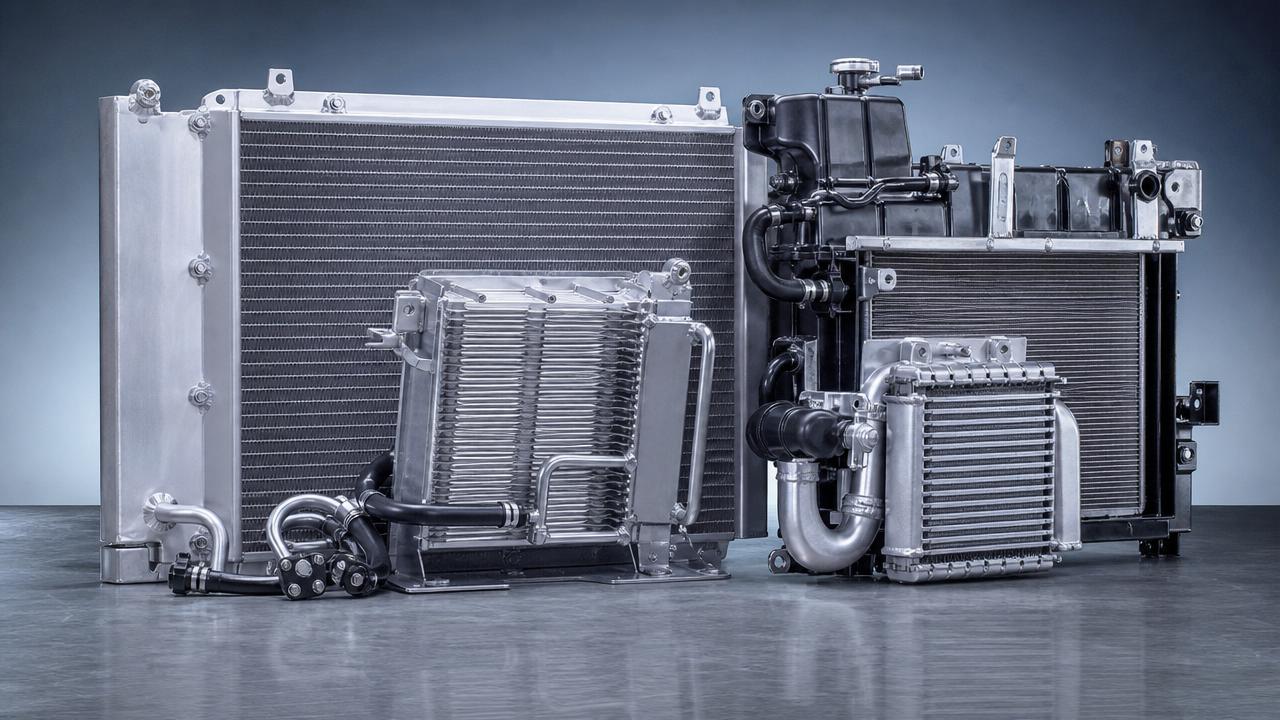
At the 2026 Thermal Systems Exhibition, the latest Condenser designs are attracting attention for a practical reason: technical evaluators need clearer evidence of efficiency gains, durability margins, and integration readiness before approving new thermal architectures.
For this audience, the key question is not whether a Condenser looks innovative, but whether it delivers measurable heat rejection, stable pressure performance, corrosion resistance, and manufacturable packaging in demanding vehicle or equipment environments.
Backed by Liaocheng Xinde Auto Parts Co., Ltd.’s experience in radiators, intercoolers, heavy-duty cooling systems, and new energy thermal modules, this article examines what the newest Condenser developments actually mean in engineering terms.
It also focuses on how technical assessment teams can judge design value, compare solutions more effectively, and identify where exhibition claims translate into dependable field performance rather than short-lived laboratory advantages.
What Technical Evaluators Are Really Looking for in a New Condenser
When evaluators search for information on a new Condenser, their core intent is usually comparative and decision-oriented. They want to know which design changes improve thermal efficiency without introducing unacceptable cost, risk, or integration complexity.
That means exhibition coverage must go beyond product announcements. Technical readers need insight into fin geometry, tube structure, refrigerant flow paths, joining quality, coating protection, vibration resistance, and compatibility with real operating cycles.
They are also asking whether the design supports stricter efficiency targets in heavy-duty, commercial, construction, or electrified systems where thermal loads are rising while installation space is becoming more constrained.
In short, the most useful analysis helps readers answer three questions quickly: what changed, why it matters, and under what conditions those changes create a meaningful engineering advantage.
Why 2026 Condenser Designs Are Getting More Attention
The 2026 exhibition cycle reflects a broader shift in thermal system engineering. New vehicle platforms and industrial equipment increasingly require compact heat exchangers that maintain performance under higher ambient temperatures and more demanding duty profiles.
As a result, Condenser development is no longer limited to incremental dimensional adjustments. Manufacturers are refining internal flow distribution, optimizing louvered fin behavior, and reducing pressure penalties that can erode total system efficiency.
Another reason for rising attention is the need for better lifecycle reliability. Technical evaluators are no longer satisfied with nominal thermal performance if contamination sensitivity, fatigue resistance, or galvanic corrosion risk remain unresolved.
This is especially true in heavy trucks, construction machinery, and high-utilization fleets, where thermal component failure affects uptime, maintenance planning, and total cost of ownership far more than headline performance alone suggests.
Which Design Changes Matter Most in a Modern Condenser
The most relevant improvements generally fall into four areas: heat transfer enhancement, refrigerant-side flow balance, structural durability, and system packaging. Not every innovation delivers equal value, so evaluators should rank these factors by application context.
Heat transfer enhancement often comes from revised fin density, improved louver geometry, or more efficient tube surface interaction. However, gains must be assessed against air-side pressure drop, fouling behavior, and manufacturability at production scale.
Flow balance is equally important because poor refrigerant distribution can leave part of the Condenser underutilized. Advanced header and channel design can improve effective surface usage and stabilize performance under varying load conditions.
Structural durability depends on braze quality, tube-wall consistency, vibration tolerance, and resistance to thermal cycling. A design that tests well in steady conditions may still underperform if fatigue concentrations are not addressed early.
Packaging matters because modern systems often demand tighter front-end module integration. Evaluators should review not only external dimensions, but also mounting logic, service access, stack compatibility, and interactions with adjacent thermal components.
How to Judge Heat Exchange Efficiency Beyond Marketing Claims
Efficiency claims at exhibitions can be impressive, but technical teams need to ask how those numbers were generated. Test conditions, airflow assumptions, refrigerant type, inlet temperatures, and contamination state all influence reported Condenser performance.
A credible evaluation should compare heat rejection per unit frontal area, pressure drop across realistic operating ranges, and performance stability at different face velocities. Single-point results rarely reflect actual system behavior in varied climates.
It is also useful to examine transient response rather than only steady-state benchmarks. In many real applications, thermal systems repeatedly face load spikes, idle periods, and partial blockage conditions that affect overall cooling consistency.
For technical evaluators, the best Condenser is not necessarily the one with the highest peak value. It is the one that maintains reliable, repeatable thermal performance with acceptable pressure characteristics across the widest realistic envelope.
Durability and Reliability: The Criteria That Often Decide Approval
In practical sourcing and platform validation, durability often outweighs small efficiency gains. A modestly better thermal result has limited value if the Condenser is more vulnerable to vibration cracking, salt exposure, or brazed-joint weakness.
That is why evaluators should look for evidence from thermal cycling, burst pressure testing, pulsation testing, corrosion exposure, and mechanical vibration validation. These results provide a better picture of field readiness than appearance or structure alone.
Material selection also deserves close attention. Alloy composition, wall thickness strategy, coating treatment, and joining process control all influence long-term reliability, especially in mixed operating environments with moisture, debris, and road chemicals.
For heavy-duty applications, durability assessment should include serviceability considerations. A Condenser that performs well but is difficult to clean, inspect, or replace may create operational penalties that overshadow initial technical advantages.
System Integration Is Now as Important as Standalone Performance
One of the clearest industry trends is that Condenser design must support broader thermal module integration. Front-end space is limited, and interactions among the radiator, charge air cooler, fan system, and refrigerant loop are increasingly interdependent.
Technical evaluators should therefore examine how a new Condenser behaves within the full assembly rather than as an isolated component. Airflow sharing, thermal stacking, mounting stiffness, and maintenance path all affect final system outcomes.
This integration mindset is familiar to manufacturers with broader thermal system experience. Liaocheng Xinde Auto Parts Co., Ltd. has built its development base around radiators, intercoolers, heavy-truck cooling assemblies, and related modules for demanding applications.
That background matters because thermal components rarely succeed in isolation. The strongest engineering programs understand how one exchanger’s geometry, resistance, and durability profile influence the entire cooling package under real installation constraints.
What Heavy-Duty and Construction Equipment Evaluators Should Prioritize
For heavy-duty trucks and construction machinery, the evaluation logic is different from that of light passenger systems. Operating cycles are harsher, contamination exposure is higher, and tolerance for unplanned downtime is significantly lower.
In these applications, the Condenser should be judged by resistance to vibration, debris loading, thermal shock, and uneven airflow conditions. A design that works well in controlled environments may degrade much faster in actual field service.
Technical teams should also consider how the Condenser interacts with engine cooling and charge air cooling demands. In compact front-end packages, one component’s pressure drop or thermal blockage can reduce total system effectiveness.
This is where broader product benchmarking becomes useful. For example, heavy-duty thermal packaging decisions are often made alongside radiator assessments such as RADIATOR FOR SCANIA , model 1776026, sized 860*928*40.
That kind of reference helps evaluators compare dimensional logic, cooling stack arrangement, and service considerations across adjacent components rather than reviewing the Condenser as a standalone part with no packaging context.
How Manufacturing Quality Influences Real Performance
Even a well-designed Condenser can disappoint if production quality is inconsistent. Technical evaluators should ask about process capability, leak testing standards, braze furnace control, fixture precision, and inspection traceability.
Small manufacturing deviations can affect refrigerant distribution, local stress concentration, and long-term sealing integrity. These issues may not appear during short exhibition demonstrations, but they often surface during fleet use or environmental exposure.
Consistency is especially important when scaling from prototype to volume production. Some designs perform well in sample form but become harder to control when throughput increases and tolerance variation enters the process.
Suppliers with established thermal manufacturing experience are often better positioned to manage this transition. Their knowledge of exchanger geometry, material behavior, and validation feedback loops tends to reduce launch risk for new programs.
Questions Technical Evaluators Should Ask at the Exhibition
To separate meaningful innovation from polished presentation, evaluators should ask focused questions. What exact operating envelope was used in testing? What pressure drop trade-off accompanies the claimed efficiency gain? How was durability verified?
They should also ask whether the Condenser was designed for a specific refrigerant strategy, ambient range, or duty profile. A solution optimized for one platform may not transfer well to another with different airflow and contamination conditions.
Another useful question concerns failure modes. Which part of the design was most improved compared with the previous generation, and what weakness was it intended to solve? This reveals whether the innovation addresses a real engineering constraint.
Finally, ask how the supplier supports integration reviews. Teams evaluating multiple heat exchangers may benefit from comparing associated products, including solutions such as RADIATOR FOR SCANIA , when assessing complete module compatibility.
A Practical Evaluation Framework for Selecting the Right Condenser
A strong selection framework starts with application definition. Before comparing designs, evaluators should establish thermal load, space envelope, airflow condition, contamination risk, vibration profile, refrigerant requirements, and service expectations.
Next comes performance screening. Compare heat rejection, pressure drop, flow distribution behavior, and performance consistency across multiple points rather than relying on a best-case figure supplied for promotional purposes.
Then evaluate durability evidence with equal seriousness. Review corrosion, thermal cycle, pulsation, and vibration results, and determine whether the test conditions align with actual operating severity rather than minimum qualification thresholds.
After that, examine manufacturing readiness and integration support. The right Condenser should not only meet technical targets, but also fit assembly logic, sourcing plans, quality control expectations, and lifecycle maintenance requirements.
This approach helps technical evaluators move from exhibition interest to evidence-based judgment. It also reduces the risk of approving a component that performs well on paper but creates hidden problems during validation or field deployment.
Conclusion: What the 2026 Exhibition Reveals About Condenser Direction
The newest Condenser designs on display in 2026 show that the market is moving toward higher efficiency, tighter integration, and stronger durability under increasingly demanding operating conditions. That direction is real, but not every claimed advance is equally valuable.
For technical evaluators, the most important task is disciplined comparison. Focus on heat transfer efficiency under realistic conditions, pressure behavior, structural reliability, manufacturing consistency, and compatibility with the full thermal system.
When viewed through that lens, a promising Condenser is one that balances measurable performance with dependable service life and practical integration. That is the standard that should guide selection in heavy-duty, construction, and advanced thermal applications.
With its background in radiators, intercoolers, and robust cooling modules, Liaocheng Xinde Auto Parts Co., Ltd. reflects the kind of system-oriented expertise that increasingly matters as thermal components become more interconnected and performance-critical.