



Excavator Radiator Temperature Control in Continuous Operation
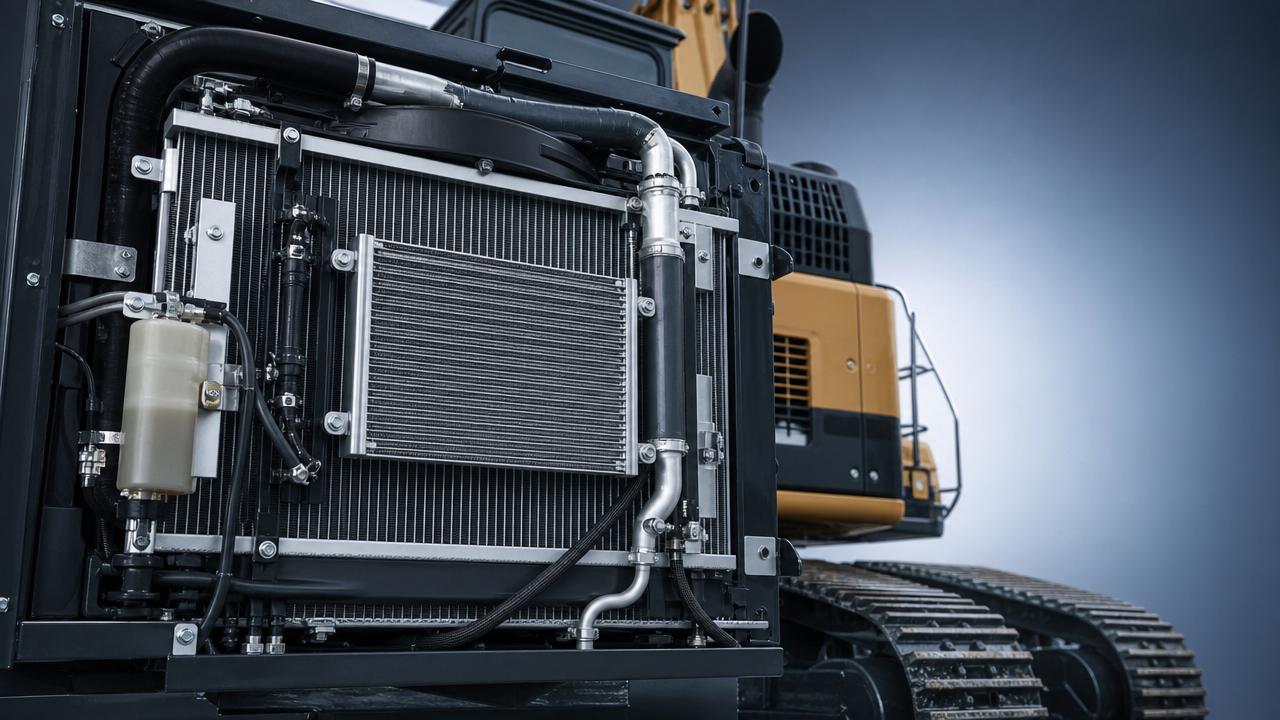
In continuous-duty applications, Excavator radiator performance is critical to maintaining stable engine temperatures, preventing downtime, and protecting core hydraulic and powertrain systems.
For technical evaluation, temperature control depends on radiator design, airflow efficiency, coolant circulation, fin durability, and material consistency under dust, vibration, and long operating cycles.
In heavy-duty parts selection, a reliable Excavator radiator is not only a cooling component.
It is a system-level safeguard for engine life, hydraulic stability, fuel efficiency, and predictable construction performance.
Temperature Control Basics in Excavator Radiator Systems
An Excavator radiator removes heat from circulating coolant and releases it through tubes and fins into ambient air.
This process keeps engine operating temperature within a narrow and efficient range during digging, lifting, breaking, and travel cycles.
Under continuous operation, heat generation stays high for extended periods.
That makes radiator efficiency more important than in equipment with intermittent duty.
Core factors affecting cooling stability
- Core surface area and fin density
- Coolant flow rate and passage design
- Airflow volume through the cooling pack
- Resistance to clogging from mud and dust
- Material quality under vibration and pressure cycling
If one factor declines, the Excavator radiator may still function, but heat rejection margin becomes smaller.
That reduced margin often leads to unstable temperatures in summer, at altitude, or during high-load attachment use.
Industry Conditions Driving Higher Cooling Demands
Construction environments are becoming more demanding for every Excavator radiator installed in modern fleets and specialized machines.
Machines now work longer shifts, face hotter climates, and carry hydraulic loads that produce sustained thermal stress.
These conditions explain why radiator selection now requires more than matching external size or tank layout.
Thermal reserve, contamination tolerance, and structural integrity matter just as much as nominal fitment.
How Excavator Radiator Design Influences Real-World Performance
A well-designed Excavator radiator maintains stable temperatures because its internal and external structures work together under load.
Tube geometry controls coolant distribution, while fin design controls heat release to passing air.
Airflow efficiency
Airflow is often the limiting factor in continuous operation.
Even a large core cannot perform well if fan pull is weak or the core face clogs quickly.
Balanced fin spacing helps protect the Excavator radiator from excessive blockage without sacrificing thermal transfer.
Coolant circulation
Uniform coolant flow prevents hot spots and improves heat extraction from the engine block and cylinder head.
Poor flow distribution leaves sections of the core underused, reducing effective cooling capacity.
Material and joining quality
Continuous vibration challenges soldered, brazed, and mechanically stressed joints.
Stable metallurgy and clean manufacturing reduce leakage risk, pressure loss, and early fatigue failure.
Related heavy-duty cooling experience can be seen in products such as RADIATOR FOR SCANIA .
Its model 1776026 and 860*928*40 size reflect how dimensional precision supports thermal packaging in demanding equipment platforms.
Business Value of Stable Cooling in Heavy-Duty Parts Systems
A dependable Excavator radiator protects more than the engine.
It supports uptime, maintenance predictability, and overall machine economics in field conditions where interruption is costly.
- Lower overheating incidents and emergency stoppages
- Improved seal, hose, and coolant life
- More consistent hydraulic response during long shifts
- Reduced thermal stress on nearby components
- Better confidence in equipment deployment planning
For replacement parts, cooling reliability also influences warranty exposure and service interval consistency.
That is especially relevant where machines operate remotely and support access is limited.
Liaocheng Xinde Auto Parts Co., Ltd. has focused on this parts field since 2018.
The company specializes in water tank radiators, intercoolers, construction machinery radiators, heavy truck cooling parts, and new energy radiator modules.
With rapid development, strong investment, and recognized enterprise honors, it reflects the industry's push toward higher-quality thermal components.
Typical Continuous-Operation Scenarios and Cooling Priorities
Not every Excavator radiator faces the same thermal challenge.
Application context should guide design evaluation and replacement decisions.
This scenario-based review helps determine whether an Excavator radiator should prioritize contamination tolerance, core depth, or stronger structural reinforcement.
Practical Selection and Maintenance Recommendations
Effective temperature control starts with correct specification and continues with disciplined maintenance.
Both are necessary for any Excavator radiator expected to survive long-duty schedules.
Selection checkpoints
- Confirm thermal capacity for actual duty cycle, not only machine model.
- Check core dimensions, mounting points, and hose routing accuracy.
- Review fin design for the site’s dust and cleaning conditions.
- Evaluate pressure resistance and brazing consistency.
- Match coolant compatibility and corrosion protection requirements.
Maintenance priorities
- Clean external fins with methods that avoid deformation.
- Monitor coolant quality, pH balance, and contamination.
- Inspect cap pressure, hose condition, and clamp tightness.
- Check fan, shroud, and belt condition regularly.
- Investigate rising operating temperatures before failure occurs.
When these steps are ignored, even a high-quality Excavator radiator can lose efficiency far earlier than expected.
When they are applied consistently, thermal performance remains more stable across seasons and site conditions.
Next-Step Evaluation for Reliable Continuous Cooling
Selecting an Excavator radiator for continuous operation should center on heat rejection stability, airflow resilience, coolant distribution, and structural durability.
The best results come from comparing real operating demands with verified core design, material quality, and maintenance practicality.
A structured review of working temperature trends, contamination exposure, and load patterns will identify whether the current cooling package has enough reserve.
For heavy-duty parts decisions, that approach reduces risk and supports longer service life with fewer unplanned shutdowns.
If a cooling upgrade or replacement is under consideration, compare application data, radiator construction details, and long-cycle reliability before finalizing the component choice.