



Vehicle Radiator Quality Checks That Help Prevent Overheating Complaints
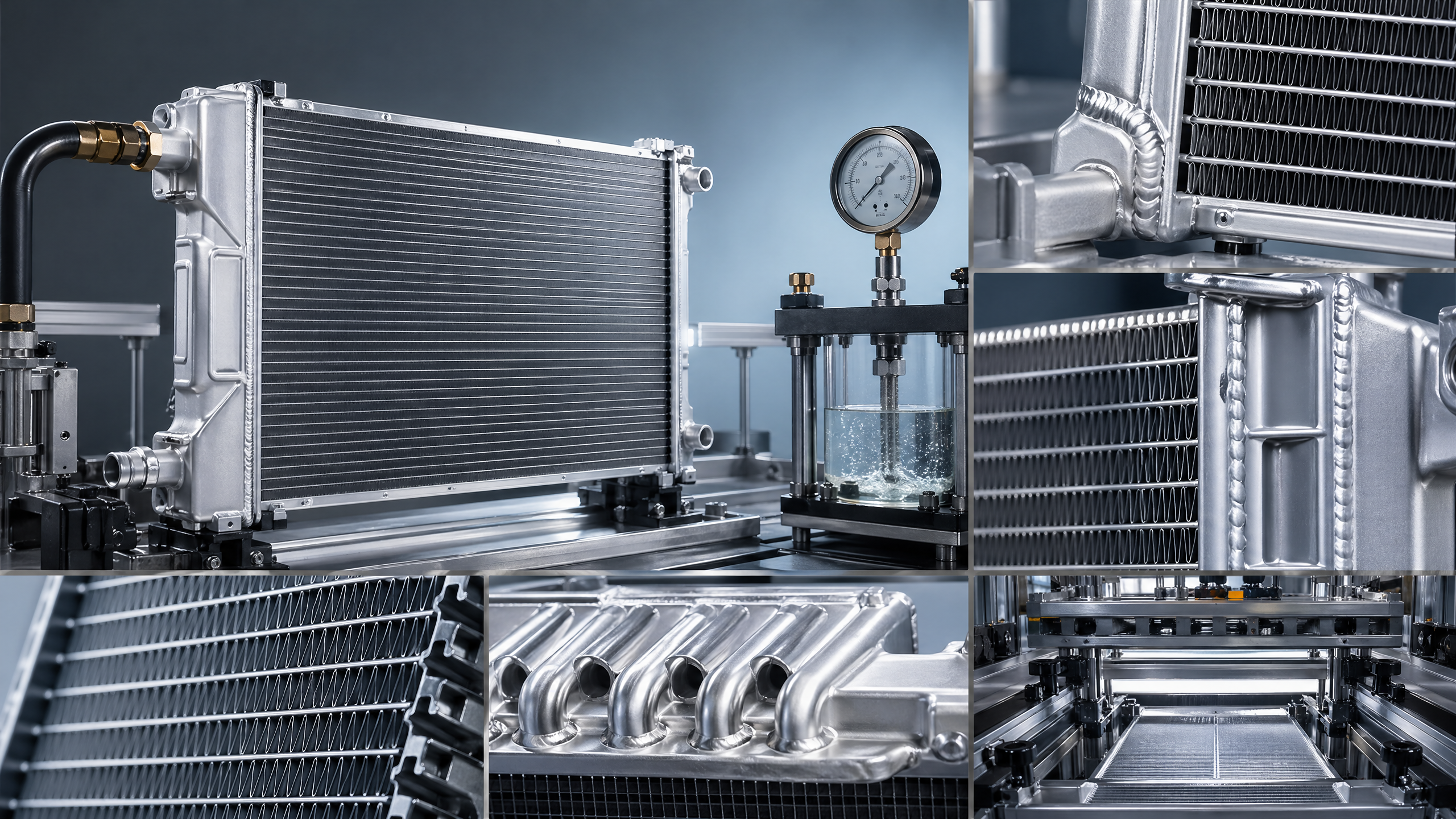
For quality control and safety managers, effective Vehicle radiator inspection is critical to reducing overheating complaints before products reach the field. From leak resistance and pressure stability to weld integrity and thermal performance, consistent quality checks help identify hidden risks early. This article outlines the key inspection points that support reliable cooling performance, lower failure rates, and stronger customer confidence in demanding vehicle applications.
Why do overheating complaints still happen even when a Vehicle radiator passes basic inspection?
A basic pass result often means only that the part survived a limited set of checks, not that it is fully protected against field stress. In the auto parts industry, many overheating complaints appear after 3 to 12 months of service, when vibration, thermal cycling, coolant chemistry, and pressure fluctuation begin to expose weak points that were not captured during incoming or final inspection. For quality and safety teams, the real task is not only to reject visible defects, but to identify hidden failure modes before shipment.
A Vehicle radiator can look acceptable in appearance while still carrying process risks such as inconsistent brazing, uneven fin bonding, tube deformation, or poor tank sealing. These issues may not cause immediate leakage during a short pressure hold, but they can reduce heat dissipation efficiency by 5% to 15% under real operating loads. In heavy trucks, construction machinery, and new energy cooling modules, that performance gap can be enough to trigger repeated temperature alarms or customer complaints during long climbs, stop-and-go operation, or high ambient temperature conditions above 35°C.
Another reason is that inspection plans are sometimes too narrow. If the focus stays only on dimensional accuracy and visible leakage, teams may miss thermal balance, airflow resistance, core cleanliness, or material consistency. A stronger quality control approach checks the radiator as a cooling system component, not just as a finished metal assembly. That means reviewing process capability, traceability, test frequency, and complaint feedback together.
Which hidden risks are most commonly missed?
The most common misses usually fall into four categories: sealing weakness, heat transfer loss, structural fatigue, and contamination. Sealing weakness may come from header plate flatness problems or tank crimp variation. Heat transfer loss can result from blocked passages, fin damage, or poor bonding between tubes and fins. Structural fatigue is often linked to weak mounting areas, vibration exposure, or thermal expansion mismatch. Contamination includes flux residue, metal particles, or packaging debris left in the flow path.
- Short pressure tests may miss slow leaks that appear after 10 to 20 thermal cycles.
- Visual checks alone cannot confirm internal flow consistency or localized hot spots.
- Sampling rates below normal process variation may allow unstable batches to pass.
- Uncontrolled rework can change weld condition, coating quality, or dimensional stability.
For manufacturers serving global vehicle and machinery applications, these points matter because complaint costs go beyond replacement. They may involve downtime, warranty handling, logistics, and reduced trust. Companies such as Liaocheng Xinde Auto Parts Co., Ltd., which focuses on water tank radiators, intercoolers, construction machinery radiators, and new energy radiator modules, understand that prevention depends on process discipline from raw material review through final shipment.
What quality checks should be prioritized to prevent Vehicle radiator overheating complaints?
The most effective inspection plan starts with a priority sequence rather than a long unchecked list. For a Vehicle radiator, the first priority is leak resistance under stable pressure, the second is thermal transfer capability, the third is structural durability, and the fourth is dimensional and fitment accuracy. This order reflects field reality: a radiator that fits well but cannot maintain pressure or dissipate heat will still generate complaints.
Quality managers often divide checks into three stages: incoming material inspection, in-process control, and final validation. At incoming stage, tube thickness, fin material condition, and tank quality should be verified batch by batch. During production, brazing parameters, weld consistency, and assembly alignment should be monitored every shift or every 2 to 4 hours depending on output volume. At final validation, pressure holding, airflow passage condition, and key dimensions should be confirmed before packing.
The table below summarizes common quality checks that directly support overheating complaint prevention in radiator manufacturing and outgoing inspection.
These checks are most effective when linked to control limits and response actions. For example, if pressure drop exceeds the internal threshold, the team should not only recheck the part but also trace fixture condition, operator method, and lot history. A complaint-prevention mindset turns every failed check into a process improvement signal.
How often should these checks be performed?
Frequency depends on process stability, product complexity, and customer requirements. In general, appearance and key dimensions are checked continuously or per lot, leak resistance is often checked at 100% final inspection for critical applications, and thermal or destructive validation is performed by batch, shift, or defined production quantity such as every 300 to 500 units. For new launches, first 3 production lots usually require tighter monitoring than mature products.
Recommended priority checklist for QC teams
- Confirm material lot consistency before production starts.
- Verify brazing, welding, or crimping process settings at each shift change.
- Perform leak and pressure stability checks before packing.
- Review airflow path, fin condition, and internal cleanliness for blockage risk.
- Retain batch records for traceability over at least one normal warranty cycle.
When these controls are implemented together, the Vehicle radiator is much more likely to maintain stable cooling performance across variable road and temperature conditions.
How can QC teams judge whether leak and pressure tests are actually sufficient?
A leak test is only meaningful when it matches expected service conditions closely enough to reveal realistic weakness. If the test pressure is too low, if the hold time is too short, or if fixtures introduce false sealing, the result may create false confidence. Many quality teams now review three dimensions together: test pressure level, pressure hold duration, and post-test observation of stress-sensitive zones such as seam joints, tube-to-header connections, and tank corners.
For many radiator types, pressure checks in the range of 100 to 250 kPa are common during internal manufacturing control, while final values depend on product design and customer specification. However, a single pressure value does not answer everything. A part may survive 60 seconds but still fail after repeated expansion and contraction. That is why periodic burst margin review, thermal cycling, or vibration-assisted validation can be useful for quality planning, especially for heavy-duty and high-load applications.
The table below helps compare common pressure-related test purposes and what each one can or cannot reveal.
For safety managers, this comparison is useful because it prevents overreliance on one test. A balanced verification plan combines routine leak detection with periodic deeper validation. That combination is more reliable than increasing pressure test intensity alone, which can slow production without necessarily improving complaint prevention.
What signs suggest the current test plan is too weak?
Warning signs include repeated field complaints from one production month, failures concentrated around seam areas, a gap between internal pass rate and customer returns, or unstable performance after transport. If complaint timing clusters around 1,000 to 5,000 km of use or within the first seasonal heat cycle, the test plan may not be stressing the same weakness that customers experience in real conditions.
- Field returns show coolant residue but factory records show normal leak test results.
- Complaint rate rises after supplier material changes or process maintenance intervals.
- Reworked units pass final inspection but fail at a higher rate than first-pass units.
In those cases, test adequacy should be reviewed together with process history and packaging conditions, not in isolation.
How important are weld integrity, fin bonding, and internal cleanliness in a Vehicle radiator?
These three factors are central to real cooling performance. Weld or brazed joint integrity determines whether pressure and vibration loads can be carried over time. Fin bonding influences how efficiently heat moves from coolant through the tubes into the airflow. Internal cleanliness affects coolant distribution and resistance. Even when dimensions are correct, weakness in any of these areas can reduce cooling stability and eventually increase overheating complaints.
Fin and tube contact quality is especially important because small bonding inconsistencies can create localized temperature rise. In production environments, bent fins, crushed passages, or uneven brazing spread may not look severe, yet they can disrupt airflow and lower effective heat exchange area. For high-performance applications, including passenger vehicle systems that must stay efficient in compact engine bays, these details matter. As one example of application-focused replacement solutions, Radiator for AION is designed for car fitment with goals such as replace or repair use, cooling efficiency, and stable operation under demanding workloads.
Internal cleanliness is often underestimated. Residual particles, flux traces, or packaging debris can restrict narrow coolant paths and affect pump load or local heat transfer. A flushing and cleanliness check should therefore be part of outgoing quality control, especially for modules with tighter passage geometry or higher flow sensitivity. In some production plans, cleanliness verification every lot and deeper audit every 1 to 2 weeks provides a workable balance between control and efficiency.
What should inspectors look for beyond obvious visual defects?
Inspectors should review uniformity, not just presence or absence of defects. A clean-looking core may still have inconsistent fin pitch. A smooth seam may still hide insufficient joining depth. A straight assembly may still have partial internal blockage. This is where layered inspection methods help, combining visual review, dimensional measurement, sample cut-up analysis, and process record confirmation.
High-value observation points during shop-floor inspection
- Check fin alignment and fin damage density across the entire core, not only at the edges.
- Compare tube expansion and bonding consistency at multiple positions from top to bottom.
- Inspect mounting brackets and stress concentration areas for distortion or incomplete joining.
- Verify that internal flushing leaves no visible debris at outlet points or test filters.
- Review whether rework marks indicate repeated heating or reshaping that could affect durability.
When these observations are logged consistently, they help predict complaint risk earlier than final failure data. For products using advanced fluid dynamics and premium thermal materials, maintaining process consistency is as important as selecting the right design concept.
What are the most common mistakes quality and safety managers should avoid?
One common mistake is assuming that all overheating complaints originate from the engine, fan, or coolant side rather than the radiator itself. While system diagnosis is important, the radiator should still be reviewed as a possible root cause when complaints involve temperature rise during high load, slow recovery after idle, or pressure instability. Another mistake is treating all radiator platforms the same, even though heavy truck, construction machinery, and passenger car applications face very different vibration, flow, and packaging conditions.
A second mistake is focusing on defect detection without strengthening process prevention. If leak failures rise after a maintenance event or after a material lot change, the response should include process capability review, supplier communication, and fixture verification. Simply increasing final sorting may reduce escapes for a few days but will not remove the source of instability. In many cases, the better decision is to tighten control at the first unstable node rather than at the final gate.
A third mistake is weak traceability. If batches, operators, and parameter windows are not linked clearly, complaint investigation becomes slower and corrective action becomes less accurate. For products with export distribution or multiple application platforms, traceability should cover at least material lot, production date, process settings, and final inspection result. Even a 24-hour delay in root cause confirmation can increase containment cost significantly when shipments are already in transit.
How can teams turn complaint data into better inspection rules?
Complaint records should be grouped by symptom, timing, operating condition, and failed location. If complaints cluster under high ambient temperature, the review should emphasize thermal margin and airflow path quality. If failures concentrate near the tank seam after transport, packaging vibration and joint robustness should be rechecked. If early-life leakage is linked to one process period, shift-based parameter review may reveal variation that average monthly data hides.
A useful practice is to update the inspection control plan every quarter or after each major complaint pattern. That keeps the Vehicle radiator quality system aligned with actual field risk rather than historical assumptions.
Before sourcing or approving a radiator supplier, what should QC managers confirm first?
Before approval, QC and safety teams should confirm whether the supplier can control the full chain from material input to final validation. This includes production capability, process discipline, test method clarity, response speed for nonconforming batches, and fitment understanding for the target vehicle or machinery application. A supplier does not need to make unrealistic claims, but it should be able to explain how it controls leak risk, thermal consistency, and structural stability in repeat production.
It is also practical to ask how the supplier handles sample development, drawing confirmation, and delivery rhythm. Typical evaluation points include sample lead time, batch traceability, outgoing inspection records, and support for customized cooling modules. Companies with a focused manufacturing background in radiators and related cooling components are usually better positioned to discuss these details in application language rather than in general sales terms.
The FAQ-style checklist below can help procurement, QC, and safety teams evaluate whether a supplier’s Vehicle radiator control approach is likely to support lower overheating complaint rates.
This checklist is especially helpful when the supplier offers multiple radiator categories such as water tank radiators, intercoolers, construction machinery radiators, and new energy modules. Broad product range can be an advantage, but only if process control remains consistent across platforms. For example, a model such as AIONV-1301010-0030 may require close attention to car fitment, cooling efficiency, and replacement accuracy rather than the same assumptions used for heavy-duty equipment.
Why choose a supplier with focused cooling component experience?
Focused experience often means faster understanding of complaint patterns, more practical control plans, and better communication between engineering, quality, and production. Liaocheng Xinde Auto Parts Co., Ltd., established in 2018 with registered capital of 5 million RMB and total investment of 50 million RMB, has concentrated on the research, production, and global sales of cooling-related auto parts. This specialization supports more application-aware discussions on product selection, production stability, and outgoing quality expectations.
If your team is evaluating replacement or repair solutions for passenger vehicle cooling systems, it may also be useful to review targeted offerings such as Radiator for AION, especially when you need to compare fitment, thermal material choices, or workload stability expectations within a specific car platform.
How should you move from inspection concerns to an actual sourcing or improvement plan?
The most effective next step is to define your risk priorities clearly. Start by listing the complaint modes you want to prevent, such as early leakage, poor heat dissipation, pressure instability, or transport-related damage. Then align them with the supplier questions, inspection frequency, sample validation method, and delivery schedule. This reduces the chance of approving a part that looks acceptable on paper but does not match your operating environment.
For quality control managers, practical discussion topics usually include pressure test expectations, traceability format, sample review cycle, and handling of design or process changes. For safety managers, the focus may include durability reserve, complaint response speed, and consistency across repeated shipments over 6 to 12 months. These are more useful than broad promises because they directly affect field reliability and internal risk management.
If you are reviewing a Vehicle radiator program or preparing a new sourcing decision, contact us to discuss parameter confirmation, product selection, sample support, delivery cycle, customization options, and quotation details. We can communicate around application fitment, inspection priorities, cooling performance expectations, and the most suitable radiator solution for your project scope.