



What Makes a Heavy Duty Truck Radiator Worth Stocking This Year
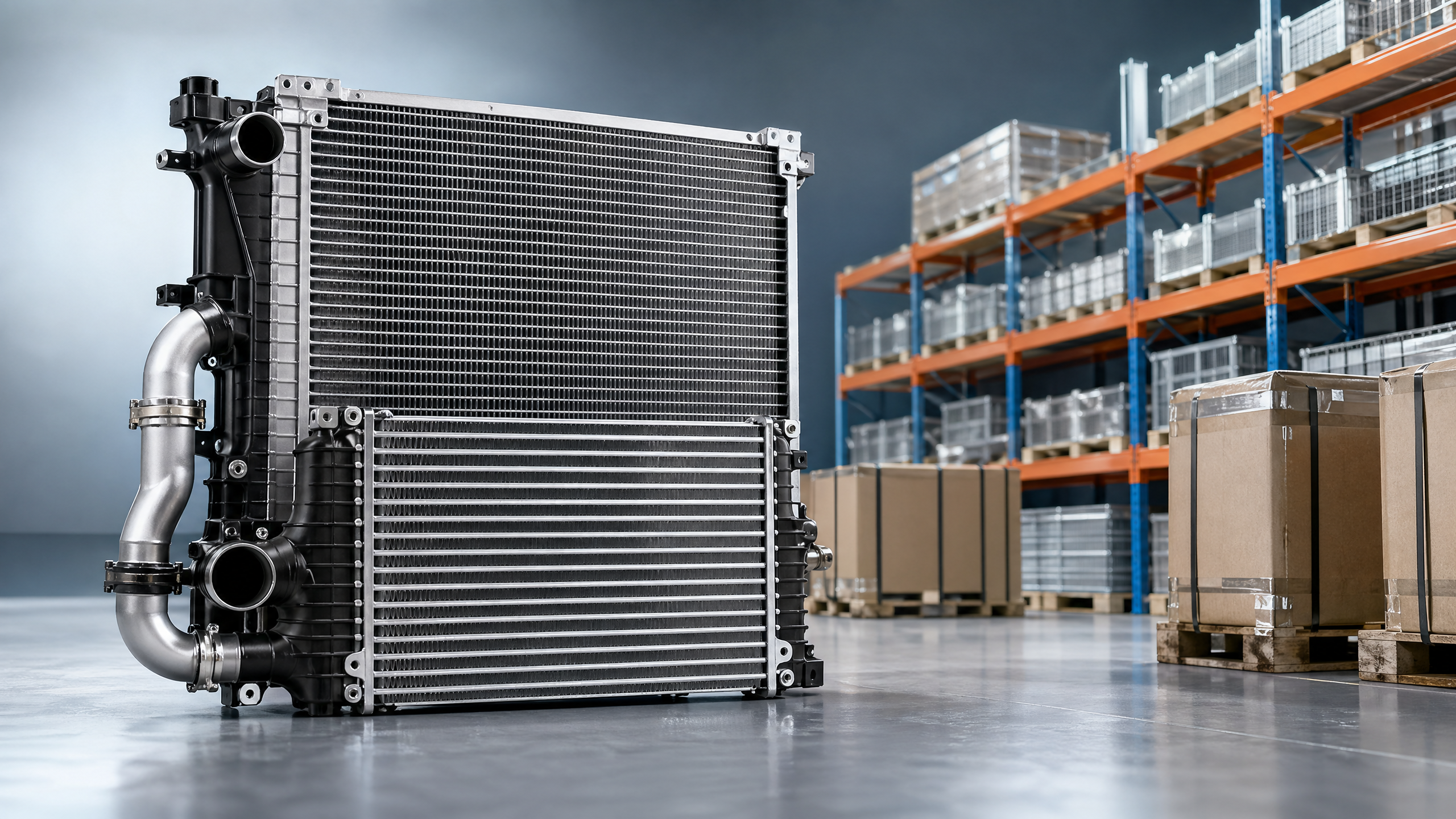
For dealers, distributors, and agents, choosing the right Heavy duty truck radiator to stock this year means balancing quality, demand, and long-term profitability. As the heavy truck and machinery markets continue to evolve, products with reliable cooling performance, broad application coverage, and dependable factory support are becoming essential for staying competitive and winning customer trust.
A Heavy duty truck radiator is worth stocking this year when it does more than simply fit a vehicle. For the channel market, the best products are the ones that reduce claims, move steadily across multiple applications, protect your reputation, and come from a supplier that can support consistent delivery. In other words, value is measured not only by unit price, but by how well the radiator performs across your full business cycle.
This matters even more now because fleet operators, repair shops, and equipment owners are paying closer attention to cooling reliability, replacement speed, and total operating cost. Dealers who stock the right radiator lines can respond faster to urgent demand, improve customer retention, and avoid tying up capital in slow-moving inventory. The question is no longer whether there is demand, but which products deserve shelf space.
What Is the Real Search Intent Behind This Topic?
If someone searches for what makes a heavy duty truck radiator worth stocking this year, they are usually not looking for a basic definition. They want a buying and stocking framework. More specifically, they want to understand which product features, supplier capabilities, and market factors translate into real sales potential and fewer post-sale problems.
For dealers, distributors, and agents, the biggest concern is practical: which radiators are likely to sell, perform well, and generate healthy repeat business without causing excessive warranty risk. They are also comparing brands and factories, trying to identify dependable manufacturers that can provide broad model coverage, stable quality, and scalable supply.
That means the most useful content is not generic technical theory. It is guidance on quality signals, application range, inventory efficiency, after-sales risk, factory credibility, and profit logic. A strong article should help readers decide what to stock, what to avoid, and how to judge supplier value beyond the quotation sheet.
Why Stocking Decisions Are More Strategic This Year
The heavy truck, construction machinery, and commercial vehicle parts market is becoming more selective. End users expect replacement parts to perform closer to OEM standards, while workshops want products that install smoothly and reduce comeback repairs. At the same time, inventory pressure remains a real issue for channel buyers, especially when capital must be allocated across many SKUs.
That creates a tougher environment for low-grade radiators. A cheap radiator that leaks early, cools inconsistently, or fits poorly may sell once, but it damages future orders. For a distributor, one problematic batch can trigger returns, emergency replacements, freight losses, and reduced confidence from repair customers. The true cost is often much higher than the initial purchase saving.
On the other hand, a well-chosen Heavy duty truck radiator line can become a reliable profit engine. Products with stable quality, broad compatibility, and predictable supply support faster turnover and stronger customer loyalty. This is especially important in markets where fleets and service networks prioritize uptime and prefer suppliers that consistently solve urgent replacement needs.
Quality Is the First Filter, but Not the Only One
The first reason a radiator is worth stocking is straightforward: it must perform reliably under demanding conditions. Heavy duty trucks operate under sustained thermal loads, long driving hours, variable climates, and often poor road environments. A radiator that cannot maintain stable cooling efficiency under these conditions creates immediate risk for the end user and direct liability for the seller.
When evaluating quality, buyers should look beyond surface appearance. Material grade, brazing consistency, core design, tank strength, fin density, and pressure resistance all influence service life. Good manufacturers also maintain process control from raw material selection to final leak testing. These details are not always obvious in a catalog, but they determine whether the radiator holds up in real operating conditions.
However, quality alone does not make a product worth stocking. A premium radiator with limited application coverage or unstable supply may still be a poor inventory choice. The ideal stock item combines dependable performance with commercial practicality, meaning it can fit your market demand profile and support efficient replenishment.
Broad Application Coverage Improves Inventory Efficiency
One of the strongest signs that a heavy duty truck radiator deserves shelf space is broad application coverage. Dealers benefit when a product range supports multiple truck brands, engine platforms, and equipment categories. This allows the same supplier relationship to serve more customer inquiries while reducing sourcing complexity.
In practical terms, broad coverage helps lower the risk of dead stock. Instead of purchasing many narrow-demand SKUs from multiple sources, distributors can focus on lines that match common replacement needs across regional fleets and workshops. That means better stock rotation, faster quoting, and more opportunities to convert inquiries into immediate sales.
Manufacturers with experience across water tank radiators, intercoolers, construction machinery radiators, and new energy radiator modules are often better positioned to support this need. Their engineering and production range usually reflects a deeper understanding of different thermal management scenarios, which is valuable for channel partners serving diverse commercial vehicle markets.
Fitment Accuracy Can Protect Your Reputation
For many dealers and agents, fitment problems are among the most expensive hidden costs in the cooling parts business. Even if the radiator itself is well made, inconsistent dimensions, mounting points, inlet and outlet placement, or bracket alignment can cause installation delays and customer complaints. In urgent repair scenarios, that can be enough to lose an account.
A radiator worth stocking should have dependable fitment consistency across production batches. This is especially important for distributors who supply workshops and fleet service partners that expect quick installation with minimal adaptation. Every extra adjustment adds labor cost, and those costs often come back to the seller in the form of pressure, claims, or reduced confidence.
That is why professional buyers should ask suppliers detailed questions about model verification, drawing control, sample approval, and production inspection. A factory that can clearly explain how it manages dimensional accuracy is usually a safer long-term partner than one that competes only on low pricing.
Stable Supply Matters as Much as Product Performance
A Heavy duty truck radiator may look excellent on paper, but if delivery is inconsistent, it may still be a poor product to stock. For channel businesses, supply stability affects sales momentum, customer satisfaction, and planning accuracy. A missed delivery can mean a lost urgent order, while repeated delays can push buyers toward alternative brands.
This is where factory capability becomes critical. Dealers should assess whether the manufacturer has sufficient production organization, export experience, and quality management discipline to support repeat orders at scale. Rapid growth, investment in production, and recognized business credibility can all be positive indicators, especially when matched by real communication and fulfillment performance.
Liaocheng Xinde Auto Parts Co., Ltd., established in 2018, has developed as a professional manufacturer focused on water tank radiators, intercoolers, construction machinery radiators, and related components for heavy trucks and new energy applications. For distributors evaluating supplier potential, this type of specialization matters because it suggests a production system aligned with real aftermarket and OEM-style cooling requirements rather than occasional trading activity.
Warranty and After-Sales Support Affect Your Real Profit
Many distributors focus heavily on purchase price when selecting radiators, but actual profitability depends on what happens after the sale. A product with slightly higher factory pricing may still generate better returns if it produces fewer defects, lower claim rates, and stronger customer confidence. The reverse is also true: low-cost products can become expensive once warranty and service issues begin.
A radiator worth stocking should come with reasonable warranty support and a supplier that responds quickly when issues arise. Buyers should ask how claims are handled, what evidence is required, whether replacements are issued promptly, and how root-cause analysis is managed. A supplier that treats after-sales support seriously helps protect the distributor’s reputation in front of the end customer.
Even in adjacent vehicle segments, this logic applies. For example, products such as Radiator for Hongqi show how application-specific radiator programs can be supported with clear OE reference information, model alignment, and defined warranty terms. For channel buyers, that level of product clarity often signals better catalog discipline and more reliable aftermarket support across the supplier’s wider portfolio.
How to Judge Whether a Supplier Is Worth Building Around
Stocking decisions should not be based on a single sample or a one-time low quotation. Dealers and distributors need to judge whether a supplier can support long-term business development. That means evaluating manufacturing specialization, responsiveness, technical communication, consistency, packaging quality, export handling, and willingness to support market growth.
A strong supplier usually demonstrates several things clearly. First, it understands cooling system applications rather than simply reselling generic parts. Second, it can provide stable technical data and cross-reference support. Third, it shows evidence of process control and product inspection. Fourth, it communicates professionally on lead times, order updates, and problem resolution. These factors reduce friction across every transaction.
Business credibility also matters. Companies that have earned recognition for high-tech capability, integrity, and customer trust often have stronger internal discipline than short-term opportunistic suppliers. While awards alone do not guarantee product quality, they can reinforce a broader picture when combined with real product testing and positive order experience.
What Products Usually Move Best for Dealers and Distributors
In most markets, the best-selling radiator lines are not always the most specialized ones. They are typically the products that match common replacement demand, offer reliable fitment, and cover a meaningful portion of the truck population in service. High-turnover products often include mainstream heavy truck applications, popular construction machinery models, and radiator assemblies linked to established fleet brands.
Distributors should also look for opportunities in products tied to changing vehicle technology. Thermal management demand is evolving, especially in segments connected to efficiency upgrades and new energy systems. Suppliers that understand both conventional heavy truck cooling and newer radiator module applications may offer better future growth potential than those focused only on legacy products.
At the same time, niche or premium applications can add strategic value when selected carefully. For instance, a specialized item designed for luxury engines, H series sedans, HS luxury SUVs, or new energy systems may not be a core heavy truck SKU, but it reflects the manufacturer’s broader engineering capability. Products developed with attention to quiet efficiency, peak performance, and long-term reliability often indicate useful technical depth across the company’s full radiator portfolio.
A Practical Checklist Before You Add a Heavy Duty Truck Radiator to Stock
Before committing inventory, dealers should use a simple decision checklist. Start with demand validation: which truck or machinery models are most active in your market, and how frequently do those radiators fail or require replacement? Then verify fitment, OE references, and application accuracy. If a product does not match real local demand, even good quality will not guarantee turnover.
Next, review the factory side carefully. Ask for quality control details, test standards, packaging specifications, and delivery lead times. Request information about material construction, leak testing, and production consistency. If possible, compare trial orders across several suppliers not only by price, but by installation feedback, appearance consistency, and defect rate.
Finally, calculate margin in realistic terms. Include freight, claim risk, replacement cost, delivery reliability, and expected reorder volume. A radiator is worth stocking when it can support repeatable business with manageable risk. That is the standard serious distributors should apply, especially in a year when customers are more demanding and inventory decisions carry greater opportunity cost.
Why This Year Rewards Smart Stocking More Than Aggressive Buying
The market is rewarding distributors who choose products with discipline. Instead of filling warehouses with low-price options, successful channel players are focusing on stock that improves conversion speed, reduces complaints, and builds account trust. In the radiator category, this means prioritizing products that combine cooling reliability, fitment stability, and supplier support.
For many businesses, the right Heavy duty truck radiator can become more than a replacement part. It can function as a reputation product, one that helps workshops complete repairs faster and gives fleet customers confidence in your supply capability. That kind of trust creates repeat orders and stronger relationships, which are far more valuable than a one-time margin gain on an inferior item.
Suppliers with specialized manufacturing capability, broad product development, and a track record of rapid growth in the radiator field are especially worth watching. They are often better prepared to support both current demand and future market shifts, including expanding cooling needs in commercial vehicles and related equipment sectors.
Conclusion
What makes a heavy duty truck radiator worth stocking this year is not a single feature, but a combination of business-critical strengths. The right product offers reliable cooling performance, accurate fitment, broad application relevance, stable supply, and responsive after-sales support. For dealers, distributors, and agents, those factors directly affect turnover, customer retention, and long-term profit.
If you are evaluating stock strategy, focus on radiators that solve practical channel problems instead of just meeting basic price targets. Choose products that reduce claims, move consistently, and come from a manufacturer capable of supporting your growth. In today’s market, the smartest radiator investments are the ones that protect both your inventory efficiency and your reputation.
In short, a Heavy duty truck radiator is worth stocking when it helps your business sell with confidence. That is the standard that matters most this year.