



Condenser Price Changes in 2026 and What They May Mean for Supply Planning
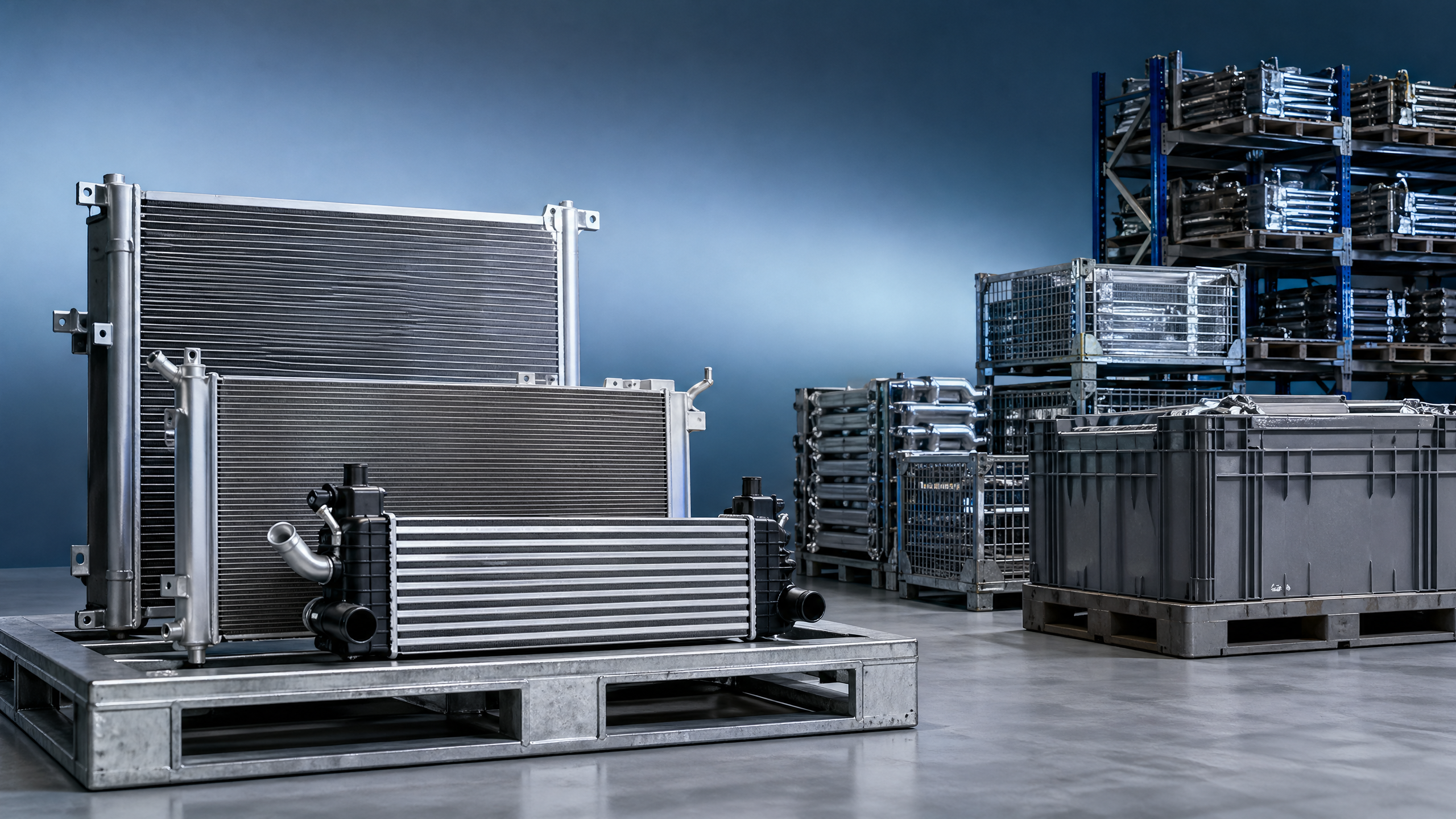
Condenser price changes in 2026 could reshape sourcing budgets, inventory timing, and supplier risk assessments for business evaluation teams. As demand patterns, raw material costs, and global supply conditions continue to shift, understanding how Condenser pricing may move is essential for better planning. This article explores the key factors behind expected price trends and what they may mean for smarter supply planning decisions in the auto parts sector.
Why Condenser Price Movements Matter More in Some Supply Scenarios Than Others
For business evaluation professionals in the auto parts sector, a Condenser is not just a line item in thermal management purchasing. Its price behavior can affect margin forecasts, service-level commitments, working capital exposure, and supplier concentration risk. In 2026, even a price movement in the range of 5% to 12% can materially change planning decisions when annual volumes are high or replacement demand is seasonal.
The reason scenario analysis matters is simple: not every buyer experiences Condenser price changes in the same way. An aftermarket distributor managing 3 to 6 months of stock faces very different pressure from an OEM-aligned buyer planning weekly call-offs. Likewise, a heavy-duty parts supplier focused on construction machinery and truck cooling systems may evaluate procurement windows differently from a passenger vehicle component trader responding to faster model turnover.
For companies like Liaocheng Xinde Auto Parts Co., Ltd., which focuses on radiators, intercoolers, construction machinery radiators, heavy truck cooling products, and new energy radiator modules, price trend analysis is tied to broader thermal system sourcing logic. Even when the immediate discussion is about Condenser procurement, the real planning question is often whether adjacent heat-exchange components will show similar volatility in aluminum, brazing, logistics, and delivery lead time over the next 2 to 4 quarters.
Key variables that make one scenario more sensitive than another
- Order frequency: weekly, monthly, or quarterly release cycles change the ability to absorb Condenser price fluctuations.
- Inventory model: safety stock of 15 days versus 90 days leads to different timing risk.
- Product mix: standard fitment parts are easier to rebalance than low-volume or model-specific Condenser items.
- Material exposure: aluminum-intensive products are more vulnerable to commodity swings and energy-related processing costs.
- Customer contract structure: fixed-price supply agreements transfer risk differently than index-linked or short-cycle quotations.
Because of these differences, supply planning for 2026 should not rely on a single average expectation. Evaluation teams should build at least 3 planning bands: stable, moderate increase, and high-volatility. In practical terms, many parts businesses use review intervals of 30, 60, and 90 days to decide whether to lock pricing, diversify supply, or increase stock before peak demand cycles.
Three Typical Business Scenarios Where Condenser Pricing Has Different Effects
The most useful way to interpret Condenser price changes is by application scenario rather than abstract market commentary. In the auto parts industry, business evaluation teams usually encounter pricing pressure in at least three common settings: aftermarket distribution, OE or project-based procurement, and integrated thermal system purchasing for broader cooling portfolios.
Each setting has a different decision horizon. Some teams need to protect monthly cash flow, others need continuity for model-specific delivery, and others need to compare Condenser cost movement with radiator or intercooler sourcing to decide on bundle negotiations. These distinctions directly influence whether 2026 price changes should trigger stock building, contract renegotiation, or supplier qualification expansion.
The comparison below shows how the same Condenser trend can lead to different actions depending on operational context, volume stability, and service obligations.
This table highlights an important point: the same market signal does not justify the same response. A 7% increase may be manageable for a project buyer with forecast visibility, yet disruptive for a distributor running lean stock and high SKU variety. For evaluation teams, scenario fit is more valuable than generic market prediction.
Scenario 1: Aftermarket distribution with seasonal demand spikes
In aftermarket channels, Condenser purchasing is often tied to weather-driven service demand, fleet maintenance cycles, and vehicle age structure. Buyers in this scenario usually care about stock turn, fill rate, and replacement consistency more than annual contract mechanisms. If 2026 brings repeated month-to-month price adjustments, holding 45 to 75 days of inventory may either protect margin or create overstock risk, depending on sell-through speed.
The practical challenge is that many aftermarket portfolios include both high-volume common references and slow-moving vehicle-specific items. Fast movers can justify earlier buying before a projected increase, but long-tail SKUs need stricter controls. Teams should segment Condenser items by movement class, gross margin contribution, and return frequency instead of applying one replenishment logic to the entire catalog.
A useful method is to combine a 30-day sales review with a 90-day forecast checkpoint. If supplier lead time extends beyond 4 to 6 weeks, the safety stock model should be recalculated immediately. In volatile conditions, even small changes in freight or packaging cost can make imported Condenser procurement less attractive than regional sourcing.
What evaluation teams should verify
- Whether top-selling Condenser references have alternate qualified suppliers.
- Whether current stock cover matches actual peak-season demand, not average demand.
- Whether quotation validity is shorter than procurement approval time.
- Whether claims and return rates could rise if buyers switch to lower-cost supply too quickly.
Scenario 2: OE-linked or program-based sourcing
For OE-linked purchasing, Condenser price changes have a slower but often deeper effect. Here, the issue is not only unit cost but also engineering approval, delivery scheduling, and line-stop exposure. If a supplier requests a mid-cycle adjustment in Q2 or Q3 of 2026, the buyer may not have enough time to requalify another source before the next production release window.
This scenario requires a contract view, not just a transactional view. Teams should examine whether pricing is fixed for 6 months, 12 months, or linked to raw material review intervals. They should also check if there are pass-through mechanisms for aluminum, energy-intensive processing, or transport surcharges. Even where exact index linkage is unavailable, a defined review process is better than relying on exception-based renegotiation.
In project environments, a Condenser with a stable technical drawing but unstable upstream material cost can still create budget distortion. The remedy is to align procurement milestones with engineering and quality checkpoints. That reduces the risk of approving a technically acceptable source that later fails on commercial stability or delivery resilience.
Scenario 3: Cross-category thermal system purchasing
Some buyers do not assess Condenser procurement in isolation. They compare it with radiator, intercooler, and module-level sourcing because these categories share exposure to metals, brazing processes, fin-tube design complexity, and logistics footprint. In this scenario, the purchasing decision is less about one product and more about portfolio efficiency across several heat-exchange components.
This is particularly relevant for companies managing mixed demand from passenger vehicles, heavy trucks, and machinery cooling applications. A supplier with capability across multiple categories may help smooth planning volatility through consolidated production scheduling, common quality systems, and broader delivery visibility. That is one reason why thermal specialists with experience in radiators and related components can be strategically useful when Condenser prices become uncertain.
For example, sourcing teams reviewing replacement cooling components may also compare compatible thermal product lines such as Radiator for AION when evaluating supplier depth, fitment understanding, and product development responsiveness. The point is not to substitute products, but to judge whether the supplier can support a wider thermal management roadmap over the next 1 to 3 planning cycles.
What May Drive Condenser Price Changes in 2026
Business evaluation teams should avoid treating Condenser pricing as a single-variable outcome. In practice, price changes usually come from a combination of material cost movement, production cost pressure, model mix shifts, and trade or logistics factors. Understanding these drivers helps determine whether a price increase is temporary, structural, or supplier-specific.
In the auto parts and heat exchanger field, aluminum remains one of the most visible cost drivers, but it is not the only one. Energy costs, brazing throughput, labor efficiency, packaging standards, and delivery frequency can all influence the final quotation. In some cases, low-volume Condenser references increase faster than high-volume items because setup cost and inventory burden are spread over fewer units.
The matrix below can help teams distinguish likely triggers and the planning action each one suggests.
The table shows why price analysis must be linked to operational facts. If the main issue is freight or lead time, simply negotiating unit price may not solve the real problem. If the issue is material exposure, then timing and formula transparency matter more. If the issue is low-volume complexity, SKU strategy becomes a bigger lever than spot bargaining.
A practical caution for 2026 budgeting
Many teams build annual budgets using one average purchase cost for Condenser categories. That can work in stable years, but it becomes less reliable when quotations refresh every 30 to 60 days. A stronger approach is to build three assumptions: base case, controlled increase, and stress case. Then connect each assumption to stock cover, customer pricing flexibility, and supplier lead time.
Even if the final change is smaller than expected, scenario budgeting improves response speed. It gives management a framework to decide whether to pre-buy, delay a noncritical item, or shift volume between suppliers before margin pressure becomes visible in the quarter-end review.
How to Adapt Condenser Supply Planning by Business Need
Once the likely price drivers are clear, the next step is adaptation. Supply planning for Condenser categories in 2026 should not begin with price alone. It should begin with business need: service continuity, cash efficiency, program stability, or portfolio expansion. Different needs justify different actions, and the wrong response can raise cost rather than control it.
A buyer serving urgent replacement demand may accept slightly higher unit cost in exchange for shorter lead time and more reliable fill rates. A program buyer with predictable releases may prioritize long-horizon agreements. A group sourcing team may favor thermal suppliers that can support adjacent categories such as radiators, improving visibility across the cooling system supply base.
The checklist below is designed for business evaluation teams that need to compare options quickly but systematically.
Supply planning checklist for 2026 Condenser sourcing
- Classify Condenser SKUs into critical, standard, and long-tail groups by sales value and service risk.
- Review supplier quotation validity periods and compare them with internal approval cycle length.
- Map lead time by origin, including production, consolidation, and transit, not only factory release.
- Estimate the financial effect of a 5%, 10%, and 15% cost change on quarterly procurement plans.
- Check whether suppliers can support parallel thermal product categories if sourcing strategy broadens.
- Align stock policy with demand pattern, especially where summer demand or fleet maintenance peaks are predictable.
Where supplier capability becomes a planning advantage
Supplier capability matters most when pricing pressure coincides with delivery risk. A manufacturer experienced in cooling products for heavy trucks, construction machinery, and new energy radiator modules can often provide more useful planning support than a narrow trader, because capability affects forecasting communication, material scheduling, and process consistency. This becomes important when Condenser sourcing decisions are part of a wider thermal parts strategy.
As an example of adjacent product capability, buyers reviewing fitment-driven replacement requirements may also consider supplier familiarity with model-based cooling parts such as the Radiator for AION, model AIONV-1301010-0030, used for car fitment and designed around replace/repair demand, cooling efficiency, advanced fluid dynamics, premium thermal materials, and stable performance under demanding workloads. This kind of product breadth can be relevant when evaluating whether a supplier understands thermal system performance beyond one SKU family.
Common Misjudgments When Assessing Condenser Price Risk
One common mistake is treating every Condenser item as equally price-sensitive. In reality, the highest risk often sits in parts with a combination of medium volume, limited interchangeability, and unstable replenishment timing. These are not always the most expensive SKUs, but they can cause the greatest planning disruption when demand arrives faster than procurement can react.
Another mistake is focusing only on current quotation comparison. A lower unit price may still create a higher total cost if it brings longer lead time, larger MOQ requirements, or inconsistent packaging and claim handling. For business evaluation teams, total landed and operational cost over 1 to 2 quarters is usually a stronger indicator than single-order savings.
A third issue is underestimating the connection between Condenser procurement and adjacent cooling categories. If radiators, intercoolers, and related heat-exchange products are sourced from overlapping suppliers, stress in one category can signal future constraints in another. That is why thermal portfolio visibility is increasingly valuable in 2026 planning.
Warning signs worth escalating early
- Lead time extending by more than 2 weeks without a clear production explanation.
- Repeated quotation refreshes inside a 30-day period.
- Supplier reluctance to discuss raw material logic or MOQ structure.
- High dependence on one source for the top 10 revenue-driving Condenser references.
- Mismatch between forecast commitment and actual call-off behavior.
If two or more of these signals appear at the same time, the issue is no longer just purchase price. It becomes a supply planning risk that may require customer communication, safety stock revision, or supplier development action before the next seasonal demand swing.
Why Work With a Thermal Parts Manufacturer That Understands Planning Reality
In a year where Condenser price changes may affect margin, service performance, and sourcing confidence, buyers benefit from suppliers that understand more than production alone. Liaocheng Xinde Auto Parts Co., Ltd., established in 2018, focuses on the research, production, and global sales of water tank radiators, intercoolers, construction machinery radiators, and related components for heavy trucks and new energy radiator modules. That operating focus helps business customers evaluate cooling-related sourcing through a practical, application-based lens.
For business evaluation teams, the value of such a partner is not in broad claims, but in coordinated discussion around fitment, product category planning, delivery cycles, and demand application. Whether your concern is replacement parts turnover, project-based scheduling, or comparison across thermal product families, a supplier with hands-on manufacturing orientation can support more grounded decision-making over the next 6 to 12 months.
If you are reviewing 2026 Condenser sourcing strategy, contact us to discuss parameter confirmation, product selection, expected lead time, custom cooling solutions, sample support, or quotation planning for different business scenarios. We can help you assess which supply approach fits your application, risk level, and purchasing cycle more effectively.