



Vehicle Radiator Material Choices and Their Real Service Tradeoffs
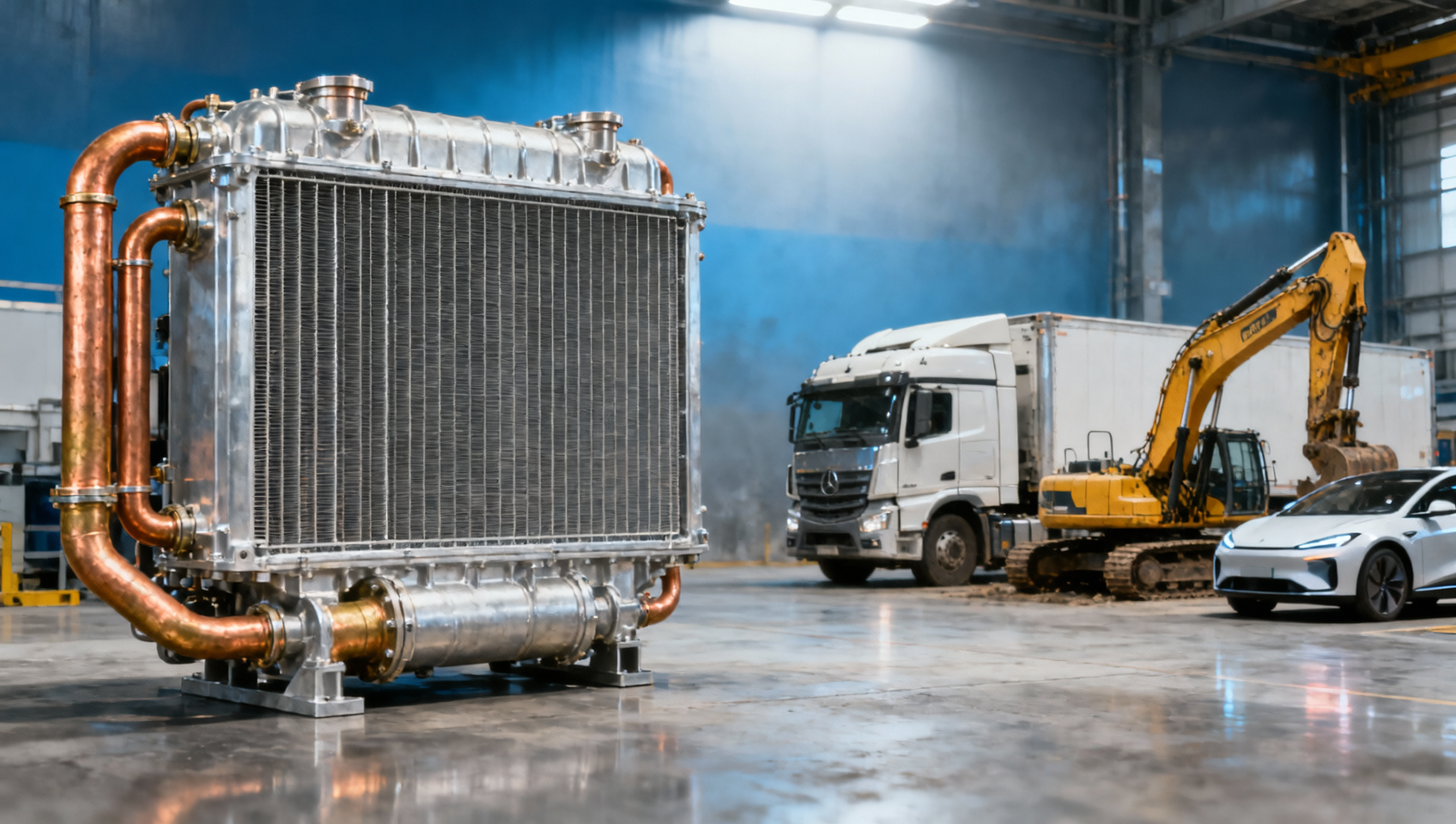
Choosing the right Vehicle radiator material affects cooling efficiency, durability, corrosion resistance, and total lifecycle cost across demanding applications. For buyers and technical evaluators comparing a Heavy duty truck radiator, Condenser, Agriculturaal radiator, Excavator radiator, or New Energy Vehicle Radiator, understanding real-world service tradeoffs is essential. This guide outlines practical material differences to support smarter sourcing, performance validation, and long-term business decisions.
In the auto parts sector, material selection is rarely a simple question of price per unit. A radiator that performs well in a passenger vehicle may fail prematurely in heavy trucks, construction machinery, or high-vibration agricultural equipment. Procurement teams, engineering reviewers, and business decision-makers need a framework that connects metal choice to thermal load, road conditions, coolant chemistry, maintenance frequency, and expected service life.
Liaocheng Xinde Auto Parts Co., Ltd., established in 2018 with a registered capital of 5 million RMB and a total investment of 50 million RMB, focuses on the research, production, and global sales of water tank radiators, intercoolers, construction machinery radiators, heavy truck cooling components, and new energy radiator modules. For buyers evaluating suppliers in China, practical manufacturing capability and application-fit engineering matter more than broad claims. This article examines the real service tradeoffs behind copper-brass, aluminum, and mixed-structure radiator designs in B2B purchasing scenarios.
Why radiator material choice matters in real operating conditions
A Vehicle radiator is expected to transfer heat quickly, resist internal corrosion, survive pressure cycling, and remain structurally stable across thousands of hours of operation. In many commercial use cases, coolant temperatures can regularly operate in the 85°C to 105°C range, while pressure caps often work around 0.9 to 1.4 bar. Material selection directly affects how consistently the radiator handles those conditions over 2, 5, or even 8 years of service.
For technical evaluators, thermal conductivity is only one variable. Wall thickness, brazing quality, fin density, tube geometry, and joint reliability can influence actual field performance more than raw metal data listed on paper. A radiator with excellent theoretical conductivity but weak seam durability may create a higher lifecycle cost than a slightly less conductive design with better fatigue resistance.
For procurement teams, the most common mistake is treating all radiator materials as interchangeable commodities. In reality, the tradeoff often sits between 4 factors: heat rejection, mass, corrosion resistance, and repairability. A fleet operator focused on uptime may value local repair capability, while a new energy vehicle project may prioritize lighter weight and packaging efficiency.
In heavy duty truck radiator and excavator radiator applications, sustained vibration and contaminated working environments can expose weak tanks, tube joints, or soldering interfaces within 12 to 24 months if the material system is not matched to usage. By contrast, well-designed aluminum radiators can provide stable service over long cycles when coolant management, braze quality, and mounting isolation are properly controlled.
Key evaluation dimensions before comparing prices
- Thermal demand: engine load, ambient temperature, airflow restriction, and duty cycle length.
- Mechanical stress: vibration frequency, shock loading, pressure pulses, and mounting stiffness.
- Chemical exposure: coolant formulation, water quality, salt spray, and galvanic corrosion risk.
- Service model: field repair needs, replacement interval targets, and parts availability across regions.
The table below summarizes how material choice influences practical performance in different parts business scenarios rather than ideal laboratory assumptions.
The most important takeaway is that there is no universal best radiator material. The right answer depends on application load, service environment, and maintenance discipline. Buyers who compare only initial purchase cost can underestimate downstream expenses such as early leakage, repeat replacements, or thermal derating under peak conditions.
Copper-brass versus aluminum: practical service tradeoffs buyers should quantify
Copper-brass radiators have long been associated with repairability and robust use in traditional commercial systems. In certain regional service networks, technicians can still rework joints or restore localized damage, which may reduce downtime for older fleets. This remains relevant for some agriculture radiator, construction machinery radiator, and legacy truck platforms operating in remote areas where replacement inventory is slower to access.
However, aluminum radiator designs have become dominant in many modern applications because they support lighter assemblies, efficient brazed core production, and competitive heat exchanger packaging. In volume manufacturing, aluminum can offer a better balance between cost, thermal design flexibility, and vehicle integration. For projects where every 5 to 15 kg of component weight matters, aluminum often provides a practical advantage.
That said, field outcomes depend heavily on manufacturing detail. A poorly designed aluminum core with insufficient vibration control may crack earlier than a properly built copper-brass unit. Conversely, an older copper-brass design may face corrosion or scaling issues if users run untreated water or incorrect coolant concentrations for 6 to 12 months. Material choice is inseparable from coolant discipline and operating reality.
For business evaluators, it is useful to compare not just metal type but also service consequences: replacement intervals, field repair options, freight cost impact, and stock strategy. A lower-weight radiator may cut transport costs across large annual orders, while a repairable design may support lower downtime in remote fleet operations.
What technical reviewers should ask suppliers
When comparing heavy duty truck radiator or condenser suppliers, reviewers should request evidence around base material thickness, braze consistency, pressure test criteria, and corrosion protection methods. It is reasonable to ask whether units are tested at a defined pressure threshold, such as 1.5 times normal operating pressure, and whether thermal cycling or vibration validation is part of production control.
Common tradeoff checklist
- Compare unit weight, especially if annual procurement exceeds 500 to 1,000 pieces.
- Verify expected coolant compatibility and maintenance intervals.
- Check whether field repair is realistic in your target market.
- Review packaging space, airflow path, and fan matching.
- Assess warranty risk under vibration-intensive working conditions.
The next table gives a practical sourcing view for teams balancing engineering and commercial concerns.
For many B2B buyers, the best method is to model total cost over a 24 to 60 month period. That calculation should include not only purchase price, but also transport, installation labor, expected failure rate, cooling stability, and operational losses from unexpected downtime.
Material fit by application: trucks, machinery, agriculture, and new energy systems
Different operating environments place very different demands on radiator material and structure. A Heavy duty truck radiator may run long highway cycles with high thermal load and variable ambient temperatures from -20°C to 45°C. An excavator radiator can face repeated dust loading, engine vibration, and low-speed airflow limitations. An agricultural radiator may experience mud contamination, seasonal storage, and inconsistent maintenance quality.
This is why selection cannot rely on a single rule such as “aluminum is better” or “copper is stronger.” In real service, design details like fin pitch, tube shape, tank material, and mounting bracket resilience can matter as much as the base metal. A correctly matched aluminum module may outperform a traditional build in one application, while a more serviceable conventional radiator may still be the better commercial choice in another.
New energy platforms add another layer of complexity. Battery thermal management, motor cooling, and compact front-end module packaging often require a high-performance, lightweight radiator with reliable heat transfer under tightly controlled flow conditions. In such projects, advanced fluid path design and material consistency become more important than repairability in remote service conditions.
For example, an application-specific passenger vehicle unit such as Radiator for AION reflects how modern cooling components are increasingly selected for thermal efficiency, stable pressure resistance, and packaging compatibility rather than simple material tradition. Buyers should review whether the product supports replacement or repair objectives, peak-performing system stability, and demanding workload requirements in the actual vehicle architecture.
Application matching priorities
- Heavy trucks: prioritize vibration durability, long-duty heat rejection, and reliable sealing under repeated pressure cycles.
- Excavators and construction machinery: prioritize anti-clogging airflow design, structural stiffness, and maintenance access.
- Agricultural equipment: prioritize contamination tolerance, corrosion control during storage, and practical field support.
- New energy vehicles: prioritize low mass, compact integration, thermal response consistency, and module-level efficiency.
Typical selection logic by segment
A sourcing team handling 3 different product lines should not use one qualification sheet for all radiator categories. Instead, define segment-specific requirements such as 2 pressure levels, 3 durability checks, and separate coolant compatibility standards. This makes supplier comparison more objective and reduces mismatch risk during pilot orders.
For manufacturers with broad radiator capabilities, including heavy truck, construction machinery, and new energy radiator modules, the strongest value is usually engineering adaptation. That means adjusting material system, core structure, and production process to the operating profile instead of forcing one standard build into every market.
How procurement and technical teams should validate radiator material decisions
A sound sourcing process should move through at least 5 stages: requirement definition, drawing and sample review, test verification, pilot order evaluation, and batch supply assessment. Material choice should be tested against actual use conditions rather than approved only from datasheets. Even a well-priced radiator can become an expensive procurement mistake if it fails after 3 to 6 months in high-load service.
The first step is defining measurable criteria. Instead of asking for a “durable radiator,” buyers should specify pressure range, dimensional tolerance, mounting interface, coolant specification, and target application life. Practical targets may include leak-free pressure holding at a defined threshold, tolerance within ±0.5 mm on key interfaces, or thermal stability across repeated start-stop cycles.
Second, teams should review manufacturing consistency. In the radiator business, the difference between acceptable and unreliable product quality often comes from process control: braze furnace stability, fin forming accuracy, weld or crimp integrity, and incoming material uniformity. A supplier with expanding production capability should still be evaluated on whether growth is matched by quality discipline.
Third, commercial reviewers should connect technical validation to supply performance. Delivery windows such as 15 to 30 days for routine orders, packaging suitability for export, and responsiveness on drawing confirmation all affect procurement risk. A technically strong supplier that cannot maintain schedule stability can still create downstream cost pressure.
Recommended validation checklist
Before placing large-volume orders, many buyers benefit from a simple supplier scoring model. The table below can be adapted for heavy truck radiator, intercooler, condenser, or new energy cooling module evaluation.
This approach helps teams avoid two common errors: approving a radiator solely on sample appearance, or rejecting a supplier solely on unit price without understanding lifecycle value. Material choice should be validated as part of a complete application and supply assessment.
Common mistakes, maintenance implications, and long-term sourcing strategy
One of the most frequent mistakes in radiator sourcing is overemphasizing raw material type while underestimating system maintenance. Even the best-designed aluminum or copper-brass radiator can lose performance if coolant is not changed on schedule, if mixed metals create galvanic problems, or if dirty water introduces scale that reduces heat transfer. In practical service, maintenance discipline often determines whether the radiator achieves 2 years or 5 years of reliable use.
Another common issue is ignoring operating environment. A radiator that works well in a paved-road truck fleet may not tolerate the dust, impact, and airflow blockage common in excavator or agricultural use. Procurement specifications should therefore include environment-related items such as vibration exposure, debris load, ambient temperature band, and cleaning frequency, not just nominal vehicle model match.
A stronger long-term strategy is to group purchases by service profile. For example, separate radiators into 3 categories: high-vibration machinery, standard road transport, and lightweight new energy applications. Then assign different validation priorities and stocking rules to each. This prevents overbuying premium designs for low-demand uses and under-specifying products for severe conditions.
For buyers reviewing modern passenger vehicle replacement parts, a model-specific solution such as Radiator for AION may be attractive when the decision criteria include cooling efficiency, advanced fluid dynamics, premium thermal materials, and stable system performance under demanding workloads. The practical question is not whether a product sounds advanced, but whether its configuration matches the real fitment and cooling system requirements of the target platform.
FAQ for technical and purchasing teams
How should buyers compare radiator materials when exact operating data is limited?
Start with 4 baseline indicators: application type, estimated duty cycle, maintenance quality, and service geography. If operating data is incomplete, run a pilot batch of 10 to 30 units, monitor leakage, temperature stability, and fitment feedback over one service interval, and then refine the material decision before scaling.
Is aluminum always the best choice for new projects?
Not always. Aluminum is often preferred for lightweight and compact designs, especially in newer vehicle platforms, but the best choice still depends on vibration conditions, coolant control, thermal load, and replacement model. In some legacy or remote-service scenarios, a more repair-friendly design may still offer better operational value.
What service factors most often shorten radiator life?
The main factors are incorrect coolant concentration, poor water quality, unmanaged vibration, blocked airflow, and delayed cleaning or maintenance. In dusty or muddy applications, inspection every 250 to 500 operating hours is often more valuable than waiting for visible overheating symptoms.
What should decision-makers ask a supplier before approving batch orders?
Ask for application matching logic, material and structure description, pressure or leak test method, dimensional control approach, pilot sample lead time, and batch delivery range. Also confirm how the supplier responds to fitment or performance issues within the first shipment cycle.
Vehicle radiator material decisions shape not only heat transfer, but also service reliability, maintenance burden, and procurement risk across trucks, construction machinery, agricultural equipment, and new energy platforms. The most effective sourcing strategy compares copper-brass and aluminum in the context of real duty cycles, validation evidence, and total lifecycle cost rather than unit price alone.
For companies seeking a radiator manufacturer with experience in water tank radiators, intercoolers, construction machinery radiators, heavy truck cooling components, and new energy radiator modules, a structured discussion around application data, material tradeoffs, and supply expectations will lead to better decisions. Contact us now to discuss your project, request product details, or get a tailored cooling solution for your target market.