



Why Some Vehicle Radiators Overheat Despite a Normal Coolant Level
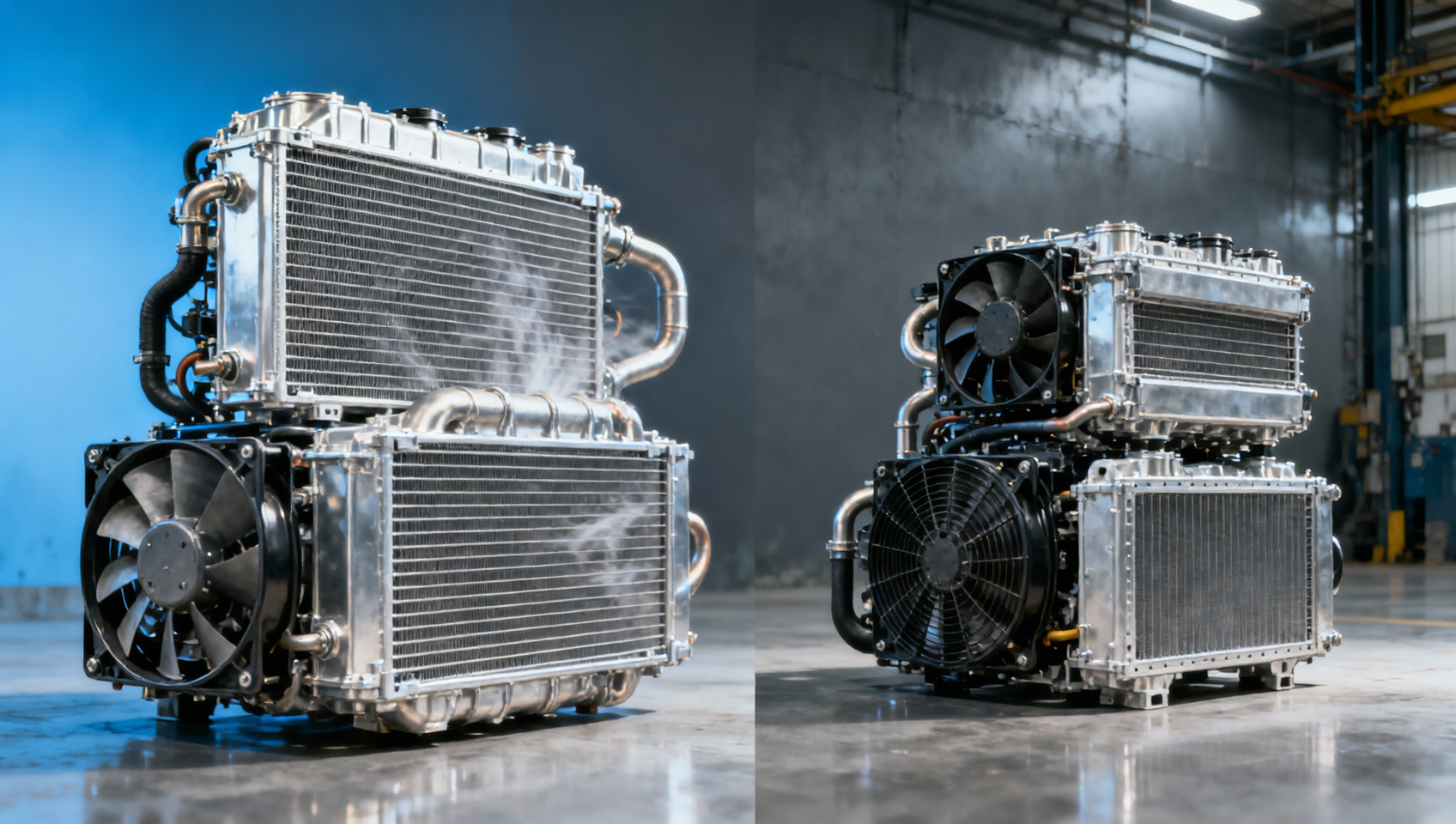
Even with a normal coolant level, a vehicle radiator can still overheat because coolant quantity is only one part of the thermal management equation. In real operating conditions, overheating is more often linked to restricted airflow, internal core blockage, fan or thermostat failure, poor heat transfer efficiency, pressure loss, or heat load that exceeds the radiator’s actual design capacity. For technical evaluators, buyers, and decision-makers in transport, construction, and industrial equipment sectors, the key issue is not simply whether coolant is present, but whether the entire cooling system can dissipate heat reliably under load.
That distinction matters when assessing a Heavy duty truck radiator, Excavator radiator, Agriculturaal radiator, or New Energy Vehicle Radiator. A unit may appear acceptable in basic inspection, yet still underperform during steep climbs, stop-and-go duty cycles, dusty jobsite work, or high ambient temperature operation. Understanding the hidden reasons behind overheating helps buyers reduce maintenance risk, avoid downtime, and choose radiator solutions with real-world thermal stability.
Why a Normal Coolant Level Does Not Guarantee Proper Cooling
Many people assume that if the reservoir is full and there are no visible leaks, the radiator should work correctly. In practice, overheating happens when heat cannot move efficiently through the system. Coolant must circulate at the right flow rate, absorb engine or system heat, transfer that heat through the radiator core, and release it into the air stream. If any of these stages fail, temperature rises even though coolant level remains normal.
For procurement and technical review teams, this means coolant level should never be treated as a standalone health indicator. A radiator system must be evaluated as a complete thermal circuit that includes the core structure, tube and fin quality, fan performance, water pump flow, thermostat behavior, cap pressure, external airflow path, and system matching with the vehicle’s operating profile.
What Hidden Faults Commonly Cause Radiator Overheating
The most frequent hidden cause is airflow restriction. Mud, dust, oil residue, insects, bent fins, and tightly packed debris can block the radiator surface. In heavy trucks, excavators, and agricultural machinery, this is especially common because operating environments are harsher than passenger vehicle conditions. A radiator can be full of coolant and still overheat if outside air cannot pass efficiently across the core.
Another major issue is internal blockage. Scale, corrosion products, contaminated coolant, or manufacturing residue can reduce flow through the tubes. This lowers effective heat exchange area and creates hot spots. Because the coolant level may still look normal from the tank, the problem is often missed until overheating becomes recurring.
A faulty thermostat is also a common factor. If it does not open fully, coolant circulation is restricted. Similarly, a weak or damaged water pump may fail to maintain sufficient flow under load. In both cases, the system contains coolant, but heat is not being transported away fast enough.
Fan-related issues matter as well. A worn fan clutch, underperforming electric fan, control module error, or poor shroud design can sharply reduce cooling at low vehicle speeds. This is why some vehicles only overheat in traffic, on site, or during idling with high thermal load.
In some systems, the condenser becomes part of the problem. If the Condenser is clogged, oversized relative to airflow path, or positioned in a way that increases inlet air temperature into the radiator, overall cooling efficiency drops. This is important in tightly packaged engine bays and high-load commercial vehicles, where condenser-radiator interaction directly affects thermal performance.
How Operating Conditions Reveal Cooling Weaknesses Better Than Static Inspection
For business evaluators and purchasing teams, the most useful question is not “Does the radiator look fine?” but “Can it maintain temperature stability in the actual duty cycle?” A radiator that performs adequately in light testing may fail in long-haul freight, uphill hauling, mining support work, agricultural field operation, or urban delivery with repeated stop-start patterns.
Heavy-duty applications expose weak thermal margins quickly. A Heavy duty truck radiator must sustain stable cooling when gross vehicle weight, ambient temperature, engine output, and road gradient all rise together. An Excavator radiator must continue to reject heat despite dust loading, engine compartment heat accumulation, and low travel speed. An Agriculturaal radiator often faces chaff, mud, and fibrous debris that can clog fins much faster than in normal road use. A New Energy Vehicle Radiator must also support temperature consistency for batteries, power electronics, or integrated thermal modules, where heat balance can influence safety, range, and reliability.
This is why bench specifications alone are not enough. Decision-makers should ask whether the radiator design has enough reserve capacity, whether the fin geometry is optimized for the airflow environment, and whether the brazing quality and aluminum material support long-term performance instead of only initial output.
What Technical Evaluators Should Check Before Approving a Radiator
For technical assessment, several points provide far more value than a simple visual or dimensional match.
First, verify core efficiency rather than only radiator size. A larger unit does not automatically perform better if tube design, fin density, and airflow resistance are poorly balanced.
Second, review material and manufacturing method. Aluminum brazing radiators are widely used because they combine light weight, heat transfer efficiency, and structural consistency. However, manufacturing quality determines whether those benefits are realized in practice.
Third, assess pressure durability and leak stability. A system that cannot maintain proper pressure will reduce boiling margin and can overheat sooner under stress, even when coolant level appears normal.
Fourth, check compatibility with the vehicle or equipment’s real thermal load. The radiator should be matched to engine output, duty cycle, fan system, space envelope, and upstream/downstream cooling components.
Fifth, evaluate contamination resistance and cleanability. In dusty or debris-heavy sectors, a radiator that is difficult to clean may create recurring maintenance problems and higher total ownership cost.
Sixth, confirm supplier consistency. For fleet buyers and OEM-related sourcing teams, process stability, batch repeatability, and quality control matter as much as unit performance.
What Buyers and Procurement Teams Should Care About Beyond Unit Price
From a commercial perspective, overheating risk is not just a technical inconvenience. It affects downtime, repair frequency, warranty exposure, service reputation, and operating continuity. A lower-cost radiator may appear attractive during quotation comparison, but if it leads to more field failures, blocked schedules, or engine protection events, the real cost becomes much higher.
Procurement teams should focus on lifecycle value. That includes thermal stability under load, resistance to clogging and corrosion, ease of installation, parts consistency, warranty support, and supplier response capability. For business evaluation personnel, the key metric is not just purchase price, but whether the radiator reduces long-term risk across fleets, projects, or distribution channels.
It is also useful to review whether the supplier understands multiple application scenarios. Manufacturers with experience in heavy trucks, construction machinery radiators, and new energy radiator modules are often better positioned to support demanding cross-segment cooling requirements.
How Product-Level Design Can Help Reduce Overheating Risk
In practical sourcing, component design details matter. For example, a brazed aluminum radiator built for stable heat rejection and dimensional fit can improve cooling reliability when correctly matched to the application. One example is Radiator for Lynk, model 2069525700, designed for the automotive cooling system of Link 06 / binyue. Its aluminum construction and brazing radiator type support the thermal stability required for demanding driving conditions, while the design approach emphasizes the fusion of European engineering standards and advanced thermal technology.
Although application requirements differ between passenger vehicles and heavier-duty sectors, the evaluation logic is similar: buyers should look for proven heat exchange capability, material reliability, dimensional suitability, and manufacturing consistency. These fundamentals are what separate a radiator that merely fits from one that performs under real heat stress.
When Overheating Indicates a System Problem Rather Than a Single-Part Failure
Not every overheating event should be blamed on the radiator itself. In many cases, the radiator is only one weak link in a broader system mismatch. An undersized fan, clogged condenser, collapsing hose, inaccurate temperature sensor, combustion issue, or transmission heat load can all increase operating temperature while making the radiator appear inadequate.
For this reason, evaluators should adopt a system-based diagnostic approach. If overheating occurs despite normal coolant level, ask these questions:
Is airflow entering and leaving the core unobstructed?
Is coolant actually circulating at the intended rate?
Is the radiator internally clean and structurally sound?
Is the fan system delivering sufficient airflow at low speed?
Is the condenser adding excessive heat or restricting air passage?
Is the radiator sized for the actual operating load and climate?
Is system pressure being maintained correctly?
This framework helps both technical and commercial teams avoid misjudgment and make better sourcing or replacement decisions.
Conclusion
A normal coolant level does not mean a cooling system is healthy. Vehicle radiators can still overheat because of airflow restriction, internal blockage, poor circulation, weak fan performance, condenser interference, or insufficient thermal design margin. For technical evaluators, purchasers, and business decision-makers, the real priority is to determine whether the radiator system can maintain heat balance under actual operating conditions, not just pass a basic inspection.
Whether reviewing a Heavy duty truck radiator, Excavator radiator, Agriculturaal radiator, or New Energy Vehicle Radiator, the smartest approach is to assess thermal performance, durability, application matching, and lifecycle cost together. That is the basis for choosing cooling solutions that reduce failure risk, support stable operation, and deliver long-term value.