



Vehicle Radiator Material Choices That Affect Service Life
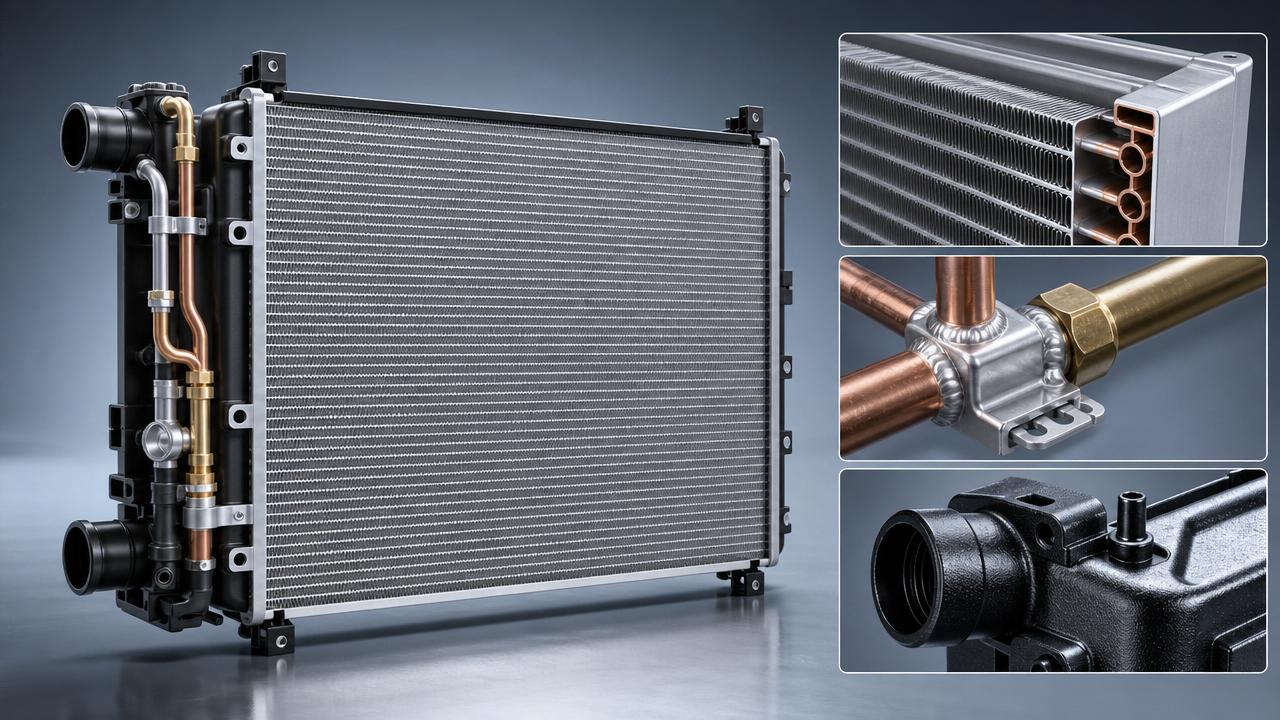
Vehicle radiator material choices and why they shape service life
Choosing the right Vehicle radiator material directly affects cooling efficiency, corrosion resistance, and long-term durability.
In heavy trucks, construction equipment, and new energy systems, material failure often starts before visible leakage appears.
A Vehicle radiator may look similar from the outside, yet alloy grade, tube design, solder quality, and coating selection can change service life dramatically.
For auto parts applications, material choices must match thermal load, vibration level, coolant chemistry, and maintenance intervals.
Liaocheng Xinde Auto Parts Co., Ltd., established in 2018, focuses on radiator and intercooler development for heavy-duty and new energy cooling systems.
Its product development background shows how fast-growing radiator technologies demand better material decisions, not only better shapes.
Why a checklist-based evaluation is necessary
Material selection often fails when decisions rely only on price, weight, or short-term heat transfer data.
A structured review helps compare aluminum, copper-brass, and coated assemblies under real operating stress.
This approach is useful because Vehicle radiator durability depends on combined factors, not one specification alone.
A practical checklist also reduces hidden risks such as galvanic corrosion, solder fatigue, blocked microchannels, and seam cracking.
Core material checklist for a longer-lasting Vehicle radiator
- Confirm the base metal matches the cooling duty, because high heat rejection, vibration, and pressure cycling affect aluminum and copper assemblies differently over time.
- Check alloy grade and tube thickness, since weak material selection may improve cost but reduce burst strength, fatigue resistance, and long-term sealing stability.
- Review fin density and fin bonding quality, because excellent heat transfer is useless if fins detach, corrode early, or trap debris under dirty conditions.
- Evaluate brazing or soldering consistency across tubes, headers, and joints, as poor joint integrity is a common source of premature Vehicle radiator leakage.
- Verify internal corrosion resistance against actual coolant chemistry, including pH range, chloride contamination, inhibitor package, and service interval discipline.
- Inspect external coatings for salt spray, stone impact, and moisture exposure, especially when radiators operate on roads, mines, ports, or construction sites.
- Assess compatibility with mixed-metal systems, because galvanic corrosion becomes more aggressive when aluminum cores contact unsuitable fittings or contaminated coolant.
- Measure resistance to thermal cycling, since repeated startup and shutdown loads can weaken joints, tanks, seals, and tube expansion zones.
- Check repair strategy and parts availability, because some materials are easier to service while others favor complete module replacement after failure.
- Request validation data from pressure, vibration, corrosion, and endurance tests, rather than accepting generic claims about universal Vehicle radiator performance.
Aluminum radiators: strengths and service life factors
Aluminum is widely used in modern Vehicle radiator production because it is light, efficient, and suitable for compact module designs.
It supports high-volume brazed manufacturing and fits heavy truck and new energy thermal systems well.
However, aluminum needs correct coolant control and coating support.
Poor inhibitor balance, trapped moisture, and chloride contamination can shorten service life quickly.
Thin-wall aluminum cores also require strong vibration design, especially in rough-road or engine-mounted applications.
Copper-brass radiators: where they still make sense
Copper-brass designs remain relevant where repairability and rugged field service are priorities.
They are often valued in legacy equipment, remote operations, or cases where local repair skills are available.
A copper-based Vehicle radiator may tolerate certain repair methods better than aluminum.
Still, it is heavier and can face solder joint aging under repeated heat cycles.
Service life depends heavily on solder quality, tube cleanliness, and exposure to corrosive environments.
Coatings, treatments, and material combinations
Coatings do not replace good base material, but they can greatly extend Vehicle radiator life in aggressive environments.
External anti-corrosion layers help against salt, mud, and industrial pollution.
Internal treatments may reduce scaling and corrosion if coolant quality is maintained properly.
The key is system compatibility.
An excellent coating can still fail if fasteners, tanks, or pipe materials create galvanic mismatch.
Application notes for different operating scenarios
Heavy-duty trucks
Heavy-duty trucks place continuous stress on every Vehicle radiator through vibration, long idling, dust loading, and variable speed airflow.
In this case, prioritize brazed joint quality, header strength, and resistance to fin blockage.
A suitable example within commercial cooling portfolios can include platform-specific solutions such as MERCEDES-BENZ radiator applications.
Construction machinery
Construction machinery faces shock loads, low-speed operation, and heavy airborne contamination.
Material selection should focus on mechanical robustness and coating durability rather than heat transfer values alone.
Tube wall consistency, fin protection, and easy cleaning access are especially important here.
New energy radiator modules
New energy systems require stable temperature control for batteries, electronics, and drive components.
A Vehicle radiator in this environment may use compact aluminum structures with strict cleanliness and pressure standards.
Microchannel sensitivity, coolant purity, and joining reliability become more critical than in older systems.
Often ignored issues that reduce radiator lifespan
Mixed coolants are a common hidden problem.
Even a well-made Vehicle radiator can fail early when incompatible coolant types destroy inhibitor balance and accelerate corrosion.
Mounting stress is another overlooked factor.
If brackets, cushions, or frame alignment are poor, cracking may appear at joints before any core material reaches its normal life limit.
Cleaning methods also matter.
High-pressure washing at the wrong angle can flatten fins and reduce heat rejection, especially on lightweight aluminum designs.
Storage conditions create risk as well.
Moisture trapped before installation can trigger corrosion inside or outside the assembly, particularly in coastal regions.
Practical execution steps before final material selection
- Define actual operating temperature, pressure, vibration, airflow restriction, and maintenance interval instead of using nominal vehicle data only.
- Compare aluminum and copper-brass options using corrosion testing, pressure pulse data, and real coolant compatibility records.
- Review coating specifications together with environmental exposure, including salt, mud, fertilizer dust, or urban chemical pollution.
- Check whether the Vehicle radiator design allows cleaning, inspection, and replacement without adding extra stress during service.
- Ask for documented validation from experienced radiator producers with heavy-duty and new energy cooling experience.
Quick comparison table for decision support
FAQ about Vehicle radiator material durability
Is aluminum always better for a Vehicle radiator?
Not always.
Aluminum performs very well in many modern systems, but service life depends on coolant control, design quality, and operating environment.
Does coating guarantee longer radiator life?
No.
Coating helps, but it cannot fix poor alloy choice, weak joints, or incompatible system materials.
Can the wrong coolant damage a new Vehicle radiator?
Yes.
Wrong coolant or mixed chemistry can rapidly reduce corrosion resistance and shorten service life, even in a newly installed unit.
Conclusion and next action
The best Vehicle radiator material is the one that matches real load conditions, coolant chemistry, vibration level, and service expectations.
Aluminum, copper-brass, and coated structures each have clear advantages when selected with discipline.
Use the checklist above to compare materials by durability, not by initial cost alone.
When evaluating platform-specific options, also review validated cooling assemblies and application fit, including solutions related to MERCEDES-BENZ.
A careful material decision today can prevent leakage, overheating, and avoidable downtime across the entire cooling system lifecycle.