



Condenser Supply Outlook After Recent Industry Events
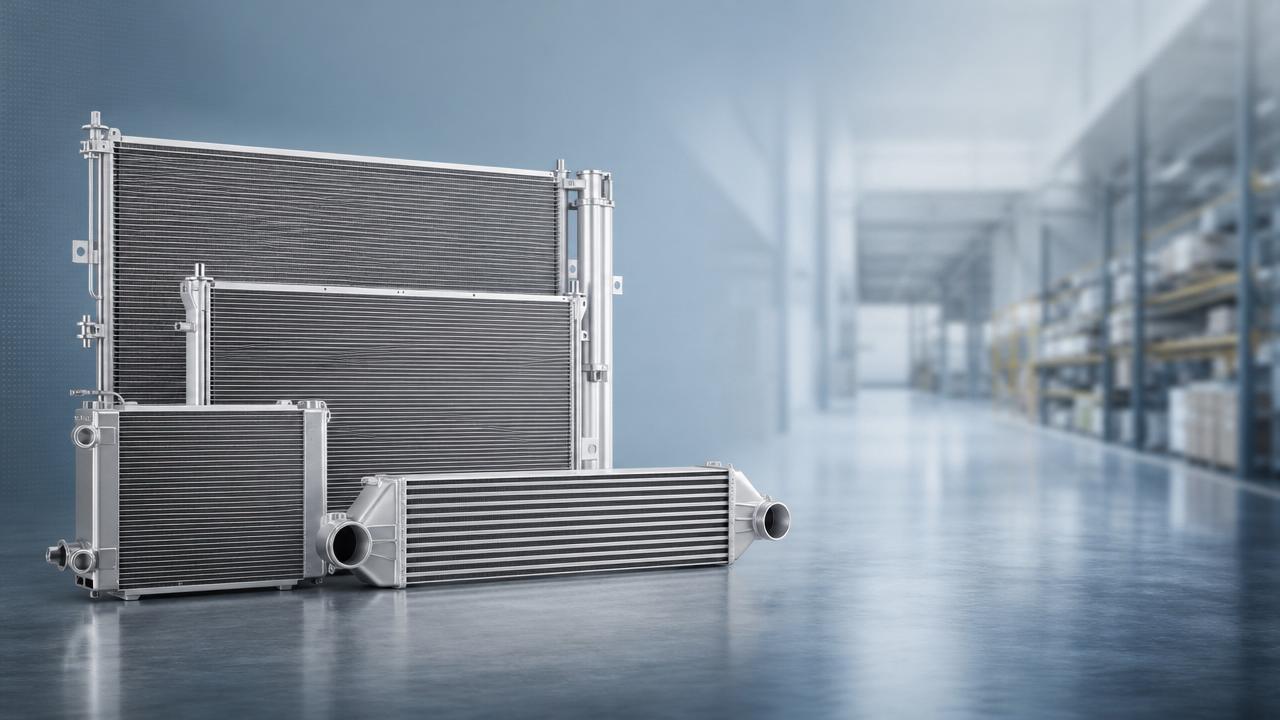
Recent industry disruptions are reshaping the global Condenser supply landscape, making reliable sourcing and risk assessment more critical than ever for business evaluators. This article reviews key market signals, supply chain shifts, and capacity trends while highlighting how experienced manufacturers such as Liaocheng Xinde Auto Parts Co., Ltd. support stable procurement decisions in a fast-changing parts industry.
Condenser supply conditions are shifting faster than many expected
The Condenser market is no longer shaped by demand alone. Supply resilience, material access, logistics timing, and regional capacity now influence availability just as strongly.
Recent industry events have exposed weak links across the parts chain. Interruptions in metals, transport, energy, and labor have all affected Condenser lead times.
For the auto parts sector, Condenser sourcing has become a broader evaluation issue. Buyers now compare not only price, but continuity, responsiveness, and production flexibility.
This matters because Condenser demand remains connected to vehicle production, aftermarket replacement, thermal management upgrades, and heavy-duty cooling system expansion.
Several market signals now define the near-term Condenser outlook
Current signals suggest a mixed Condenser supply environment. Capacity exists, but it is not evenly distributed across regions, quality tiers, or product categories.
- Raw aluminum price swings continue to affect Condenser production cost visibility.
- Freight volatility still influences landed cost and replenishment timing.
- Demand for thermal systems in commercial vehicles remains relatively firm.
- Regional diversification is increasing as companies reduce single-source exposure.
- Quality validation cycles are becoming longer for new Condenser suppliers.
Another visible trend is a tighter link between Condenser and broader heat-exchange component planning. Companies increasingly review radiators, intercoolers, and condensers together.
That integrated approach can reduce procurement fragmentation. It can also improve coordination when cooling systems need matched specifications across multiple parts.
The main drivers behind Condenser supply pressure can be mapped clearly
The recent Condenser outlook is not the result of one event. It comes from several overlapping forces across manufacturing and trade.
These drivers are especially relevant in heavy truck, aftermarket, and new energy cooling applications, where heat exchange reliability directly affects operating performance.
The effects are spreading across sourcing, inventory, and product planning
A more uncertain Condenser market changes decision-making at several business stages. The first impact appears in sourcing timelines and quotation validity periods.
The second impact appears in stocking strategy. When Condenser replenishment becomes less predictable, companies often raise safety stock or split orders across approved sources.
The third impact appears in engineering coordination. Condenser selection increasingly depends on system-level compatibility, especially when cooling modules share performance requirements.
- Longer review cycles for new suppliers
- Greater focus on sample consistency and repeat quality
- Higher importance of delivery transparency
- Stronger preference for suppliers with related cooling component capability
This is why the Condenser conversation now overlaps with broader heat exchanger sourcing. Firms often prefer suppliers who understand complete thermal assemblies, not isolated parts only.
Stable Condenser evaluation now depends on broader capability, not only unit cost
In a disrupted market, the cheapest Condenser option may create the highest hidden risk. Evaluation standards need to become more practical and more complete.
Key points worth checking before confirming supply
- How stable is access to core raw materials?
- Can the supplier manage sudden volume changes?
- Are inspection standards documented and repeatable?
- Is export delivery experience proven across markets?
- Can the supplier support related parts for the same cooling system?
- How quickly can technical issues be traced and corrected?
This broader checklist gives a more realistic view of Condenser supply security. It also supports more accurate total-cost assessment over time.
For example, a supplier with strong radiator and intercooler expertise may better understand shared material behavior, brazing consistency, and thermal performance expectations.
Why experienced cooling-system manufacturers are gaining relevance
The current Condenser outlook favors suppliers with manufacturing depth, technical continuity, and export discipline. Those strengths help reduce uncertainty when the market changes quickly.
Liaocheng Xinde Auto Parts Co., Ltd. reflects this type of capability. Established in 2018, the company combines research, production, and global sales in cooling-related auto parts.
Its portfolio includes water tank radiators, intercoolers, construction machinery radiators, and heavy truck and new energy radiator modules. That scope matters in today’s Condenser environment.
A supplier active across related thermal products can often support stronger process understanding, better production coordination, and more flexible response to changing demand patterns.
The company’s rapid development and recognized provincial and municipal honors also suggest operational credibility. In a volatile Condenser market, credibility becomes a sourcing advantage.
This integrated cooling background can also support cross-reference evaluation for related products, such as RADIATOR FOR SCANIA XD055, when system matching matters.
The next phase of Condenser supply will likely reward flexibility and regional balance
Looking ahead, the Condenser market may become less chaotic, but not fully stable. The main change is likely to be smarter supply design rather than a complete return to old patterns.
More companies are expected to combine local buffers with international sourcing. This creates a hybrid model aimed at cost balance and continuity.
At the same time, Condenser suppliers with strong process control may gain share, especially where customers need dependable performance across multiple thermal applications.
Practical steps can improve Condenser resilience right now
A useful response to today’s Condenser outlook starts with visibility. Map current suppliers, lead times, material dependencies, and quality history first.
Then compare that map against likely demand scenarios. Identify where a Condenser shortage would create the largest operational disruption or service delay.
- Review current Condenser sourcing concentration by region and product line.
- Check whether related cooling parts can be sourced from coordinated suppliers.
- Reconfirm quality benchmarks, test records, and traceability methods.
- Assess response speed for urgent orders or design adjustments.
- Build a shortlist of proven partners with scalable production capability.
When evaluating future cooperation, it also helps to look beyond one item. A supplier with broad thermal expertise may support better planning across the cooling portfolio.
That is particularly relevant where Condenser demand intersects with commercial vehicle, heavy truck, or machinery cooling applications requiring durable and consistent component performance.
The recent Condenser supply outlook shows a clear lesson: resilience now comes from preparation, supplier depth, and system-level thinking. Stronger decisions begin with stronger verification.
A focused next step is to review qualified cooling-component partners, compare their production breadth, and verify whether they can support both current Condenser needs and future demand shifts.