



Vehicle Radiator Core Thickness A Bigger Factor Than It Seems
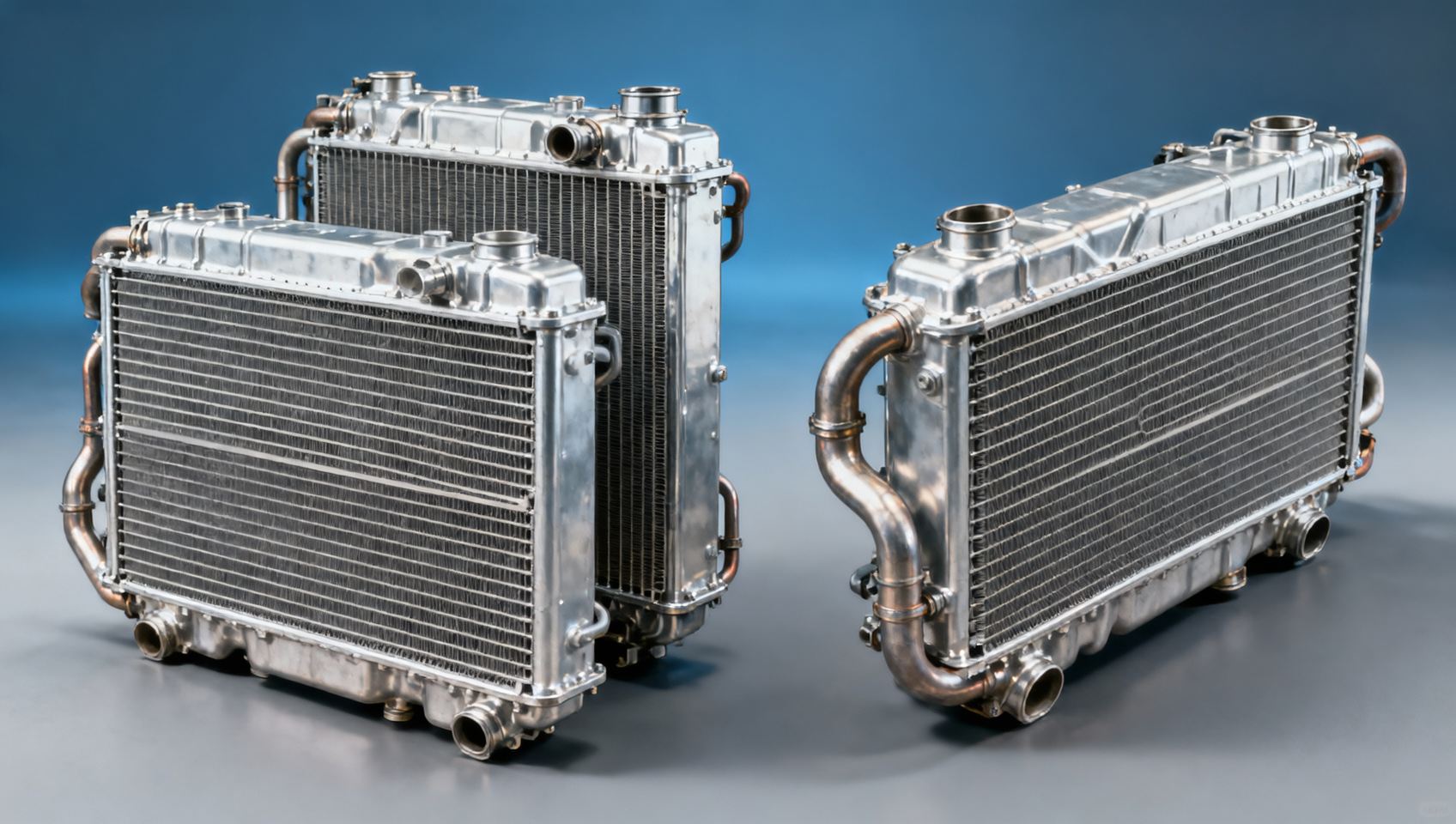
Core thickness can significantly affect cooling efficiency, durability, and fitment more than many buyers expect. Whether you are evaluating a Vehicle radiator, Heavy duty truck radiator, Condenser, Agriculturaal radiator, Excavator radiator, or New Energy Vehicle Radiator, understanding this factor helps reduce performance risk and sourcing mistakes. This article explains why radiator core thickness deserves closer technical and commercial attention.
Why radiator core thickness changes more than just cooling capacity
Many buyers first compare overall dimensions, tube count, or price, but radiator core thickness often determines how a heat exchanger behaves under real operating load. In the auto parts sector, this matters because the same external radiator size can deliver very different results when the core stack, fin density, airflow resistance, and coolant passage volume change together. A thicker core may increase heat rejection potential, yet it can also reduce airflow if fan matching and shroud design are not considered.
For technical evaluators, core thickness is not a single isolated number. It affects coolant residence time, structural rigidity, brazed joint stress, and contamination tolerance. In typical procurement reviews, teams usually compare 2 to 4 supplier drawings before sample approval, but many still overlook whether a 26 mm, 32 mm, or 42 mm core changes pressure drop and installation margin. This is where early engineering clarification prevents expensive sourcing corrections later.
For procurement and commercial assessment teams, thickness also influences transport cost, packing density, and replacement compatibility. A heavier or thicker radiator can alter carton quantity per pallet, which affects shipment planning over 2 to 4 weeks of export logistics. If the application is a heavy duty truck radiator or excavator radiator, a mismatch in core thickness may create field complaints faster than a mismatch in finish or labeling.
Liaocheng Xinde Auto Parts Co., Ltd., established in 2018 with 5 million RMB registered capital and 50 million RMB total investment, focuses on the research, production, and global sales of water tank radiators, intercoolers, construction machinery radiators, and related thermal components. For buyers, that specialization matters because a radiator supplier with concentrated product experience is usually better equipped to discuss thickness, brazing structure, and platform-specific fitment instead of offering only generic catalog answers.
What core thickness influences in practice
- Cooling reserve under peak ambient temperatures, especially in stop-and-go duty cycles and long uphill operations.
- Airflow resistance across the radiator pack, which becomes critical when condensers and intercoolers share the same front-end space.
- Mechanical durability in vibration-heavy applications such as agricultural radiator assemblies and construction machinery.
- Fitment tolerance, fan clearance, and module integration for diesel platforms and new energy radiator modules.
How to compare thin, medium, and thick radiator cores without oversimplifying
A thicker core is not automatically better. The right choice depends on engine heat load, vehicle speed profile, front-end airflow, space limitation, and maintenance condition. In many fleet and industrial applications, buyers should evaluate 3 core questions first: how much thermal reserve is needed, how much airflow is available, and how much installation room exists. Without these 3 checks, thickness becomes guesswork rather than a controlled engineering decision.
A thin core may perform well when airflow is strong and the duty cycle is steady. A medium core often balances fitment and cooling efficiency for mainstream commercial vehicles. A thick core may be suitable for high thermal load or low-speed operation, but only if fan capacity, bracket support, and adjacent heat exchanger spacing remain adequate. For this reason, good supplier communication should include drawing review, application confirmation, and often 1 sample validation stage before batch release.
The table below gives a practical comparison framework that procurement teams, sourcing managers, and engineering reviewers can use when comparing vehicle radiator options across different platforms.
This comparison shows why thickness should be assessed as part of a thermal system, not as a standalone upgrade. In practice, a 10 mm increase may improve cooling reserve in one platform but reduce net performance in another if airflow across the pack becomes restricted. That is especially relevant when the radiator sits behind a condenser or works together with an intercooler in a tightly packaged front module.
For public transportation projects, buyers sometimes require thermal stability for both traditional diesel and electric bus platforms. In such cases, product structure matters as much as nominal thickness. For example, Radiator for Ankai is designed for public transportation use, built with premium-grade aluminum and advanced brazing technology to support reliable thermal management while helping reduce downtime and protect long-term service life.
A practical 4-point comparison method
- Compare heat load and speed profile: highway, mixed route, or low-speed heavy load operation.
- Check front-pack stacking: radiator only, radiator plus condenser, or radiator plus condenser plus intercooler.
- Review fitment margins: bracket spacing, fan clearance, hose routing, and service access.
- Validate durability factors: vibration level, road dust, coolant cleanliness, and expected maintenance interval.
Which technical parameters should buyers check with core thickness
Core thickness should always be reviewed together with related technical parameters. The most common mistake in radiator sourcing is to request only overall size and mounting points, then assume similar cores are interchangeable. In reality, 5 key checks usually determine whether a replacement radiator can meet field expectations: core thickness, tube structure, fin configuration, material quality, and operating pressure requirement. Skipping any of these can lead to repeat procurement or warranty friction.
Material selection is particularly important in the spare parts business. Premium-grade aluminum remains a preferred choice because it supports good heat transfer, controlled weight, and broad manufacturing compatibility. However, aluminum performance also depends on brazing stability, fin geometry, and corrosion protection. A thicker but poorly assembled core can underperform a thinner but better-built one. This is why technical assessment should include manufacturing method, not just dimensional specifications.
For heavy trucks, agricultural machines, and excavators, vibration load and contamination exposure often create harsher conditions than passenger vehicles. Under these conditions, a buyer may need to verify whether the radiator is intended for continuous operation cycles, intermittent overload peaks, or mixed climate use. Even where exact test numbers are not disclosed, suppliers should still be able to discuss typical operating ranges, maintenance intervals, and fitment tolerance in a clear and engineering-based way.
The table below summarizes a technical checklist that helps cross-functional teams review radiator core thickness with better consistency before RFQ approval or batch purchase.
Using a checklist like this reduces the chance that one department focuses only on price while another later discovers installation or durability problems. It also supports cleaner communication between engineering and purchasing. When a supplier can explain thickness together with brazing method, material selection, and application logic, the sourcing discussion becomes much more reliable.
Why process capability matters
Brazing consistency is a hidden risk point
In aluminum radiator manufacturing, advanced brazing technology is not just a selling phrase. It directly affects joint integrity, thermal conduction path, and long-term leakage resistance. A thicker core contains more thermal interfaces and more structural demand, so process consistency becomes increasingly important as core depth rises.
This is one reason specialized manufacturers are often preferred over traders for technical projects. Liaocheng Xinde Auto Parts Co., Ltd. has built its business around radiators, intercoolers, construction machinery radiators, and new energy radiator modules, which allows discussions to move beyond catalog dimensions into manufacturing suitability and project matching.
Procurement risks, cost trade-offs, and selection advice for B2B buyers
From a purchasing perspective, the lowest initial cost is not always the lowest total cost. If radiator core thickness is underspecified, fleets may experience overheating complaints during summer peaks, low-speed hauling, or full-load climbing. If it is overspecified, buyers may face unnecessary material cost, more difficult installation, and reduced packing efficiency. In export-oriented B2B procurement, these mistakes can create delays of 7 to 15 days when replacement approval or rework becomes necessary.
Commercial evaluators should therefore review radiator projects through at least 4 dimensions: technical suitability, unit cost, delivery risk, and after-sales handling complexity. A supplier that can ship quickly but cannot answer questions about core structure may increase downstream risk. By contrast, a supplier that supports drawing confirmation, sample review, and application discussion can reduce uncertainty even when the quoted price is not the lowest on the first comparison sheet.
For enterprises managing multiple platforms such as buses, heavy trucks, or construction machinery, standardizing decision criteria can save time. A 3-stage sourcing method is often effective: first confirm dimensions and interfaces, then verify thermal and structural suitability, and finally align delivery, packaging, and commercial terms. This approach is especially useful when evaluating radiator, condenser, and intercooler suppliers within the same thermal management program.
The company background also matters in risk screening. Liaocheng Xinde Auto Parts Co., Ltd. has expanded rapidly since 2018 and has received provincial and municipal recognitions such as High-tech Enterprise, Civilized and Honest Enterprise, and Trustworthy Unit for Consumers. For corporate buyers, such information does not replace technical validation, but it does strengthen confidence in organizational stability and responsible business conduct.
A useful buyer checklist before final approval
- Confirm whether the proposed core thickness matches the real load profile instead of only the nominal vehicle category.
- Ask for a drawing or key dimensional sheet covering overall size, mounting points, inlet and outlet positions, and pack depth.
- Check whether the radiator sits alone or in a multi-heat-exchanger pack with condenser and intercooler layers.
- Review expected lead time, which in standard production may range from 2 to 4 weeks depending on model complexity and batch size.
- Clarify sample support, quotation scope, packaging method, and whether minor structure adaptation is possible for repeat orders.
Common misconceptions and FAQ about radiator core thickness
Because radiator purchasing often combines engineering and commercial decision-making, misunderstandings are common. The most frequent problem is assuming that any thicker core is a universal upgrade. Another is treating radiators as fully interchangeable if external dimensions look similar. In reality, the final result depends on thermal load, airflow path, operating environment, and manufacturing quality working together.
The following questions reflect what technical assessors, sourcing teams, and company decision-makers often ask during supplier comparison and replacement planning.
Is a thicker radiator core always better?
No. A thicker core can provide more heat transfer area, but it can also increase airflow resistance. If fan capability, shroud design, or front-pack spacing is limited, a thicker radiator may not improve real cooling performance. The correct choice depends on system matching rather than one isolated dimension.
What should buyers request from suppliers besides thickness?
At minimum, request overall dimensions, inlet and outlet configuration, mounting details, material description, core structure, and intended application. For larger orders, many buyers also ask for sample confirmation, packaging details, and a normal delivery window such as 2 to 4 weeks. These points reduce avoidable disputes after purchase.
How does core thickness affect heavy duty truck radiator and excavator radiator selection?
These applications often run in harsher conditions, including vibration, dust, low-speed high-load duty, and long operating hours. In such cases, thicker cores may be useful, but only when structure strength, airflow, and maintenance access are considered together. Buyers should also verify contamination sensitivity and bracket stability.
Does the same logic apply to new energy vehicle radiator modules?
Yes, but the thermal target may differ. New energy systems may prioritize battery, motor, and power electronics cooling rather than only engine coolant management. Packaging can also be tighter, so the acceptable core thickness range may be narrower. That makes early design communication especially important.
Why choose a specialized radiator manufacturer and what to discuss next
When radiator core thickness becomes part of a real sourcing decision, buyers need more than a price list. They need a manufacturer that can discuss application fit, material selection, brazing process, and delivery feasibility in one conversation. That is particularly important for companies buying water tank radiators, heavy truck cooling parts, construction machinery radiators, intercoolers, or new energy radiator modules across several projects at the same time.
Liaocheng Xinde Auto Parts Co., Ltd. focuses on precisely these product categories and supports global sales with a manufacturing-centered background. For technical and commercial teams, this means discussions can move from generic specification matching toward more practical topics such as thermal suitability, public transportation application needs, premium-grade aluminum selection, and production readiness. If your project involves buses, the application logic behind Radiator for Ankai is a relevant example of how targeted radiator design supports both diesel and new energy bus thermal management.
A productive next step is to prepare 4 items before consultation: drawing or key dimensions, vehicle or equipment application, expected order volume, and delivery target. With these basics, a supplier can help evaluate whether the current radiator core thickness is suitable, whether an alternative structure makes sense, and whether sample support is advisable before mass ordering.
If you are comparing radiator options now, contact the team to discuss parameter confirmation, product selection, lead time, custom solution feasibility, packaging arrangement, sample support, and quotation details. This helps reduce technical uncertainty early and gives procurement, business review, and decision-making teams a clearer basis for approval.