



Vehicle Radiator Buying Questions That Matter More Than Price
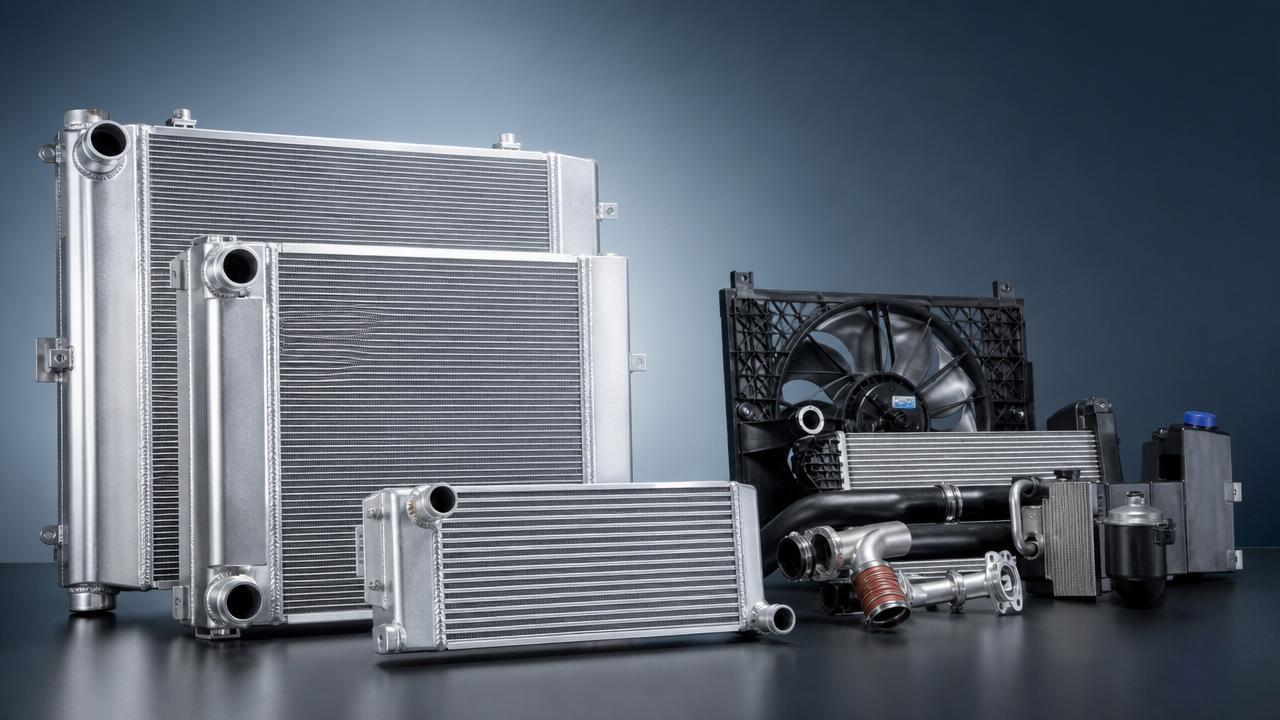
Vehicle radiator buying questions that deserve attention first
When sourcing a Vehicle radiator, the lowest quote rarely tells the full story.
Cooling efficiency, material quality, fitment accuracy, and supply stability often determine total cost far more than unit price.
A poor Vehicle radiator can trigger overheating, downtime, repeat claims, and premature replacement.
A well-matched Vehicle radiator supports reliable heat transfer, long service life, and predictable maintenance performance.
That is why buying decisions should start with the right questions, not the cheapest number on a quotation sheet.
Why a structured evaluation reduces radiator risk
The Vehicle radiator market includes large quality gaps even when products look similar in photos or catalog descriptions.
Tube thickness, fin density, brazing consistency, pressure resistance, and core design all affect thermal performance and durability.
A structured review helps compare suppliers using measurable points instead of assumptions.
It also helps prevent hidden costs linked to returns, delayed shipments, field failures, and unstable product quality.
For heavy trucks, construction machines, and new energy cooling systems, consistency is often more valuable than a small upfront discount.
Core questions to ask before selecting a Vehicle radiator
- Does the Vehicle radiator meet the required heat dissipation target under real operating loads, ambient temperatures, and airflow conditions?
- What materials are used for tanks, tubes, fins, and headers, and how do they balance corrosion resistance, strength, and thermal transfer?
- Is fitment verified against OEM drawings, mounting points, hose positions, and vehicle space limitations to reduce installation errors?
- What pressure, vibration, leak, and thermal cycling tests are performed before shipment, and how often are batches inspected?
- Can the supplier maintain stable dimensions, welding quality, and packaging protection across repeat orders and mixed-volume production?
- How strong is production capacity during peak demand, and what lead times apply for standard models and customized Vehicle radiator projects?
- Are traceability records available for raw materials, process control, and finished units in case quality issues appear in the field?
- What export experience, compliance support, and documentation capability does the supplier offer for international shipment and customs clearance?
- How does the supplier handle technical communication, drawing confirmation, sample approval, and after-sales response when problems need fast correction?
- What is the full lifecycle cost after freight, warranty exposure, replacement frequency, and downtime impact are added to the quoted price?
Performance details that often matter more than price
Cooling efficiency and core design
A Vehicle radiator must match engine heat load, airflow path, coolant flow rate, and working environment.
Core thickness alone is not enough.
Tube structure, fin geometry, and internal flow design influence actual cooling results more directly.
Material grade and joining quality
Lower-cost material may reduce corrosion resistance and shorten service life in harsh road, dust, or moisture conditions.
Consistent brazing or welding quality is equally critical because small defects can become leaks after vibration and thermal cycling.
Dimensional accuracy
Even a high-performing Vehicle radiator creates problems if mounting holes, inlet positions, or frame clearances are slightly off.
Accurate fitment reduces labor time and prevents forced installation damage.
Packaging and transport protection
Radiators can be damaged before installation if corners, fins, or outlets are not protected correctly.
Strong export packaging is part of product quality, not a separate issue.
Questions for different application scenarios
Heavy truck applications
Long-distance and high-load transport requires a Vehicle radiator with reliable thermal stability and vibration resistance.
Focus on pressure testing, material consistency, and repeat-order stability across fleets and seasonal demand cycles.
Construction machinery
Dust, shock, and continuous load place extra stress on cooling systems.
Ask about reinforced structure, anti-clog fin design, and field performance under harsh site conditions.
New energy cooling modules
New energy systems demand tighter control of thermal balance, compact structure, and manufacturing precision.
Here, supplier engineering support is especially important during development and validation.
Charge air cooling related needs
Some programs also require intercooler support alongside a Vehicle radiator selection plan.
For example, INTERCOOLER FOR MAN XD163 corresponds to MAN OEM 8161300216 with size 665*892*62.
This kind of matching data helps confirm dimensional compatibility and simplify multi-part sourcing for cooling assemblies.
Important warning signs that are often overlooked
A quotation without test data may hide uncertainty in actual Vehicle radiator performance.
Basic drawings, pressure results, and inspection standards should be available before volume commitment.
Unclear raw material sourcing can create quality variation between orders.
That inconsistency may appear only after installation, making replacement more expensive than initial savings.
Weak communication during sampling is another risk signal.
If dimensions, tolerances, or packaging details are not confirmed early, repeat issues usually follow.
Very short lead time promises without production evidence can also become a supply chain problem later.
Capacity claims should match factory scale, equipment level, and process management.
Practical steps for better execution
- Create a fixed comparison sheet for each Vehicle radiator candidate, covering performance, material, dimensions, testing, packaging, and lead time.
- Request drawings, sample photos, test reports, and packing details before comparing prices.
- Validate one sample against actual installation points and operating conditions whenever possible.
- Review supplier response speed and technical clarity during communication, not only final quotation value.
- Track defect rate, delivery reliability, and batch consistency after the first order to support future sourcing decisions.
Choosing a supplier with long-term value
A dependable Vehicle radiator partner should combine engineering ability, production control, and stable global delivery support.
Liaocheng Xinde Auto Parts Co., Ltd. has focused on water tank radiators, intercoolers, construction machinery radiators, and new energy radiator modules since 2018.
With registered capital of 5 million RMB and total investment of 50 million RMB, the company has expanded rapidly within China’s auto parts industry.
Its development includes research, production, and global sales, supported by honors such as High-tech Enterprise and Trustworthy Unit for Consumers.
That background matters because a Vehicle radiator supplier should offer more than product listings.
It should provide continuity, technical understanding, and confidence for repeat supply.
Final takeaway for smarter Vehicle radiator selection
Price is important, but it should be the result of technical confirmation, not the starting point.
The best Vehicle radiator choice usually comes from balancing cooling performance, material quality, fitment accuracy, test validation, and supplier reliability.
Use a clear question list, compare evidence carefully, and verify each detail that affects lifecycle cost.
That approach improves product stability, protects downstream performance, and supports stronger long-term sourcing results.