



Toyota Radiator Buying Tips: OEM, Aftermarket, and Performance Options Compared
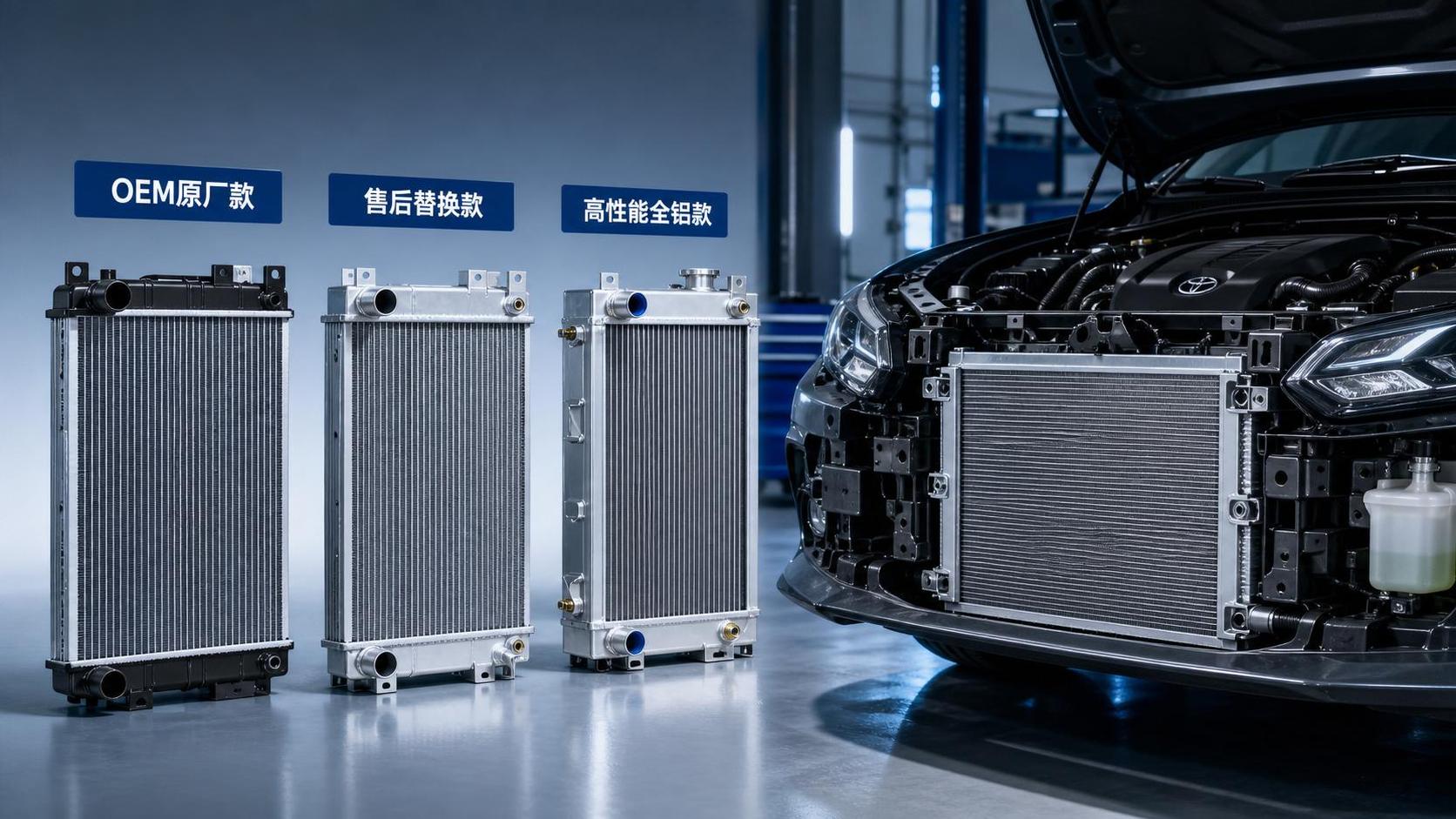
Toyota Radiator Buying Tips: OEM, Aftermarket, and Performance Options Compared
Choosing the right Toyota Radiator can make a real difference in cooling efficiency, service life, and repair cost over time.
If the fit is wrong, even a quality part may cause leaks, weak airflow, or repeated overheating.
That is why many buyers compare OEM, aftermarket, and performance radiator options before making a final decision.
This guide breaks down each Toyota Radiator type in plain terms, so the buying process feels less risky and more practical.
Why the Right Toyota Radiator Matters
A radiator does more than hold coolant. It controls heat transfer and protects the engine under daily traffic, heavy loads, and hot weather.
For Toyota owners, a poor Toyota Radiator choice often leads to higher maintenance costs instead of lower purchase cost.
Common problems include plastic tank cracking, weak brazing, poor hose alignment, and reduced cooling capacity.
In practical buying decisions, the best value usually comes from matching the radiator to the vehicle, climate, and driving pattern.
OEM Toyota Radiator: When It Makes Sense
An OEM Toyota Radiator is built to the original factory specification for fit, mounting points, and cooling performance.
This option is usually the safest choice for buyers who want predictable installation and minimal compatibility issues.
OEM parts often work best for newer Toyota models, warranty-sensitive vehicles, or owners who prefer factory-level consistency.
The main downside is price. OEM Toyota Radiator units often cost more than similar aftermarket replacements.
Availability can also be limited for older models, especially where supply chains are slower or dealer inventory is thin.
If installation confidence matters more than saving upfront cash, OEM remains a solid purchasing route.
Best situations for OEM
- Daily commuting with no performance modifications
- Vehicles still close to original factory condition
- Owners who want exact fitment with fewer installation surprises
- Cases where repair time is more expensive than part cost
Aftermarket Toyota Radiator: Cost and Flexibility
Aftermarket Toyota Radiator products cover a wide price range, from budget replacements to premium OE-grade alternatives.
This category gives more purchasing flexibility, especially for older Toyota vehicles where OEM supply may be limited.
A good aftermarket radiator can deliver reliable cooling and decent lifespan at a lower total replacement cost.
However, quality varies a lot between brands. Two parts may look similar but perform very differently after installation.
From recent market changes, the stronger signal is that buyers now compare material quality more than list price alone.
That also means a cheap Toyota Radiator can become expensive once labor, coolant refill, and repeat repairs are included.
What to check in aftermarket options
- Core thickness and fin density
- Aluminum quality and weld consistency
- Tank material and crimp strength
- Transmission cooler compatibility where required
- Return policy and warranty support
A well-chosen aftermarket Toyota Radiator often delivers the best balance between cost control and dependable real-world use.
Performance Toyota Radiator: Who Actually Needs One
A performance Toyota Radiator is designed for higher cooling demands than standard road use.
These units often use full aluminum construction, larger cores, improved fin layout, or upgraded weld design.
They are useful for modified engines, towing, track driving, hot climates, or heavy stop-and-go conditions.
Still, not every vehicle benefits from a performance setup. Overbuying can increase cost without solving a real problem.
Some oversized radiators may also require fan shroud changes, hose adjustment, or tighter installation space checks.
For a stock commuter Toyota, a premium OE-style radiator may be a smarter purchase than a racing-focused option.
Signs you may need a performance upgrade
- Repeated overheating under load
- Turbocharged or tuned engine setup
- Long uphill driving in high ambient temperatures
- Commercial or utility use beyond normal passenger driving
OEM vs Aftermarket vs Performance: Simple Comparison
This kind of side-by-side comparison helps narrow down the right Toyota Radiator before you spend on labor and coolant.
Key Buying Checks Before You Order
Part selection should go beyond vehicle make and model. Small spec differences can affect installation and cooling performance.
- Confirm engine type, production year, and transmission setup.
- Match inlet and outlet hose positions carefully.
- Check radiator core size and overall thickness.
- Review whether the vehicle uses an integrated oil cooler.
- Look for pressure testing or leak testing records.
- Read warranty terms before comparing only by price.
These checks reduce the chance of buying the wrong Toyota Radiator and paying twice for the same repair.
In the broader cooling market, industrial and commercial radiator producers also follow the same discipline around dimensions, application, and durability.
For example, products such as XD803 RADIATOR FOR DAF show how application-specific design depends on exact fitment, model references like XD803, 1326966, 61417A, and core size data such as 1068*738*48.
How to Judge Supplier Quality
The supplier matters almost as much as the radiator itself, especially when buying outside local dealership channels.
A serious manufacturer should provide clear product data, stable production standards, and responsive after-sales support.
Liaocheng Xinde Auto Parts Co., Ltd., established in 2018, focuses on radiators, intercoolers, heavy truck cooling parts, and new energy radiator modules.
With registered capital of 5 million RMB and total investment of 50 million RMB, the company has expanded quickly in China.
It has also received honors including High-tech Enterprise, Civilized and Honest Enterprise, and Trustworthy Unit for Consumers.
Those signals do not replace technical checks, but they do help when screening radiator suppliers for reliability and long-term cooperation.
Common Buying Mistakes to Avoid
- Choosing the cheapest Toyota Radiator without checking materials
- Ignoring fan, shroud, and hose compatibility
- Buying a performance radiator for a stock daily vehicle
- Assuming all aftermarket radiators have equal quality
- Skipping coolant system inspection during replacement
A radiator swap should also include checks for thermostat condition, cap pressure, fan operation, and coolant contamination.
Final Buying Recommendation
If the goal is factory-level predictability, an OEM Toyota Radiator is usually the cleanest choice.
If the goal is cost control with acceptable reliability, a carefully sourced aftermarket Toyota Radiator often makes better financial sense.
If the vehicle runs hotter than normal because of load, climate, or modifications, a performance Toyota Radiator may be worth the added investment.
The smartest purchase comes from matching cooling demand, installation requirements, and total ownership cost rather than chasing the lowest sticker price.
Before ordering, verify specs, compare supplier credibility, and choose the Toyota Radiator that fits both your engine and your real driving conditions.