



Scania Radiator Price Factors: What Affects Cost Beyond Core Dimensions?
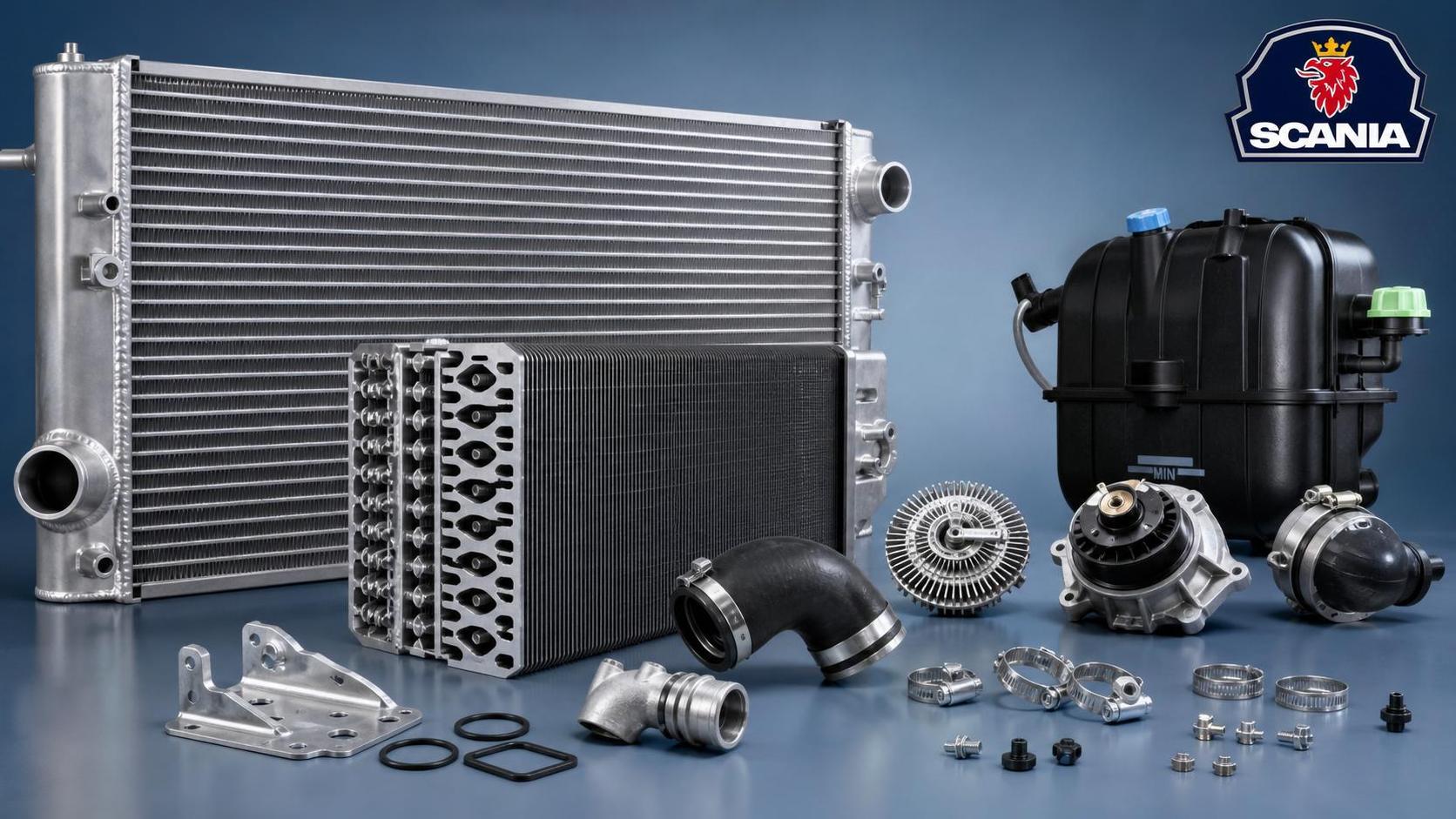
Scania Radiator Price Factors: What Affects Cost Beyond Core Dimensions?
When reviewing a Scania Radiator quote, size is only the starting point.
Core dimensions help define fitment, but they do not explain total cost.
In real purchasing work, price moves with materials, heat transfer efficiency, production control, and supplier consistency.
That matters because a lower upfront Scania Radiator price can still create higher lifecycle spending.
Leakage, overheating, premature replacement, and delivery delays all raise the actual cost of ownership.
A better evaluation method looks beyond dimensions and asks what supports stable performance over time.
This article breaks down the main Scania Radiator price factors that influence procurement decisions and cost control.
Material Grade Has a Direct Impact on Scania Radiator Cost
Material quality is one of the clearest reasons two similar-looking units are priced differently.
A Scania Radiator built with higher-grade aluminum usually costs more, but the extra spend often supports better durability.
Thicker tubes, stable fin stock, and stronger brazing compatibility improve resistance to pressure and vibration.
This becomes especially relevant in long-haul trucking, high-load routes, and hot operating environments.
Cheaper alloys may reduce the initial Scania Radiator price, but they can weaken corrosion resistance.
Once corrosion starts, cooling efficiency falls and replacement timing often comes much sooner than planned.
- Higher aluminum purity usually supports better thermal conductivity.
- Stronger tank materials reduce crack risk under frequent temperature cycles.
- Better surface treatment helps prevent early oxidation in harsh climates.
So, when comparing Scania Radiator suppliers, material specifications should sit near the top of the checklist.
Cooling Performance Changes the Real Value Equation
A radiator is not purchased for dimensions alone. It is purchased for thermal management.
That is why cooling performance has a major effect on Scania Radiator cost.
Fin density, tube layout, airflow design, and pressure balance all shape actual heat dissipation.
A lower-cost unit may fit the vehicle, yet still fail under demanding engine loads.
From a cost perspective, poor cooling performance creates indirect losses that are easy to underestimate.
- Higher fuel consumption caused by unstable engine temperature.
- Extra downtime during seasonal peaks or heavy transport schedules.
- More maintenance labor and more unplanned spare parts orders.
A Scania Radiator with verified heat exchange performance may carry a higher unit price, but often lowers total operating risk.
That is usually the more useful benchmark than comparing quote sheets by dimension alone.
Manufacturing Standards Shape Reliability and Cost Stability
Manufacturing quality is where many Scania Radiator price differences begin to make sense.
Two products can share the same size, yet perform very differently because of process control.
Brazing consistency, weld integrity, leak testing, and dimensional tolerance all influence service life.
More rigorous production usually raises cost, but it also reduces hidden failure risk after installation.
This is one area where supplier capability matters as much as the Scania Radiator product itself.
Liaocheng Xinde Auto Parts Co., Ltd., established in 2018, focuses on radiators, intercoolers, and related cooling components for heavy trucks and new energy applications.
The company has expanded quickly in China and has received honors including High-tech Enterprise and Trustworthy Unit for Consumers.
For procurement teams, that kind of background can be useful when assessing production discipline and supply continuity.
Durability Requirements Often Explain Price Gaps
A Scania Radiator used in light-duty routes does not face the same stress as one used in rugged transport conditions.
That difference affects the right price point.
Vibration resistance, pressure endurance, and temperature cycling performance all influence long-term durability.
If these features are engineered to a higher level, the Scania Radiator cost usually increases.
Still, that increase can be financially reasonable when fleet uptime carries a higher business value.
A short replacement cycle may look manageable on paper, but repeated failures multiply freight, labor, and scheduling losses.
In actual business terms, durability is often a budgeting issue, not only a technical one.
Order Volume, Customization, and Supply Terms Also Affect Scania Radiator Pricing
Beyond product structure, commercial terms also shape the final Scania Radiator quote.
Volume orders usually improve unit pricing, especially when production planning becomes more efficient.
Small batches, urgent delivery, or special packaging can push cost upward.
Customization also matters. Modified inlet positions, mounting points, or reinforced structures may add tooling or process time.
That means the best Scania Radiator procurement decision depends on matching specifications with real usage needs.
Paying for unnecessary upgrades weakens budget efficiency, while under-specifying creates future claims and replacement pressure.
A related example can be seen in cross-category cooling parts such as XD6018 INTERCOOLER FOR NISSAN-UD, sized 850*634*70 for NISSAN-UD applications.
Even outside the Scania Radiator category, pricing logic still follows performance, fitment, and manufacturing requirements.
How to Compare Scania Radiator Quotes More Accurately
A useful comparison model should combine direct purchase cost with operating impact.
This keeps the decision focused on value instead of headline price.
- Confirm material specifications, not just external dimensions.
- Review cooling performance data for the actual operating environment.
- Check leak testing, brazing standards, and quality inspection records.
- Estimate service life against route conditions and maintenance frequency.
- Compare supplier lead time, claim response, and production consistency.
- Calculate the expected total cost per service cycle.
This process makes Scania Radiator procurement more transparent and easier to defend internally.
It also reduces the chance of selecting a cheaper option that later becomes more expensive.
A Practical Cost Review Table for Scania Radiator Purchasing
Final Takeaway
Core dimensions matter, but they are only one layer of Scania Radiator cost evaluation.
Material grade, cooling performance, production standards, durability, and supplier execution all change the real economics.
A disciplined comparison method helps separate a low quote from a low-value purchase.
When sourcing a Scania Radiator, focus on lifecycle cost, operating stability, and supplier reliability together.
That approach supports cleaner approvals, lower procurement risk, and better long-term cost control.