



Radiator vs Condenser: What Is the Difference in Vehicle Cooling Systems?
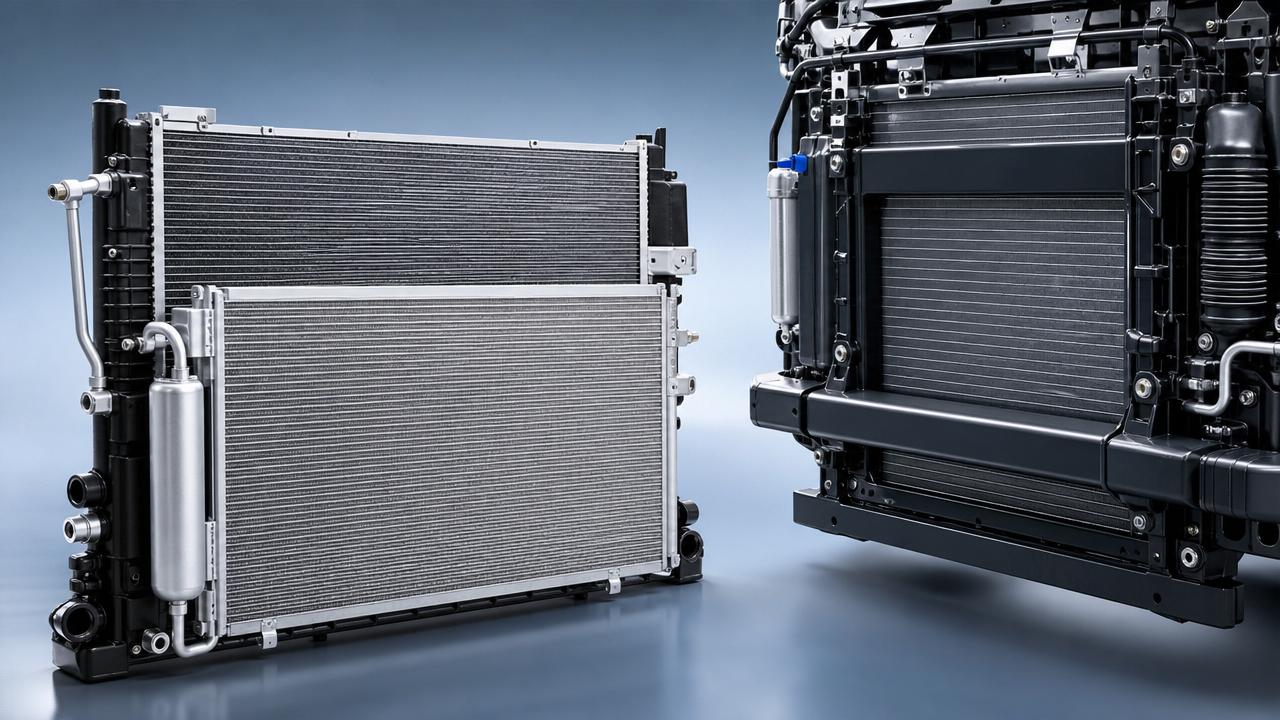
Radiator vs Condenser: What Is the Difference in Vehicle Cooling Systems?
In vehicle cooling systems, the radiator and condenser may look similar, but they do very different jobs.
That visual similarity often causes confusion during maintenance, troubleshooting, or parts replacement.
A radiator controls engine temperature.
A condenser supports the air conditioning system.
Knowing the difference helps prevent wrong diagnoses, unnecessary downtime, and costly replacements.
It also makes it easier to choose the right component for heavy trucks, passenger vehicles, and construction equipment.
What Does a Radiator Do?
The Radiator is a heat exchanger in the engine cooling circuit.
Its main job is to remove heat from engine coolant after the coolant absorbs combustion heat.
Hot coolant leaves the engine and flows into the Radiator core.
Air passes through thin fins and tubes, carrying heat away from the coolant.
The cooled fluid then returns to the engine to repeat the cycle.
Without a properly working Radiator, engine temperatures rise fast.
That can lead to warped cylinder heads, gasket failure, reduced efficiency, and severe engine damage.
What Does a Condenser Do?
The condenser belongs to the vehicle air conditioning system, not the engine coolant loop.
It releases heat from high-pressure refrigerant after the compressor pressurizes it.
Inside the condenser, refrigerant changes from hot gas into high-pressure liquid.
That liquid then moves deeper into the AC cycle to create cool cabin air.
If the condenser becomes blocked or damaged, cabin cooling drops noticeably.
In some cases, AC pressure rises too high and stresses other system components.
Radiator vs Condenser: Core Differences
At a glance, both parts sit near the front of the vehicle.
Both use fins and tubes.
Both depend on airflow.
Still, their function, working fluid, and failure symptoms are not the same.
This difference matters most during diagnosis.
If the engine overheats, the Radiator deserves close attention first.
If the cabin stays warm, the condenser becomes a likely suspect.
Where They Sit and Why Placement Matters
In many vehicles, the condenser sits in front of the Radiator.
That location gives it first access to incoming air.
The Radiator sits just behind it, using the remaining airflow.
This layout works well, but it creates a practical issue.
Dust, mud, insects, and road debris often collect between the two units.
When airflow is restricted, both engine cooling and AC performance may suffer.
This is especially common in trucks, off-road equipment, and hot-weather fleets.
How to Tell Which Part Has a Problem
A quick symptom check can save time.
It also reduces the risk of replacing the wrong part.
- If the temperature gauge climbs, inspect the Radiator, coolant level, fan, and hoses.
- If coolant leaks appear, check the Radiator tanks, seams, and core for damage.
- If the AC blows warm air, inspect the condenser for fin blockage or external impact.
- If high-side AC pressure rises, the condenser may have restricted heat transfer.
- If both systems feel weak, airflow blockage in the front cooling pack is possible.
More obvious signals include corrosion, bent fins, oil traces, and repeated overheating under load.
These clues usually point to real heat exchange problems, not just sensor errors.
Why Radiator Quality Matters in Heavy-Duty Applications
In heavy trucks and machinery, heat loads stay high for long periods.
That makes Radiator design, material quality, and production consistency far more important.
Liaocheng Xinde Auto Parts Co., Ltd. has focused on this field since 2018.
The company specializes in water tank radiators, intercoolers, construction machinery radiators, and related modules.
Its product development supports heavy trucks and new energy cooling applications.
In practical sourcing work, stable heat rejection and reliable fitment often matter more than headline pricing.
A suitable option for replacement planning is RADIATOR FOR SCANIA XD055.
For fleet operations, the right Radiator can help reduce downtime, stabilize engine temperatures, and support longer service intervals.
Maintenance Tips for Better Cooling Performance
Cooling problems often build slowly.
Routine checks are usually cheaper than emergency repairs.
- Clean external fins carefully to restore airflow.
- Inspect for leaks, cracks, and fin damage during service intervals.
- Use the correct coolant mixture to protect the Radiator from corrosion.
- Check fan operation because weak airflow hurts both components.
- Keep the space between condenser and Radiator free from packed debris.
- Investigate rising temperatures early, especially under towing or heavy load.
These actions improve heat transfer and lower the chance of sudden failure.
They also help extend the useful life of the entire front cooling package.
How to Choose the Right Replacement
When replacing a Radiator or condenser, exact matching matters.
Size alone is not enough.
- Confirm vehicle model, engine type, and operating conditions.
- Check core thickness, mounting points, and inlet or outlet positions.
- Review material quality, pressure resistance, and brazing consistency.
- Consider whether the vehicle works in high dust, high load, or high temperature environments.
This is where supplier experience becomes valuable.
A well-matched Radiator performs better and usually lasts longer in demanding service conditions.
Final Takeaway
The radiator and condenser may look alike, but their roles are completely different.
The Radiator protects the engine by removing coolant heat.
The condenser supports cabin comfort by releasing refrigerant heat.
Once that distinction is clear, troubleshooting becomes much more accurate.
For anyone comparing parts, diagnosing overheating, or reviewing cooling system upgrades, understanding the Radiator is the smart starting point.
A careful inspection, the right replacement choice, and regular cleaning can keep vehicle cooling systems working efficiently for the long run.