



Common Radiator Failure Signs and What They Mean for Cooling Performance
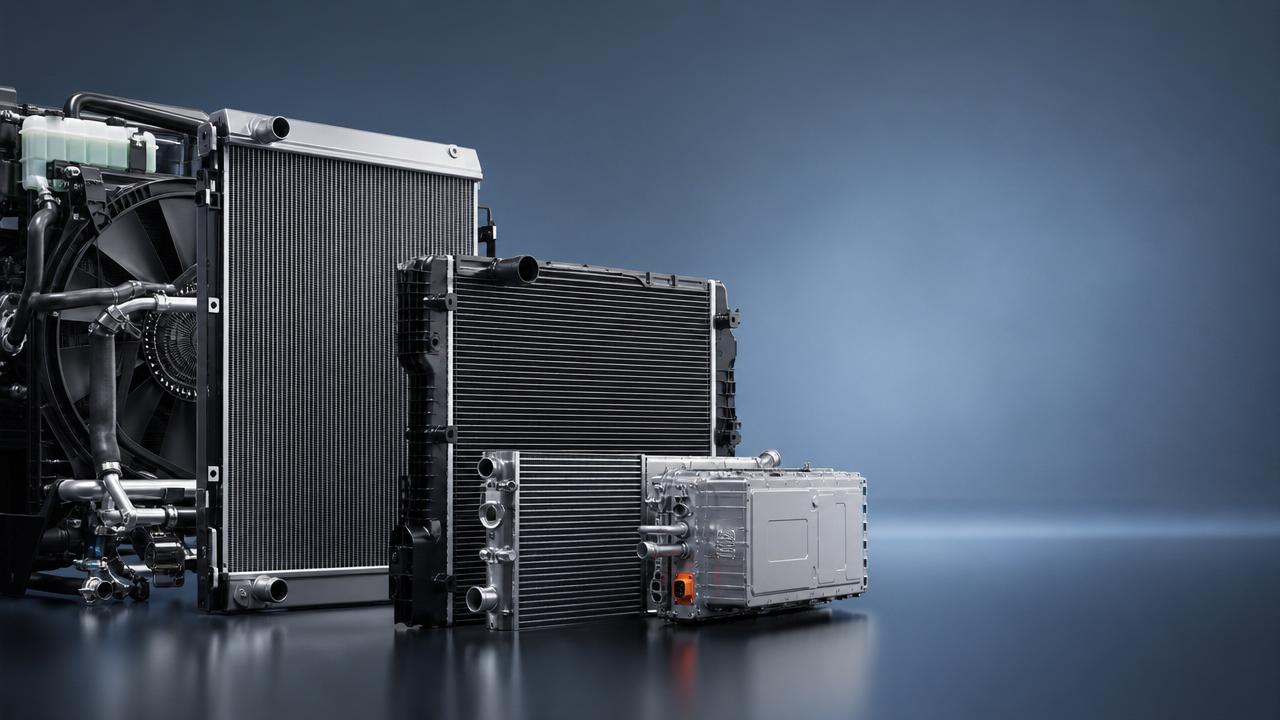
Why early Radiator symptoms matter more in real operating conditions
A Radiator usually signals trouble long before complete failure appears.
Small leaks, unstable temperature, rust traces, or weak heat transfer often start as minor service notes.
In actual use, those signs mean different things in different systems.
A heavy truck climbing under load stresses cooling capacity differently from a construction machine idling in dust.
A new energy cooling module also reacts differently than a conventional engine loop.
That is why symptom reading should never stop at the visible fault.
The better approach is to connect each Radiator sign with duty cycle, airflow, coolant quality, and thermal load.
For companies rooted in radiator manufacturing, this distinction is practical rather than theoretical.
Liaocheng Xinde Auto Parts has grown around that reality, focusing on water tank radiators, intercoolers, construction machinery radiators, heavy truck systems, and new energy modules.
That product background reflects a simple fact.
Cooling performance depends on matching components to the real scene, not only to catalog dimensions.
Different operating scenes change what a Radiator warning really means
The same symptom can point to very different root causes.
Coolant loss on a highway vehicle may suggest vibration fatigue, hose connection stress, or cap pressure issues.
The same coolant loss on construction equipment may be linked to external fin damage or contamination around the core.
Overheating during long uphill driving usually highlights insufficient heat rejection under sustained load.
Overheating during low-speed site work often points to poor airflow, blocked fins, or fan-side inefficiency.
Even cabin heat complaints can reveal a broader Radiator condition.
Weak thermal output sometimes shows that coolant circulation and heat exchange are already compromised.
A useful diagnosis starts by asking where the temperature problem appears, how often it repeats, and under what load.
Long-haul heavy trucks: watch for gradual heat rejection loss
On long-distance routes, a Radiator rarely fails in one moment.
More often, cooling reserve slowly shrinks.
Drivers may first notice longer fan engagement, rising temperature on grades, or coolant topping-off becoming more frequent.
This scene puts emphasis on sustained thermal performance rather than short peak events.
If the Radiator core is partially restricted, the truck may still behave normally in mild weather.
The weakness appears when ambient temperature rises or cargo load increases.
In that case, replacement decisions should focus on core efficiency, material stability, and vibration durability.
Construction machinery: contamination can look like internal failure
Earthmoving and site equipment create a different cooling challenge.
Dust, oil mist, chaff, and mud often reduce external airflow before internal coolant flow is affected.
That means a hot-running Radiator does not always need immediate core replacement.
Sometimes the real issue is blocked fin spacing or poor cleaning practice.
The judgment point here is simple.
Check whether temperature rises mainly during low-speed work, repeated idling, or debris-heavy operation.
If yes, airflow-side inspection should come before assuming internal corrosion.
New energy thermal loops: small inefficiency creates larger system effects
Modern cooling modules are less tolerant of thermal imbalance.
A Radiator or related exchanger operating below target efficiency can affect battery temperature, inverter stability, and overall energy management.
In these applications, early signs are often subtle.
You may see fluctuating thermal readings, uneven cooldown response, or repeated control system intervention.
The main difference is that performance loss appears in system behavior before obvious mechanical leakage is visible.
That calls for tighter compatibility checks on flow design, pressure range, and module integration.
Common failure signs and how to read them without guessing
Some warning signs appear in almost every category, but they should not be interpreted in isolation.
This kind of comparison prevents rushed decisions.
It also helps separate a failing Radiator from nearby issues in pumps, fans, caps, or piping.
Where misjudgment happens most often
In practice, cooling problems are often misread because visible symptoms feel conclusive.
- Treating every temperature rise as a core failure, while airflow or fan efficiency is the real limit.
- Comparing only size and mounting points, while ignoring fin density, pressure behavior, and duty cycle.
- Replacing a Radiator after leakage, but leaving vibration sources or contaminated coolant unchanged.
- Focusing on purchase price, while repeated downtime creates the larger operating cost.
Another common mistake is assuming similar vehicles need the same cooling solution.
Two systems may share dimensions yet face different thermal loads, climates, or service intervals.
That is especially relevant when choosing alternatives across aftermarket channels.
A passenger vehicle application such as Radiator for HONDA may require a very different balance of fitment, material, and cooling response than a heavy-duty platform.
How to match the right Radiator response to the actual scene
A better replacement or repair strategy starts with a short scene-based review.
- Confirm load pattern, including continuous climbing, stop-start work, idling time, or thermal cycling frequency.
- Check environmental pressure, such as dust, humidity, corrosive exposure, or seasonal temperature swings.
- Review service records for coolant quality, cleaning method, and repeated leakage locations.
- Compare replacement design against actual airflow path, not only part number compatibility.
When the scene is harsh, structural durability matters as much as nominal heat exchange data.
When the system is tightly integrated, compatibility and long-term stability become the key filters.
This is why experienced suppliers with broad radiator categories are often better positioned to support cross-scene judgment.
Knowledge built from heavy trucks, machinery radiators, and new energy modules usually reveals where a Radiator design succeeds or falls short.
A practical way to compare scene differences before final decisions
If cooling symptoms repeat, a simple comparison framework helps reduce guesswork.
Using this view makes the next step clearer.
The goal is not simply to replace a bad Radiator.
The goal is to restore cooling performance in the conditions where the failure actually develops.
What to do next when warning signs start to repeat
Repeated coolant loss, overheating, or weak heat transfer should trigger a structured review.
Start with the operating scene, then confirm system load, airflow condition, coolant history, and replacement compatibility.
That sequence usually produces better decisions than reacting to the most visible symptom alone.
Where the application changes from passenger vehicles to heavy-duty platforms, the judgment standard should change as well.
Even a part example like Radiator for HONDA reminds us that fitment logic must stay tied to actual cooling demands.
When the scene is clearly defined, the right Radiator choice becomes easier to verify, maintain, and trust over time.