



How to Choose a Radiator: Core Size, Fin Density, Flow Rate, and Pressure Rating
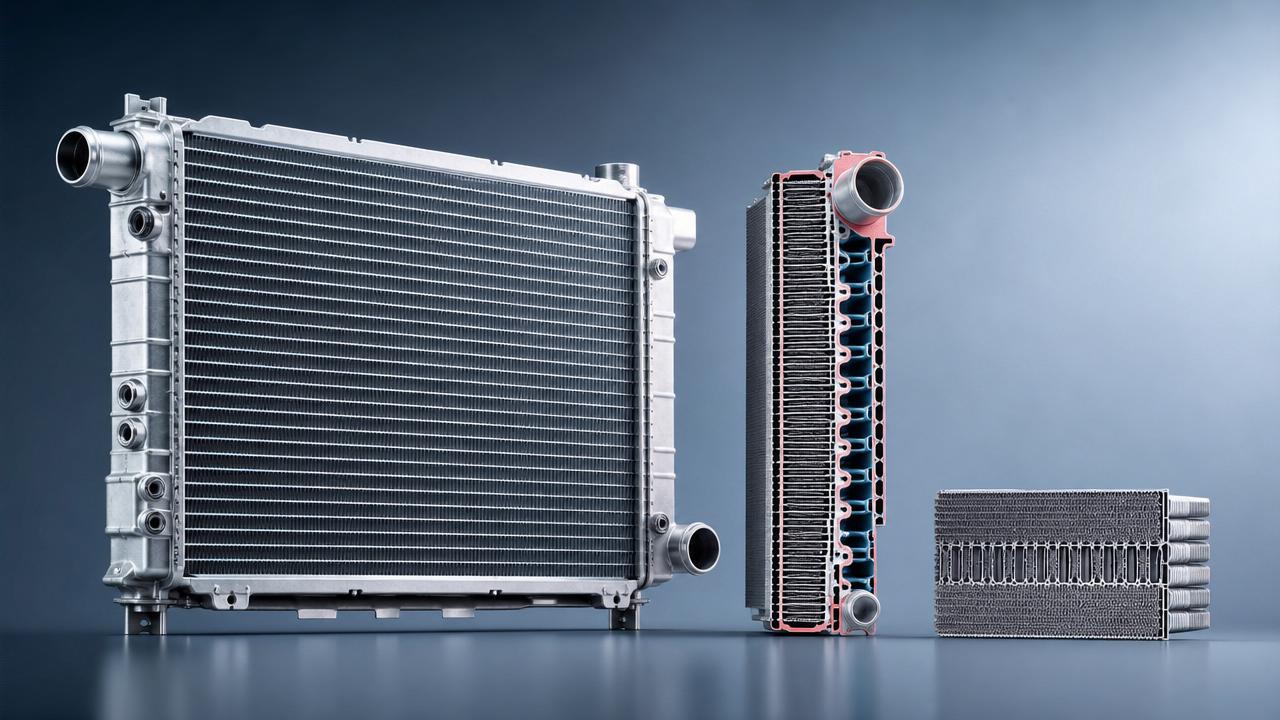
Choosing a Radiator is rarely a single-parameter decision. In parts evaluation, cooling efficiency, service life, installation fit, and system pressure all interact, especially in heavy trucks, construction equipment, and new energy platforms.
That is why core size, fin density, flow rate, and pressure rating deserve to be reviewed together. A Radiator that performs well on paper can still create field issues if one specification is mismatched with the operating environment.
In the auto parts sector, this matters even more as thermal loads rise and duty cycles become less forgiving. Companies with strong manufacturing depth, such as Liaocheng Xinde Auto Parts Co., Ltd., reflect this shift through continued focus on water tank radiators, intercoolers, construction machinery radiators, and heavy-duty cooling modules.
Founded in 2018, with registered capital of 5 million RMB and total investment of 50 million RMB, the company has expanded quickly and earned recognition including High-tech Enterprise and Trustworthy Unit for Consumers. That background signals how central reliable cooling components have become in today’s parts market.
What a good Radiator selection really means
A suitable Radiator is not simply the largest unit available. It is the one that matches heat rejection demand, coolant circuit characteristics, airflow conditions, packaging space, and pressure requirements without creating unnecessary system stress.
In practice, selection usually starts with the thermal profile. Engine output, ambient temperature, operating duration, dust exposure, idle time, and load fluctuations all influence how much heat must be removed.
The second layer is compatibility. Mounting points, hose layout, coolant path geometry, material type, and service access can determine whether a technically strong option remains practical in the field.
Core size sets the thermal foundation
Core size is often the first visible indicator of cooling potential. It affects the available heat transfer area and the volume of coolant moving through the heat exchange section.
A larger core generally supports higher heat dissipation. Even so, size alone does not guarantee better performance. If airflow is limited or coolant distribution is uneven, a bigger core may deliver less benefit than expected.
Thickness also deserves attention. A thicker core can increase thermal capacity, but it may raise air resistance. In dusty or low-speed applications, that trade-off can reduce real operating efficiency.
For that reason, dimensions should be reviewed in relation to fan capability, grille opening, and surrounding module layout. Core size works best as part of a system view, not an isolated number.
When size becomes a risk
- Oversized cores can increase weight and packaging difficulty.
- Undersized cores may pass basic tests but fail during peak duty cycles.
- Improper thickness can reduce airflow through the cooling stack.
- Poor dimensional matching may cause vibration or mounting fatigue.
Fin density affects both efficiency and cleanliness
Fin density describes how tightly fins are arranged across the core. More fins usually create more surface area, which can improve heat transfer under controlled airflow conditions.
However, higher fin density also increases resistance to air movement. In clean highway use, this may be acceptable. In construction machinery or mixed-road use, debris clogging becomes a more serious concern.
This is one reason a Radiator should be matched to its environment. A design optimized for compact performance in one platform may be less suitable where mud, dust, or fibers regularly block air passages.
Serviceability matters here as well. Fin structures that trap contamination can increase maintenance frequency and gradually reduce cooling stability, even if initial test results look strong.
Flow rate is about balance, not maximum volume
Flow rate is often misunderstood. More coolant flow can help carry heat away, but only within a balanced system. If flow is too low, heat transfer drops. If flow is too high, residence time and pressure behavior may create new issues.
The right Radiator must work with pump output, tube design, coolant path resistance, and thermostat behavior. Evaluation should consider how the entire circuit behaves at startup, full load, and high ambient temperature.
Flow distribution across the core is just as important as total volume. Uneven flow can create hot spots, leaving part of the cooling area underused while another section carries too much thermal stress.
In vehicle programs with limited installation space, this becomes a practical comparison point. A well-designed tube arrangement may outperform a larger but less balanced unit.
Useful checks during comparison
- Review coolant inlet and outlet dimensions.
- Check whether internal passages support uniform distribution.
- Compare flow resistance under operating temperature.
- Confirm matching with pump and fan characteristics.
Pressure rating protects long-term reliability
Pressure rating is not only a safety figure. It reflects how well a Radiator can maintain structural integrity under thermal expansion, pulsation, and system surges over time.
In heavy-duty and new energy applications, pressure stability has become more important because thermal cycles can be frequent and operating loads can change quickly. Weak pressure resistance may lead to leakage, seam fatigue, or premature failure.
This is why pressure cap settings, material choice, weld quality, and tank construction should be evaluated together. A nominal pressure value is useful, but durability depends on how that value is achieved in actual manufacturing.
Manufacturing capability becomes relevant at this stage. Suppliers with established research, production, and export experience in cooling assemblies are usually better positioned to maintain consistent pressure performance across batches.
How application context changes the decision
The best Radiator for a long-haul truck may not be the best option for a loader, excavator, or hybrid thermal module. Selection criteria shift according to airflow stability, contamination level, vibration, and heat rejection patterns.
For commercial road vehicles, packaging efficiency and durability under continuous mileage are major priorities. For construction machinery, anti-clogging ability and structural robustness may outweigh compactness.
For new energy systems, thermal management can be more integrated. In those cases, the Radiator should be reviewed alongside the broader module architecture rather than as an isolated part.
A practical reference can be seen in model-specific options such as xd81206 radiator for mercedes-benz. With a 570*568 size and application for Mercedess Benz, it illustrates how dimensional fit and platform matching remain central during comparison.
A grounded way to compare options
A useful evaluation process usually combines drawing review, thermal targets, material assessment, and durability expectations. Looking at one figure alone often leads to avoidable trade-offs.
When comparing Radiator candidates, several questions help narrow the decision.
- Does the core size match the actual heat load and available airflow?
- Is fin density appropriate for the contamination level of the application?
- Can the coolant circuit maintain stable flow without excessive restriction?
- Is the pressure rating aligned with long-term operating peaks and thermal cycling?
- Do manufacturing consistency and quality controls support repeatable field performance?
It is also worth checking whether the supplier’s product range covers adjacent components such as intercoolers and construction machinery radiators. Broader thermal system experience often improves application judgment.
Where to focus next
A strong Radiator decision starts with clear operating data. Heat load, airflow conditions, space limits, contamination exposure, and pressure behavior should be organized before comparing part numbers.
From there, core size, fin density, flow rate, and pressure rating can be judged as connected factors rather than isolated specifications. That approach usually leads to better cooling stability and fewer service surprises.
If the next step is narrowing alternatives, build a simple comparison sheet around those four parameters, then add platform fit, material quality, and durability evidence. A Radiator chosen that way is more likely to meet both thermal targets and real operating demands.