



Radiator for commercial vehicles trends seen at the expo
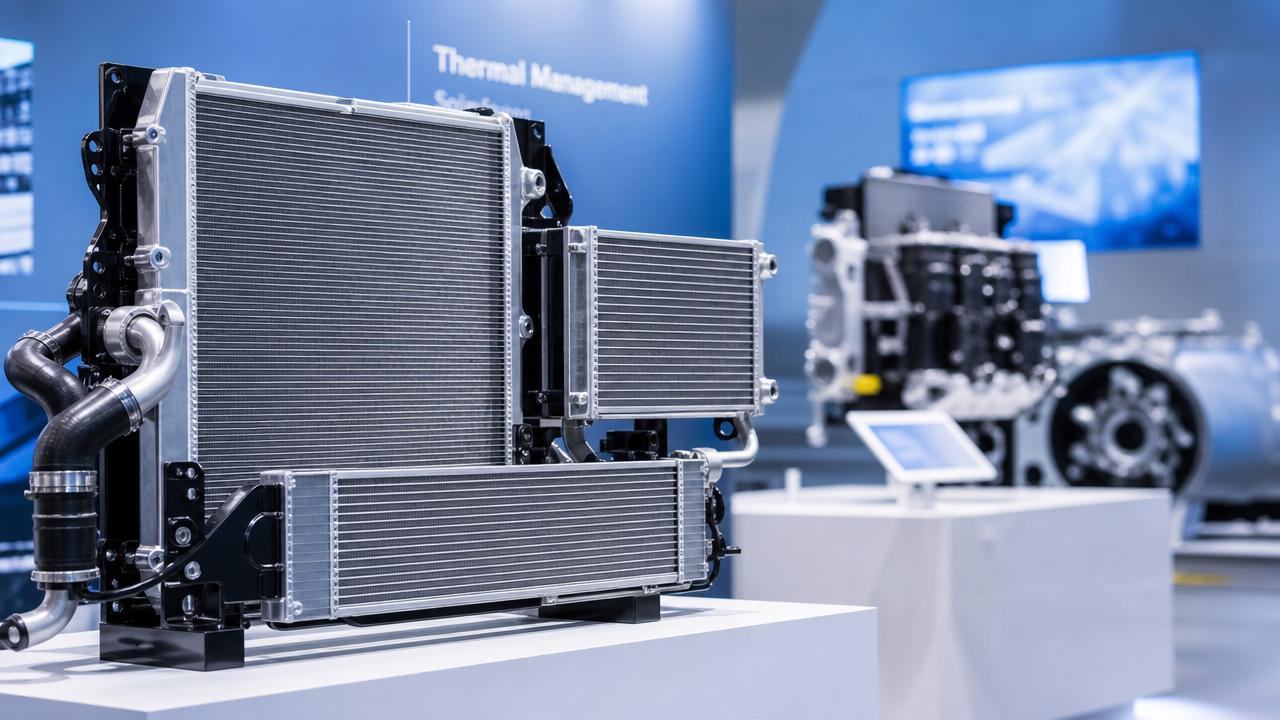
At the latest industry expo, the radiator for commercial vehicles segment revealed clear shifts in performance, durability, and thermal management for heavy-duty and new energy applications. For business decision-makers, these trends signal more than product upgrades—they highlight new opportunities to improve fleet reliability, reduce operating costs, and choose manufacturing partners with stronger R&D and global supply capabilities.
What changed at the expo for radiator for commercial vehicles buyers?
The strongest signal from the expo was simple: radiator for commercial vehicles is no longer treated as a standard replacement part. It is now a strategic thermal management component that directly affects uptime, fuel efficiency, maintenance intervals, and total cost of ownership.
For procurement managers, fleet owners, distributors, and OEM sourcing teams, this matters because cooling systems are under pressure from higher engine loads, stricter emissions expectations, denser packaging, and broader operating temperature ranges.
Heavy trucks, construction machinery, and new energy platforms are all pushing radiator design toward better heat exchange, stronger vibration resistance, and more stable production quality. Buyers are asking not only whether a radiator fits, but whether it supports long service life in real duty cycles.
- Higher demand for durable core structures that can withstand vibration, thermal cycling, and rough road use.
- More attention to full-system compatibility with intercoolers, water tanks, and module layouts.
- A stronger focus on supplier responsiveness, sample support, and stable export delivery capacity.
Why decision-makers are paying closer attention
A cooling failure does not stay inside the engine bay. It affects route planning, service schedules, customer commitments, and operating margins. When a radiator for commercial vehicles underperforms, the hidden cost often exceeds the part price by a wide margin.
That is why the discussion at the expo moved beyond low-price sourcing. Buyers increasingly want a partner that understands product application, manufacturing consistency, export coordination, and technical communication across multiple markets.
Which radiator for commercial vehicles trends matter most in real operations?
The most relevant trends can be grouped into performance, durability, integration, and sourcing reliability. The table below translates those expo observations into business meaning for commercial vehicle parts buyers.
These trends show that the buying decision is shifting from isolated SKU comparison to lifecycle thinking. A lower initial quote may look attractive, but weak thermal stability or inconsistent manufacturing can create repeated warranty exposure and supply disruption.
Performance is now linked to business continuity
For fleets and parts distributors, radiator for commercial vehicles performance is tied to service reputation. If a part fails early in high-load transport or on demanding construction routes, the customer remembers the downtime, not the discount.
This is especially true where ambient temperatures vary sharply, cargo loads are high, or engines operate for long periods in stop-and-go conditions. In such cases, reliable cooling becomes a profit-protection tool.
How should buyers evaluate technical performance instead of only price?
A smart radiator for commercial vehicles procurement process uses technical checkpoints. This does not require overcomplicated engineering language. It requires a practical review of the factors that influence fit, durability, heat exchange, and service stability.
- Core size and cooling area must match the vehicle’s thermal load rather than only the original outline.
- Material and joining quality should support pressure endurance and resistance to frequent heat cycles.
- Tank, bracket, and mounting design should be checked for vibration conditions in real road use.
- Supplier communication must include application confirmation, not just part number matching.
A sample parameter reference in practical sourcing
At the expo, many buyers asked for application-specific samples rather than generic catalog review. A practical example is radiator for scania, which is used for Scania applications and can help buyers think more clearly about dimensional confirmation and fitment review.
The key lesson is not that one size fits all. The lesson is that precise product data, application confirmation, and clear technical discussion reduce costly back-and-forth in export procurement.
What procurement risks do business buyers often overlook?
Many companies think the biggest risk is buying too expensively. In reality, the larger risk is buying a radiator for commercial vehicles that creates hidden cost after delivery. That includes repeated fitment questions, unstable batches, shipment delays, and premature field complaints.
Common sourcing blind spots
- Selecting by drawing or photo alone without confirming the vehicle platform, operating load, and installation constraints.
- Focusing only on the unit price without checking whether the supplier can maintain stable quality across repeat orders.
- Ignoring packaging and export handling, which can affect arrival condition and claims rate.
- Treating heavy truck and new energy cooling demands as identical, even though their thermal management logic may differ significantly.
For enterprise buyers, the best control method is a structured supplier review. This should include technical communication, sample verification, production consistency, and delivery coordination rather than relying on price alone.
A practical procurement checklist
The table below is useful when comparing radiator for commercial vehicles suppliers during RFQ and pre-order review.
A checklist like this helps purchasing teams align technical and commercial criteria. It also makes internal reporting easier when multiple stakeholders are involved in approval.
How do heavy-duty and new energy applications change radiator for commercial vehicles selection?
The expo made one thing clear: not all cooling decisions should follow traditional diesel logic. Heavy-duty trucks and new energy systems both require disciplined thermal planning, but their risk points can differ in operating cycles, module structure, and maintenance expectations.
Heavy-duty transport and construction use
In these environments, the radiator for commercial vehicles must cope with extended engine load, dust, vibration, and irregular road conditions. Structural strength and stable heat dissipation matter as much as nominal fitment.
New energy thermal management direction
For new energy platforms, thermal modules often support battery, power electronics, or integrated cooling systems with different control strategies. Buyers should work with manufacturers that already understand the transition from conventional water tank radiators toward broader thermal system integration.
This is one reason Liaocheng Xinde Auto Parts Co., Ltd. draws attention from professional buyers. Established in 2018 with a registered capital of 5 million RMB and a total investment of 50 million RMB, the company focuses on research, production, and global sales of water tank radiators, intercoolers, construction machinery radiators, and related components for heavy trucks and new energy radiator modules.
For decision-makers, that specialization matters. It means the supplier discussion can move beyond catalog trading and into platform-specific support, cross-category thermal product understanding, and export-oriented coordination.
Why does supplier capability matter as much as product specification?
A capable radiator for commercial vehicles supplier does more than manufacture. It reduces transaction cost across the full purchasing cycle. That includes technical clarification before ordering, organized sampling, consistent communication during production, and practical support when customers need adjustments.
- R&D involvement helps translate operating conditions into realistic product recommendations.
- Production experience across heavy truck and construction machinery categories improves application judgment.
- Global sales experience improves document handling, communication rhythm, and delivery expectations.
Liaocheng Xinde Auto Parts Co., Ltd. has developed rapidly since its establishment and has received provincial and municipal honors including High-tech Enterprise, Civilized and Honest Enterprise, and Trustworthy Unit for Consumers. For B2B buyers, these recognitions are not a guarantee of fit for every project, but they do indicate a company with recognized development momentum and operating credibility.
FAQ: what are buyers still asking about radiator for commercial vehicles?
How do I choose the right radiator for commercial vehicles for my fleet or market?
Start with application data, not only price or photo comparison. Confirm OE reference, overall size, core thickness, mounting structure, and real operating conditions. If the vehicles run under high ambient heat, heavy payload, or mixed road conditions, discuss those factors early with the manufacturer.
Is aftermarket replacement enough, or should I request deeper technical review?
For routine replacement in a known platform, standard matching may be enough. For export business, large orders, heavy-duty fleets, or complaint-sensitive channels, a deeper review is recommended. It reduces the risk of mismatch, installation delays, and thermal performance disputes after delivery.
What lead time questions should procurement teams ask?
Ask about sample timing, batch production scheduling, packaging readiness, and shipment coordination. A good supplier should explain the path from parameter confirmation to sample release and mass order planning, especially when the radiator for commercial vehicles requirement includes customization.
Are standards and compliance relevant for this type of sourcing?
Yes, but they should be discussed realistically. Buyers often review general quality management, material control, and export documentation expectations. For some projects, industry-standard testing logic, dimensional confirmation, and pressure-related quality checks may also matter, depending on the customer market and application level.
Why choose us for radiator for commercial vehicles projects?
If you are evaluating radiator for commercial vehicles suppliers after the expo, the real question is not only who can quote. It is who can support your business with dependable technical communication, application understanding, and scalable production coordination.
Liaocheng Xinde Auto Parts Co., Ltd. focuses on water tank radiators, intercoolers, construction machinery radiators, related heavy truck components, and new energy radiator modules. This product focus helps business buyers consolidate sourcing discussions and shorten the path from inquiry to technical confirmation.
- Consult us for parameter confirmation, including model matching, size review, and application checks.
- Ask for product selection support if you are comparing multiple radiator configurations for different vehicle platforms.
- Discuss delivery cycles early if your project involves stocking plans, export scheduling, or urgent aftermarket demand.
- Request customized solution discussion for heavy-duty, construction machinery, or new energy thermal module needs.
- Raise certification and documentation requirements in advance so the quotation and supply process can be aligned from the beginning.
- Ask about sample support and quotation communication when testing a new market or adding a new application range.
The expo confirmed that radiator sourcing is becoming more technical, more strategic, and more connected to fleet economics. For buyers who want fewer surprises and stronger long-term value, working with a specialized manufacturer can create a measurable advantage in both procurement quality and market responsiveness.