



Condenser technologies that stood out at this exhibition
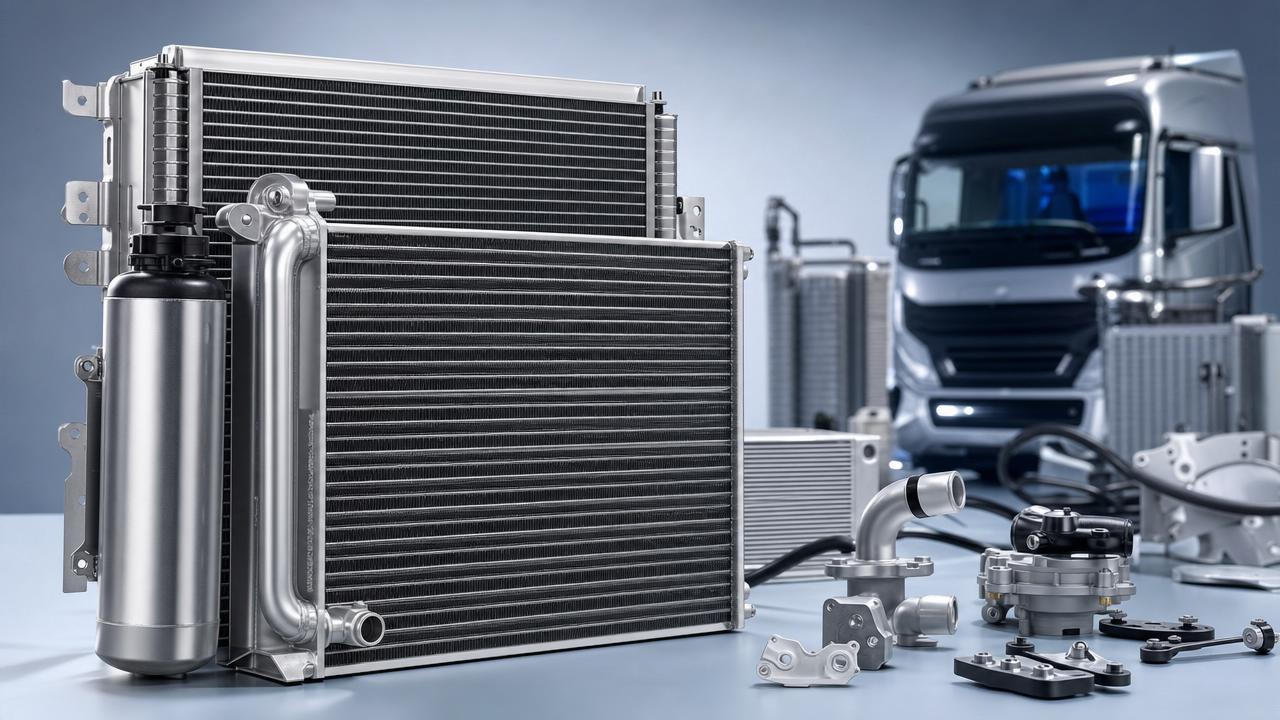
At this exhibition, several Condenser innovations drew strong attention from technical evaluators focused on thermal efficiency, durability, and system integration.
For this audience, the key question was not which display looked advanced, but which condenser technologies can deliver measurable gains under real operating stress.
From improved heat-exchange structures to solutions tailored for heavy trucks and new energy applications, these technologies highlighted where performance gains are becoming most practical.
The following overview examines the standout developments and what they may mean for component selection and future engineering decisions.
What Technical Evaluators Were Really Looking For
When engineers search for Condenser technologies that stood out at this exhibition, their core intent is usually practical comparison rather than general industry news.
They want to know which designs showed credible improvements in heat rejection, pressure resistance, corrosion control, packaging efficiency, and lifecycle reliability.
For technical assessment teams, exhibition highlights only matter if they translate into lower thermal risk, easier integration, and more predictable field performance.
This is especially true in heavy trucks, construction machinery, and new energy platforms, where condenser performance affects system stability far beyond the cooling circuit itself.
The Strongest Trend: Higher Efficiency Without Unmanageable Complexity
The most notable Condenser trend at the exhibition was the push toward higher thermal efficiency through smarter core architecture, not just larger frontal area.
Several suppliers emphasized optimized fin geometry, improved tube layouts, and better refrigerant flow distribution to raise effective heat transfer within limited packaging space.
For evaluators, this matters because many vehicle platforms can no longer afford simple size-based upgrades as engine bays and module assemblies become more crowded.
A condenser that removes more heat per unit area can support system targets without forcing major redesigns in brackets, fan shrouds, piping, or front-end structures.
The best examples were not those claiming extreme laboratory performance, but those showing balanced gains with manufacturability, serviceability, and contamination tolerance in mind.
Microchannel and Refined Tube-Fin Designs Drew Attention
Microchannel-based Condenser solutions remained a major point of interest, particularly where weight reduction and compactness are important selection criteria.
These designs can offer strong heat transfer performance, reduced refrigerant charge, and lower overall mass compared with older round-tube constructions in suitable applications.
However, technical evaluators were also careful to examine the tradeoffs, especially sensitivity to debris blockage, repair difficulty, and long-term corrosion behavior.
Exhibitors that stood out were those able to explain how coating systems, flow path design, and structural reinforcement reduced these common concerns.
In parallel, enhanced tube-fin condensers also attracted attention because they can provide a more familiar reliability profile while still improving thermal performance.
For fleets and industrial duty cycles, this middle path may be attractive when evaluation teams prioritize maintainability and field robustness alongside efficiency.
Durability Was a Bigger Differentiator Than Marketing Claims
Across the exhibition floor, durability evidence separated serious Condenser suppliers from those relying mainly on broad efficiency language.
Technical evaluators tend to ask how a condenser behaves after vibration exposure, thermal cycling, salt spray, pressure pulsation, and long operating hours in contaminated environments.
That focus is justified because condenser failure rarely remains an isolated component issue; it often affects compressor life, refrigerant containment, and overall system uptime.
Standout technologies therefore included reinforced header structures, improved brazing consistency, better alloy selection, and coatings designed for corrosion-heavy service conditions.
In applications such as heavy trucks and construction machinery, these details often matter more than small peak-efficiency advantages shown under ideal test conditions.
For buyers and evaluators, the right question is not simply whether the Condenser is advanced, but whether its advanced features survive real vibration, dust, moisture, and thermal shock.
System Integration Became a Major Evaluation Standard
Another strong exhibition theme was system integration, especially for platforms combining tighter packaging, higher thermal loads, and stricter efficiency requirements.
Technical teams increasingly evaluate the Condenser as part of a thermal module rather than as a standalone heat exchanger.
This shift changes how products are judged.
Mounting points, airflow interaction, fan coordination, shroud compatibility, and adjacent radiator or intercooler performance now carry more decision weight.
Suppliers with experience across radiators, intercoolers, and complete cooling-related components often had an advantage in these conversations because they could discuss module-level tradeoffs more clearly.
For example, in heavy-duty applications, condenser placement can influence radiator inlet air temperature and therefore affect coolant-side stability under sustained load.
That is why evaluators were interested in companies capable of broader thermal engineering support, not only single-part manufacturing.
Why Heavy Truck and New Energy Applications Are Shaping Condenser Development
The exhibition also made clear that Condenser innovation is being pushed by two especially demanding sectors: heavy trucks and new energy vehicles.
In heavy trucks, long operating cycles, harsh environments, and high durability expectations require condensers that maintain performance under constant mechanical and thermal stress.
In new energy applications, thermal management becomes even more integrated, with tighter efficiency targets and more complex interactions across battery, electronics, cabin, and drivetrain cooling systems.
This raises the standard for condenser design.
It is no longer enough to provide acceptable nominal heat rejection; the component must support stable operation across broader and faster-changing load conditions.
Manufacturers such as Liaocheng Xinde Auto Parts Co., Ltd., with capabilities in water tank radiators, intercoolers, construction machinery radiators, and new energy radiator modules, reflect this wider market direction.
For technical evaluators, that broader specialization suggests stronger potential for coordinated thermal solutions rather than isolated component substitution.
How to Judge Whether an Exhibition Condenser Innovation Is Actually Valuable
One of the most useful takeaways from the exhibition is that evaluation should follow a disciplined filter rather than excitement around new terminology.
First, verify what problem the Condenser innovation is solving: insufficient capacity, packaging pressure, weight reduction, corrosion resistance, refrigerant-side efficiency, or manufacturing consistency.
Second, ask whether the claimed benefit is supported by relevant validation data instead of only promotional comparison charts.
Third, assess whether the technology introduces new risks in clogging, repairability, sourcing, process control, or cost sensitivity.
Fourth, determine whether gains remain meaningful when the condenser is installed within the real thermal module and airflow environment.
Fifth, compare lifecycle value rather than focusing only on acquisition price, because premature failure or unstable performance can erase nominal savings quickly.
This type of structured review helps technical evaluators distinguish mature engineering progress from exhibition-stage storytelling.
Manufacturing Quality and Process Control Matter as Much as Design
A Condenser can appear impressive in section drawings yet underperform if manufacturing variation is not tightly controlled.
That is why experienced evaluators looked beyond design language and into process discipline.
Brazing quality, dimensional consistency, leak integrity, material traceability, and cleanliness control all affect final thermal and durability outcomes.
Exhibitors that discussed production capability in concrete terms tended to create more confidence than those focused only on design features.
For component buyers in demanding sectors, manufacturing repeatability is essential because thermal modules are sensitive to small deviations in internal flow paths and joint quality.
This is also where supplier maturity becomes visible.
A company with rapid development and recognition such as high-tech and trustworthy enterprise status may still need technical verification, but those signals support initial credibility.
Selection Decisions Should Be Based on Application Fit, Not Exhibition Popularity
Not every standout Condenser technology is the right choice for every platform.
A compact, lightweight design may be ideal for one system and a durability-first configuration may outperform it in another.
Technical evaluators should therefore map exhibition innovations against actual duty profiles, airflow limits, maintenance expectations, and integration constraints.
For off-road or construction machinery use, resistance to fouling, vibration, and impact may dominate the decision.
For long-haul trucks, thermal stability over extended hours and easy replacement logistics may be more important.
For new energy systems, packaging density, energy efficiency, and interaction with broader thermal controls may take priority.
The best engineering choice is usually the one that aligns with application realities, not the one that generated the most attention on the exhibition floor.
A Useful Reminder from Adjacent Thermal Components
Although the focus here is on Condenser technologies, technical evaluators often benefit from comparing condenser advances with progress in adjacent heat exchangers.
For instance, developments in charge-air cooling and radiator packaging can reveal how suppliers think about airflow sharing, structural durability, and modular integration.
In that context, products such as INTERCOOLER FOR MAN XD163 offer a practical reminder that thermal performance decisions are rarely isolated.
With MAN OEM 8161300216 reference compatibility and a size of 665*892*62, this type of intercooler reflects the dimensional and integration precision expected across heavy-duty thermal systems.
For evaluators, reviewing such related products can help identify whether a supplier understands platform-level requirements rather than only one component category.
What Stood Out Most in Strategic Terms
If the exhibition is viewed from a technical decision-making perspective, three Condenser directions stood out most clearly.
First, efficiency gains are becoming more practical through refined internal structures and better use of available packaging volume.
Second, durability is moving back to the center of evaluation, especially in commercial and industrial applications where uptime matters more than headline specifications.
Third, integration capability is becoming a decisive supplier advantage as condensers are judged within broader thermal modules.
These points are more valuable than simply naming individual products because they help technical evaluators form a framework for future comparisons.
In other words, the exhibition did not just showcase components; it revealed which performance criteria are becoming most important in real purchasing and engineering decisions.
Conclusion
For technical evaluators, the Condenser technologies that truly stood out at this exhibition were those combining measurable thermal improvement with credible durability and easier system integration.
The most promising innovations were not necessarily the most dramatic on paper.
They were the ones that addressed real engineering constraints in heavy trucks, construction machinery, and new energy thermal systems.
Going forward, the smartest selection approach is to prioritize validated performance, manufacturing consistency, lifecycle reliability, and module-level compatibility.
When these factors are used as the decision lens, exhibition highlights become more than trends.
They become useful indicators of which Condenser solutions are most likely to deliver dependable value in the field.