



How radiator module suppliers are responding to new demand
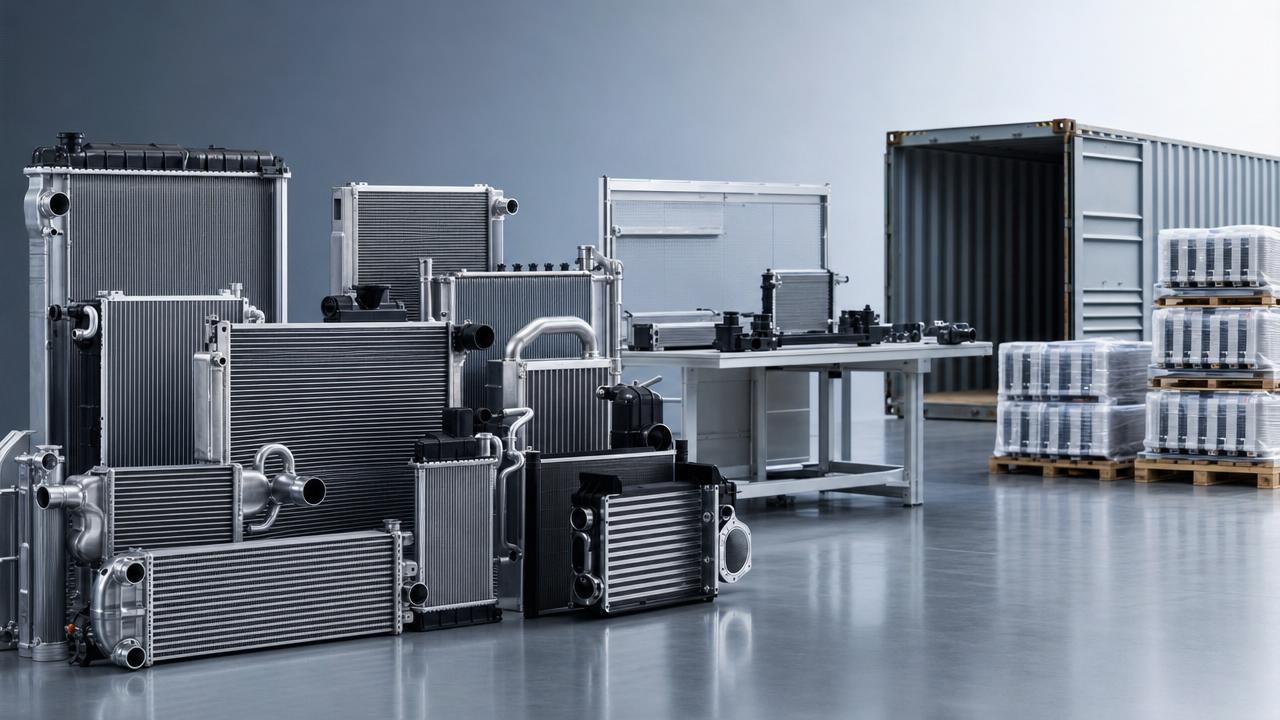
As market needs shift across heavy trucks, construction equipment, and new energy vehicles, radiator module suppliers are adapting faster than ever. For distributors, agents, and dealers, understanding how each radiator module manufacturer responds to quality, customization, delivery speed, and global demand is key to choosing reliable partners. This article explores the strategies behind that response and what they mean for your business growth.
Why is radiator module demand changing so quickly?
The radiator module market is no longer driven by one simple requirement: heat dissipation. Buyers now expect a radiator module to support longer service life, compact design, stable supply, and fitment across multiple vehicle or machinery platforms.
For distributors in the auto parts sector, this shift creates both risk and opportunity. A weak supplier can cause delayed shipments, high warranty claims, and lost end customers. A responsive radiator module manufacturer can help a channel partner expand faster and compete on value.
Three market forces are shaping demand most clearly:
- Heavy trucks need stronger cooling systems for higher operating intensity, longer routes, and stricter uptime expectations.
- Construction machinery often works in dust, vibration, and high-load conditions, so radiator module durability matters as much as thermal performance.
- New energy applications require lighter, more integrated thermal management solutions with tighter dimensional control and more customization.
That is why procurement teams are asking more detailed questions before placing orders. They want to know not only price, but also raw material control, brazing consistency, packaging, sample speed, and after-sales support.
What distributors are really worried about
In practical terms, channel buyers are not just sourcing a part number. They are protecting inventory turnover, customer reputation, and cash flow. When a radiator module fails in the field, the distributor often pays the first visible cost.
- Will the dimensions match the target application without installation problems?
- Can the supplier maintain stable quality across repeated batches?
- How fast can samples and bulk orders be delivered during peak season?
- Is there enough engineering support for customized radiator module requests?
How leading radiator module suppliers are responding
The best suppliers are not reacting with one isolated improvement. They are changing across product development, manufacturing, logistics, and communication. This matters because distributors need reliability across the full business process, not only on the production line.
1. Expanding product coverage
A competitive radiator module supplier now serves several adjacent categories, such as water tank radiators, intercoolers, construction machinery radiators, and new energy radiator modules. This broader capability helps distributors consolidate sourcing and reduce supplier fragmentation.
2. Improving customization speed
Customization is no longer a niche request. Dealers often need fitment changes, mounting adjustments, or application-specific cooling solutions. Suppliers that can review drawings quickly, confirm key dimensions, and shorten sample cycles have a clear advantage.
3. Tightening quality control
Quality control has become more process-driven. Buyers increasingly ask about leak testing, dimensional inspection, weld or brazing stability, and packaging protection. A radiator module manufacturer that documents these controls reduces uncertainty for overseas partners.
4. Supporting faster export response
Global buyers want quick communication, clear specifications, and predictable lead times. Suppliers that understand export documentation, pallet planning, and batch traceability are easier for distributors to work with, especially when managing mixed container orders.
What should distributors check before choosing a radiator module partner?
Choosing a radiator module supplier should be based on measurable factors, not general promises. The table below summarizes practical evaluation points that help agents and dealers reduce sourcing mistakes.
This evaluation method is especially useful when comparing several radiator module manufacturers with similar pricing. In many cases, the lowest quote becomes the most expensive option after claims, delays, and repeat communication are considered.
A practical procurement checklist
- Confirm OEM references, core dimensions, and installation points before discussing price.
- Request sample evaluation for sealing, appearance, fin condition, and packaging.
- Check whether the supplier can support future radiator module expansion, not only the current item.
- Review communication speed and technical clarity during quotation, because that usually reflects future service level.
How does Liaocheng Xinde Auto Parts respond to this market?
Liaocheng Xinde Auto Parts Co., Ltd. was established in 2018 with registered capital of 5 million RMB and total investment of 50 million RMB. The company focuses on research, production, and global sales of water tank radiators, intercoolers, construction machinery radiators, related components for heavy trucks, and new energy radiator modules.
For distributors, this positioning matters. A supplier with dedicated focus in thermal management components can respond more effectively to application differences between road transport vehicles, engineering machinery, and evolving new energy systems.
The company has also developed rapidly since its establishment and has received provincial and municipal honors including High-tech Enterprise, Civilized and Honest Enterprise, and Trustworthy Unit for Consumers. These recognitions do not replace technical review, but they do indicate an enterprise with organized development and market credibility.
Why this is relevant for agents and wholesalers
- A specialized product focus supports more accurate communication on radiator module applications.
- Coverage across several cooling product categories helps buyers reduce the number of suppliers they manage.
- A rapidly developing manufacturer is often better aligned with changing market demands and new project requests.
- Recognition for honesty and consumer trust can be helpful when evaluating long-term cooperation potential.
Which radiator module solution fits which application?
Different operating environments create different purchasing priorities. The table below helps distributors map radiator module selection logic to common market segments in the parts industry.
This kind of application-based sourcing is more effective than buying every radiator module by price alone. It helps distributors match technical reality with commercial strategy and avoid overstocking the wrong configuration.
Why are delivery speed and customization now purchasing priorities?
In the past, many buyers accepted longer lead times if pricing was attractive. Today, market competition is tighter, and end users expect faster replacement cycles. If a distributor cannot secure supply quickly, a competitor often takes the order.
At the same time, model diversity is expanding. More brands, more equipment variants, and more regional fitment differences mean that standard stock alone cannot cover demand. This is where radiator module suppliers that combine manufacturing discipline with engineering responsiveness stand out.
Signals of a responsive supplier
- Quotations clearly list dimensions, model references, and application scope.
- Technical teams ask follow-up questions instead of guessing compatibility.
- Sample support is tied to drawing review or confirmed vehicle information.
- Production planning and shipment timing are discussed early, not after payment only.
A product example: how specific fitment information supports faster decisions
For many dealers, a clear example makes supplier capability easier to judge than broad claims. In some projects, buyers need application-linked information such as OEM references, dimensions, and target vehicle fitment before they can move to sampling or quotation.
One example is RADIATORS FOR SCANIA, associated with OEM 1100631 and model 64072, with a size of 970*760*56 for Scania application. Details like these help distributors compare stock planning, fitment matching, and customer inquiry response speed.
When a radiator module supplier can provide this level of structured information early, the distributor can reduce internal verification time and move faster from inquiry to deal closure.
Common mistakes when buying radiator module products
Mistake 1: Focusing only on unit price
A lower price may hide higher claim rates, poor packaging, slower communication, or unstable dimensions. Total procurement cost includes replacement handling, complaint management, delayed sales, and damaged customer trust.
Mistake 2: Ignoring application differences
A radiator module for highway heavy trucks and one for construction machinery may face very different operating conditions. Without matching the solution to the use case, even acceptable products can underperform.
Mistake 3: Approving samples without packaging review
Transport damage is a real issue in international parts distribution. Fin deformation, scratched surfaces, or mounting distortion can happen even when the product itself was manufactured correctly.
Mistake 4: Treating communication quality as secondary
Poor communication often leads to specification errors. If a supplier cannot answer technical questions clearly during the quotation stage, post-order coordination may become slower and more expensive.
FAQ for distributors evaluating a radiator module supplier
How do I choose the right radiator module for my market?
Start with your main sales structure: heavy truck aftermarket, machinery repair network, or new energy projects. Then confirm OEM references, dimensions, mounting points, and operating conditions. The right radiator module is the one that fits both application needs and your turnover model.
What matters more: price or quality stability?
For most distributors, quality stability is more important over time. A small saving on purchase price can quickly disappear if returns, field failures, or order delays increase. The better approach is to compare total commercial risk.
Can a radiator module manufacturer support custom projects?
Yes, but support levels vary. Ask whether the supplier can review technical drawings, confirm dimension changes, prepare samples, and manage repeated production after approval. Custom capability is especially important in machinery and new energy applications.
What should I confirm before placing a bulk order?
Confirm application scope, dimensions, OEM or reference numbers, packaging method, lead time, and claim handling process. If possible, approve a sample and keep a clear technical confirmation record for the bulk order.
What trends will shape the next stage of radiator module supply?
The radiator module business is moving toward faster development cycles, more application segmentation, and stronger integration between technical support and sales support. Distributors that work with adaptable suppliers will be better positioned to capture emerging demand.
In the parts industry, the winning supplier is increasingly the one that can combine product range, accurate communication, consistent manufacturing, and practical export coordination. These strengths help channel partners reduce friction and build repeat business.
Why choose us for your radiator module sourcing?
If you are looking for a radiator module partner for heavy trucks, construction machinery, or new energy applications, Liaocheng Xinde Auto Parts offers a focused manufacturing background and product coverage aligned with real distribution needs.
- You can consult us on parameter confirmation, including dimensions, application matching, and reference model checks.
- You can discuss product selection for different markets, from standard aftermarket items to project-based radiator module requirements.
- You can ask about delivery cycles, sample arrangements, and packaging expectations for export distribution.
- You can communicate custom solution needs for heavy truck, machinery, or new energy cooling applications.
- You can request quotation support based on target volume, technical drawings, or specific OEM references.
For dealers, agents, and distributors, the right radiator module supplier does more than ship parts. The right partner helps you shorten decision cycles, improve fitment confidence, and serve your customers with fewer risks and better long-term supply support.