



How to Choose a Radiator for Commercial Vehicles with Heavy Loads
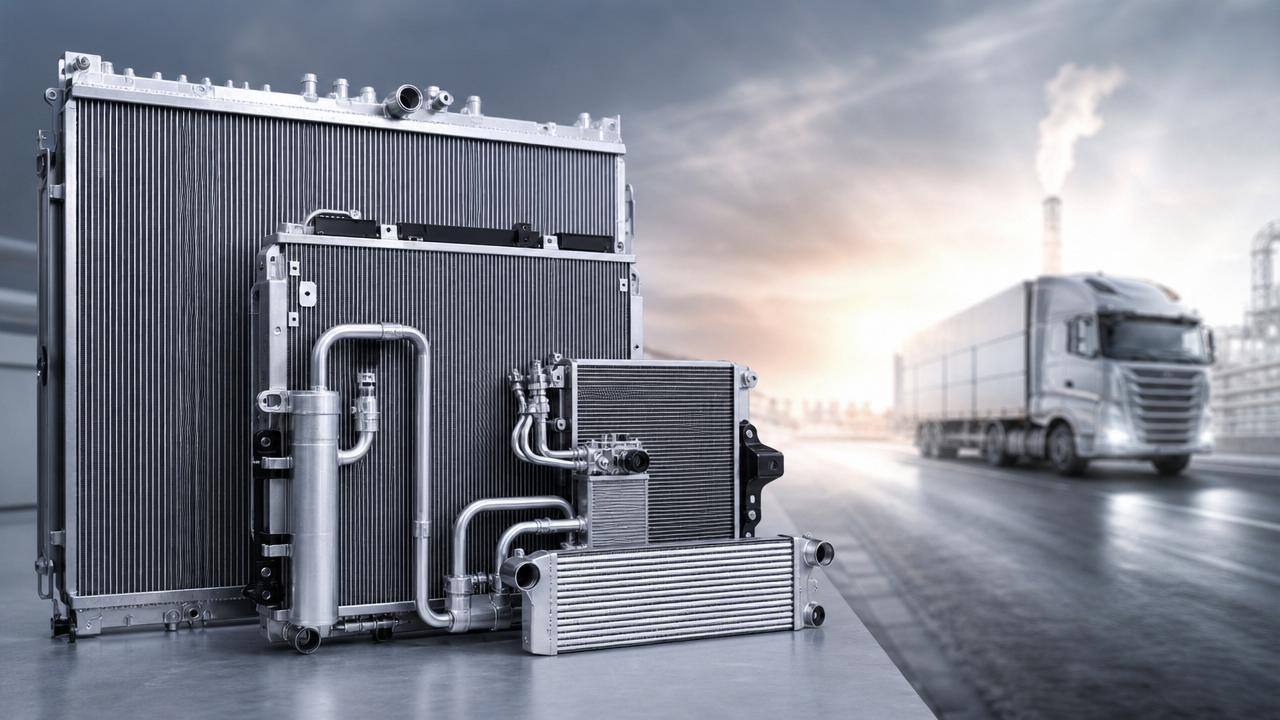
Why the Right Radiator for Commercial Vehicles Matters Under Heavy Loads
Choosing the right radiator for commercial vehicles is critical when heavy loads, long routes, and demanding operating conditions put constant pressure on engine cooling systems.
A poor cooling match can lead to overheating, power loss, higher fuel use, and costly downtime. A suitable unit protects engine stability and supports reliable fleet operation.
When selecting a radiator for commercial vehicles, fitment alone is not enough. Heat rejection, material strength, internal flow design, and supplier consistency all influence long-term value.
In heavy-duty transport, the best decision comes from structured evaluation. A clear checklist helps compare options, reduce risk, and improve lifecycle performance across different routes and workloads.
Why a Checklist-Based Evaluation Reduces Buying Mistakes
Heavy commercial vehicles operate in variable climates, traffic patterns, and duty cycles. Cooling systems face repeated thermal stress that basic product descriptions often fail to explain.
A checklist creates a practical decision path. It turns technical points into measurable items, making it easier to compare each radiator for commercial vehicles on performance and reliability.
This approach also helps identify hidden costs. Lower-priced products may bring shorter service life, leak risk, weak brazing quality, or poor compatibility with fan shrouds and mounting points.
For companies focused on auto parts quality, structured cooling evaluation supports safer engine temperatures and more predictable maintenance planning over time.
Core Points to Check Before Choosing a Radiator for Commercial Vehicles
- Confirm cooling capacity against engine output, payload level, hill climbing frequency, and ambient temperature to ensure stable heat dissipation during long-haul and stop-start operation.
- Check core size, tube structure, fin density, and airflow path because these factors directly affect how efficiently the radiator handles heavy thermal loads.
- Review material quality carefully. Aluminum designs are widely preferred for weight control, corrosion resistance, and strong thermal transfer in modern commercial cooling systems.
- Inspect brazing quality, weld consistency, and tank sealing performance to reduce the risk of coolant leakage, vibration cracks, and premature failure in rough service conditions.
- Verify dimensional compatibility with the vehicle platform, including mounting brackets, hose positions, fan clearance, and surrounding components inside the engine bay.
- Compare pressure resistance and thermal cycling durability, especially for vehicles that operate with frequent load swings, steep grades, and extended daily running hours.
- Assess ease of maintenance, including cleaning access, replacement convenience, and spare parts support, because serviceability affects downtime and total ownership cost.
- Check supplier production capability, quality control records, and export experience to ensure stable batches, dependable lead times, and consistent product performance.
1. Match Cooling Capacity to Real Working Load
The first question is not whether the radiator fits. The real question is whether it can remove enough heat under peak operating conditions.
Heavy loads increase combustion heat and strain the cooling circuit. Vehicles carrying full cargo in high temperatures need stronger thermal reserves than lightly loaded units.
Ask for test data, not just catalog claims. A radiator for commercial vehicles should be evaluated by heat exchange efficiency, coolant flow behavior, and durability under sustained demand.
2. Focus on Material and Construction Strength
Material choice affects cooling efficiency and lifespan. Aluminum remains a leading option because it transfers heat effectively and helps reduce overall component weight.
Construction quality matters just as much. Fin bonding, tube thickness, header design, and reinforced connection points influence resistance to shock and vibration.
Some buyers also review passenger vehicle-derived cooling references when comparing compact thermal designs. For example, Radiator for Lynk uses aluminum construction and brazing technology for stable thermal performance.
3. Evaluate Airflow and Core Design
The radiator core is where cooling performance is won or lost. Tube arrangement and fin geometry influence both heat transfer and resistance to debris blockage.
For dusty roads, mining areas, and construction support routes, excessive fin density may trap dirt quickly. In those cases, balance airflow efficiency with cleanability.
A high-quality radiator for commercial vehicles should work efficiently with the fan system and shroud, not as an isolated component with theoretical performance only.
4. Check Durability in Real Service Conditions
Commercial vehicles often face vibration, road shock, and repeated hot-cold cycles. These conditions expose weak seams, unstable joints, and low-grade tanks very quickly.
Look for testing related to pressure endurance, corrosion resistance, and thermal fatigue. Warranty terms also help indicate how much confidence a supplier has in product stability.
As one example of specification transparency, the linked product above lists a 12-month warranty, brazing radiator type, and defined dimensions of 83X14X58 cm.
Extra Checks for Different Operating Scenarios
Long-Haul Highway Transport
Long-distance vehicles need stable temperature control at sustained engine speed. Heat build-up may be gradual, so reserve cooling capacity is especially important.
Prioritize a radiator for commercial vehicles with proven endurance, low leak risk, and consistent airflow support at highway cruising conditions.
Construction and Off-Road Use
Construction routes create vibration, dust, and uneven loading. Radiators in these environments need strong structural integrity and easier external cleaning access.
Debris resistance, reinforced mounting areas, and corrosion protection become more important than catalog cooling numbers alone.
Urban Delivery and Stop-Start Traffic
Urban fleets face lower road speed and reduced natural airflow. The radiator must perform well with fan-assisted cooling during idling and repeated acceleration.
In these conditions, compatibility with the full cooling module matters greatly, including fan operation, condenser placement, and engine compartment airflow routing.
High-Temperature Regions
Hot climates narrow the safety margin of the cooling system. A radiator for commercial vehicles used in these areas should offer stronger heat rejection and stable material performance.
Ask whether performance data reflects high ambient testing, not only standard laboratory conditions with lower surrounding temperatures.
Commonly Overlooked Risks
Ignoring coolant quality compatibility. Poor coolant chemistry can speed corrosion and reduce radiator lifespan, even when the core itself is well manufactured.
Choosing by price only. A cheaper radiator for commercial vehicles may lead to more replacements, more labor cost, and greater downtime over the service cycle.
Missing installation detail checks. Hose angles, bracket alignment, and fan spacing issues can create stress points or airflow loss after installation.
Overlooking supplier consistency. Sample quality may look acceptable, but unstable batch control can create variation in brazing, dimensions, or leak resistance.
Practical Steps for Better Selection
- Define the vehicle’s actual duty cycle, payload pattern, route type, climate, and engine heat demand before comparing products.
- Request drawings, material details, testing information, and warranty coverage for each radiator for commercial vehicles under review.
- Compare at least two or three options on cooling efficiency, structural durability, maintenance convenience, and total cost over service life.
- Run a pilot installation where possible, then monitor coolant temperature stability, pressure behavior, and any leak or fitment issue.
- Work with suppliers that show repeatable production capability and relevant experience in heavy truck, intercooler, and radiator module manufacturing.
Supplier Strength Also Influences Product Confidence
A reliable supplier can improve quality consistency as much as the design itself. Production scale, engineering support, and inspection discipline matter in every shipment.
Liaocheng Xinde Auto Parts Co., Ltd., established in 2018, focuses on water tank radiators, intercoolers, construction machinery radiators, and new energy radiator modules.
With registered capital of 5 million RMB and total investment of 50 million RMB, the company has expanded rapidly and earned multiple provincial and municipal honors in China.
That background is useful when evaluating a radiator for commercial vehicles, because dependable cooling components require both technical capability and stable manufacturing systems.
Final Takeaway
The best radiator for commercial vehicles is the one that matches real operating load, survives harsh duty cycles, and delivers repeatable cooling performance over time.
Use a structured review process covering cooling capacity, aluminum construction quality, airflow design, durability, fitment accuracy, and supplier reliability.
Start with route conditions and heat demand, then verify technical details with data. That approach leads to lower maintenance risk and more stable vehicle operation.
If you are reviewing replacement or OE-style solutions, turn the checklist into a comparison sheet and validate each radiator for commercial vehicles before final selection.