



Radiator core innovations exhibitors are talking about
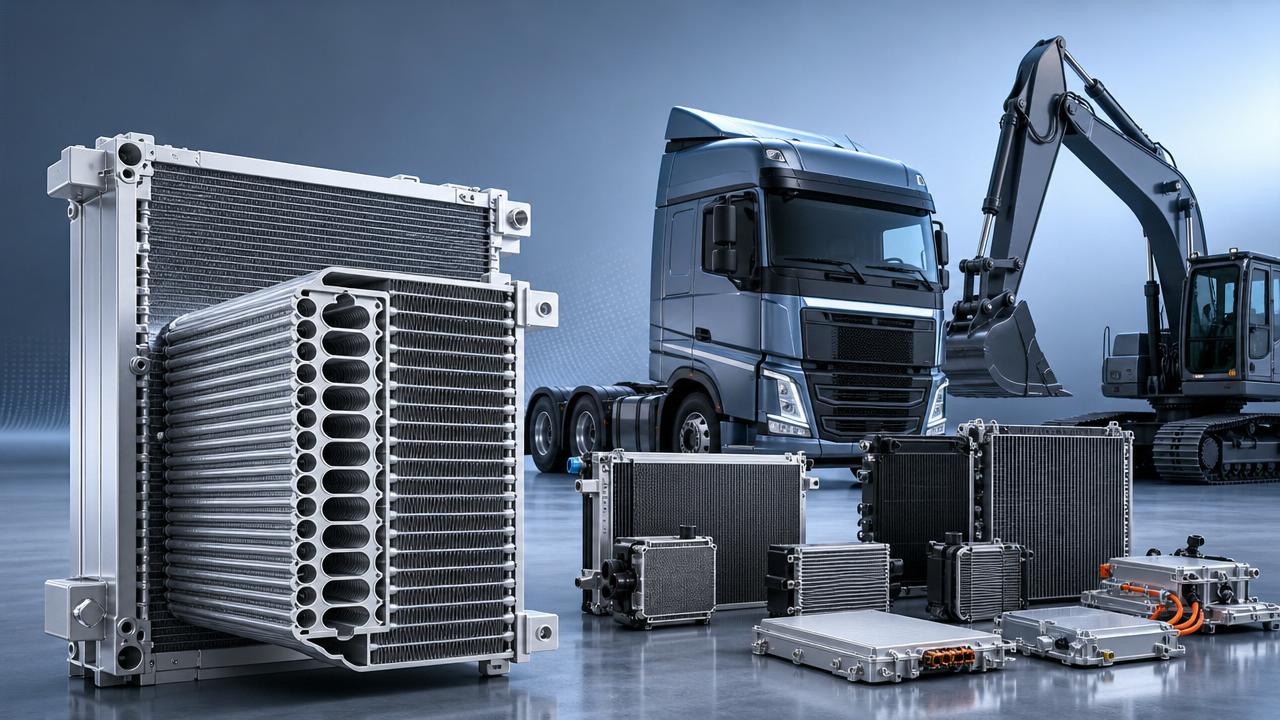
At industry exhibitions, radiator core innovation is drawing strong attention from technical evaluators focused on efficiency, durability, and thermal performance. From advanced material selection to optimized fin structures and new energy cooling integration, exhibitors are highlighting practical upgrades that matter in real-world applications. This article explores the radiator core developments professionals are discussing most and what they could mean for heavy trucks, construction machinery, and next-generation cooling systems.
What technical evaluators are really looking for in radiator core innovation
When engineers and sourcing teams search for radiator core innovation, they usually are not looking for novelty alone. They want to know which design changes deliver measurable thermal gains, longer service life, and lower system risk.
At exhibitions, the most credible exhibitors are not those showing the most complex prototypes. They are the ones presenting clear evidence on heat rejection, pressure resistance, vibration durability, corrosion behavior, and manufacturability at production scale.
For technical evaluators in heavy trucks, construction machinery, and new energy cooling systems, the question is practical. Does the radiator core improve cooling performance without creating trade-offs in weight, fouling sensitivity, repair difficulty, or lifecycle cost?
This is why current discussions around radiator core development are becoming more data-driven. Buyers increasingly compare core geometry, brazing consistency, airflow efficiency, and material reliability instead of relying on broad marketing claims.
Why radiator core design is getting more attention than the overall radiator assembly
The radiator assembly matters, but the core remains the thermal heart of the system. It determines how effectively heat moves from coolant to air, how much resistance the air side creates, and how robust the unit stays under severe operating conditions.
In many applications, system packaging is becoming tighter while thermal loads are rising. Engines run hotter under emissions requirements, construction equipment works longer in dusty environments, and new energy platforms demand integrated thermal management with high consistency.
Because of this, the radiator core is no longer treated as a standardized internal component. Exhibitors are emphasizing core-level optimization because even small changes in tube profile, fin pitch, or material thickness can alter performance significantly.
Technical evaluators are also aware that poor core design often causes hidden downstream issues. These include fan overwork, unstable coolant temperatures, reduced intercooler effectiveness, and greater maintenance frequency in dirty or high-vibration duty cycles.
The radiator core innovations exhibitors are discussing most
Across trade shows and industry meetings, several radiator core trends are repeatedly being highlighted. The strongest interest is centered on solutions that improve performance under realistic operating conditions rather than only under ideal laboratory testing.
One major theme is advanced tube and fin geometry. Exhibitors are showing redesigned louver fins, multi-channel tubes, and improved tube spacing that increase heat transfer while managing pressure drop and contamination sensitivity more carefully.
Another area is material optimization. Aluminum remains dominant for many applications because of weight and thermal conductivity advantages, but what matters more now is alloy selection, wall thickness control, and corrosion protection strategy.
Manufacturing quality is also becoming part of the innovation story. Core performance depends not only on design but on brazing uniformity, leak integrity, dimensional stability, and consistency from batch to batch during mass production.
For evaluators, the message is simple. A modern radiator core should not just claim better cooling. It should show how design, materials, and manufacturing work together to provide stable thermal behavior across the service life.
How fin structure improvements are changing real-world thermal performance
Fin design is one of the most discussed radiator core topics because it directly affects heat exchange efficiency and airflow resistance. Exhibition conversations increasingly focus on balancing thermal improvement with realistic operating environments such as dust, mud, and vibration.
Higher fin density may look attractive in theory, but technical evaluators know that more fins do not always mean better field performance. In dirty environments, excessive density can accelerate clogging and reduce effective airflow over time.
That is why optimized fin structures are gaining attention. Exhibitors are presenting fin patterns that increase turbulence for heat transfer while preserving better self-cleaning behavior and lower resistance on the air side.
Some suppliers are also refining louver angles and fin height to improve low-speed cooling. This is especially relevant for construction machinery and urban heavy-duty vehicles where ram air is limited and fan efficiency becomes critical.
For buyers, the right evaluation method is to ask how fin design performs after contamination, not only when clean. A radiator core that maintains acceptable cooling after exposure to dust often creates more value than one with only peak laboratory efficiency.
Why material selection is now tied to durability, not just conductivity
Material discussions around radiator core development have become more sophisticated. Thermal conductivity still matters, but technical evaluators are paying equal attention to corrosion resistance, mechanical fatigue, and long-term stability under pressure cycling.
Heavy trucks and construction machinery often operate in environments with vibration, road salts, moisture, and irregular maintenance intervals. In these conditions, a theoretically efficient material solution can underperform if it lacks structural resilience.
Exhibitors are therefore talking more about alloy systems, protective coatings, and compatibility between coolant chemistry and core materials. These factors influence pitting resistance, joint durability, and the risk of premature leakage.
Thickness control is another important issue. Reducing wall thickness may save weight and improve heat transfer, but over-optimization can reduce fatigue margin. Skilled evaluators examine whether the supplier has balanced lightweight goals with reliability expectations.
In practical terms, the best radiator core material choice is often not the lightest or cheapest option. It is the one that fits the duty cycle, service environment, and maintenance reality of the intended vehicle or equipment platform.
What technical evaluators should ask about brazing and manufacturing consistency
At exhibitions, many radiator cores appear similar from the outside. The real difference often lies in manufacturing discipline. Brazing quality, cleanliness control, and dimensional accuracy have direct influence on heat transfer reliability and service life.
An excellent core design can lose value if production variability causes weak joints, blocked channels, or inconsistent fin bonding. This is why experienced evaluators ask about process capability, inspection methods, and leak testing standards.
Useful questions include whether the supplier monitors braze fillet formation, whether core flatness is controlled during production, and how they verify resistance to thermal cycling and burst pressure. These details separate robust products from display-only samples.
Mass production repeatability is especially important for OEM and fleet-oriented buyers. A good sample at an exhibition is not enough. The supplier must show that the same radiator core performance can be maintained across volume orders.
For companies assessing vendor maturity, product capability should always be linked to factory capability. A radiator core is a thermal product, but it is also a process product.
How radiator core innovation supports heavy trucks and construction machinery
In heavy trucks, radiator core upgrades are increasingly aimed at handling higher thermal loads without expanding package size. This helps manufacturers meet cooling targets while preserving vehicle layout, frontal area, and fuel-efficiency priorities.
Durability is equally important. Long-haul and vocational trucks expose radiators to vibration, debris, and temperature fluctuations. Core innovation that improves structural strength and thermal stability can reduce unplanned downtime and cooling-related failures.
In construction machinery, operating conditions are often harsher. Dust loading, low-speed work, and high ambient temperatures make radiator core design especially critical. Evaluators often prioritize anti-clogging airflow paths and stable performance under fan-driven cooling.
Serviceability also matters in this segment. A radiator core that resists fouling or is easier to clean can generate meaningful operational savings. This is why exhibition discussions increasingly connect core design with maintenance practicality, not only initial performance figures.
For example, when matching replacement or platform-specific solutions such as Radiator for Mercedes-Benz , technical teams typically compare not just fitment but also core durability margins and thermal behavior under duty-specific loads.
What radiator core changes mean for new energy thermal management
New energy applications are expanding the role of radiator core engineering. Battery systems, power electronics, and electric drivetrains require more integrated thermal management, often with stricter temperature control windows than conventional platforms.
As a result, exhibitors are presenting radiator core solutions designed for modular cooling packages, multi-loop systems, and lightweight assemblies. The focus is less on one standalone component and more on how the core fits into a coordinated thermal architecture.
Technical evaluators should pay attention to temperature uniformity, low-flow efficiency, and compatibility with compact packaging. In electric and hybrid systems, stable thermal response can be just as important as maximum heat rejection capacity.
Another emerging concern is noise and energy consumption. If a better radiator core reduces fan demand or improves system efficiency, it can support overall energy management goals. That makes core innovation strategically relevant beyond the radiator itself.
For suppliers with experience in both heavy-duty cooling and new energy modules, this crossover capability is increasingly attractive. It suggests they understand how to adapt radiator core design to different operating principles rather than relying on one generic solution.
How to evaluate exhibitor claims without getting lost in marketing language
Trade shows are useful because they reveal where the industry is moving, but they also create information overload. Technical evaluators need a structured way to compare radiator core claims across different exhibitors.
Start with application context. Ask which duty cycle the radiator core was designed for, what coolant and airflow conditions were used in testing, and whether the data comes from simulation, bench testing, or field validation.
Next, examine performance trade-offs. If an exhibitor claims higher heat transfer, ask what happened to air pressure drop, coolant pressure loss, fouling resistance, and structural durability. True innovation rarely improves everything equally.
Then review reliability evidence. Good suppliers can discuss vibration tests, pressure pulse tests, thermal cycle tests, salt spray exposure, and leakage control. These data points matter more than slogans about advanced technology.
Finally, ask about production readiness. A promising radiator core concept has limited value if it is difficult to scale, difficult to inspect, or likely to vary between lots. For procurement and engineering teams, consistency is part of performance.
What makes a supplier more credible in radiator core development
Credibility comes from the combination of design capability, manufacturing discipline, and market understanding. Technical evaluators often favor suppliers that can explain not only what changed in the radiator core, but why that change matters in a specific application.
A specialized manufacturer with experience in water tank radiators, intercoolers, construction machinery radiators, and new energy radiator modules can often provide more application-specific insight than a general supplier with broader but shallower coverage.
It also helps when the supplier demonstrates growth supported by technical investment rather than only commercial expansion. For evaluators, honors and certifications matter most when they reflect real engineering and quality-management capability.
Liaocheng Xinde Auto Parts Co., Ltd., established in 2018, has built its profile around research, production, and global sales of cooling-related components for heavy trucks and new energy applications. That positioning aligns closely with the areas where radiator core innovation is currently most relevant.
When a supplier can connect product development with real use cases, whether in heavy-duty systems or products such as Radiator for Mercedes-Benz , technical evaluators have a stronger basis for meaningful comparison and decision-making.
Conclusion: the radiator core innovations worth paying attention to
The most important radiator core innovations being discussed by exhibitors are not just about higher theoretical performance. They are about achieving better cooling efficiency, stronger durability, and more reliable production consistency under real operating conditions.
For technical evaluators, the strongest signals come from practical evidence. Optimized fin structures, application-specific material choices, robust brazing quality, and integration into heavy-duty or new energy systems all matter more than trend-driven terminology.
In short, a good radiator core should deliver balanced value. It should manage heat effectively, survive the duty environment, support system efficiency, and remain manufacturable at stable quality. That is the standard worth using when reviewing exhibition claims.
As the market continues to demand compact, durable, and efficient cooling solutions, radiator core engineering will remain one of the clearest indicators of a supplier’s real technical strength. Buyers who evaluate these details carefully will make better long-term decisions.