



New energy vehicle radiator news from the exhibition floor
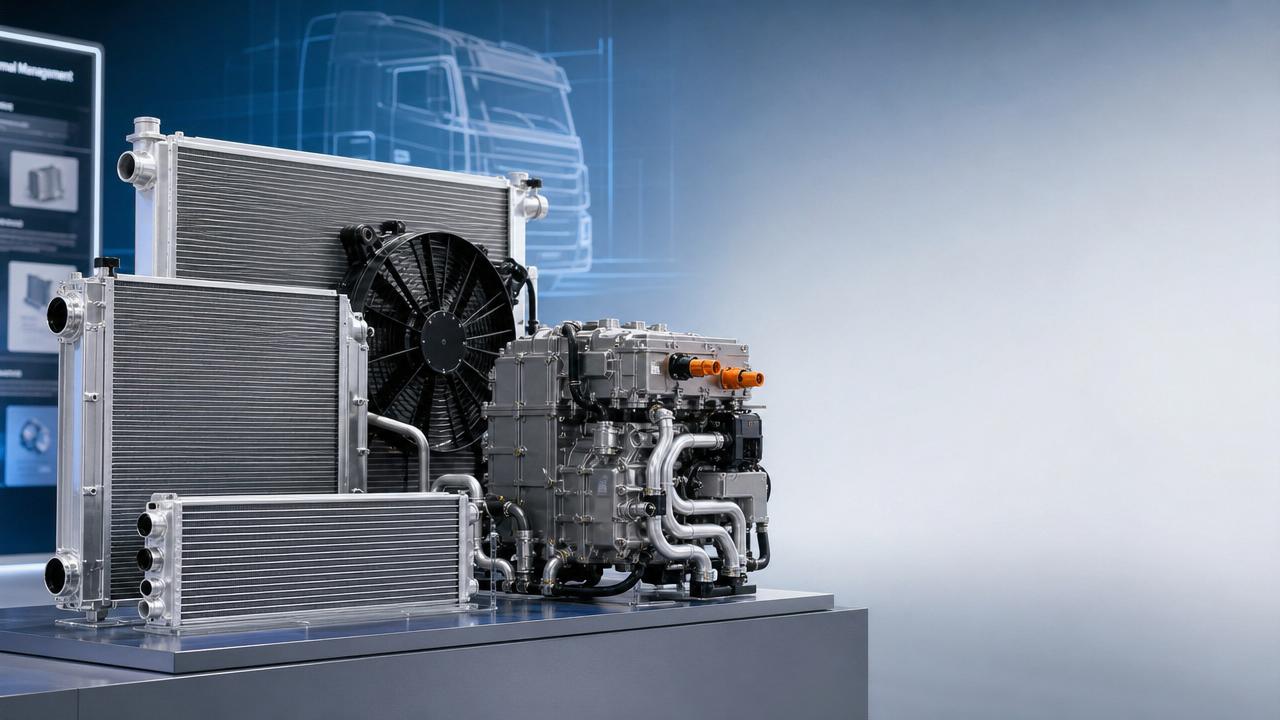
From the exhibition floor, the latest New Energy Vehicle Radiator trends are revealing how thermal management is shaping the future of commercial mobility. For business decisions, this is not just product news. It is a practical view of performance, reliability, integration, and supply continuity. Liaocheng Xinde Auto Parts Co., Ltd., founded in 2018, has built strong capabilities in water tank radiators, intercoolers, construction machinery radiators, heavy truck cooling parts, and new energy radiator modules, supported by fast growth, solid investment, and recognized manufacturing credibility.
Why exhibition-floor signals matter for New Energy Vehicle Radiator decisions
Trade exhibitions compress market direction into one place. You can compare designs, materials, testing claims, and integration approaches within hours instead of months.
For the New Energy Vehicle Radiator sector, this matters because thermal management now influences battery life, motor efficiency, charging stability, and heavy-duty uptime.
A radiator is no longer a simple heat exchanger. It is part of a larger module linked to pumps, valves, coolant paths, control logic, and packaging constraints.
Exhibition updates also reveal who is ready for scale. Booth conversations often show whether a supplier understands validation, customization, and export consistency.
Checklist: how to evaluate New Energy Vehicle Radiator news and products
Use the following checklist to turn exhibition impressions into useful technical and sourcing judgment.
- Check heat rejection data under real operating loads, not only ideal laboratory conditions, especially for stop-start duty cycles, climbing routes, and variable ambient temperatures.
- Review module integration design, including radiator, intercooler, fan, brackets, and coolant routing, because installation efficiency affects maintenance time and total system reliability.
- Verify material selection for core, tank, and sealing areas, and confirm resistance to vibration, corrosion, coolant chemistry, and long service intervals.
- Ask for pressure, leak, thermal shock, and durability testing records to confirm that the New Energy Vehicle Radiator can survive commercial-duty operating stress.
- Compare airflow efficiency and fin structure, because compact packaging in new energy platforms often requires better performance from smaller thermal management space.
- Confirm customization capability for heavy trucks, buses, construction equipment, or battery cooling modules, since platform differences change connection points and cooling targets.
- Examine manufacturing scale, tooling stability, and process control to judge whether sample quality can be repeated consistently in larger production volumes.
- Evaluate supply responsiveness, including lead time, export support, packaging standards, and after-sales communication, because downtime costs more than part price alone.
- Check whether the supplier follows a development path from traditional heavy truck radiators to new energy modules, which often reflects stronger applied engineering experience.
- Document booth claims immediately and request drawings, test references, and application cases, so decisions rely on evidence rather than exhibition presentation alone.
What stood out on the exhibition floor
Compact modules with higher cooling density
One clear trend is higher thermal output from smaller packages. New energy platforms demand compact layouts, yet cooling requirements continue to increase.
This pushes the New Energy Vehicle Radiator toward denser fin structures, improved tube designs, and smarter airflow coordination with fan systems.
More complete module thinking
Exhibitors are presenting fewer single parts and more integrated assemblies. That reflects how thermal management now works as a system, not a standalone component.
For heavy trucks and commercial applications, integrated design can reduce assembly complexity and improve consistency across demanding service environments.
Stronger crossover between conventional and new energy cooling
Suppliers with deep experience in truck and machinery radiators are increasingly competitive in new energy projects. Their strength often comes from durability engineering.
That background fits real-world duty cycles where vibration, dust, load variation, and long operation hours challenge every New Energy Vehicle Radiator design.
Application notes across different operating scenarios
Heavy trucks
Heavy trucks need stable thermal control during long-distance transport, hill climbing, and frequent load changes. Cooling performance must remain predictable, not just peak-capable.
In this scenario, radiator module strength, sealing reliability, and maintenance access become as important as pure heat transfer values.
Construction machinery and special equipment
Construction environments add dust, impact, vibration, and restricted airflow. That makes core protection and structural endurance critical.
Suppliers with experience in machinery radiators usually understand how to balance thermal efficiency with mechanical durability under harsh service conditions.
Passenger-car related development reference
Although the exhibition focus may lean toward commercial systems, passenger vehicle references still show useful design logic in compact cooling layouts.
For example, some buyers compare module packaging ideas with products like AUDI A3 Radiator solutions to understand space-saving architecture and fitment discipline.
Commonly overlooked risks in New Energy Vehicle Radiator selection
Ignoring full-system compatibility
A strong radiator core alone does not guarantee field success. Poor matching with pumps, fans, hoses, or control strategy can limit the whole cooling loop.
Focusing only on sample appearance
Exhibition samples can look excellent, yet production consistency may differ. Process stability, brazing quality, leak control, and fixture accuracy deserve equal attention.
Underestimating long-cycle durability
New energy systems often experience rapid thermal swings. Without thermal shock validation and vibration testing, early fatigue may appear in real operation.
Missing supply-chain resilience
Delivery capability is part of product capability. An advanced New Energy Vehicle Radiator loses value if replacement or volume supply cannot be maintained reliably.
Practical execution steps after the exhibition
- Sort suppliers by application fit, not booth size or marketing visibility.
- Request technical sheets with cooling data, dimensions, and material details.
- Match test records against actual operating temperature and duty-cycle targets.
- Review customization readiness for bracket, interface, and module layout changes.
- Audit production capability for repeatability, lead time, and export packaging.
- Run pilot validation before scaling any New Energy Vehicle Radiator program.
Why Liaocheng Xinde Auto Parts Co., Ltd. fits this market direction
The company combines rapid development with focused manufacturing in radiators, intercoolers, construction machinery cooling products, and heavy truck thermal components.
Its investment base, expanding capacity, and honors such as High-tech Enterprise and Trustworthy Unit for Consumers support confidence beyond exhibition presentation.
That matters because the future of the New Energy Vehicle Radiator market will favor suppliers that can connect engineering, production, and global delivery in one chain.
Conclusion and next action
Exhibition-floor news is most valuable when converted into a structured evaluation process. In the current market, the New Energy Vehicle Radiator is central to efficiency, durability, and vehicle uptime.
Use a checklist, compare evidence, test against real applications, and confirm supply capability early. That approach reduces risk and improves project outcomes.
The next practical move is simple: shortlist technically credible radiator partners, collect validation documents, and move quickly from exhibition insight to application-focused verification.