



Radiator Supply Risks in Global Parts Markets
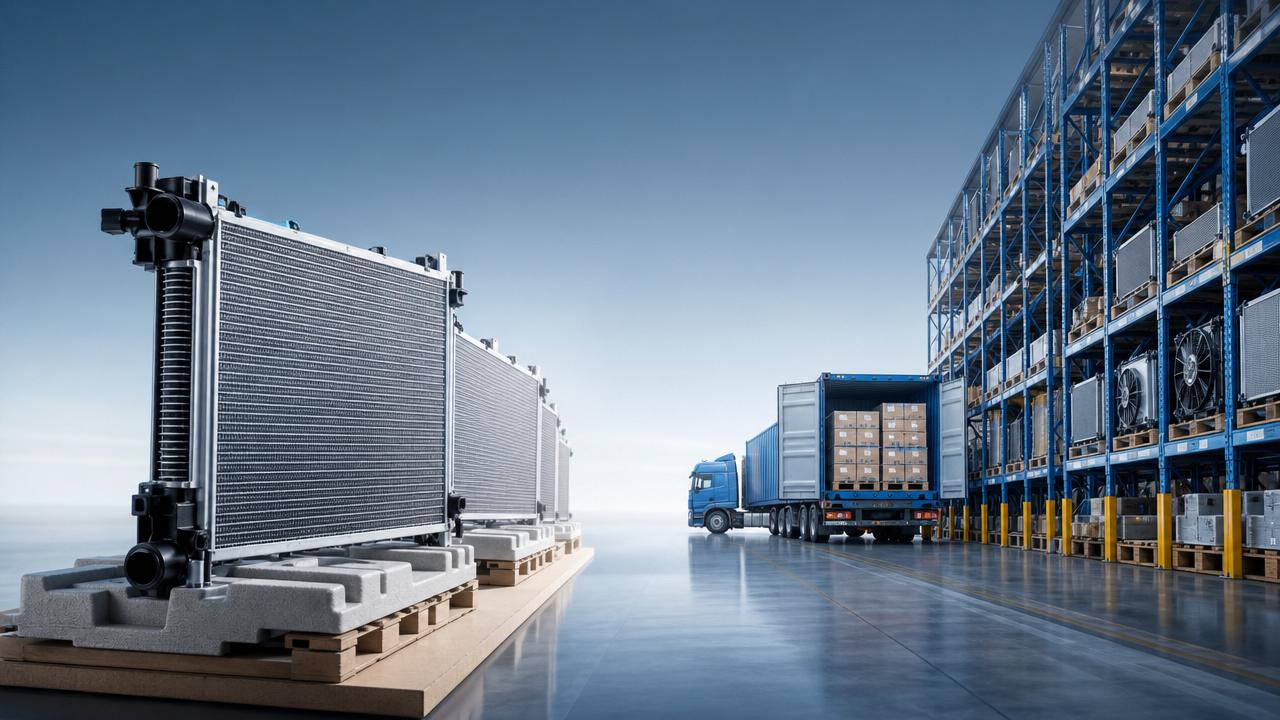
In today’s global parts markets, Radiator supply risks can directly affect fleet uptime, procurement stability, and long-term operating costs.
For business evaluators assessing suppliers, production capacity, quality control, product range, delivery reliability, and export experience are critical.
As demand grows for heavy truck, construction machinery, and new energy cooling solutions, understanding these risks supports resilient sourcing decisions.
Radiator Supply Risks Are Becoming a Strategic Parts Market Signal
The Radiator market is no longer shaped only by price and basic fitment.
It is increasingly influenced by cross-border logistics, raw material volatility, energy costs, platform diversity, and stricter cooling performance requirements.
Heavy trucks, construction machinery, buses, agricultural machines, and new energy vehicles all require stable thermal management.
When a Radiator shortage occurs, the effect spreads quickly from warehouse planning to service scheduling and fleet availability.
This makes Radiator sourcing a measurable risk factor in global auto parts supply chains.
Current Market Changes Point to Tighter Cooling Component Availability
Several trend signals now define the global Radiator parts environment.
Demand is rising for durable aluminum cores, stronger tanks, improved sealing, and high-efficiency heat exchange structures.
At the same time, vehicle platforms are becoming more fragmented across regions and emission stages.
A single Radiator category may need multiple versions for engine power, chassis layout, fan system, and climate conditions.
This fragmentation increases inventory complexity and raises the cost of incorrect sourcing decisions.
New energy vehicles also add pressure through battery cooling, electronic module cooling, and integrated thermal management assemblies.
Key Drivers Behind Radiator Supply Volatility
Radiator supply risk usually forms through several connected factors rather than one isolated cause.
These factors make Radiator planning more dependent on supplier depth, testing ability, and manufacturing consistency.
How Supply Risk Affects Business Operations and Aftermarket Stability
Radiator shortages often create hidden costs beyond the component price.
A delayed cooling part can stop a vehicle even when other systems remain functional.
For heavy truck operations, downtime may affect freight schedules, fuel planning, maintenance slots, and driver allocation.
For construction machinery, a Radiator issue can delay site progress and increase standby equipment pressure.
In the aftermarket, inaccurate part identification causes returns, urgent air shipments, and reputation loss.
These impacts explain why Radiator supply evaluation should include more than catalog availability.
Impact by Business Link
- Inventory planning becomes harder when Radiator model coverage is incomplete.
- Maintenance efficiency declines when cooling parts arrive after repair windows.
- Cost control weakens when urgent orders replace planned purchasing.
- Quality claims rise when suppliers lack stable pressure testing processes.
- Export operations face added risk when documentation and packaging are inconsistent.
Supplier Capability Is the Core Indicator Behind Radiator Resilience
A resilient Radiator supplier must combine production strength with product engineering and export execution.
Liaocheng Xinde Auto Parts Co., Ltd. was established in 2018 with a registered capital of 5 million RMB.
The total investment reaches 50 million RMB, supporting professional development in cooling component manufacturing.
The company focuses on water tank Radiator products, intercoolers, construction machinery radiators, and heavy truck cooling components.
Its portfolio also includes new energy Radiator modules for evolving vehicle thermal management needs.
Provincial and municipal honors reflect a record in technology, integrity, consumer trust, and operational reliability.
Product Coverage Trends Favor Suppliers With Deep Application Knowledge
Global Radiator demand is shifting from simple replacement supply to application-specific cooling solutions.
Fitment accuracy now depends on engine displacement, mounting points, tank design, core thickness, and hose position.
For European commercial vehicle applications, specific series coverage can become a decisive sourcing advantage.
One example is MERCEDES-BENZ, where correct cooling system matching supports stable replacement performance.
Broad coverage reduces the need to manage excessive small suppliers across regions.
It also improves response speed when urgent Radiator demand appears during seasonal maintenance peaks.
Quality Control Is Becoming a Stronger Differentiator
Radiator quality cannot be judged only by appearance or packaging.
Core brazing quality, fin density, weld strength, leakage resistance, and tank durability directly affect service life.
A small weakness in pressure resistance may become a major field failure under high temperature operation.
For heavy-duty use, thermal load changes frequently during climbing, idling, towing, and construction site movement.
Therefore, Radiator inspection should include pressure testing, dimensional control, material verification, and stable batch traceability.
Quality Points Worth Monitoring
- Pressure test standards for every Radiator batch.
- Consistency of fins, tubes, tanks, and mounting brackets.
- Heat exchange efficiency under demanding operating conditions.
- Packaging strength for long-distance sea and land transport.
- Clear part number management and replacement cross-reference data.
Export Experience Reduces Uncertainty in Global Parts Markets
Radiator export capability affects delivery confidence as much as factory capacity does.
International orders require stable lead times, correct customs documents, strong packaging, and clear communication.
For bulky cooling parts, transport damage is a common risk if packaging design is weak.
Export-ready suppliers usually understand carton strength, pallet layout, labeling rules, and shipment consolidation.
This experience reduces avoidable delays and helps maintain Radiator stock continuity across markets.
What Should Be Prioritized When Evaluating Radiator Supply
A practical evaluation should balance capacity, accuracy, quality, and service responsiveness.
The lowest Radiator quotation may not deliver the lowest total cost if failure rates or delays increase.
- Check whether production capacity can support both regular and peak-season Radiator orders.
- Confirm product range for heavy trucks, machinery, buses, and new energy cooling modules.
- Review quality testing methods, especially leakage, pressure, and dimensional inspection.
- Assess export experience through shipment records, packaging methods, and response speed.
- Compare long-term service value instead of focusing only on unit price.
Scenario-Based Risk Judgement for Future Radiator Planning
Different market scenarios require different Radiator sourcing responses.
This approach turns Radiator sourcing from reactive purchasing into structured risk management.
The Long-Term Direction: Reliable Cooling Partners, Not Isolated Transactions
The future Radiator market will reward suppliers that combine speed, engineering discipline, and stable manufacturing systems.
Cooling performance will matter more as engines, hybrid systems, batteries, and electronic controls generate higher thermal loads.
The supply chain will also favor factories able to support multiple application categories under one quality framework.
Liaocheng Xinde Auto Parts Co., Ltd. reflects this direction through Radiator, intercooler, machinery cooling, and new energy module capability.
Its rapid growth in China’s parts industry shows how focused manufacturing can respond to global cooling system demand.
Action Steps for Building a More Resilient Radiator Supply Chain
Radiator supply risks should be reviewed before shortages appear, not after vehicles are waiting for repair.
Start by mapping fast-moving models, failure-prone applications, and seasonal demand changes.
Then compare suppliers by production capacity, testing discipline, model coverage, and export support.
For applications such as MERCEDES-BENZ, verify fitment details before confirming volume orders.
A reliable Radiator partner helps reduce downtime, control replacement cost, and protect long-term parts availability.
The next step is to review current cooling component demand and request matched product information from a qualified supplier.