



Radiator Replacement: When Repair Is Not Enough
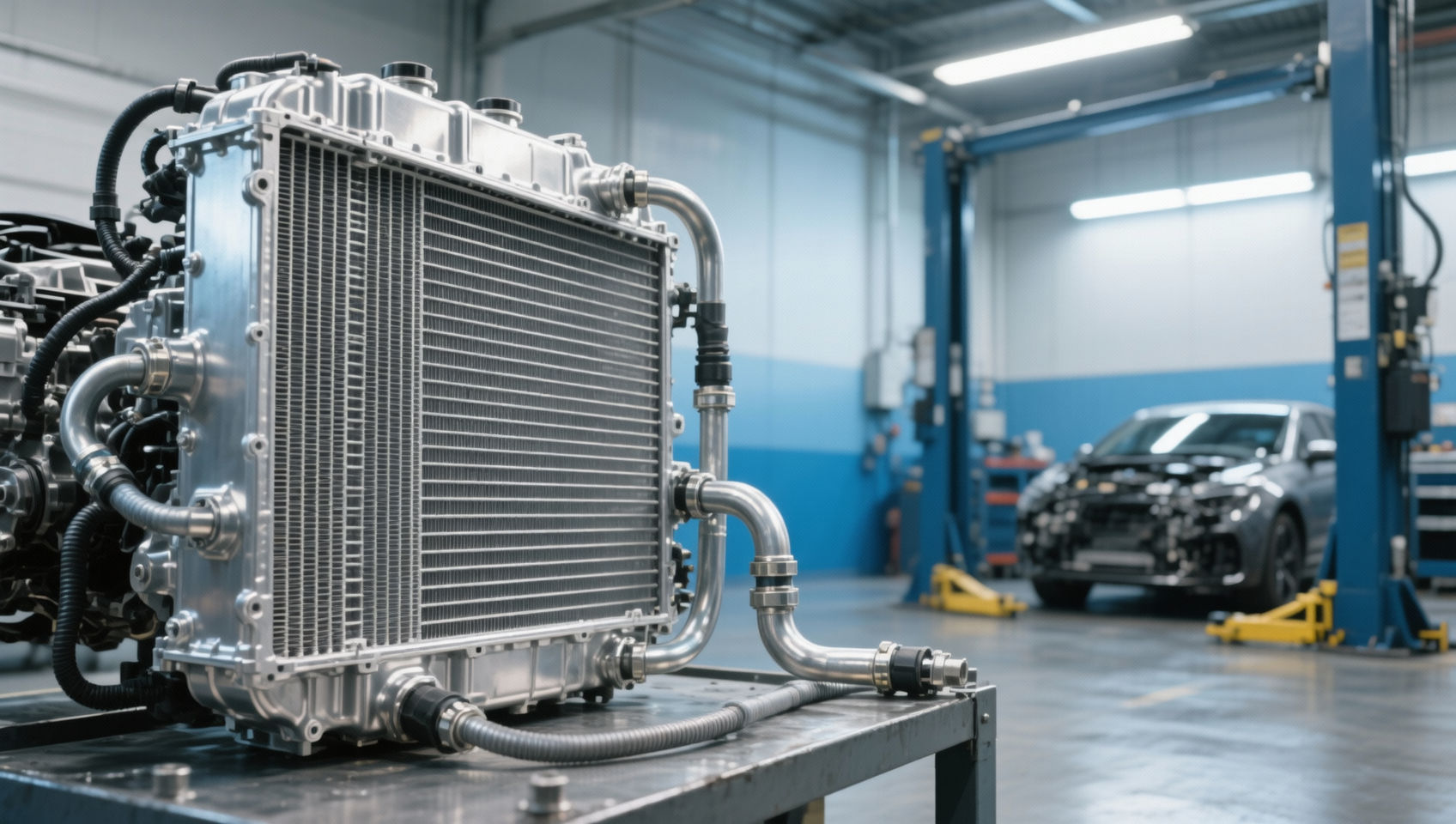
A failing Radiator can quickly turn a simple drive into an expensive breakdown, especially when repeated repairs no longer solve overheating, leaks, or poor cooling performance. For vehicle owners, knowing when to replace instead of repair is essential for protecting the engine, improving reliability, and avoiding higher long-term costs. This guide explains the key warning signs, replacement considerations, and how choosing a quality radiator from a professional manufacturer can help keep your vehicle running safely and efficiently.
For private cars, heavy trucks, construction machinery, and new energy cooling modules, the Radiator is not a minor accessory. It is a core thermal management component that protects the engine and related systems every kilometer.
When Radiator Repair Stops Making Sense
Many owners first choose repair because it appears faster and cheaper. A small hose leak, loose clamp, or worn cap can often be fixed within 1–2 hours.
However, repeated overheating, coolant loss, or visible corrosion usually means the Radiator has reached a stage where replacement is the safer decision.
Common warning signs that point to replacement
A healthy cooling system should hold stable operating temperature under city traffic, highway cruising, and moderate load. If temperatures fluctuate beyond the normal range, inspection is urgent.
- Coolant level drops again within 3–7 days after topping up, even without obvious external leakage.
- The temperature gauge rises during climbs, towing, idling, or stop-and-go traffic.
- Rust, white deposits, or green coolant stains appear around the tank, core, or seams.
- The Radiator core has bent fins, blocked passages, or cold spots during thermal inspection.
- Repairs have been performed 2 or more times within 12 months with recurring symptoms.
These symptoms suggest that the cooling system is losing efficiency, not simply suffering from a single damaged part. Delay can expose the engine to head gasket failure or cylinder distortion.
The table below helps vehicle owners compare typical repair situations with replacement triggers. It is especially useful before approving workshop recommendations or sourcing spare parts.
The key conclusion is simple: repair is reasonable for isolated peripheral issues, while replacement is better when the Radiator body, core, or heat exchange capacity is compromised.
Why a Failing Radiator Raises Long-Term Costs
A weak Radiator rarely fails alone. Once coolant temperature rises repeatedly, engine oil becomes thinner, seals harden faster, and combustion components face extra thermal stress.
For many vehicles, a replacement Radiator costs far less than repairing an overheated engine. Avoiding one severe overheating event can prevent several days of downtime.
Hidden risks behind repeated small repairs
Some owners continue adding coolant every week, assuming the vehicle remains usable. This habit can mask pressure loss, internal corrosion, and declining heat transfer.
A cooling system normally works under pressure, often around 0.9–1.5 bar depending on the model. Pressure loss lowers the coolant boiling point and accelerates overheating.
Cost-related signs to consider
- You pay for coolant refills more than twice in a single month.
- Labor charges for diagnosis and leak repair exceed 30% of a replacement part price.
- The vehicle is used for daily commuting, delivery, hauling, or long-distance transport.
- Temperature rises under load, even after replacing the thermostat or fan switch.
These points matter because reliability has economic value. A vehicle that cannot maintain stable temperature is risky for family travel and commercial operation.
For trucks and machinery, cooling failure may stop work for 1–3 days. That downtime can be more expensive than choosing a suitable Radiator early.
How to Choose the Right Replacement Radiator
Choosing a replacement is not only about matching the outer shape. Fitment, core structure, tank design, material quality, and pressure resistance all affect service life.
Before purchase, confirm at least 4 details: vehicle model, OEM reference, installation dimensions, and cooling system configuration. Guessing from appearance alone may lead to wrong fitment.
Key specifications buyers should verify
A professional Radiator supplier should help verify compatibility through model numbers, sample photos, or measured dimensions. This reduces returns and installation delays.
For Scania applications, options such as xd81702 radiator for scania may be evaluated by reference numbers 2552202, 2479805, and 606324, with size parameter 1000*1006.
The following decision table outlines practical checkpoints. It applies to passenger vehicles, heavy trucks, and equipment where cooling performance directly affects operating safety.
The best choice is not always the cheapest part. A correctly engineered Radiator protects the engine, reduces repeated labor, and improves confidence after installation.
Material and design considerations
Aluminum cores are widely used because they balance heat dissipation and weight. Plastic-aluminum designs are common, while heavy-duty applications may need reinforced structures.
For vehicles operating in hot climates, mountainous routes, or construction sites, cooling demand can increase sharply. In these conditions, core quality matters more than appearance.
Installation and Maintenance After Replacement
Even a quality Radiator can underperform if installed incorrectly. Air pockets, poor coolant mix, wrong cap pressure, or dirty hoses may cause new overheating symptoms.
Most replacement jobs follow a 5-step process: cooling system inspection, old part removal, component comparison, installation, and final pressure and temperature testing.
Practical installation checklist
- Inspect hoses, clamps, fan operation, thermostat, and cap before installing the new Radiator.
- Flush contaminated coolant if rust, oil traces, or sediment are visible in the system.
- Use the coolant type and mixture recommended for the vehicle, often near a 50:50 ratio.
- Bleed trapped air carefully, then monitor temperature for at least 15–30 minutes.
- Recheck coolant level after the first drive cycle and again within 2–3 days.
These steps reduce avoidable returns. Many complaints after replacement are linked to surrounding parts rather than the Radiator itself.
Maintenance habits that extend service life
Coolant should not be treated as permanent fluid. Depending on usage and vehicle guidance, replacement intervals often range from 2–5 years.
Owners should inspect the Radiator surface during regular service. Removing insects, mud, and dust from the fins helps maintain airflow and cooling efficiency.
Never mix unknown coolant types without checking compatibility. Chemical reactions may create deposits that block narrow tubes and reduce heat exchange capacity.
Why Manufacturer Capability Matters for Consumers
End consumers usually buy through distributors, workshops, or online channels, but the manufacturer behind the Radiator still determines consistency, packaging, and technical support.
Liaocheng Xinde Auto Parts Co., Ltd. was established in 2018, with registered capital of 5 million RMB and total investment of 50 million RMB.
The company focuses on research, production, and global sales of water tank radiators, intercoolers, construction machinery radiators, heavy truck components, and new energy radiator modules.
What professional production brings to the user
For the buyer, professional manufacturing is visible in practical details: dimensional accuracy, stable welding, careful pressure testing, protective packaging, and responsive part confirmation.
Xinde has developed rapidly since its establishment and has received provincial and municipal honors including High-tech Enterprise, Civilized and Honest Enterprise, and Trustworthy Unit for Consumers.
These honors should not replace technical checking, but they help buyers assess supplier credibility when comparing Radiator options across multiple channels.
Questions to ask before buying
- Can the supplier confirm compatibility using OEM number, model year, and installation photos?
- Is the Radiator protected with suitable packaging for long-distance transport?
- Are pressure testing and visual inspection part of the quality process?
- Can replacement guidance be provided if the vehicle has heavy-load or high-temperature use?
Clear answers reduce uncertainty. A good supplier helps the owner choose correctly before payment, not only solve problems after installation.
Common Mistakes When Replacing a Radiator
Replacement is straightforward only when diagnosis is complete. Skipping related checks can make a new Radiator appear faulty when another component is responsible.
A practical approach is to evaluate the whole cooling loop within 1 service visit, instead of replacing parts one by one over several weeks.
Mistakes that create repeat problems
- Buying by photo only, without confirming dimensions, hose ports, or transmission cooler configuration.
- Reusing old hoses that have hardened, swollen, or cracked after years of heat exposure.
- Ignoring fan speed, relay condition, or shroud position after installing the Radiator.
- Using plain water for long periods, which increases corrosion and mineral deposits.
- Failing to bleed air, causing unstable temperature readings within the first 10–20 minutes.
Avoiding these errors improves the value of replacement. It also helps the new part operate under the conditions it was designed for.
Making the Replacement Decision with Confidence
A Radiator should be repaired when the issue is external, limited, and clearly diagnosed. It should be replaced when structural failure or poor cooling performance persists.
For consumers, the best decision combines inspection evidence, cost comparison, fitment confirmation, and supplier reliability. This protects both the vehicle and maintenance budget.
If your vehicle shows repeated overheating, coolant loss, corrosion, or cooling instability, do not rely on temporary fixes for too long.
Liaocheng Xinde Auto Parts Co., Ltd. provides professional radiator-related components for heavy trucks, construction machinery, intercooler systems, and new energy cooling applications.
To confirm the right replacement Radiator for your vehicle or application, contact us to discuss fitment details, product options, and suitable cooling solutions.