



Radiator Module vs Separate Components: Which Saves More
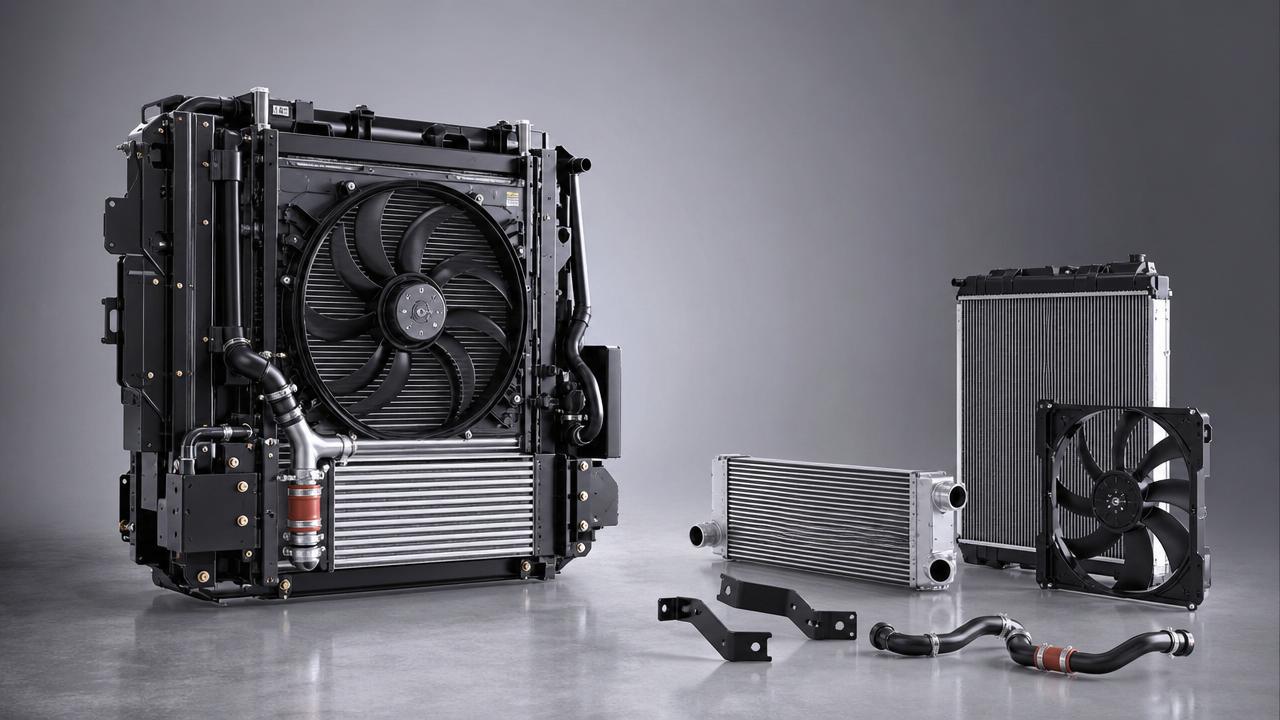
Radiator Module vs Separate Components: Which Saves More
For financial decision-makers evaluating cooling system investments, choosing between a radiator module and separate components is more than a technical issue—it directly affects total cost, installation efficiency, maintenance expenses, and long-term value.
This article compares both options from a cost-control and operational perspective, helping buyers identify which solution delivers better returns for heavy trucks, construction machinery, and new energy applications.
Why a Structured Evaluation Matters
A radiator module may look more expensive at first glance. Separate components may seem flexible and cheaper to source. However, purchase price alone rarely reflects the true savings.
Cooling systems influence labor hours, assembly errors, downtime risk, parts compatibility, shipping volume, and service complexity. A structured review prevents hidden cost leaks over the full equipment lifecycle.
For parts selection in trucks, machinery, and electrified platforms, the radiator module decision should be based on total cost of ownership, not isolated component pricing.
Cost Comparison Checklist for a Better Decision
Use the following points to compare a radiator module with separate radiators, intercoolers, brackets, fans, hoses, and mounting parts.
- Compare total landed cost, including core parts, brackets, hoses, fans, packaging, freight, customs, and warehouse handling, not only the quoted unit price.
- Measure installation time per vehicle or machine, because a radiator module often reduces assembly steps, alignment work, and production-line labor variability.
- Check interface compatibility across engine, cooling circuit, and frame layout, since separate components may require extra connectors or field modifications.
- Estimate maintenance frequency and service access, because integrated assemblies can simplify replacement, while separate parts may isolate failures more precisely.
- Review failure risk from vibration, thermal cycling, and connection points, as more joints in separate systems often increase leak potential.
- Calculate downtime cost for unscheduled repairs, because faster swap-out of a radiator module can protect fleet utilization and project schedules.
- Consider inventory complexity, since a radiator module can reduce SKU count, while separate components may require larger safety stock.
- Assess platform standardization needs, especially when the same cooling architecture must support multiple vehicle variants or export configurations.
- Verify thermal performance margins under peak load, as a radiator module is usually engineered for balanced airflow and integrated heat exchange efficiency.
- Examine long-term supplier support, quality consistency, and test validation, because savings disappear quickly when replacement cycles become unpredictable.
Where a Radiator Module Usually Saves More
1. Assembly and installation
A radiator module combines major cooling elements into one engineered package. This can reduce fixture changes, simplify routing, and lower the chance of assembly mismatch.
In production environments, fewer separate parts often mean shorter line time. That labor saving becomes meaningful when volumes rise or installation space is limited.
2. Logistics and inventory control
Managing one radiator module instead of multiple cooling parts can reduce receiving, storage, picking, and documentation work. This helps control indirect operating costs.
For cross-border supply chains, fewer line items may also improve shipment coordination and reduce packaging-related damage points during transportation.
3. Thermal system optimization
An integrated radiator module is typically designed around airflow balance, fan matching, and structural fit. This can improve cooling consistency under harsh duty cycles.
Better thermal coordination may protect engine efficiency, battery temperature stability, and turbocharging performance, depending on the application architecture.
4. Field replacement speed
When service teams replace one complete radiator module, repair time can be shorter than diagnosing several separate parts and connection failures.
This matters most when downtime carries high revenue loss, project delay penalties, or equipment scheduling disruption.
When Separate Components May Save More
1. Low-volume or highly customized builds
Separate components can offer more flexibility when each machine has unique space constraints, cooling loads, or retrofit needs.
In such cases, the engineering convenience of a radiator module may not offset the benefits of custom part selection.
2. Targeted maintenance strategy
If one component fails more often than others, replacing that single part may cost less than replacing a complete radiator module assembly.
This approach works best when fault isolation is clear, labor access is easy, and service teams can source matching parts quickly.
3. Existing inventory advantages
Organizations with established stock of coolers, hoses, and brackets may prefer separate components to use current inventory efficiently.
Still, that benefit should be tested against future standardization goals and long-term service complexity.
Application Notes by Use Case
Heavy trucks
For heavy trucks, the radiator module often supports better packaging efficiency and repeatable installation. Long-haul duty also increases the value of downtime reduction.
When evaluating replacement parts, model matching is critical. For example, RADIATOR FOR XD316 fits Benz-related applications and highlights the importance of exact model alignment.
Construction machinery
Construction environments create intense dust, shock, and thermal load. A radiator module can reduce connection points that may loosen under vibration.
However, machines with special frame layouts may still benefit from separate components if access and cooling paths vary by equipment type.
New energy applications
In electrified systems, thermal management affects batteries, power electronics, and cabin comfort. A radiator module may support cleaner integration and better system balancing.
Because thermal tolerance windows are tighter, design validation should focus on efficiency, sealing reliability, and future maintenance accessibility.
Often Overlooked Cost Risks
Ignoring service labor rates can distort decisions. A cheaper parts layout may become more expensive when installation or repair time rises significantly.
Overlooking leak points is another common mistake. Separate components usually introduce more clamps, joints, and routing interfaces that require ongoing inspection.
Some buyers underestimate packaging and freight. A radiator module may appear bulkier, yet multiple separate items can create hidden shipping inefficiencies.
Thermal underperformance is also costly. If a low-cost configuration causes overheating, fuel efficiency, engine durability, or battery life may suffer.
Finally, inconsistent sourcing can increase warranty exposure. Stable quality matters more than minor initial price differences.
Practical Steps to Make the Right Choice
- List all direct and indirect costs over three to five years, including labor, inventory, downtime, freight, and replacement cycles.
- Request thermal and structural validation data before comparing quotations from different cooling system suppliers.
- Run a pilot comparison on one platform, measuring installation time, service frequency, and real operating temperatures.
- Prioritize standardization if future production scale or export expansion is expected across multiple models.
- Choose a supplier with proven radiator module expertise, stable manufacturing quality, and responsive after-sales support.
Liaocheng Xinde Auto Parts Co., Ltd., established in 2018, focuses on radiators, intercoolers, heavy truck cooling products, construction machinery radiators, and new energy radiator module solutions.
Its fast development, technical focus, and recognized industry credibility reflect the importance of choosing validated partners for long-term cooling system value.
Final Decision Guidance
A radiator module usually saves more when installation efficiency, thermal integration, standardized supply, and downtime control are top priorities.
Separate components may save more when customization is high, repair isolation is simple, and existing inventory already supports the platform.
The best decision comes from comparing full lifecycle costs, not just purchase price. Review labor, reliability, service speed, and platform strategy together.
If the goal is better operational efficiency with lower long-term complexity, a well-designed radiator module often delivers the stronger return.