



Radiator Module Integration Trends at Thermal Management Expo
Radiator Module Integration Trends at Thermal Management Expo
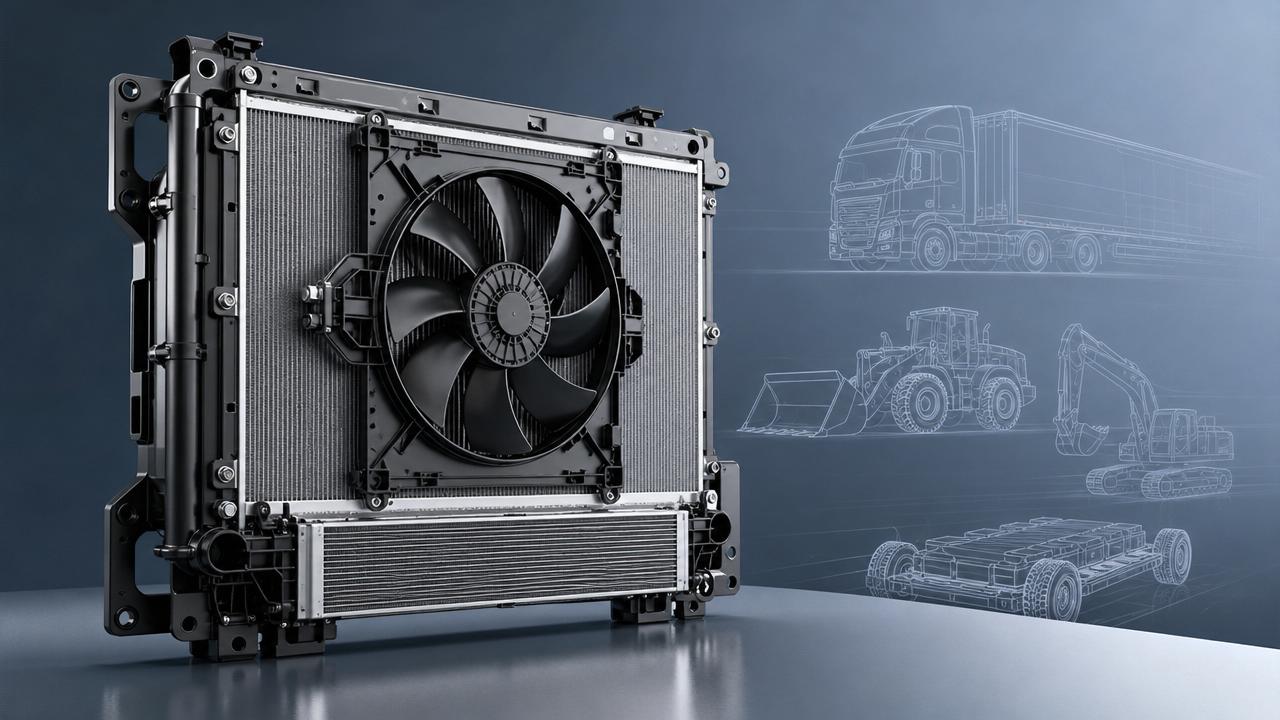
At Thermal Management Expo, radiator module integration is reshaping cooling strategies across heavy-duty vehicles, construction equipment, and new energy platforms.
For component selection, the radiator module now matters beyond heat exchange alone. It affects packaging, airflow control, durability, service access, and total system reliability.
Recent displays showed a clear move toward compact assemblies, higher thermal efficiency, and smarter compatibility between radiators, intercoolers, fans, shrouds, and mounting structures.
This article reviews the most relevant radiator module trends, provides a practical evaluation framework, and highlights market signals shaping future thermal management decisions.
Why a Structured Evaluation Matters
Expo announcements often emphasize innovation, but not every radiator module offers equal value in real operating conditions.
A structured review helps compare integrated cooling solutions using measurable criteria instead of isolated claims about efficiency or compactness.
This is especially important in the auto parts sector, where thermal loads, vibration, contamination, and installation limits strongly affect field performance.
Liaocheng Xinde Auto Parts Co., Ltd., established in 2018, reflects this market direction through focused development of radiators, intercoolers, construction machinery radiators, and new energy radiator modules.
Its rapid expansion and recognition as a High-tech Enterprise underline how demand is shifting toward reliable, application-specific cooling components with scalable integration potential.
Core Points to Check in a Radiator Module
- Confirm whether the radiator module combines radiator, intercooler, fan, condenser support, and shroud design into one assembly that reduces interfaces and leakage risk.
- Check heat rejection performance under peak load, idle conditions, low-speed airflow, and hot ambient temperature rather than relying only on laboratory rating data.
- Review package dimensions carefully to ensure the radiator module fits confined engine bays or battery thermal layouts without compromising service space.
- Evaluate material choice, including tube, fin, tank, and frame construction, because corrosion resistance and fatigue life determine long-term cooling stability.
- Inspect vibration isolation strategy and mounting geometry, since integrated assemblies face combined stress from engines, road shock, and chassis torsion.
- Verify airflow management details such as sealing strips, fan coverage, and shroud depth, because poor air guidance can reduce radiator module efficiency.
- Assess maintenance access for cleaning, hose replacement, and fastener reach, especially where dust, mud, or construction debris may clog core surfaces.
- Examine compatibility with emission, engine, or battery thermal strategies so the radiator module supports system-level temperature control rather than isolated cooling.
- Ask for validation evidence covering pressure cycling, thermal shock, salt spray, and endurance testing to confirm real-world reliability of the integrated design.
- Compare replacement availability and specification traceability, since aftermarket support influences downtime, service continuity, and total lifecycle cost.
Key Integration Trends Seen at the Expo
1. Higher Functional Integration
Suppliers are combining multiple thermal functions into one radiator module to reduce assembly steps and simplify vehicle packaging.
This approach also reduces bracket count, hose routing complexity, and tolerance stacking across connected cooling components.
2. Compact Design with Greater Heat Density
Exhibits showed thinner but more efficient cores, improved fin geometry, and optimized airflow paths for higher performance in smaller spaces.
For vehicles where front-end space is limited, a compact radiator module can free room for safety, emissions, or electrification components.
3. Growing Relevance in New Energy Platforms
New energy vehicles require coordinated management of battery packs, power electronics, cabins, and motors.
As a result, radiator module integration is becoming more system-driven, with tighter thermal balancing and more precise temperature zoning.
4. Stronger Focus on Durability and Service Life
Heavy trucks and construction machinery still demand rugged cooling systems that tolerate vibration, dust, overload, and long operating hours.
This keeps durability engineering at the center of radiator module development, not just lightweight design or compact packaging.
Application Notes by Vehicle and Equipment Type
Heavy-Duty Trucks
In long-haul and regional truck use, the radiator module must maintain stable cooling during steep grades, stop-start traffic, and seasonal temperature extremes.
Check core strength, coolant flow balance, and fan matching. Highway reliability depends on sustained thermal control under variable engine loads.
Construction Machinery
Construction equipment places the radiator module in harsh contamination environments with constant shock and frequent low-speed operation.
Priority checks include debris resistance, ease of cleaning, reinforced mounting, and stable cooling when airflow is limited by worksite conditions.
New Energy Vehicles
For electrified platforms, the radiator module is part of a broader thermal architecture rather than a standalone engine cooling device.
Review whether the design supports battery protection, inverter cooling, and compact front-end integration without creating service complexity.
Platform-Specific Replacement Demand
In replacement markets, dimensional accuracy remains critical. A reference example is RADIATORS FOR SCANIA.
With models such as OEM 1100631 and 64072, and size 970*760*56, this type of solution highlights how fitment precision supports radiator module performance.
Commonly Overlooked Issues and Risk Alerts
One common mistake is selecting a radiator module based only on nominal cooling capacity. Packaging efficiency means little if airflow sealing is weak.
Another overlooked issue is serviceability. Integrated designs can reduce parts count, but poor maintenance access may increase downtime later.
Many evaluations also underestimate contamination exposure. Fine dust, oil film, and mud can quickly reduce radiator module effectiveness in field operation.
Material mismatch is another risk. If tanks, cores, seals, and brackets age differently, leaks and fatigue failures may appear earlier than expected.
Finally, some integrated assemblies are difficult to trace by specification. Without clear part mapping, replacement planning becomes slow and error-prone.
Practical Steps for Better Execution
- Map operating temperature ranges, duty cycle, contamination level, and available installation space before comparing any radiator module options.
- Request performance curves, endurance data, and dimensional drawings to verify whether the integrated solution matches the real application.
- Inspect interface details, including hose routing, brackets, seals, and fan alignment, because these areas often determine installation success.
- Prioritize suppliers with stable engineering capability, proven production consistency, and experience across heavy truck and new energy thermal systems.
- Build a comparison sheet covering efficiency, size, service access, durability, and replacement support, then score each radiator module objectively.
FAQ on Radiator Module Selection Trends
Does integration always improve cooling?
Not always. A radiator module improves cooling only when airflow, core design, and system matching are engineered together.
Why is radiator module design important in new energy vehicles?
Because batteries and electronics require stable temperatures, the radiator module becomes part of a coordinated thermal control strategy.
What matters most in harsh environments?
Durability, clog resistance, sealing quality, and easy cleaning are usually more important than compactness alone.
Can replacement parts support integrated cooling strategies?
Yes, if dimensions, connection points, and thermal specifications are accurate. That is why traceable fitment data remains essential.
Conclusion and Next Actions
Thermal Management Expo confirms that radiator module integration is no longer a niche development. It is becoming a central direction in modern cooling systems.
The best results come from balancing heat performance, packaging, durability, airflow control, and maintenance practicality.
When reviewing any radiator module, use a structured checklist, compare application-specific evidence, and validate long-term service needs before final selection.
This approach supports better thermal management decisions across heavy trucks, construction machinery, and evolving new energy vehicle platforms.