



Radiator Module Installation Errors That Cause Early Failure
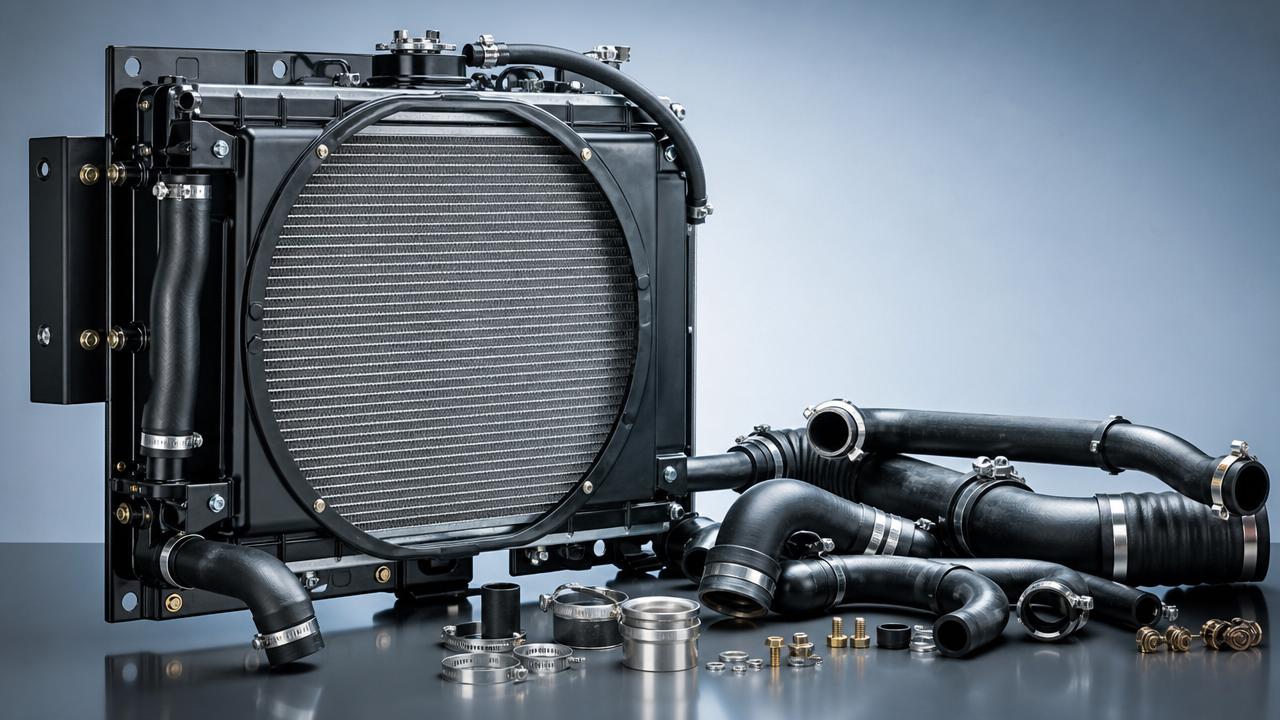
Why radiator module installation errors matter in real service scenarios
Even a high-quality radiator module can fail early if it is installed incorrectly.
In aftermarket repair, small mistakes often create large cooling system problems.
Poor alignment, twisted hoses, trapped air, and uneven fastening can all shorten radiator module life.
The result may include coolant leaks, vibration cracks, overheating, weak heat transfer, and repeat repairs.
For heavy trucks, construction equipment, and new energy cooling assemblies, installation quality directly affects uptime.
Liaocheng Xinde Auto Parts Co., Ltd. focuses on radiators, intercoolers, and related cooling parts for global markets.
Its experience in water tank radiators and module applications shows one clear lesson.
A durable radiator module needs correct fitment, controlled assembly force, and proper system bleeding.
How installation needs change across different radiator module applications
Not every radiator module works in the same operating environment.
A road truck faces long vibration cycles and high airflow exposure.
Construction machinery often sees dust, shock loads, and tighter service access.
New energy systems may involve compact packaging and stricter thermal balance requirements.
Because of these differences, the same radiator module installation method may not suit every vehicle.
Correct judgment starts with application review before the first bolt is tightened.
- Check frame condition, bracket flatness, and mounting point wear.
- Confirm hose length, bend radius, and clamp compatibility.
- Review fan shroud spacing and surrounding component clearance.
- Verify coolant type, fill method, and bleed path.
Scenario 1: Heavy truck radiator module failures often start with misalignment
Heavy truck service commonly involves radiator module replacement after collision, corrosion, or aging.
In this scenario, bracket alignment is one of the most overlooked checks.
If the support frame is bent, the radiator module may sit under constant stress.
That stress transfers into the core, tanks, welds, and hose necks during every vibration cycle.
The failure may not appear immediately.
Instead, cracks can develop after weeks of use, making diagnosis more difficult.
Key judgment points in truck installations
- Measure diagonal distance across mounting points.
- Inspect rubber isolators for hardening or collapse.
- Ensure the radiator module sits naturally before fastening.
- Avoid pulling the assembly into position with bolts.
If fitment requires force, the root problem is usually elsewhere.
Scenario 2: Construction machinery radiator module issues often come from hose and clamp mistakes
Construction machinery operates under dust, impact, and repeated thermal cycling.
Here, hose routing errors can damage a radiator module faster than expected.
A hose that rubs against a bracket may slowly wear through.
A hose with a tight bend may restrict coolant flow and increase local pressure.
A mismatched clamp may cut the hose or fail to seal under heat.
What to check before startup
- Keep hoses clear of moving parts and sharp edges.
- Use correct clamp size and torque.
- Confirm full seating on inlet and outlet necks.
- Leave enough flex for engine movement.
These simple checks improve radiator module reliability in harsh field conditions.
Scenario 3: Compact engine bays increase radiator module installation risk
Some vehicles have very limited installation space around the radiator module.
This creates higher risk of fin damage, fan contact, and hidden hose interference.
Technicians may focus on final fit while missing clearance under operating movement.
Even small contact between the fan shroud and radiator module can lead to wear and noise.
In compact layouts, trial positioning is essential before final assembly.
For certain vehicle models, choosing a well-matched replacement such as radiator for benz can also help reduce fitment issues.
Different applications create different radiator module installation priorities
Practical radiator module installation advice for better service life
A longer-lasting radiator module usually depends on process discipline more than speed.
- Inspect all mounting points before unpacking the new unit.
- Compare old and new dimensions, ports, and brackets carefully.
- Install without twisting the tanks or core.
- Tighten fasteners evenly in stages.
- Route hoses with smooth bends and stable support.
- Fill coolant slowly and bleed trapped air completely.
- Run the engine and recheck for leaks, vibration, and temperature stability.
When replacement quality matters, matching the application is as important as choosing a strong core design.
Some service cases also benefit from application-focused products like radiator solutions developed for specific platforms.
Common radiator module misjudgments that lead to repeat failure
Several wrong assumptions continue to cause early radiator module failure.
- Assuming a leak always comes from product quality.
- Reusing worn mounts, old clamps, or hardened hoses.
- Ignoring fan shroud alignment after front-end repair.
- Skipping pressure testing after installation.
- Believing fast tightening saves time.
- Treating air bleeding as optional.
These errors often create symptoms that appear later, not during installation.
That delay makes root cause analysis harder and raises total repair cost.
A careful process protects both the radiator module and the full cooling system.
Next-step checks to reduce radiator module failure after installation
Before releasing a vehicle, use a short verification routine.
- Pressure test the cooling system.
- Inspect every joint after warm-up.
- Confirm stable operating temperature under load.
- Listen for fan or shroud contact.
- Recheck coolant level after the first heat cycle.
A radiator module should not be judged only by initial fit.
It should be judged by leak-free sealing, controlled vibration, stable airflow, and proper thermal performance.
For long-term reliability, installation discipline is the final quality step.
If a replacement project involves platform-specific fitment, reviewing options such as a second-use reference for radiator compatibility can support better decisions.
Done correctly, a radiator module delivers the service life it was designed to provide.