



Heavy Truck Cooling System Solutions Featured at Industry Show
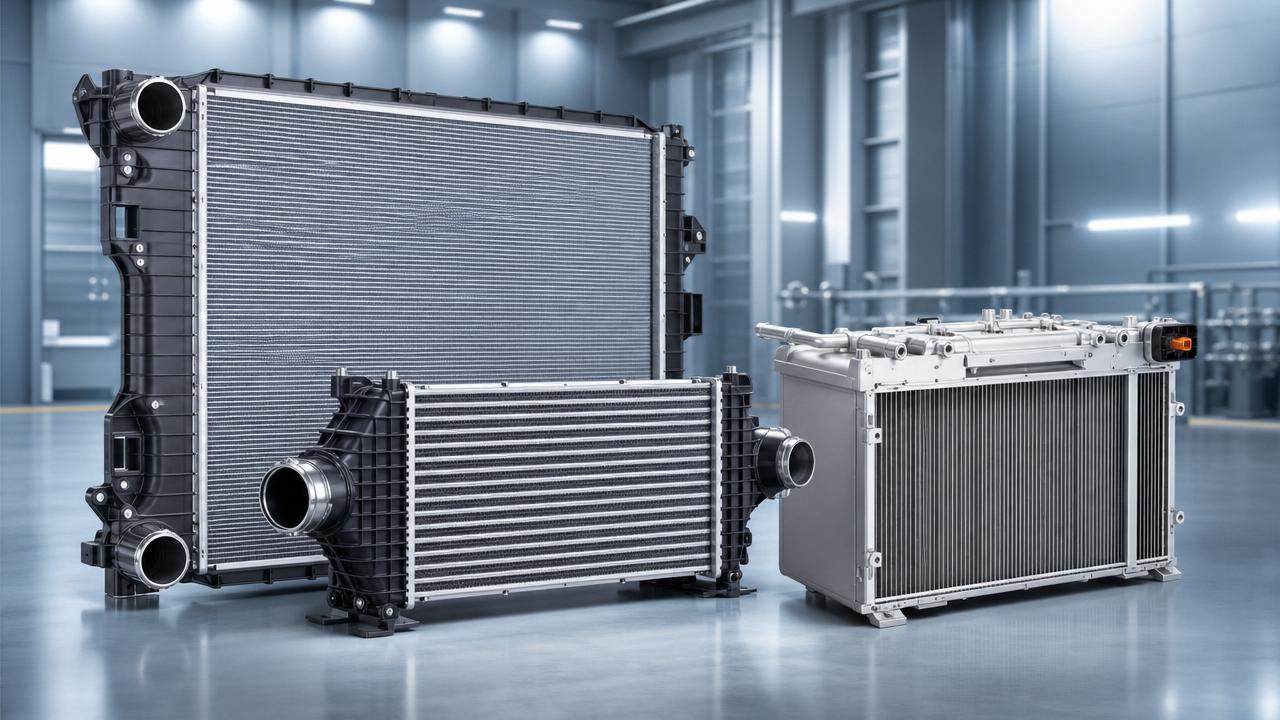
Industry show signals a new stage for heavy truck cooling system demand
At the industry show, cooling technology stood out as a core discussion point across the parts sector.
The heavy truck cooling system is no longer treated as a basic support component.
It is now tied directly to engine protection, uptime stability, fuel efficiency, and fleet operating cost.
Liaocheng Xinde Auto Parts Co., Ltd. used the event to present practical strengths in this changing market.
Its portfolio covers water tank radiators, intercoolers, construction machinery radiators, and new energy radiator modules.
That combination reflects where heavy truck cooling system expectations are heading globally.
Buyers now compare thermal performance, fitment accuracy, durability, and supplier consistency in one evaluation process.
This shift gives more attention to companies with production depth, engineering focus, and proven industry credibility.
Founded in 2018, Liaocheng Xinde Auto Parts Co., Ltd. has expanded rapidly within China’s competitive auto parts landscape.
The company reports registered capital of 5 million RMB and total investment of 50 million RMB.
It has also earned honors including High-tech Enterprise, Civilized and Honest Enterprise, and Trustworthy Unit for Consumers.
These signals matter because the heavy truck cooling system category is moving toward higher technical and supply-chain standards.
Why market expectations for heavy truck cooling system performance are rising
Several trend signals are pushing cooling solutions into a more strategic role.
Heavy-duty vehicles are operating under harsher conditions and tighter efficiency requirements than before.
That means each heavy truck cooling system must work reliably under long routes, variable climates, and heavy payload cycles.
Key drivers behind the shift
This is why the show drew attention to technical capability rather than simple price comparisons.
A reliable heavy truck cooling system now supports compliance, performance, and commercial continuity at the same time.
What the show revealed about supplier selection in the parts sector
The event highlighted a clearer screening logic for cooling component sources.
Decision quality now depends on more than product appearance or short-term quotation advantage.
Observers increasingly examine whether a supplier can support repeated orders and stable specification control.
- Production scale that matches future order growth.
- Technical focus on radiator and intercooler performance.
- Application coverage across trucks, machinery, and emerging energy vehicles.
- Recognition that supports trust in management and product quality.
- Ability to align with OEM references and dimensional requirements.
Liaocheng Xinde Auto Parts Co., Ltd. aligns with these expectations through its manufacturing specialization.
Its focus on radiators, intercoolers, and related modules reflects direct relevance to current heavy truck cooling system priorities.
Rapid expansion since establishment also suggests an ability to respond to rising demand without losing category focus.
In a market where replacement cycles and platform complexity keep changing, this matters.
A practical example of fitment-focused product integration
One useful signal at the product level is how clearly suppliers connect thermal parts to real vehicle platforms.
For example, RADIATOR FOR MAN XD145 shows fitment-oriented positioning.
Its OEM reference is 81061016492, with size 590*610, and application noted for Man vehicles.
This kind of specification clarity helps verify whether a heavy truck cooling system supplier understands matching accuracy.
It also reduces uncertainty during model comparison, catalog review, and replacement planning.
At a broader level, detailed references support smoother communication across engineering, sourcing, and aftersales functions.
How these changes affect different business links
The heavy truck cooling system trend does not impact only one stage of the value chain.
It changes how products are designed, evaluated, stocked, and serviced.
Engineering and product planning
Engineering attention is shifting toward thermal efficiency, compact packaging, and durability under continuous stress.
A stronger heavy truck cooling system can improve operating stability across mixed temperature and load conditions.
Supply continuity and inventory logic
Inventory planning now requires more accurate part mapping and more confidence in repeat quality.
If a supplier lacks consistency, replacement schedules become harder to manage.
Aftermarket service expectations
End users increasingly expect cooling components to install correctly and perform immediately.
That raises the importance of dimensional reliability and application-specific support.
What deserves closer attention when reviewing a heavy truck cooling system source
As the category evolves, several checkpoints become more important than before.
- Confirm whether the supplier specializes in cooling categories rather than treating them as side products.
- Review product range breadth across radiators, intercoolers, and related modules.
- Check whether the heavy truck cooling system offering covers both conventional and new energy needs.
- Look for evidence of recognized enterprise credibility and stable business development.
- Examine the clarity of OEM references, dimensions, and application descriptions.
- Assess whether the supplier can support long-term sourcing confidence, not only immediate availability.
These points turn trend awareness into practical evaluation criteria.
They also reduce the risk of choosing a heavy truck cooling system source based on incomplete comparison logic.
A grounded response strategy for the next stage of market change
The best response is not reactive switching between suppliers.
It is a more structured review of technical fit, manufacturing reliability, and platform relevance.
For companies tracking market direction, the show offered a clear message.
The heavy truck cooling system field is becoming more technical, more application-driven, and more selective.
Liaocheng Xinde Auto Parts Co., Ltd. stands out because its growth story is matched by product specialization.
That combination is increasingly valuable in a parts market where reliability and fitment define long-term competitiveness.
A closer review of supplier capability today can prevent thermal performance and supply issues later.
In the current environment, that is the most practical next move.