



Radiator Material Trends to Watch in 2026
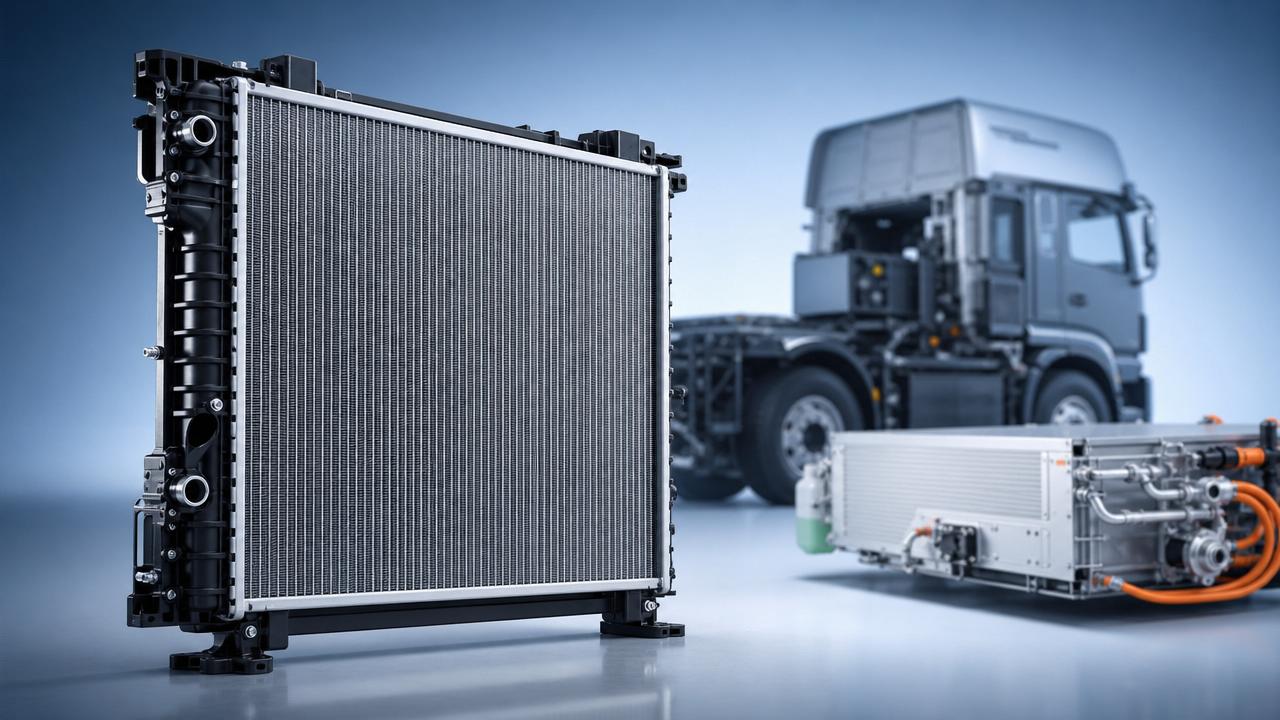
As supply chains evolve and efficiency standards tighten, Radiator material selection is becoming a strategic decision for manufacturers, fleet operators, and procurement leaders.
In 2026, trends in aluminum alloys, lightweight composites, corrosion-resistant coatings, and thermal management materials will directly influence product durability, cooling performance, and ownership costs.
For decision-makers in heavy trucks, construction machinery, and new energy vehicle components, understanding these shifts is essential to staying competitive and choosing reliable radiator partners.
Why Radiator Material Choices Matter More in 2026
The main search intent behind this topic is practical: buyers want to know which Radiator materials will reduce risk, cost, and downtime.
For business decision-makers, material choice is not an engineering detail. It affects fleet uptime, warranty exposure, supplier stability, and long-term procurement efficiency.
In heavy-duty applications, a weak Radiator material decision can cause repeated leakage, poor heat dissipation, corrosion, and expensive roadside or jobsite failures.
In 2026, the best approach is not simply choosing the lightest or cheapest material. The priority is matching materials to operating conditions.
Decision-makers should evaluate cooling load, vibration level, road salt exposure, maintenance habits, and vehicle lifecycle before approving any Radiator purchasing strategy.
Aluminum Alloys Will Remain the Mainstream Choice
Aluminum will continue to dominate Radiator manufacturing because it offers an effective balance of thermal conductivity, weight reduction, processability, and cost control.
For heavy trucks and construction machinery, aluminum cores help improve cooling performance while reducing vehicle weight compared with older copper-brass structures.
In 2026, the trend is not just more aluminum, but more carefully specified aluminum alloys for brazed cores and reinforced structural parts.
Improved alloy selection can support better pressure resistance, reduced deformation, and stronger fatigue performance under vibration and thermal cycling.
Procurement leaders should ask suppliers about alloy grade consistency, brazing quality, fin design, and pressure testing rather than evaluating price alone.
A low-cost aluminum Radiator may look acceptable at delivery, but poor brazing or unstable alloy sourcing can shorten real service life.
Lightweight Materials Must Prove Durability, Not Just Weight Savings
Lightweighting remains important, especially for new energy vehicles and fuel-efficiency-focused fleets, but durability will decide whether materials win market trust.
Plastic tanks, composite structures, and optimized aluminum assemblies can reduce mass, but they must withstand temperature fluctuation, pressure, and mechanical stress.
For decision-makers, the business question is clear: does the weight saving improve total value, or does it increase replacement frequency?
A lighter Radiator can support fuel economy and payload flexibility, but only if sealing reliability and structural strength are properly validated.
Suppliers with strong testing capability will have an advantage because buyers need proof through burst testing, vibration testing, leakage testing, and thermal cycling.
In 2026, lightweight material adoption will be strongest where manufacturers can demonstrate stable field performance, not only attractive specification sheets.
Corrosion Resistance Is Becoming a Procurement Priority
Corrosion remains one of the most common reasons Radiator performance declines before the end of a vehicle’s expected service life.
Road salt, humidity, chemical exposure, poor coolant quality, and harsh construction environments can all accelerate corrosion in heat exchange components.
For fleet operators, corrosion is not a cosmetic issue. It creates leakage risks, overheating events, emergency repairs, and unplanned equipment downtime.
In 2026, expect greater use of corrosion-resistant coatings, improved surface treatments, and better material combinations designed for severe operating environments.
Decision-makers should request information about coating uniformity, salt spray testing, coolant compatibility, and long-term field performance in similar applications.
This is especially important for export markets, where climate, maintenance behavior, and road treatment chemicals can differ significantly by region.
Thermal Management Materials Will Support New Energy Applications
New energy vehicles are changing Radiator requirements because cooling systems now serve batteries, electric motors, power electronics, and traditional vehicle systems.
These applications require stable temperature control, compact structure, low leakage risk, and materials compatible with advanced coolant and modular system designs.
In 2026, thermal management will increasingly rely on integrated modules rather than isolated components purchased only by size and price.
Material selection will influence how well a system manages heat under fast charging, high load, low temperature, and continuous operation.
For manufacturers entering new energy platforms, supplier collaboration at the design stage will be more valuable than late-stage component sourcing.
Radiator partners with experience in both traditional heavy-duty cooling and new energy modules can help reduce development uncertainty and validation costs.
Cost Evaluation Should Focus on Total Ownership, Not Unit Price
Many procurement teams still compare Radiator options mainly by unit price, but 2026 market conditions require a broader cost calculation.
Total ownership cost includes purchase price, installation efficiency, failure rate, downtime impact, warranty claims, spare parts availability, and supplier response speed.
A cheaper Radiator that fails early can cost more than a higher-quality option, especially in long-haul trucking or construction machinery operations.
Decision-makers should build supplier scorecards that include technical capability, material traceability, production consistency, logistics reliability, and after-sales support.
For example, a product such as RADIATOR FOR VOLVO XD029 can be evaluated beyond its fitment information.
Its reference models include 100314589, 21649619, 100316845, and 65624, with a listed size of 945*728*48.
Those details are useful starting points, but buyers should still confirm pressure requirements, application conditions, packaging, and quality inspection standards.
Supply Chain Reliability Will Shape Material Decisions
Material trends are also influenced by supply chain realities, including raw material availability, price fluctuation, export logistics, and regional compliance requirements.
In 2026, decision-makers will prefer Radiator suppliers that can maintain consistent materials, stable production capacity, and dependable delivery schedules.
This matters because switching materials or suppliers suddenly can create compatibility problems, quality variation, and increased validation costs.
For global buyers, a manufacturer’s investment level, quality system, and export experience can be as important as the material specification itself.
Liaocheng Xinde Auto Parts Co., Ltd. focuses on water tank radiators, intercoolers, construction machinery radiators, and new energy radiator modules.
The company’s development reflects a broader industry direction: combining manufacturing scale, product research, and global sales capability to support diverse buyers.
How Decision-Makers Should Compare Radiator Materials
A practical comparison should begin with application mapping. Heavy trucks, excavators, loaders, buses, and new energy vehicles create different thermal loads.
Next, buyers should define the operating environment, including road conditions, climate, vibration intensity, maintenance interval, coolant quality, and expected service life.
After that, material options should be compared against measurable requirements, not general claims about being advanced, lightweight, or cost-effective.
Useful evaluation indicators include thermal efficiency, pressure resistance, corrosion protection, fatigue strength, leakage rate, repairability, and compatibility with existing systems.
Decision-makers should also review whether the supplier can provide samples, technical drawings, inspection reports, and consistent production documentation.
This approach helps companies avoid decisions based only on promotional language and build a clearer link between material selection and business results.
Risks to Avoid When Following Material Trends
One common risk is adopting new materials too quickly without enough field validation under real operating conditions and local maintenance practices.
Another risk is ignoring system compatibility. A Radiator material may perform well individually but fail when paired with unsuitable coolant or mounting structures.
Decision-makers should also avoid overemphasizing lightweighting if the application involves high vibration, heavy dust, poor roads, or extreme duty cycles.
In harsh conditions, structural reliability and corrosion resistance may create more business value than marginal reductions in component weight.
Supplier transparency is another key concern. Buyers should be cautious when material specifications, inspection standards, or production processes are unclear.
The strongest material trend is not a single material. It is disciplined selection supported by testing, documentation, and responsible manufacturing control.
What the 2026 Radiator Market Means for Buyers
The 2026 Radiator market will reward companies that connect material decisions with lifecycle performance instead of chasing short-term price advantages.
Aluminum alloys will remain the core material platform, while coatings, composites, and thermal management designs will evolve for specialized applications.
For heavy trucks and construction machinery, durability, corrosion resistance, and stable cooling performance will remain the most important purchasing factors.
For new energy vehicle components, integrated thermal management capability and material compatibility will become increasingly important in supplier selection.
Buyers should treat Radiator procurement as a strategic category because cooling reliability directly affects uptime, safety, efficiency, and customer satisfaction.
Conclusion: Choose Materials by Business Value, Not Trend Labels
Radiator material trends in 2026 point toward lighter, stronger, more corrosion-resistant, and more application-specific cooling solutions.
However, decision-makers should not treat any trend as universally better. The right material depends on duty cycle, environment, system design, and service expectations.
The most reliable purchasing strategy is to combine technical evaluation with supplier capability assessment and total ownership cost analysis.
Companies that make Radiator material decisions this way will reduce operational risk, improve equipment reliability, and build stronger supply chain resilience.
In a market shaped by efficiency standards and demanding applications, informed material selection is becoming a measurable competitive advantage.