



How to Judge Radiator Cooling Efficiency
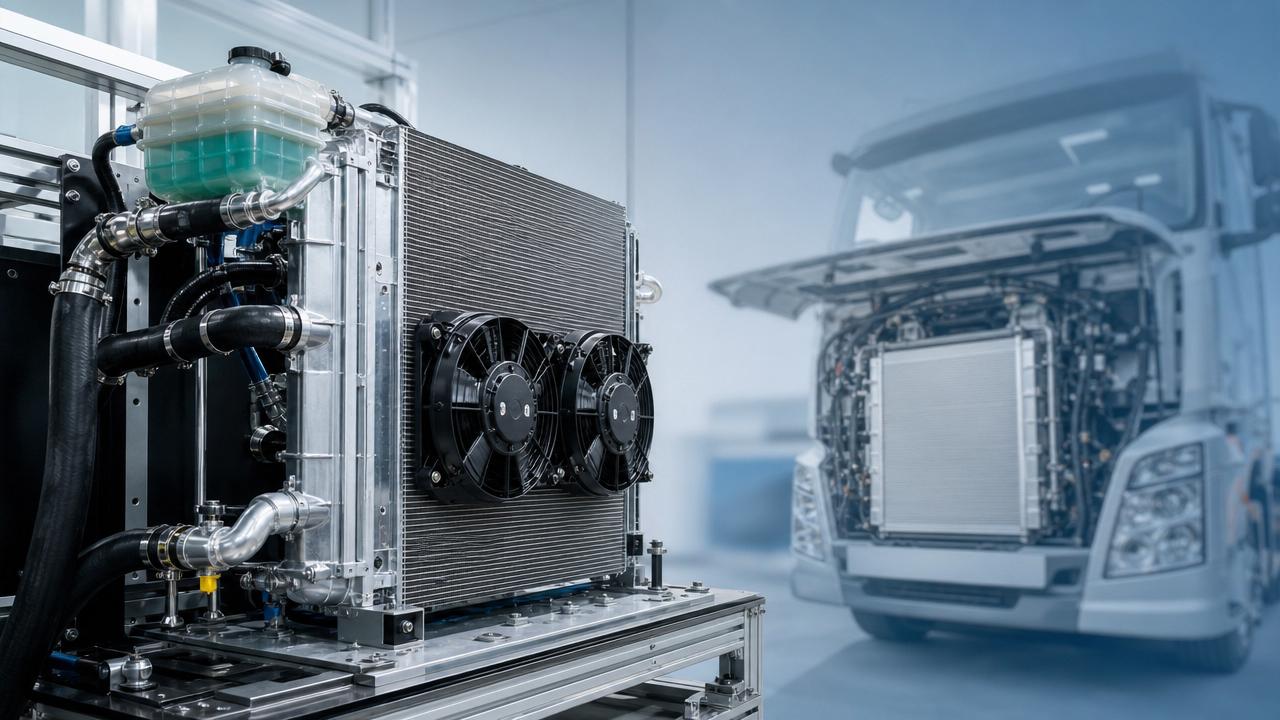
Evaluating Radiator cooling efficiency requires more than checking surface temperature or airflow at a glance. For technical assessment teams, accurate judgment depends on heat transfer performance, pressure drop, coolant flow, fin design, material quality, and real operating conditions. Whether the application is a heavy truck, construction machinery, or a new energy cooling module, understanding these indicators helps identify performance stability, durability, and system compatibility before failure occurs.
In B2B parts evaluation, the Radiator is not an isolated component. It works with the fan, coolant pump, thermostat, hose layout, intercooler, condenser, hydraulic cooler, and electronic control strategy. A technically sound assessment must therefore combine bench data, installation review, field load conditions, and long-term durability indicators.
Core Indicators for Judging Radiator Cooling Efficiency
A Radiator is efficient when it removes the required heat under defined operating conditions while maintaining acceptable pressure drop and stable coolant temperature. For heavy trucks and construction machinery, the assessment often starts with 4 indicators: heat rejection, coolant flow, air-side resistance, and structural consistency.
Heat Transfer Capacity and Temperature Difference
Heat transfer performance should be measured by inlet temperature, outlet temperature, coolant flow rate, and air temperature rise. A simple surface scan may miss internal blockage, uneven coolant distribution, or fin contamination. In typical engine cooling checks, a coolant temperature drop of 8℃–15℃ across the core can indicate effective heat exchange, depending on load and ambient conditions.
Technical teams should compare the Radiator performance against the required heat load, not only against another sample. A component that performs well at 25℃ ambient may become marginal at 40℃ ambient, especially in mining, logistics, or off-road construction applications where low-speed airflow is common.
Pressure Drop and Coolant Flow Stability
Low coolant pressure drop is not always better. If the internal tubes are too open, heat transfer contact time may be insufficient. If pressure drop is excessive, the pump load increases and circulation becomes unstable. Many evaluation programs define allowable pressure drop at 2 or 3 flow points, such as idle, rated power, and overload simulation.
The following table shows practical indicators commonly used during Radiator assessment. The values are not universal pass-or-fail standards, but they help technical evaluators organize test data and compare supplier samples under repeatable conditions.
The key conclusion is that Radiator efficiency is a system result. A sample with excellent heat rejection but high pressure drop may still fail in the vehicle. Technical teams should record values under controlled ambient temperature, stable engine load, and consistent coolant concentration.
Fin Design, Core Thickness, and Material Quality
Fin pitch, louver angle, tube layout, and core thickness determine how much heat can move from coolant to air. A thicker Radiator is not automatically more efficient. If airflow cannot penetrate the rear rows, part of the core becomes underused and fan power increases.
Material consistency also matters. Aluminum strip thickness, brazing quality, plastic tank strength, and gasket stability affect both cooling efficiency and service life. For high-vibration equipment, dimensional tolerance and mounting rigidity can be as important as the thermal calculation.
Testing Methods for Technical Assessment Teams
A reliable Radiator evaluation usually combines 3 stages: visual inspection, controlled performance test, and application verification. Each stage answers a different question: is the component built correctly, does it perform under measured conditions, and can it remain stable in the target machine?
Step 1: Visual and Dimensional Inspection
Before running thermal tests, inspect the Radiator core, tanks, mounting points, sealing areas, and pipe connections. Check fin deformation, soldering uniformity, tube alignment, bracket strength, and possible interference with the fan shroud or frame.
- Measure key dimensions against drawings, with attention to mounting hole position and inlet-outlet orientation.
- Check fin damage ratio; visible crushed areas above 5% may affect airflow distribution.
- Inspect welding and brazing zones for cracks, incomplete joints, oxidation, or uneven filler flow.
- Confirm cap pressure rating, sensor ports, drain valve location, and hose connection diameter.
Step 2: Bench Testing Under Repeatable Conditions
Bench testing helps separate Radiator performance from vehicle variables. A controlled test can set coolant flow, air velocity, inlet temperature, and ambient conditions. For comparison among suppliers, the same fan speed, coolant mixture, and heat load should be used.
Common test durations range from 20 minutes for stabilization to 2 hours for extended thermal observation. If the temperature curve rises continuously after stabilization, the Radiator may not have enough heat rejection reserve for the application.
Recommended Data Points
- Coolant inlet temperature, outlet temperature, and flow rate.
- Air inlet temperature, air outlet temperature, and airflow speed.
- Coolant-side pressure drop and air-side pressure drop.
- Thermal stabilization time, usually recorded in 5-minute intervals.
- Post-test leak condition and visible structural changes.
Step 3: Field Verification in Real Operating Conditions
Field verification is essential because dust, vibration, engine bay packaging, load cycle, altitude, and fan control strategy can change Radiator behavior. A heavy truck running long-distance freight at 80–100 km/h has a different cooling profile from an excavator working at low speed for 8 hours.
For new energy radiator modules, the evaluation should include battery pack cooling, motor controller heat rejection, pump control logic, and thermal management response during charging or rapid acceleration. The target is not only peak cooling, but temperature stability within the system’s designed range.
Application-Specific Evaluation: Heavy Trucks, Machinery, and New Energy Modules
Different vehicles place different demands on a Radiator. Technical assessment should match the product with operating load, maintenance environment, packaging space, and expected service interval. A component suitable for highway transport may not survive the same way in a quarry or high-dust construction site.
Heavy Truck Cooling Systems
For heavy trucks, stable cooling under long climbs, high payload, and hot ambient conditions is critical. The Radiator must balance heat rejection with low air resistance because fan engagement affects fuel consumption and engine response.
Intercooler matching should also be reviewed. For example, the xd035 intercooler for volvo, model 21649511, is specified with a 1020*890*62 size parameter for Volvo applications. When evaluating the cooling package, the intercooler, Radiator, and fan shroud should be checked together to avoid thermal interference.
Construction Machinery Radiators
Construction machinery often operates at low travel speed, high dust concentration, and frequent load changes. A Radiator in this environment needs good anti-clogging behavior, strong mounting design, and easy cleaning access. Fin pitch may be selected with maintenance reality in mind, not only laboratory heat transfer.
Technical evaluators should include vibration checks, mud resistance review, and cleaning interval planning. In some job sites, a daily visual inspection and weekly compressed-air cleaning cycle can prevent a 10℃–20℃ temperature rise caused by dust accumulation.
New Energy Cooling Modules
New energy cooling modules require precise temperature control rather than only high heat rejection. Battery, power electronics, and motor cooling loops may require different target ranges, and the Radiator must work with pumps, valves, sensors, and control software.
Assessment should include response speed during heat spikes, compatibility with low-conductivity coolant where applicable, and stability during repeated charge-discharge cycles. A 3-stage test under low, medium, and high thermal load can reveal whether the module has enough reserve capacity.
The table below summarizes how evaluation priorities change across several typical parts industry applications. It helps procurement engineers and test teams avoid using one generic standard for every Radiator program.
The main lesson is that Radiator selection should be tied to duty cycle. A supplier that can discuss operating scenarios, packaging constraints, and validation methods usually provides better technical support than one that only offers a dimension match.
Common Mistakes When Evaluating Radiator Efficiency
Many cooling problems are caused by incomplete evaluation rather than a single defective part. Technical teams can reduce misjudgment by separating component capability from installation, coolant condition, airflow obstruction, and control system behavior.
Mistake 1: Judging Only by External Temperature
Infrared temperature tools are useful, but they measure surface behavior. Paint, oxidation, airflow direction, and reflective surfaces can distort readings. A Radiator may show an acceptable external temperature while internal tubes are partially blocked.
Mistake 2: Ignoring Coolant Quality
Coolant concentration, corrosion inhibitors, and contamination affect heat transfer. Scale formation can reduce efficiency and increase pressure drop. In practical maintenance, coolant inspection every 6–12 months is often recommended for heavy-duty applications.
Mistake 3: Treating All Core Designs as Equivalent
Two Radiator cores with similar external dimensions may have different tube structures, fin pitch, material thickness, and brazing consistency. Technical evaluation should include sample cutting, material review, or supplier process audit when the application is high-risk.
Practical Risk Control Checklist
- Confirm the required heat rejection at peak load before selecting core size.
- Verify mounting points and fan shroud clearance with actual assembly parts.
- Run leak testing before and after thermal cycling where possible.
- Compare supplier samples using the same coolant mixture and airflow settings.
- Record at least 3 operating points instead of relying on one test condition.
Supplier Evaluation and Procurement Considerations
For purchasing and technical assessment teams, Radiator efficiency is only one part of supplier qualification. Consistent manufacturing, delivery capability, responsive engineering support, and traceable quality control determine whether a cooling component can support long-term operations.
Liaocheng Xinde Auto Parts Co., Ltd. was established in 2018 with a registered capital of 5 million RMB and total investment of 50 million RMB. The company focuses on research, production, and global sales of water tank radiators, intercoolers, construction machinery radiators, heavy truck components, and new energy radiator modules.
Its business development includes recognition such as High-tech Enterprise, Civilized and Honest Enterprise, and Trustworthy Unit for Consumers. For technical buyers, these honors are useful background, but product validation should still be based on drawings, test data, process capability, and application fit.
5 Questions to Ask Before Supplier Approval
- Can the supplier provide dimensional reports, pressure test results, and thermal performance references?
- Are materials, tube thickness, fin structure, and tank design aligned with the target application?
- Can samples be evaluated within a clear 2–4 week testing and feedback cycle?
- Is the Radiator compatible with nearby components such as intercoolers, condensers, and fan shrouds?
- Does the supplier support customization for mounting, pipe layout, core specification, or module integration?
Balancing Cost, Durability, and Cooling Reserve
A low-cost Radiator that operates close to its thermal limit can increase downtime, warranty claims, and maintenance labor. In heavy-duty parts procurement, a cooling reserve of 10%–20% may be valuable when vehicles face high temperature, overload, or long service intervals.
However, oversizing also has trade-offs. Larger cores may add weight, increase packaging difficulty, and reduce airflow to other heat exchangers. The best choice is a balanced design validated by data rather than a simple “bigger is safer” assumption.
Final Guidance for Accurate Radiator Efficiency Judgment
To judge Radiator cooling efficiency accurately, start with heat load requirements, then verify coolant flow, pressure drop, air-side performance, fin design, material quality, and real installation conditions. A complete assessment should include visual inspection, bench testing, and field validation.
For heavy trucks, construction machinery, and new energy cooling modules, efficiency must be linked to duty cycle and system compatibility. The right Radiator supports stable temperature control, reduces failure risk, and improves confidence in procurement decisions.
Liaocheng Xinde Auto Parts Co., Ltd. provides cooling component solutions for water tank radiators, intercoolers, construction machinery radiators, and related modules. If your team is evaluating specifications, replacement fitment, or customized cooling performance, contact us to discuss product details, request technical support, or get a tailored solution for your application.