



Radiator Core Thickness and Cooling Performance
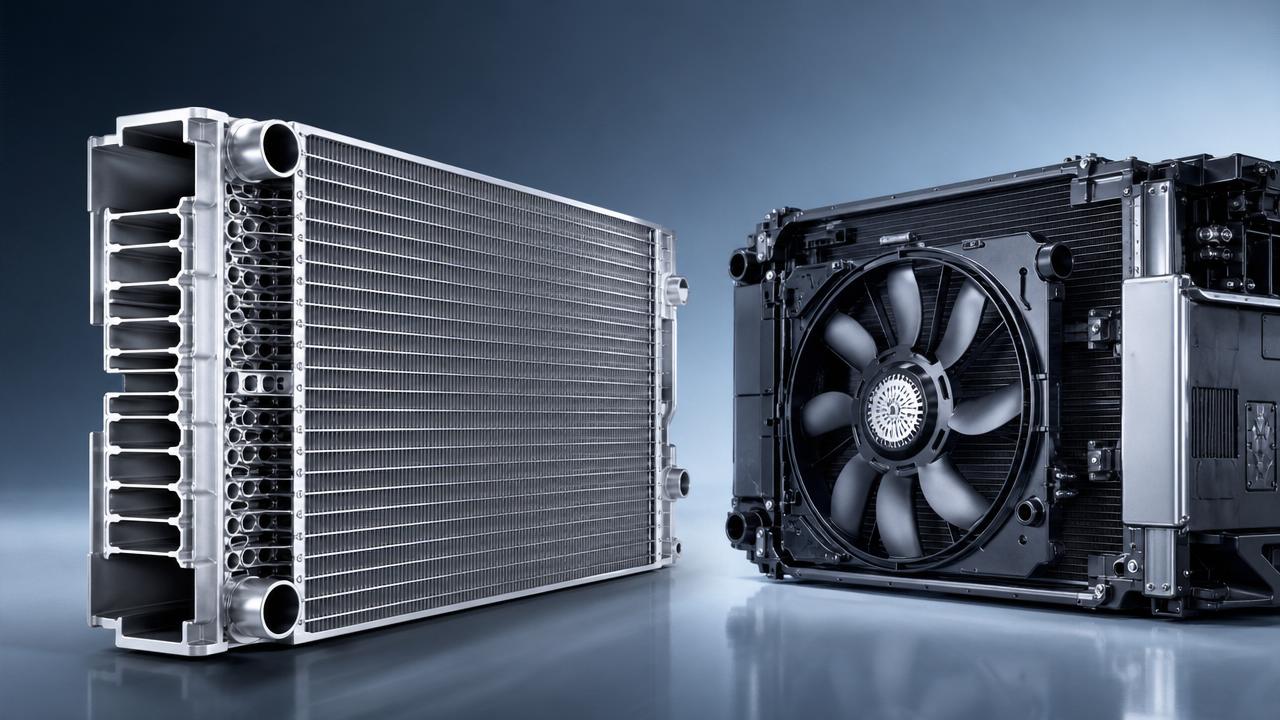
For technical evaluation, radiator core thickness is more than a dimensional specification. It directly affects heat transfer efficiency, airflow resistance, coolant capacity, and long-term system reliability.
In heavy trucks, construction machinery, and new energy cooling modules, the right radiator core structure helps cooling systems perform consistently under demanding thermal loads.
This article explains how radiator core thickness influences cooling performance, material selection, pressure stability, and application suitability in practical component decisions.
Why Radiator Core Thickness Needs a Checklist Approach
A thicker radiator core does not automatically mean better cooling. Heat rejection depends on tube design, fin density, airflow, coolant flow, and installation space.
A thin radiator core may cool efficiently when airflow is strong. A thick radiator core may underperform if air cannot pass through the fin pack.
Checklist-based evaluation prevents one-sided decisions. It connects radiator core dimensions with real operating load, vehicle layout, fan capacity, and durability expectations.
For heavy-duty parts, this method also supports consistent comparison between aluminum radiators, copper-brass designs, intercoolers, and modular cooling assemblies.
Radiator Core Thickness and Cooling Performance Checklist
Use the following checklist when comparing radiator core options for trucks, machinery, buses, or new energy thermal management systems.
- Confirm heat rejection demand before changing radiator core thickness, because engine output, duty cycle, ambient temperature, and load pattern define cooling requirements.
- Check available installation space carefully, since a thicker radiator core may interfere with fan clearance, shrouds, brackets, hoses, or adjacent components.
- Evaluate airflow resistance through the core, because excessive thickness can reduce air velocity and weaken heat transfer at the rear fin layers.
- Compare tube count and tube geometry, not only core depth, since multi-row structure and tube width strongly affect coolant contact area.
- Review fin pitch and fin shape, as dense fins increase surface area but may trap dust, mud, insects, and construction-site debris.
- Measure coolant flow compatibility, because a larger radiator core can increase volume while still suffering poor circulation if tube passages are restrictive.
- Verify pressure drop across the radiator core, especially in high-output engines where pump capacity and thermostat behavior influence operating stability.
- Inspect brazing quality and material consistency, since poor joints reduce thermal conductivity and create leakage risks under vibration and pressure cycling.
- Match radiator core thickness with fan performance, because insufficient static pressure can make a thicker core less effective than a thinner design.
- Assess service environment, as mining, agriculture, and construction applications need core structures that balance cooling capacity with easy cleaning.
- Check compatibility with charge-air cooling modules, since intercoolers and condensers placed before the radiator core affect incoming air temperature.
- Review validation data, including thermal tests, leakage tests, vibration tests, and salt-spray performance before confirming a production specification.
How Core Thickness Changes Heat Transfer
The radiator core transfers heat from coolant to metal tubes, then to fins, and finally to passing air. Thickness affects each stage.
Increasing radiator core thickness usually adds tube rows or deeper fin area. This can raise coolant capacity and increase contact surface.
However, air loses temperature difference as it travels through the core. Rear fin layers may receive warmer, slower air.
This is why radiator core design must balance depth, fin density, tube layout, and airflow path instead of relying on thickness alone.
Coolant Side Impact
A thicker radiator core can hold more coolant, which improves thermal buffering during sudden load changes. This helps stabilize temperature spikes.
Yet higher coolant volume may slow warm-up and add system weight. Tube restriction can also create pump burden if poorly designed.
Air Side Impact
Airflow is often the limiting factor. A thicker radiator core requires enough fan pressure to move air through every fin layer.
If the fan, grille, or shroud is undersized, a deep core may raise resistance and reduce effective cooling performance.
Application Notes for Different Cooling Scenarios
Heavy Trucks and Long-Haul Vehicles
Heavy trucks need stable radiator core performance during climbing, towing, idling, and high-temperature driving. Thermal reserve is important.
A moderately thicker radiator core may help when paired with optimized fins, strong fan control, and a sealed shroud system.
Liaocheng Xinde Auto Parts Co., Ltd. produces radiators and related cooling components for heavy trucks and demanding vehicle platforms.
Construction Machinery
Excavators, loaders, and cranes often work in dusty, low-speed conditions. Airflow can be unstable and contamination levels are high.
For these machines, radiator core thickness should be matched with cleanability. A very dense deep core may clog quickly.
Wider fin spacing, robust tube structure, and accessible maintenance paths often deliver better real-world cooling than maximum thickness alone.
New Energy Cooling Modules
New energy vehicles require precise thermal management for batteries, motors, controllers, and auxiliary loops. Packaging space is often limited.
Radiator core thickness must support low-temperature loops without adding unnecessary weight or pressure loss across the cooling circuit.
Intercooler and Front-End Module Interaction
When an intercooler sits before the radiator, it raises incoming air temperature. This reduces the temperature difference across the radiator core.
For related charge-air applications, products such as Intercooler for Mercedes-Benz should be evaluated together with radiator airflow requirements.
Commonly Overlooked Risks in Radiator Core Selection
Assuming More Rows Always Improve Cooling
More tube rows increase radiator core depth, but they can also increase air resistance. Rear rows may contribute limited heat rejection.
Always compare tested performance instead of judging only by row count, advertised thickness, or external appearance.
Ignoring Fan Static Pressure
A fan that works with a thin radiator core may not move enough air through a thicker core assembly.
Check fan curve data, shroud sealing, blade condition, and operating speed before approving a deeper replacement radiator core.
Overlooking Fin Blockage
Dust, fibers, mud, and insects can reduce fin efficiency. The problem becomes worse when the radiator core is dense and difficult to clean.
Maintenance access should be considered part of the cooling design, especially for off-road and construction machinery applications.
Neglecting Material and Manufacturing Quality
Radiator core thickness cannot compensate for weak brazing, uneven fins, poor tube strength, or low-quality aluminum material.
Leakage, corrosion, and vibration fatigue often come from manufacturing weakness rather than an incorrect core dimension.
Practical Execution Guide for Core Evaluation
A practical radiator core decision should combine design data, operating conditions, and inspection results. Use measurements whenever possible.
- Record engine power, coolant temperature target, ambient temperature range, and duty cycle before comparing radiator core specifications.
- Measure existing core thickness, fin pitch, tube rows, inlet size, outlet size, and mounting dimensions accurately.
- Check whether the current cooling issue comes from insufficient capacity, blocked fins, weak airflow, coolant contamination, or thermostat failure.
- Request performance data under comparable airflow and coolant flow conditions, not only catalog dimensions or visual samples.
- Inspect sample quality, including fin alignment, weld consistency, header plate strength, tank sealing, and pressure resistance.
- Validate fitment with surrounding parts, because radiator core thickness changes can affect hoses, fan guards, condensers, and intercoolers.
- Plan maintenance intervals according to worksite conditions, especially where debris loading can reduce airflow through the radiator core.
How to Compare Thin, Standard, and Thick Radiator Core Designs
Thin radiator core designs are useful where airflow is strong, space is limited, and heat load is moderate.
They can reduce weight and improve air penetration, but may lack thermal reserve under heavy continuous load.
Standard radiator core thickness is often the safest replacement choice when vehicle layout and cooling demand remain unchanged.
It usually preserves airflow balance, mounting compatibility, fan efficiency, and original system behavior.
Thick radiator core designs are suitable when thermal demand is higher and the fan system can overcome added resistance.
They require careful verification of airflow, pressure drop, vibration durability, and front-end module packaging.
Final Checklist Before Specification Approval
- Define the cooling target in measurable terms, including coolant temperature, operating load, ambient conditions, and safety margin.
- Select radiator core thickness only after confirming airflow capacity, fan static pressure, and shroud sealing condition.
- Balance heat transfer area with serviceability, especially for vehicles exposed to dust, mud, straw, or road debris.
- Confirm material quality, brazing reliability, corrosion resistance, and pressure test results before approving batch production.
- Review the whole cooling module, because condensers, intercoolers, oil coolers, and grilles influence radiator core performance.
Conclusion and Action Guidance
Radiator core thickness is a key factor in cooling performance, but it works together with airflow, coolant movement, materials, and installation design.
The best radiator core is not always the thickest. It is the design that matches heat load, fan capability, and service environment.
Before confirming a specification, compare tested data, inspect manufacturing quality, and verify fitment with the complete front-end cooling module.
Liaocheng Xinde Auto Parts Co., Ltd. supports radiator, intercooler, construction machinery radiator, and new energy module applications with practical component solutions.
Use this checklist to select radiator core designs that deliver stable cooling, reliable durability, and better long-term performance in demanding operating conditions.