



Radiator Core Supply Insights from 2026 Expos
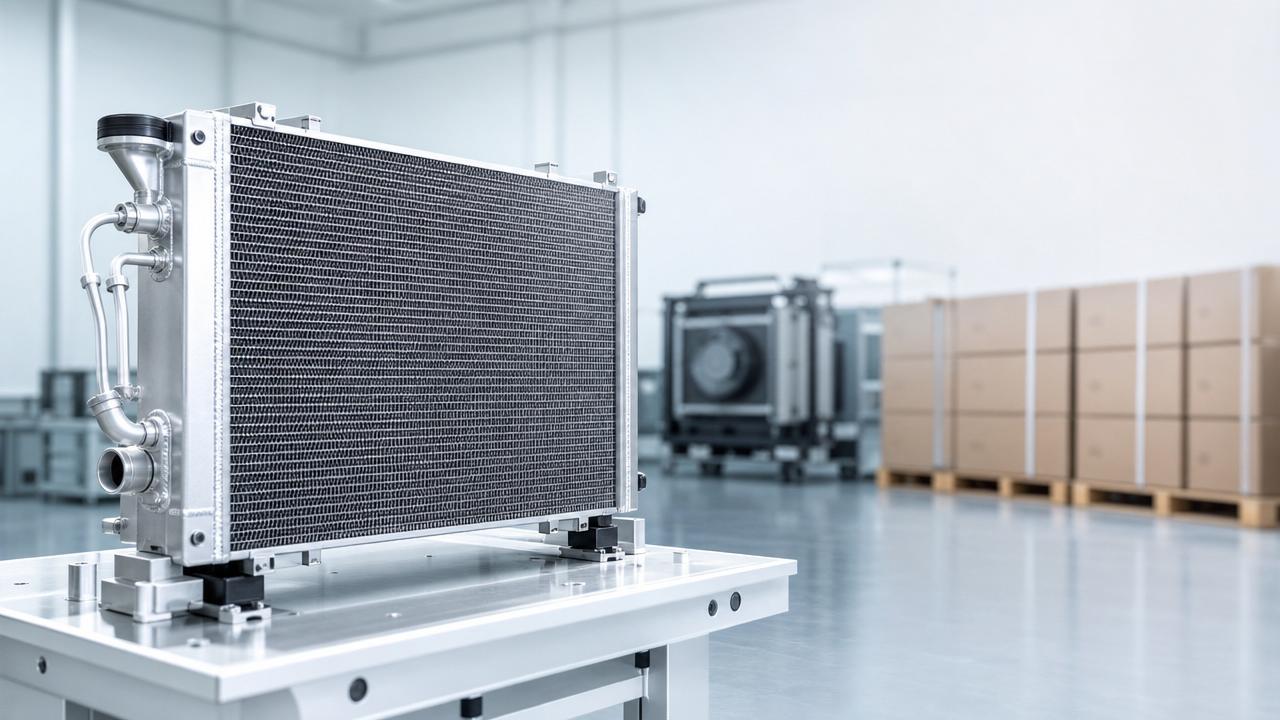
For business evaluators tracking the 2026 expo circuit, radiator core sourcing is becoming a sharper test of capability, cost stability, and reliability.
Heavy trucks, construction machinery, and new energy platforms now demand stronger thermal performance, cleaner validation data, and more predictable global supply.
The radiator core is no longer viewed as a simple replacement part. It is becoming a measurable factor in uptime, efficiency, and lifecycle value.
2026 Expo Signals Show Radiator Core Sourcing Becoming More Technical
Across 2026 exhibition discussions, thermal systems are moving from price-led comparison toward performance-led qualification.
A radiator core must now support higher load cycles, compact engine bays, and stricter expectations for heat exchange stability.
This shift is visible in heavy-duty truck displays, electric platform cooling modules, and construction equipment service solutions.
Exhibitions increasingly highlight aluminum structure quality, fin density control, brazing consistency, and pressure resistance.
The radiator core conversation is also expanding into export packaging, after-sales response, and repeatable model coverage.
Why the Radiator Core Market Is Changing
Several forces are pushing the radiator core market toward higher technical standards and more disciplined supplier evaluation.
These drivers make radiator core selection more connected to technical evidence than catalog appearance.
Expo conversations also show stronger interest in suppliers that combine production scale with model-specific engineering support.
Performance Proof Is Replacing Basic Product Claims
A radiator core must prove stability under pressure, vibration, temperature change, and long operating hours.
Visual inspection remains useful, but it is not enough for high-value parts sourcing.
More expo discussions now focus on leak testing, dimensional accuracy, brazing uniformity, and material traceability.
For heavy trucks, radiator core failure can create downtime beyond the price of the part itself.
For construction machinery, cooling reliability directly affects productivity in dusty, high-load, and remote operating conditions.
For new energy platforms, thermal stability helps protect power electronics, battery systems, and related cooling circuits.
Key Technical Signals Seen in 2026 Displays
- Closer attention to fin geometry and airflow balance.
- More demand for stable tube-to-fin bonding quality.
- Greater focus on radiator core pressure testing.
- Growing preference for model-specific fitment confirmation.
- More interest in export-ready packaging and labeling.
Supply Chain Resilience Is Becoming a Radiator Core Advantage
The radiator core supply chain faces pressure from raw material costs, freight volatility, and changing vehicle model demand.
Stable production capacity is becoming as important as the sample shown at an expo booth.
A supplier with controlled manufacturing can respond better to repeat orders, urgent replacements, and market fluctuations.
Liaocheng Xinde Auto Parts Co., Ltd. reflects this direction through focused production of radiators, intercoolers, and related components.
Established in 2018, the company has built operations around heavy trucks, construction machinery, and new energy radiator modules.
Its registered capital is 5 million RMB, with total investment reaching 50 million RMB.
Provincial and municipal honors support its credibility, including High-tech Enterprise and Trustworthy Unit for Consumers recognition.
Such indicators matter because radiator core sourcing increasingly depends on manufacturing continuity, not isolated transactions.
Model Coverage Must Match Real Vehicle Applications
Another 2026 trend is the demand for radiator core compatibility across specific vehicle platforms.
Generic descriptions are losing value when fleets require accurate installation dimensions and confirmed OEM references.
For example, RADIATOR MERCEDES-BENZ XD315 supports OEM 9425001103, with size 952*808*48 and AT&MT application capability.
This type of clear specification helps reduce fitment risk during radiator core replacement planning.
Model-level detail also supports faster quotation, better inventory planning, and smoother cross-border communication.
As exhibitions become more technical, product data quality becomes part of supplier competitiveness.
Impact Across Operations, Aftermarket, and Export Channels
The changing radiator core market affects several business links, from development decisions to service replacement.
In production planning, thermal components require closer coordination between design, procurement, and quality control.
In aftermarket service, the right radiator core reduces installation delays and repeat maintenance.
In export channels, consistent labeling and packaging reduce dispute risk and improve order efficiency.
- Heavy truck operations need dependable cooling under long-distance load conditions.
- Construction machinery needs radiator core durability against vibration and dust exposure.
- New energy systems need integrated thermal solutions with stable module performance.
- Global distribution needs repeatable specifications and reliable shipment control.
These impacts show why radiator core evaluation is becoming more strategic in the auto parts sector.
What Strong Radiator Core Suppliers Should Demonstrate
Expo activity in 2026 suggests that supplier strength should be judged through practical evidence.
A capable radiator core supplier should present more than a broad product list.
- Documented testing for leakage, pressure, and dimensional consistency.
- Clear product data, including OEM number, size, and transmission compatibility.
- Production capacity that supports both samples and repeated batch orders.
- Experience across heavy truck and construction machinery radiator core applications.
- Ability to develop new energy radiator modules and related cooling components.
- Export readiness, including communication speed and packaging reliability.
These points help separate long-term partners from short-term trading options.
They also reduce uncertainty when sourcing a radiator core for demanding markets.
Practical Response Strategy for 2026 Sourcing Decisions
A structured response helps turn expo insights into better radiator core decisions.
This framework supports clearer comparison when several radiator core options appear similar at first view.
It also helps connect technical selection with delivery confidence and lifecycle value.
Future Outlook: Radiator Core Value Will Keep Moving Upstream
The 2026 expo cycle indicates that radiator core value will keep moving closer to platform engineering decisions.
As cooling loads rise, early supplier involvement can reduce redesign pressure and prevent late-stage compatibility issues.
Radiator core suppliers with research capability, production discipline, and global sales experience will gain stronger market relevance.
For replacement markets, verified specifications and stable manufacturing will remain essential decision factors.
For new energy cooling, modular development and integration ability may become even more important.
Next Steps for Smarter Radiator Core Evaluation
The most useful next step is to compare radiator core options through evidence, not claims.
Start with model data, pressure performance, material consistency, and supplier manufacturing background.
Then evaluate communication speed, export readiness, and the ability to support future vehicle applications.
Liaocheng Xinde Auto Parts Co., Ltd. offers a focused path for radiator core sourcing across heavy trucks, machinery, and new energy modules.
Reviewing specifications and discussing application requirements can turn expo insights into practical, reliable sourcing decisions.