



Radiator Core Ordering Checks for Stable Supply
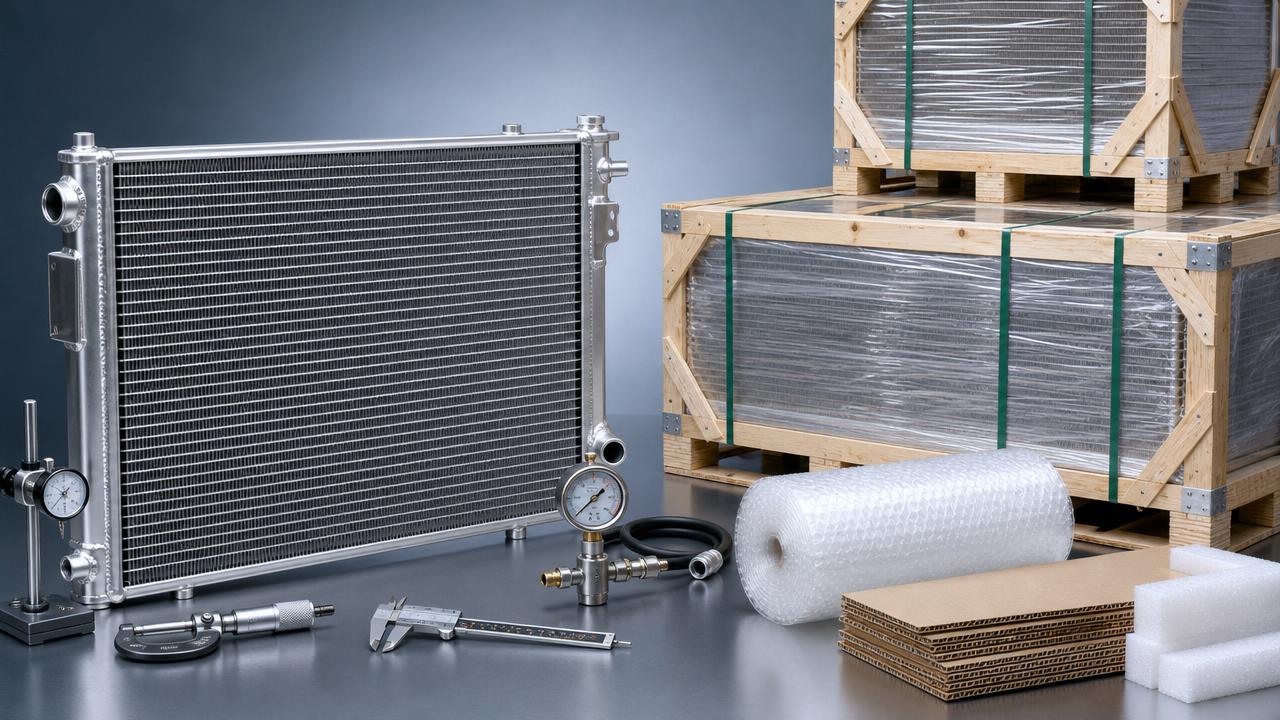
Radiator Core Ordering Checks for Stable Supply
Stable cooling parts supply is becoming a competitive requirement across heavy-duty mobility and industrial equipment markets.
A radiator core order now involves more than unit price, basic dimensions, or short-term delivery promises.
Fit accuracy, material reliability, batch consistency, and supplier response speed directly affect uptime and lifecycle cost.
For heavy trucks, construction machinery, and new energy cooling systems, every radiator core must match real operating conditions.
A clear ordering check helps reduce mismatches, emergency replacements, and production delays across global spare parts chains.
Cooling Demand Is Shifting Toward More Verified Radiator Core Supply
The parts industry is facing stronger pressure from longer vehicle duty cycles and stricter thermal management requirements.
A radiator core used in older fleets may no longer meet newer load, vibration, or heat rejection expectations.
This change is visible in cross-border orders, where one model may have several regional cooling configurations.
Incorrect assumptions about tank style, tube layout, or mounting position can turn a low-cost order into a high-cost problem.
As a result, radiator core sourcing is moving from simple replacement buying toward specification-driven supply planning.
Trend Signals Seen in Current Orders
- More orders request sample confirmation before batch production.
- Export markets require clearer packing, labels, and traceability documents.
- Heavy truck cooling parts need stronger resistance to vibration and pressure changes.
- New energy platforms increase demand for integrated thermal modules.
- Aftermarket distributors expect faster model identification and drawing comparison.
Why Radiator Core Ordering Has Become More Technical
Several market forces are raising the importance of detailed radiator core checks before confirming supply agreements.
These factors make a radiator core order more connected to engineering, warehouse control, and after-sales service.
A supplier with production experience can identify hidden differences before those differences affect field installation.
Specification Checks Should Start Before Price Comparison
The first ordering checkpoint is not quotation speed, but whether the radiator core specification is complete.
Essential data includes core size, tank material, inlet position, outlet position, mounting holes, and pressure requirements.
Core height, core length, and core thickness should be measured separately from total radiator assembly dimensions.
Fin type, tube row count, and brazing quality also influence cooling efficiency under demanding applications.
When ordering a radiator core for heavy trucks, confirm engine model, chassis model, and operating region together.
For construction machinery, dust exposure and long idle operation may require stronger heat exchange stability.
Minimum Data to Confirm
- OEM number, reference number, or previous supplier code.
- Complete core dimensions with measurement tolerance.
- Tank configuration and connection direction.
- Expected coolant pressure and leakage test standard.
- Packing requirement for sea, land, or air shipment.
Clear data allows the radiator core supplier to check compatibility before production starts.
Material and Process Verification Reduce Long-Term Failure Risk
Material selection affects corrosion resistance, pressure durability, thermal performance, and repair frequency.
Aluminum radiator core designs are widely used because they balance heat transfer, weight, and production efficiency.
However, not every aluminum core has the same strength, brazing consistency, or surface protection level.
Orders should verify tube material, fin material, header plate quality, and welding or brazing process control.
Pressure testing should be treated as a routine requirement, not as an optional inspection step.
A reliable radiator core also needs consistent airflow channels, clean joints, and controlled deformation after assembly.
Process Questions Worth Asking
- Is pressure testing performed on every unit or by sampling?
- Are dimensional inspections recorded by batch?
- How are welding defects identified before packing?
- Can the supplier provide photos before shipment?
- Are carton, foam, and pallet specifications standardized?
These questions reveal whether the radiator core supply chain is built for repeat orders or one-time transactions.
Different Applications Create Different Radiator Core Priorities
Heavy trucks usually need stable cooling under high mileage, long climbing routes, and continuous payload stress.
Construction machinery often faces dust, vibration, uneven terrain, and limited service access in remote job sites.
New energy cooling modules require careful matching among battery systems, motors, electronic controls, and auxiliary circuits.
Therefore, one radiator core standard cannot cover every working condition or market expectation.
For Benz-related applications, product matching should combine model data with actual installation details.
One reference option is radiator for benz, which should still be verified against real vehicle requirements.
Supplier Capacity Is Becoming as Important as Product Approval
A qualified sample does not always guarantee stable batch supply.
Ordering checks should include monthly output, raw material access, production scheduling, and emergency response capability.
If radiator core production depends on unstable outsourcing, delivery risk can increase during peak seasons.
Suppliers with integrated research, production, and sales systems usually respond faster to technical changes.
Liaocheng Xinde Auto Parts Co., Ltd. was established in 2018 with 5 million RMB registered capital.
Its total investment reaches 50 million RMB, supporting professional production of radiators, intercoolers, and related components.
The company serves heavy trucks, construction machinery, and new energy radiator module applications for global markets.
Provincial and municipal honors reflect its development, including High-tech Enterprise and trustworthy consumer service recognition.
Such background matters when a radiator core program requires repeat production rather than isolated spot purchasing.
Quality Control Records Help Turn Orders Into Stable Supply
Reliable quality control should be visible through records, not only verbal assurance.
A radiator core order can request inspection reports, packing photos, pressure test data, and batch identification.
These documents support claim handling and help identify whether issues are isolated or systematic.
Traceability becomes especially important for distributors managing different models across several regions.
Core Records to Keep
- Confirmed drawing or specification sheet.
- Sample approval notes and comparison photos.
- Batch inspection record and pressure test result.
- Packing list with model and quantity verification.
- After-sales feedback and corrective action record.
When records are consistent, radiator core supply becomes easier to forecast, audit, and improve.
Ordering Risk Can Be Reduced Through Stage-Based Decisions
A staged approach helps prevent large losses caused by specification errors or untested supplier assumptions.
This structure makes radiator core purchasing decisions more transparent and easier to repeat.
It also helps align commercial negotiation with technical risk control.
Key Focus Areas for Future Radiator Core Supply Planning
Future orders will likely place more value on verified compatibility and flexible supply capacity.
The radiator core market will continue to follow changes in vehicle power, emission control, and electrified platforms.
Practical Points to Watch
- Check whether one model has multiple cooling versions.
- Avoid relying on part numbers without dimensional confirmation.
- Request pressure testing and visible inspection evidence.
- Confirm carton and pallet strength for export routes.
- Review supplier capacity before seasonal demand peaks.
- Build reorder plans around proven radiator core batches.
These checks support more stable supply and reduce urgent replacement pressure.
Next Steps for More Confident Ordering
Before placing a repeat or bulk order, prepare a complete radiator core information package.
Include drawings, reference numbers, installation photos, order volume, destination, and expected delivery schedule.
Ask the supplier to review technical fit, production feasibility, inspection process, and packing protection together.
A strong radiator core supply chain is built through accurate data, tested products, and accountable communication.
For heavy trucks, construction machinery, and new energy cooling applications, these checks turn ordering into risk control.
Start with specification verification, then confirm quality evidence, capacity, delivery stability, and after-sales response.