



Radiator Core Repair or Replacement Guide
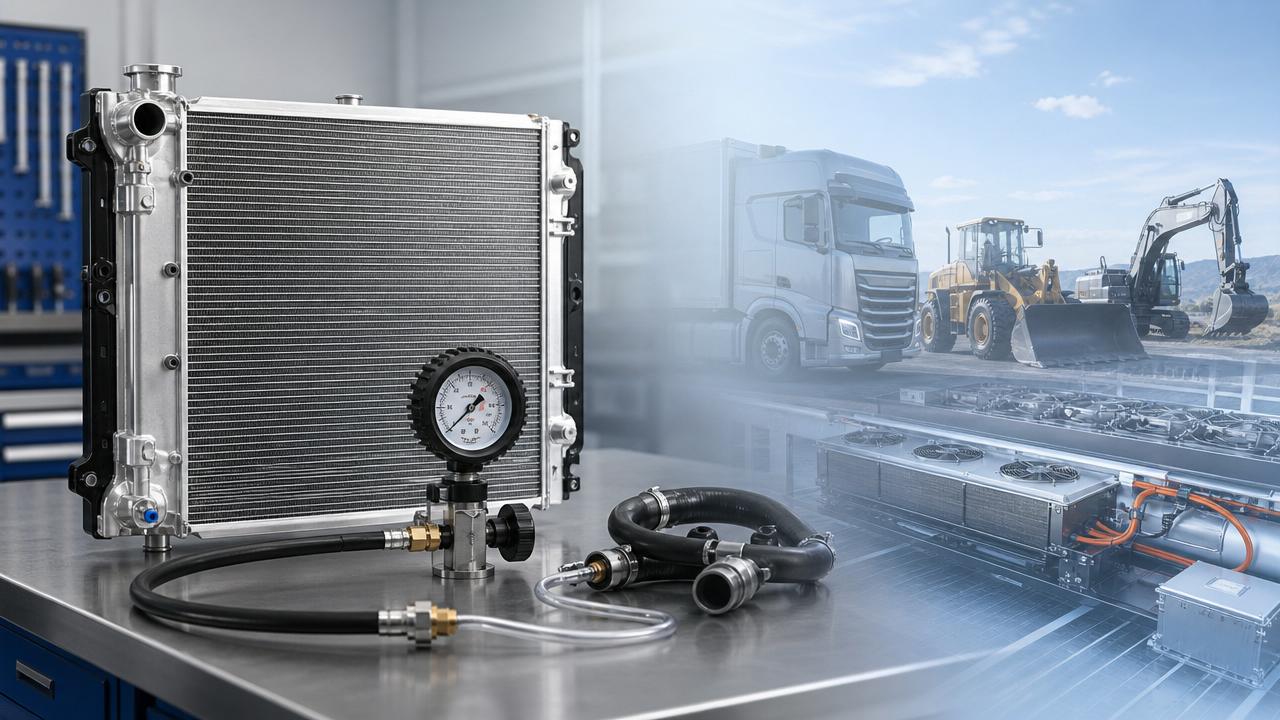
For aftermarket maintenance teams, deciding whether to repair or replace a radiator core can directly affect cooling performance, downtime, and long-term service costs. This guide explains the key inspection points, common failure signs, repair limits, and replacement considerations for heavy trucks, construction machinery, and new energy cooling modules. By understanding how a radiator core works and when damage becomes irreversible, technicians can make faster, more reliable maintenance decisions while helping fleet operators reduce unexpected failures and extend equipment service life.
What Does a Radiator Core Do in Aftermarket Maintenance?
A radiator core is the heat exchange section where coolant releases engine or module heat to passing air. Its condition determines cooling stability under load.
For maintenance teams, the radiator core is not just a leaking component. It is a decision point affecting uptime, fuel efficiency, and repair planning.
Core functions technicians should verify
- Heat transfer efficiency must remain stable during long climbs, stop-start duty, and high ambient temperature operation.
- Coolant passages must allow proper flow without internal blockage, scaling, solder residue, or contamination from degraded coolant.
- External fins must keep sufficient airflow contact area, especially on construction machinery exposed to dust, mud, and crop residue.
- Tank-to-core joints, header plates, and tube ends must withstand vibration, pressure cycling, and thermal expansion.
When a radiator core loses one of these functions, temporary repair may stop leakage but cannot always restore thermal performance or pressure reliability.
Repair or Replace: Which Failure Signs Matter Most?
Not every radiator core defect requires replacement. However, technicians should separate surface damage from structural failure before approving repair.
The following comparison helps maintenance supervisors evaluate common symptoms and avoid spending labor on a radiator core that will soon fail again.
This table shows why visual inspection alone is not enough. A clean radiator core can still fail flow, pressure, or temperature-drop checks.
Inspection Workflow for Heavy Trucks and Construction Machinery
A consistent inspection workflow reduces guesswork. It also helps teams explain repair decisions to fleet managers who must control downtime and parts budgets.
Recommended step-by-step check
- Record the operating complaint, including coolant loss, warning temperature, duty cycle, road condition, and recent repair history.
- Inspect the radiator core face for mud packing, insect blockage, oil contamination, fin loss, and impact marks.
- Pressure test the cooling circuit using the correct cap rating and observe any drop under controlled conditions.
- Check inlet and outlet temperature difference after warm-up to identify low flow or reduced heat rejection.
- Evaluate coolant quality for rust, oil, sediment, incorrect antifreeze ratio, or signs of electrochemical corrosion.
- Document findings with photos and measurements before quoting repair labor or a replacement radiator core.
In harsh field conditions, repeat failures often come from surrounding systems. A new radiator core will not solve blocked shrouds or weak fan performance.
When Is Radiator Core Repair No Longer Worth It?
Repair looks attractive when budgets are tight, but labor, return visits, coolant loss, and equipment downtime can exceed replacement cost.
Use repair only when the radiator core has limited, accessible damage and the remaining structure can withstand future pressure cycles.
Practical repair limits
- Avoid repeated soldering or brazing on weakened tube areas, because heat can thin material and create adjacent leaks.
- Do not rely on sealant for commercial vehicles that operate under heavy load or long-distance schedules.
- Reject repair when more than a small localized area has fin separation, tube swelling, or header plate fatigue.
- Replace the radiator core when internal blockage cannot be verified or removed without aggressive chemical cleaning.
For premium fleet applications, replacement may be the lower-risk decision even if the visible radiator core damage seems manageable.
Replacement Selection: What Should Aftermarket Teams Compare?
Replacement should match the original cooling requirement, installation space, mounting strength, hose layout, and working environment.
For brand-specific service programs, teams may also evaluate complete radiator assemblies such as Radiator for Mercedes-Benz when matching fleet maintenance needs.
The selection table below gives a practical checklist before ordering a radiator core or full radiator assembly for aftermarket service.
A correct radiator core selection is based on working conditions, not only catalog appearance. Confirming drawings and samples reduces costly returns.
Cost Analysis: Repair Labor, Downtime, and Replacement Value
Aftermarket maintenance teams often face pressure to choose the cheapest option. A better approach is comparing total service cost.
The following cost view helps decide whether a damaged radiator core should be repaired, recored, or replaced as an assembly.
For high-utilization vehicles, the most economical radiator core solution is usually the one that reduces repeat downtime, not the lowest invoice.
Application Scenarios: Heavy Trucks, Machinery, and New Energy Modules
Different vehicles place different stress on a radiator core. Maintenance decisions should reflect vibration, airflow conditions, and thermal cycling.
Heavy trucks
Long-haul trucks require stable cooling under sustained engine load. Minor radiator core restriction can become serious on mountain routes or hot climates.
Construction machinery
Excavators, loaders, and cranes face dust, low-speed operation, and hydraulic heat. Fin cleaning and protective screen checks are essential.
New energy cooling modules
Battery and electric drive cooling systems need controlled temperature ranges. Leakage or blockage may affect module performance and safety monitoring.
- For diesel vehicles, verify coolant pressure, fan control, intercooler condition, and exhaust heat influence before replacing parts.
- For off-road equipment, schedule radiator core cleaning based on dust exposure, not only operating hours.
- For new energy systems, confirm compatibility with low-conductivity coolant and module layout requirements.
Common Mistakes That Lead to Repeat Radiator Core Failure
Repeat failure usually comes from incomplete diagnosis. Replacing the radiator core without correcting system causes transfers the same problem to new parts.
Mistakes maintenance teams should avoid
- Ignoring coolant quality allows corrosion and scale to attack the new radiator core within a shortened service interval.
- Using high-pressure washers too close to the fins can fold airflow channels and reduce heat exchange area.
- Installing without checking mounts or rubber cushions may transfer frame vibration directly into soldered or brazed joints.
- Choosing by appearance only can miss differences in tube pitch, port angle, sensor position, or cooling capacity.
A radiator core should be treated as part of the whole cooling system. Small surrounding faults can create large warranty disputes.
Standards, Quality Checks, and Practical Compliance Points
Aftermarket parts may not always require the same documentation as original equipment programs, but basic quality control remains essential.
Technicians and buyers should request reasonable inspection information for the radiator core, especially for fleets with strict acceptance procedures.
Quality points worth confirming
- Pressure testing should match the intended cooling system range and include leakage observation after assembly.
- Dimensional inspection should cover mounting points, core thickness, tank position, and hose connection orientation.
- Packaging should protect fins, ports, and mounting brackets during export handling or long-distance domestic transport.
- Material consistency should be discussed when vehicles operate in corrosive environments or use specialized coolant.
General automotive quality management concepts, pressure test procedures, and traceable inspection records help reduce uncertainty during procurement.
FAQ for Radiator Core Repair and Replacement
How can I tell if a radiator core is blocked internally?
Look for uneven temperature distribution, weak outlet flow, recurring overheating, and sediment in coolant. Infrared temperature checks can support diagnosis.
Is it safe to use leak sealant in commercial vehicles?
Sealant may provide short emergency relief, but it can restrict small passages. It is not a reliable long-term radiator core repair method.
Should I choose a core replacement or a complete radiator assembly?
Choose core replacement when tanks and frames are reusable. Select a complete assembly when corrosion, distortion, or urgent delivery makes recoring risky.
What information helps suppliers recommend the right radiator core?
Provide vehicle model, engine type, application environment, core dimensions, photos, port positions, coolant type, and expected delivery schedule.
Why Choose Liaocheng Xinde Auto Parts for Cooling Solutions?
Liaocheng Xinde Auto Parts Co., Ltd. was established in 2018 with a registered capital of 5 million RMB and total investment of 50 million RMB.
The company focuses on research, production, and global sales of water tank radiators, intercoolers, construction machinery radiators, and new energy radiator modules.
Its product direction fits the needs of aftermarket maintenance teams handling heavy trucks, machinery fleets, and cooling module replacement projects.
The company has received provincial and municipal honors including High-tech Enterprise, Civilized and Honest Enterprise, and Trustworthy Unit for Consumers.
Consultation support available
- Confirm radiator core dimensions, tank layout, mounting points, and connection positions before purchase.
- Discuss product selection for heavy trucks, construction machinery, intercoolers, and new energy cooling modules.
- Review delivery cycle, sample support, packaging requirements, and quotation details for aftermarket procurement.
- Clarify documentation expectations, pressure test needs, customization feasibility, and operating environment requirements.
If your team is deciding whether to repair or replace a radiator core, prepare photos, measurements, and operating symptoms before inquiry.
For matching support or fleet-specific cooling plans, you can also reference Radiator for Mercedes-Benz when discussing suitable assemblies and replacement options.