



Radiator Core Manufacturing Trends in 2026
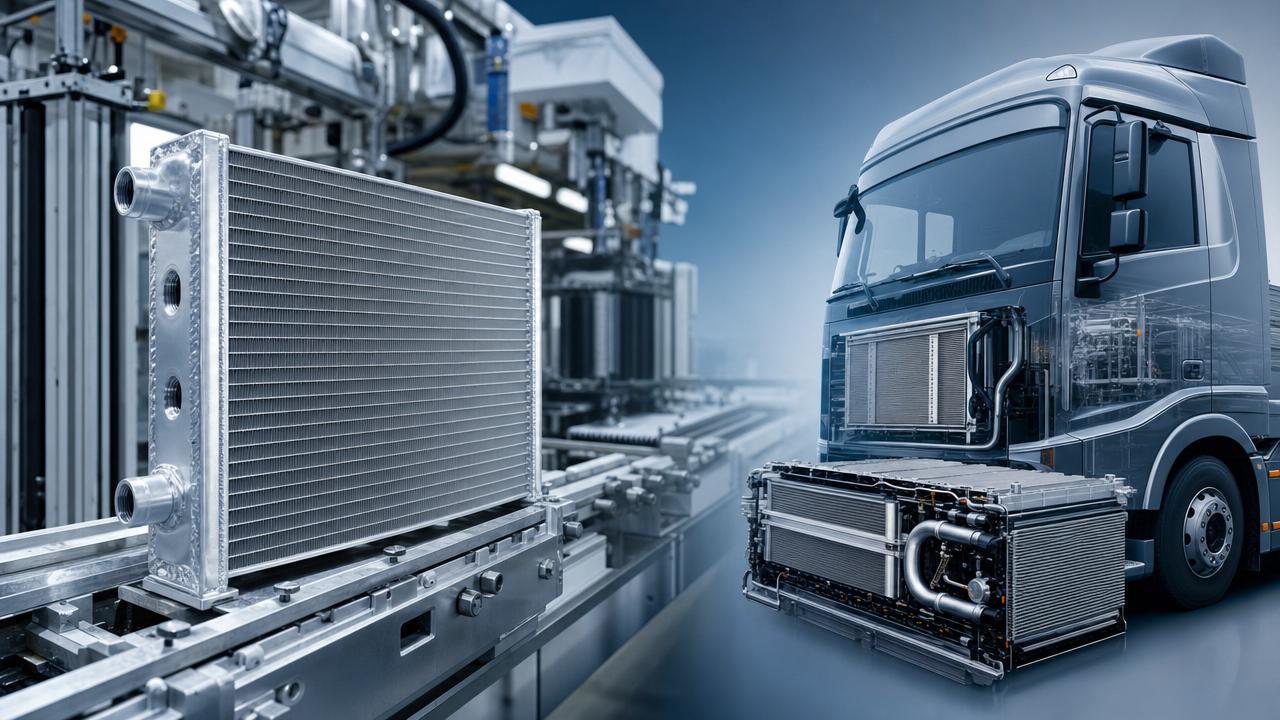
As global demand for heavy-duty trucks, construction machinery, and new energy vehicles continues to evolve, the radiator core is becoming a strategic component for performance, durability, and thermal efficiency.
In 2026, radiator core manufacturing trends will influence cost control, vehicle uptime, emissions compliance, and long-term parts reliability across multiple operating scenarios.
For component supply chains, the key question is no longer only price. It is whether each radiator core matches real heat load, vibration, space, and service conditions.
Scenario Background: Why Radiator Core Requirements Are Changing
Different vehicles face different thermal risks. A highway truck, an excavator, and an electric platform do not use a radiator core in the same way.
In 2026, cooling systems must respond to higher power density, stricter packaging limits, and longer operating cycles. This changes radiator core design priorities.
Material selection, fin geometry, tube structure, brazing quality, and airflow resistance now affect complete system performance, not only heat exchange data.
Liaocheng Xinde Auto Parts Co., Ltd. focuses on water tank radiators, intercoolers, construction machinery radiators, and new energy radiator modules.
Established in 2018, the company has developed rapidly with research, production, and global sales capabilities for demanding automotive parts markets.
Heavy Truck Scenarios: Durability Comes Before Extreme Lightweighting
Heavy trucks usually operate under long-distance, high-load, and high-temperature conditions. The radiator core must resist pressure fluctuation and continuous vibration.
A radiator core for this scenario should be assessed through thermal margin, leak resistance, header strength, and compatibility with existing engine platforms.
The 2026 trend is balanced optimization. Excessive weight reduction may weaken structural reliability if alloy selection and brazing control are not upgraded.
For fleet applications, a stable radiator core reduces overheating events, lowers maintenance stops, and protects engines during steep climbs or high ambient temperatures.
Key Judgment Points for Heavy Trucks
- Check whether radiator core thickness matches engine heat rejection requirements.
- Confirm corrosion resistance for long coolant replacement intervals.
- Review vibration performance for rough roads and heavy payloads.
- Evaluate brazed joint consistency, especially around tubes and headers.
Construction Machinery Scenarios: Dust, Shock, and Low-Speed Heat Load
Construction machinery often works at low speed with high load. Airflow may be limited by dust, mud, or site restrictions.
In this environment, radiator core clogging resistance becomes as important as nominal cooling capacity. Fin spacing and cleanability require careful selection.
The radiator core also needs shock resistance. Excavators, loaders, and cranes experience working impacts that can damage weak soldering or poor assemblies.
A practical 2026 approach is to combine stronger aluminum structures with optimized airflow channels, instead of relying only on larger core size.
When a Reinforced Core Is More Valuable
A reinforced radiator core is more suitable when equipment operates in mines, quarries, hot regions, or long construction shifts without frequent cleaning.
It is also recommended when downtime cost is high. In these cases, radiator core reliability directly affects project delivery schedules.
New Energy Vehicle Scenarios: Precision Thermal Control Becomes Critical
New energy vehicles create new cooling requirements. Battery packs, motors, controllers, and power electronics need more precise temperature management.
A radiator core in this scenario must support stable thermal exchange under variable load, frequent acceleration, and different charging conditions.
The 2026 trend is modular cooling. A radiator core may be integrated with multiple cooling circuits for battery safety and power efficiency.
This requires tighter dimensional control, cleaner internal channels, and better consistency in aluminum brazing to support long-term coolant circulation.
Thermal Stability for Passenger Platforms
Passenger vehicles also benefit from improved radiator core manufacturing. Compact engine bays demand efficient cooling with limited installation space.
For example, Radiator for Lynk uses aluminum material and brazing radiator technology for automotive cooling systems.
Its model 2069525700 applies to Link 06 / binyue, with an 83X14X58 cm single item specification and 12-month warranty.
This type of solution reflects the demand for thermal stability under demanding driving conditions and modern European-style engineering expectations.
Different Scenario Requirements for Radiator Core Selection
A radiator core should be selected by application, not by appearance. Similar dimensions can hide very different performance and durability levels.
This comparison shows why one radiator core design cannot cover every market effectively. Matching the application is the foundation of supply quality.
Manufacturing Trends That Matter Most in 2026
Radiator core manufacturing is moving toward higher automation, better process traceability, and more application-specific engineering.
Automated brazing lines help improve temperature consistency, joint quality, and repeatability. This reduces hidden leakage risk after installation.
Aluminum remains a key material because it supports lightweight construction, corrosion resistance, and efficient heat transfer in many vehicle segments.
However, aluminum radiator core performance depends on alloy control, fin design, tube forming precision, and proper surface treatment.
Digital inspection is also becoming important. Pressure testing, dimensional checks, and visual inspection data support stable batch quality.
Customization Is Becoming a Standard Requirement
In 2026, customized radiator core development is expected to grow. Vehicle platforms are more diverse, especially in export and retrofit markets.
Customization may involve tank structure, core size, mounting points, fin density, tube layout, and compatibility with related cooling modules.
This is especially relevant for heavy trucks, construction machinery radiators, intercoolers, and new energy radiator modules.
Scenario Adaptation Suggestions for Better Decisions
A reliable radiator core decision should begin with real operating data. Ambient temperature, load cycle, space, and maintenance practice all matter.
- Define the vehicle scenario before confirming radiator core specifications.
- Compare heat rejection requirements with actual engine or power system load.
- Check whether mounting dimensions fit without airflow obstruction.
- Request pressure test and brazing quality information for batch assurance.
- Assess whether the supplier supports global sales, technical communication, and stable production.
Liaocheng Xinde Auto Parts Co., Ltd. has a registered capital of 5 million RMB and total investment of 50 million RMB.
Its honors include High-tech Enterprise, Civilized and Honest Enterprise, and Trustworthy Unit for Consumers, reflecting continued development capacity.
Common Misjudgments When Choosing a Radiator Core
One frequent mistake is judging a radiator core only by outer size. Heat transfer performance depends on much more than dimensions.
Another mistake is ignoring airflow. Even a high-capacity radiator core can underperform if the fan, shroud, or grille blocks air movement.
Some selections also overlook coolant quality. Poor coolant can shorten radiator core life through corrosion, scaling, and internal blockage.
For construction sites, ignoring dust conditions is especially risky. Fin blockage can quickly reduce cooling efficiency and cause repeated overheating.
For new energy platforms, ignoring cleanliness is another hidden issue. Internal contamination can affect pumps, valves, and sensitive cooling loops.
Action Guidance: Turning 2026 Trends Into Practical Selection
The strongest radiator core strategy in 2026 is scenario-based selection supported by manufacturing evidence and application testing.
Before confirming a cooling component, collect operating conditions, installation drawings, target service life, and required delivery standards.
Then evaluate whether the radiator core supplier can provide material control, brazing stability, testing records, and customization support.
For automotive platforms needing aluminum brazing solutions, Radiator for Lynk can be reviewed as a reference product.
As cooling demands become more complex, the right radiator core partner can reduce failure risk and strengthen long-term parts competitiveness.