



Radiator Core Defects That Affect Durability
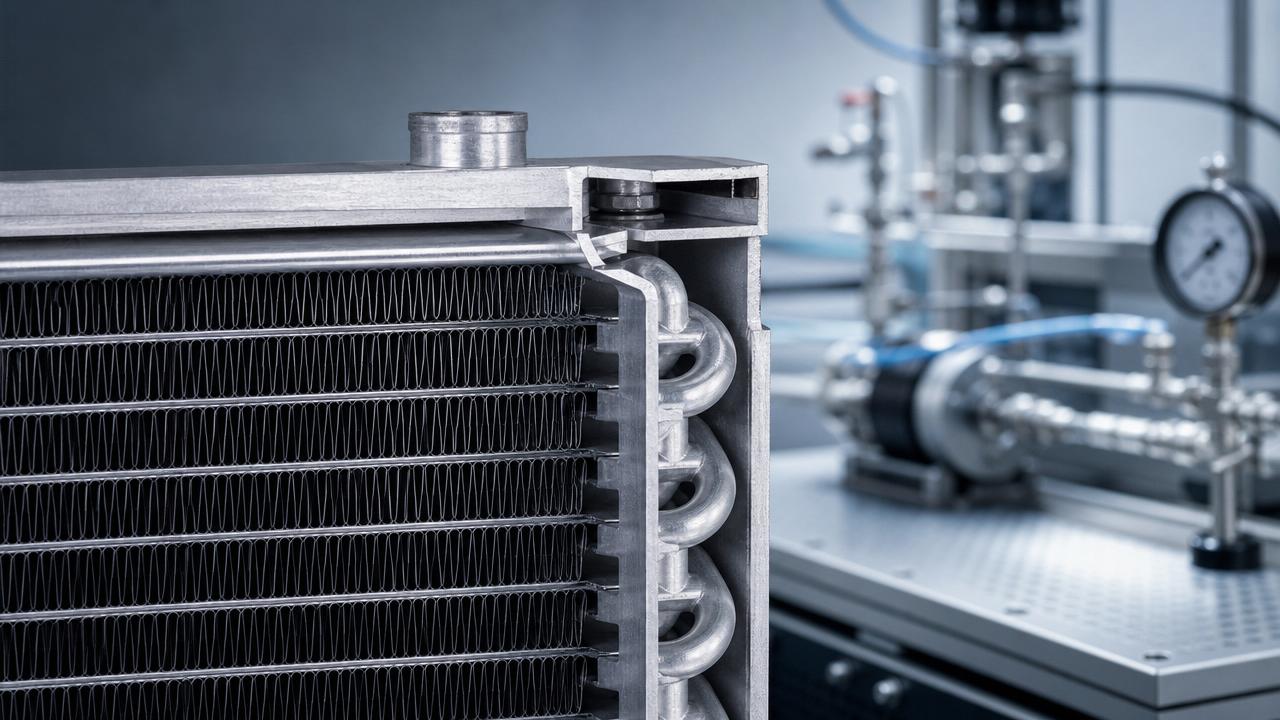
A radiator core is a critical checkpoint for durability, heat-transfer efficiency, and equipment safety.
For quality control and safety teams, small defects can cause overheating, downtime, leakage, and warranty exposure.
Weak brazing, blocked tubes, damaged fins, and hidden cracks often appear minor during assembly.
However, each radiator core defect can reduce cooling stability in heavy trucks, construction machinery, and new energy thermal systems.
What Is a Radiator Core, and Why Does It Decide Durability?
The radiator core is the heat exchange section between the inlet and outlet tanks.
It usually contains tubes, fins, headers, and brazed joints that guide coolant and airflow.
When the radiator core works correctly, hot coolant releases heat through tube walls and fin surfaces.
Durability depends on material strength, brazing quality, tube cleanliness, fin integrity, and pressure resistance.
In severe applications, the radiator core faces vibration, thermal cycling, dust, debris, and high coolant pressure.
A small weakness may expand after repeated heating, cooling, and mechanical shock.
That is why radiator core inspection should not focus only on appearance.
It should also confirm internal flow, sealing reliability, structural consistency, and long-term heat-transfer performance.
Which Radiator Core Defects Most Often Reduce Service Life?
Several radiator core defects are common in production, storage, installation, and field operation.
Some are visible immediately, while others require pressure testing or flow verification.
Weak brazing and incomplete bonding
Brazing connects tubes, fins, and headers into a sealed heat exchange structure.
If brazing is weak, the radiator core may pass appearance checks but fail under pressure.
Typical signs include uneven fillets, voids, discoloration, and local separation near tube ends.
Weak joints increase leakage risk, especially after vibration or repeated thermal expansion.
Tube blockage and restricted coolant flow
A blocked tube lowers the active heat-transfer area inside the radiator core.
Causes include flux residue, oxide particles, scale, solder contamination, and poor internal cleaning.
Restricted flow creates hot spots and uneven temperature distribution across the radiator core.
Over time, this may accelerate gasket aging, coolant degradation, and engine overheating.
Fin deformation and poor airflow passage
Fins provide large surface area for heat transfer to passing air.
Bent, crushed, or clogged fins reduce airflow through the radiator core.
This defect often appears after handling, packaging pressure, road debris, or careless installation.
Even when no leakage exists, damaged fins can reduce cooling capacity significantly.
Micro leakage and hidden cracks
Micro leakage is difficult because it may appear only at operating temperature.
Small cracks can develop around tube-header joints, side plates, or stressed corners.
A radiator core with hidden leakage may lose coolant slowly and trigger intermittent overheating.
Pressure decay testing, underwater testing, and visual dye checks help identify this risk.
How Do These Defects Affect Heavy Trucks and Construction Machinery?
Heavy trucks often operate under long load cycles, high mileage, and variable road conditions.
A defective radiator core can cause coolant temperature instability during climbing, towing, or hot-weather operation.
Construction machinery adds more severe dust, vibration, mud, and low-speed working conditions.
Because airflow is limited at low speed, radiator core efficiency becomes even more important.
Blocked fins or tubes may lead to continuous high temperature during excavation, lifting, or road building.
New energy cooling modules also require stable thermal management for batteries, motors, and controllers.
In those systems, a radiator core defect may influence charging safety and electronic component life.
Durability is therefore not only about avoiding leakage.
It also means maintaining reliable temperature control during the full equipment duty cycle.
How Can Radiator Core Quality Be Inspected Before Installation?
Inspection should combine appearance checks, dimensional control, pressure testing, and performance-oriented verification.
A single check cannot fully confirm radiator core durability.
The following methods help reduce failure risk before the part enters service.
- Check fin spacing, fin damage, and airflow passages under good lighting.
- Inspect tube ends, headers, and brazed areas for cracks or separation.
- Use pressure testing to detect leakage under controlled conditions.
- Verify core dimensions to ensure correct installation and sealing fit.
- Confirm internal cleanliness to reduce blockage and coolant contamination.
- Review packaging protection to avoid transport-related fin deformation.
For replacement applications, matching model, size, mounting position, and thermal capacity is essential.
For example, the xd81702 radiator for scania supports models 2552202, 2479805, and 606324.
Its listed size is 1000*1006, which helps confirm fitment before installation planning.
Correct matching reduces stress, misalignment, hose tension, and premature radiator core damage.
What Mistakes Cause Radiator Core Problems After Delivery?
Not every radiator core failure begins during manufacturing.
Handling, installation, coolant selection, and maintenance habits can also create defects.
Understanding these mistakes helps protect cooling system reliability after delivery.
Using unsuitable coolant
Poor coolant can corrode aluminum surfaces and leave deposits inside tubes.
Deposit buildup gradually reduces radiator core flow and heat-transfer performance.
Coolant should meet equipment specifications and be replaced at recommended intervals.
Ignoring vibration and mounting stress
Radiators need stable mounting with proper rubber cushions and bracket alignment.
If the radiator core is twisted or forced into position, cracks may develop later.
Mounting stress is especially risky in heavy-duty vehicles and off-road equipment.
Cleaning with excessive pressure
Cleaning is necessary, but aggressive water or air pressure can flatten fins.
The nozzle should be kept at a safe distance and aligned with fin direction.
This preserves airflow and avoids unnecessary radiator core damage.
How Should a Durable Radiator Core Supplier Be Evaluated?
Supplier evaluation should cover technical capability, production control, testing discipline, and application experience.
A durable radiator core requires consistent process management, not only acceptable samples.
Liaocheng Xinde Auto Parts Co., Ltd. was established in 2018.
The company focuses on water tank radiators, intercoolers, construction machinery radiators, and new energy radiator modules.
Its registered capital is 5 million RMB, with total investment of 50 million RMB.
The company has received honors including High-tech Enterprise and Trustworthy Unit for Consumers.
Such background supports stable development, quality improvement, and global radiator component supply.
FAQ: Practical Answers About Radiator Core Defects
Can a radiator core look normal but still be defective?
Yes. Internal blockage, micro leakage, and weak brazing may not appear during a quick visual check.
Pressure testing, flow checks, and careful joint inspection provide better confirmation.
Does fin damage always require replacement?
Minor fin bending can sometimes be corrected with proper tools.
Severe crushing, wide airflow blockage, or repeated overheating usually requires replacement evaluation.
Why does tube blockage create serious overheating?
Blocked tubes reduce coolant circulation through the radiator core.
The remaining open tubes carry more heat load, causing uneven temperature and lower cooling reserve.
What is the best way to prevent early radiator core failure?
Select a matched radiator, verify inspection results, install without stress, and use proper coolant.
Regular cleaning and temperature monitoring also help extend radiator core service life.
Conclusion: Turn Radiator Core Inspection Into a Durability Standard
Radiator core durability depends on more than material thickness or external appearance.
Brazing quality, tube cleanliness, fin condition, sealing performance, and installation accuracy all matter.
For heavy trucks, construction machinery, and new energy cooling systems, defects can become costly failures.
The practical next step is to build a checklist for each radiator core application.
Confirm dimensions, test pressure resistance, review airflow condition, and verify supplier quality controls.
With disciplined inspection and correct matching, a radiator core can deliver safer, longer, and more reliable cooling performance.